Babu Culture and the Indian Art of Bending
Uses the speech voice supplied by your browser or device.

Acronym key:
US: United States, the country where I spent much of my working life and learned a very different office grammar.
CEO: Chief Executive Officer, the person formally responsible for running a company.
VIP: Very Important Person, a supposedly special person who receives priority treatment over ordinary citizens.
ICS: Indian Civil Service, the elite administrative machinery of British colonial rule in India.
IAS: Indian Administrative Service, the post-independence elite civil service that inherited some of the prestige and burden of the old administrative order.
AI: Artificial Intelligence, software systems that imitate or automate forms of human reasoning, prediction, writing, classification, and decision support.
The fastest way to understand Indian hierarchy is to lose importance.
Not money. Not exactly. Money matters, naturally. Money in India is like mustard oil in a Bengali kitchen; everyone pretends the food is about the vegetables, but the oil is doing half the moral work. But status is the sharper instrument. Lose status, and the room changes temperature.
When I came back from the US in 2014, and when by 2016 the Indian startup vanished, I held on to the foolish private belief that I was still the same man. Same education. Same experience. Same battered intelligence. Same old middle-aged Bengali stomach, somewhat treacherous after luchi. I had worked in serious systems, sat in serious rooms, handled serious responsibilities, and had once carried the little visiting-card electricity of a CEO. Then India performed its old magic trick. It looked at me, sniffed the air, detected reduced usefulness, and quietly moved me from “sir” to “who are you?”
That shift teaches more sociology than a library shelf.
You notice it first in small things. A voice loses softness. A chair is not offered. A phone call goes unanswered. The clerk looks at you not with anger, which would at least be energetic, but with the deep administrative boredom of a lizard on a wall. The same people who would once have smiled as if you had personally nationalized sweetness now speak in clipped syllables. Not rude enough to protest. Not polite enough to be human.
This is India’s great social instrument: the adjustable face.
The face shown upward is one thing. The face shown downward is another. The face shown sideways depends on caste, money, English, address, clothing, job title, surname, known contacts, and whether your shoes look like they have ever met an airport lounge.
I knew this world as a boy, of course. I went to school in India. But I bypassed some of its swamp because I was a good student. Marks are one of the few clean-ish passports India still respects. A good student does not need to flatter as much because the report card flatters on his behalf. Teachers forgive him. Relatives display him. Offices reluctantly open half a window. It gives a young man a very dangerous illusion.
He begins to think competence is enough.
Then life hands him a form in triplicate.
In the US, flattery certainly exists. Let us not become sentimental about American conference rooms. They have their own polished reptiles. They say “great question” before answering the question they wished you had asked. They call layoffs “right-sizing,” which is a fine example of language wearing a clean shirt after murdering someone in the alley. But the open devotional kneeling before rank is generally considered embarrassing. The official office script says you may disagree. You may question. You may push back. You may be wrong, but you are not automatically insolent.
India has a different script.
Here, the boss is not merely a boss. The officer is not merely an officer. The secretary of the housing association is not merely a man with a key to the terrace. The local party fellow is not merely a fellow. The school clerk is not merely a clerk. Each becomes a small customs checkpoint in the republic of daily survival.
And so people bend.
Not always because they are weak. This is important. Moral scolding is cheap, like roadside sunglasses. Many Indians flatter because the system has made flattery practical. A certificate can be delayed. A hospital bed can disappear. A police complaint can become fog. A pension file can enter that mysterious government region where paper goes to develop spiritual detachment. A promotion can be slowed. A transfer can be arranged. A tender can be whispered into shape.
When rules are weak and discretion is strong, dignity becomes expensive.
The poor man bends because his daughter needs a document. The lower-middle-class man bends because his loan is stuck. The employee bends because appraisal season has arrived wearing perfume and carrying a knife. The businessman bends because the inspector has eyebrows. The rich man does not bend personally; he sends someone else to bend for him.
This is the first dirty secret.
Obsequiousness is not merely a character flaw. It is an economy.
It is payment made in posture. A bribe without an envelope. A tax paid through the spine.
The babu sits at the center of this economy. I do not mean only the government babu, though he remains the classical specimen, like the Hilsa of procedural obstruction. The babu is older and more portable than that. He may sit in a bank, a university, a hospital, a club, a corporate office, a school office, a party office, a real-estate desk, or a private company where everyone says “professional” while behaving like courtiers in nylon socks.
The old babu guarded files. The new babu guards passwords, spreadsheets, calendar invites, vendor approvals, tender language, access cards, email chains, and the sacred sentence “as discussed.” Same priesthood. Different temple bell.
His power is rarely dramatic. That is why it works. He does not need to shout. He can pause. He can misplace. He can say, “Come next week.” He can say, “Sir is busy.” He can say, “This needs one more signature.” He can say, “Actually there is a small issue.” In India, the phrase “small issue” can contain more danger than a cobra in a schoolbag.
Delay is violence with clean fingernails.
And around delay grows flattery.
“Dada, just please see once.”
“Sir, only you can help.”
“Madam, you are like our guardian.”
“Boss, what vision.”
“Minister-saheb, the people are blessed.”
This would be funny if it did not cost blood, time, money, and self-respect.
The VIP disease is only the loudest form of it. The red light on the car was never the real problem. Remove the beacon, and the mind still flashes. India abolished many visible signs of VIP privilege, but the invisible ones survived beautifully, like mosquitoes after municipal spraying. The traffic constable knows. The receptionist knows. The hospital desk knows. The school office knows. The man at the gate knows. The gate itself seems to know.
The republic says one citizen, one dignity.
The corridor says, “Who sent you?”
That question is the national anthem of practical India.
Not the official India. Official India has noble words, constitutional promises, democratic rituals, flags, speeches, and slogans polished until you can see your own disappointment in them. Practical India asks something else. Do you know anyone? Can someone call? Which party? Which office? Which surname? Which school? Which club? Which building? Which uncle? Which retired officer? Which doctor? Which police station?
We are not always trying to break the queue because we are wicked. Sometimes we break it because we know the queue itself is a decorative lie. The person who waits properly may remain waiting while the person who knows properly moves forward.
That is the second dirty secret.
Many Indians do not want the system to become fair. They want their own access to unfairness.
I include myself in the accusation. One must. Otherwise the essay becomes the usual Indian drawing-room opera, in which everyone complains about corruption while searching for a cousin in the licensing department. I have stood in lines and hated queue-jumpers. I have also felt the small shameful relief when someone said, “I know a person.” The spine, like the Kolkata electricity supply in summer, is not always reliable.
This is how a culture perpetuates itself. Not through villains alone. Through convenience.
Now look at the mythology, but carefully. This is where many people become stupid at impressive speed.
Indian mythology is not the cause of our crawling. The epics are too large, too contradictory, too intelligent for that. The Mahabharata is not a WhatsApp poster. The Ramayana is not an office circular. The old stories contain loyalty, rebellion, duty, suspicion, tenderness, statecraft, rage, doubt, and more family complications than a Bengali wedding after the fish delivery goes wrong.
But popular culture often selects the convenient bits.
We remember obedience more easily than argument. We remember blessing more easily than justice. We remember the boon more easily than the warning. We remember devotion when it flatters power, but not when devotion becomes courage. We take the language of reverence and drag it into the office.
So bhakti becomes sycophancy.
Respect becomes crawling.
A guru becomes a boss.
A blessing becomes a recommendation.
A darshan becomes an appointment.
A boon becomes a posting.
The cosmic has been reduced to clerical scale. The universe may be vast, but in India it can still be stopped by a man with a stamp pad.
This is not religion in its deep sense. This is social laziness wearing religious perfume. It tells the weak to submit and the powerful to enjoy being submitted to. It gives a cultural cushion to behavior that should make us blush. The officer is treated like a minor deity. The leader is garlanded until his neck disappears. The boss is praised until reality itself becomes shy.
And then comes stupidity.
This is the part sycophants never understand. Flattery does not merely humiliate the flatterer. It blinds the flattered.
A leader surrounded by praise becomes a badly tuned radio. He receives only static and applause. Nobody tells him the product is failing. Nobody tells her the policy is nonsense. Nobody tells the professor the lecture is embalmed. Nobody tells the party leader the people are angry. Nobody tells the father the family is afraid. Nobody tells the CEO the company is a leaking boat with motivational posters.
The flatterer survives the day.
The institution loses the map.
This is why babu culture is not only a moral problem. It is an information problem. It destroys feedback. It bends truth before truth reaches power.
In a healthy system, bad news travels upward fast.
In a sick system, bad news removes its shoes outside the door, lowers its voice, and says, “Sir, small matter only.”
Meanwhile, the day goes on in my corner of Calcutta. The ceiling fan turns with the philosophical exhaustion of a retired tram. The news on the phone shouts about AI, elections, billionaires, heatwaves, cricket, markets, satellites, scandals, and somebody’s spectacular new plan to improve the nation by producing another app. Outside, someone argues with a vegetable seller about two rupees. A scooter coughs. A dog sleeps like a failed minister. Somewhere a young man in a tucked-in shirt is saying “yes sir yes sir absolutely sir” into a phone, and you can hear his future shrinking.
This is not a small matter.
A society that trains people to flatter power also trains them to hide errors. It trains them to avoid responsibility. It trains them to prefer patronage over process. It trains them to treat law as a locked room and contacts as the duplicate key.
The result is not merely corruption. Corruption is too narrow. Corruption sounds like cash in envelopes. This is deeper. This is graded personhood.
Some people are treated as full citizens.
Some as applicants.
Some as obstacles.
Some as background furniture.
India has a genius for detecting grade. English, skin tone, watch, shoes, college, accent, address, car, caste surname, job title, political nearness, family name, and the particular way a person says “actually” all enter the calculation. The calculation happens instantly. Like a barcode scanner. Beep. This one waits. Beep. This one sits. Beep. This one gets tea. Beep. This one must stand outside.
Kolkata adds its own seasoning. Here hierarchy often wears intellectual aftershave. A man may quote Tagore and still torture the office peon. A committee may discuss equality for three hours while making the poorest fellow arrange the chairs. A para club may speak of culture, democracy, and social service, then behave like a small princely state with worse accounts. Bengal did not abolish hierarchy. It taught hierarchy to pronounce French names.
The “minister of this and that” disease grows from the same soil.
President of the committee. Secretary of the association. Joint convenor. Cultural advisor. Chief patron. Working president. Founding mentor. Permanent invitee. Special coordinator. If Bengal had unlimited electricity, we would use half of it printing titles on banners.
The title performs a magic trick. A tired man with blood sugar, unpaid bills, and a leaking balcony becomes “respected sir.” People call him. People stand. People request. People flatter. His ordinary life, otherwise hanging from a plastic clip on a damp clothesline, suddenly acquires ceremonial weight.
That is the temptation.
The oppressed do not always dream of equality. Sometimes they dream of becoming oppressors with better chairs.
This is why reform is difficult. Everyone curses VIP culture until their own relative needs admission, transfer, license, bed, appointment, waiver, file movement, or police attention. Then suddenly VIP culture becomes “help.” Nepotism becomes “network.” Bribery becomes “speed money.” Queue-breaking becomes “adjustment.” Servility becomes “respect.” Cowardice becomes “practicality.”
Language is the laundry where dirty habits go to look clean.
What would repair this?
Not speeches. India has produced speeches in such volume that if speeches could fix roads, we could drive smoothly from Garia to Greenland.
The repair is boring, technical, institutional, and therefore unfashionable.
Make queues visible. Publish timelines. Track applications. Time-stamp files. Record reasons for rejection. Reduce unnecessary discretion. Rotate gatekeepers. Protect people who report obstruction. Make public service desks answerable to citizens, not to local power brokers. Stop allowing every small official to become a tollbooth. Stop worshipping access. Stop treating “I know someone” as a life skill.
In offices, reward people who bring bad news early. A junior employee who says “this will fail” is not negative. He may be the only adult in the room. Beware the person who agrees with everything. He may be loyal. He may also be furniture with a salary.
In families, stop teaching children that obedience is the highest virtue. Teach courtesy, yes. Teach gratitude, yes. Teach restraint, yes. But do not teach crawling. A child who cannot question an elder becomes an adult who cannot question a minister, a boss, a fraud, a guru, a party leader, or a bad idea wearing a silk kurta.
And perhaps most difficult: stop enjoying being flattered.
That is the bitter medicine.
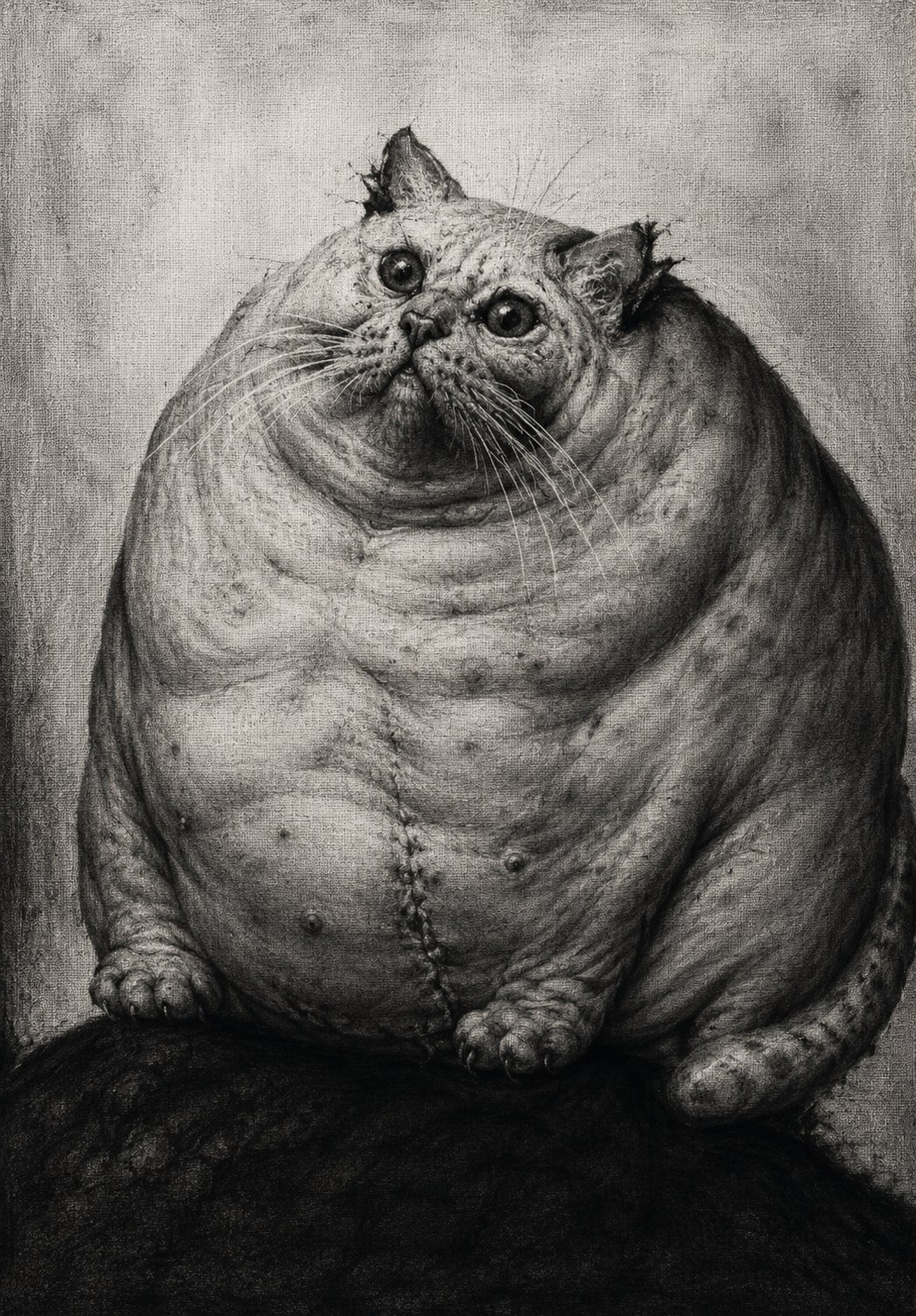
The babu is not only behind the desk. The babu is also inside us. It wakes when someone calls us sir with extra sugar. It smiles when a guard stands too quickly. It purrs when a younger person laughs at our bad joke. It grows fat when people need our approval. It whispers, “See, you matter.”
Of course we want to matter. Everyone does. The problem begins when mattering requires someone else to shrink.
I came back in 2014 and saw this more clearly because I had fallen through the social floorboards. Falling is painful, but it has one advantage. You see the underside of the house. You see the pipes, the damp, the rats, the wiring held together with hope, and the little men who control the switches.
From above, India looks chaotic.
From below, it looks arranged.
Every door has a keeper. Every keeper has a mood. Every mood has a price. Sometimes the price is money. Often it is posture.
The cure is not arrogance. Arrogance is only servility after promotion. The cure is dignity with procedure. Clean rules. Equal treatment. Less discretion. More transparency. A culture where saying “no” to power does not make you a traitor, and saying “yes sir” twenty-seven times does not make you employable.
A republic is not built when everyone gets a flag.
It is built when an ordinary person can enter an ordinary office, ask for an ordinary service, and leave with his spine still attached.
That sounds modest.
In India, modest things are often revolutionary.
Word Cloud
Related reading
Selected by shared topics and section, with closer publication dates breaking ties.