Woke: How a Tiny American Word Became a Full-Time Street Fight
Uses the speech voice supplied by your browser or device.

Acronyms and Terms
AAVE — African American Vernacular English, a distinct form of English shaped by Black American history and culture.
HR — Human Resources, the office department that smiles warmly while explaining why your salary increment resembles a dying mosquito.
The word “woke” began life peacefully. Quietly. Respectably. Like a clerk in a post office who irons his shirts and keeps exact change in a rusted tin box.
Then America got hold of it.
And America, you must understand, has a supernatural ability to convert ordinary words into flaming circus equipment. They can take a harmless expression, inflate it with television air, soak it in politics, dip it in social media kerosene, and within six months people are screaming it at Thanksgiving dinner between bites of mashed potatoes.
“Woke” originally just meant alert. Aware. Paying attention.
In AAVE, especially among Black Americans, “stay woke” meant: keep your eyes open because the world is not always what it claims to be. Police may not treat you fairly. Institutions may smile while quietly strangling you with paperwork, laws, housing rules, hiring practices, or plain old prejudice. The phrase carried exhaustion inside it. Historical memory. Experience.
Nothing ridiculous about that.
Frankly, if you have ever dealt with an Indian municipal office trying to get one simple document signed while three ceiling fans rotate with the moral urgency of a sleeping buffalo, you already understand “stay alert.” Same species of wisdom.
But then the word escaped.
And once a word escapes into the American media ecosystem, it is like dropping a goat into the Howrah fish market during monsoon. Total chaos. Elbows. Noise. Smell. Everybody grabbing at it.
Suddenly celebrities were woke.
Universities were woke.
Netflix was woke.
Toothpaste companies were woke.
A shoe company making sneakers for $300 was tweeting about social justice from a factory staffed by exhausted people earning enough money to purchase perhaps one shoelace every six months.
People noticed this contradiction. Human beings are not always intelligent, but they possess a remarkable instinct for hypocrisy. A villager may not understand derivatives trading or quantum mechanics, but he can instantly detect when a rich man is performing morality like amateur theater.
That is where the irritation began.
Because one version of “woke” meant compassion and fairness.
Another version became performance. Public virtue. Competitive righteousness. Moral bodybuilding on social media.
You know the type.
A fellow online writes: “Today I am amplifying marginalized voices.”
Meanwhile his mother downstairs is carrying two sacks of rice up four floors because the lift has again entered a spiritual relationship with non-functionality.
America became full of this split-screen existence.
And then came social media, that magnificent machine for turning mild disagreement into medieval warfare.
Now everybody had microphones.
Earlier, if a person was annoying, perhaps only seven relatives suffered. Maybe one bus conductor. Now the annoying person can reach four million people before breakfast.
So “woke” slowly stopped meaning “social awareness” and became a vague insult. Like “communist” in old American movies or “anti-national” in Indian television debates where six men shout simultaneously while a red graphic flashes BREAKING NEWS as if Pakistan has invaded Behala.
Today, depending on who says it, “woke” can mean:
too politically correct,
too sensitive,
too obsessed with identity,
too eager to censor speech,
too performative,
too liberal,
too academic,
or simply: “a person who makes me tired.”
That last definition is probably the most honest.
The funny part is that both sides in this fight contain truth and nonsense mixed together like cheap roadside biryani where half the rice is excellent and the other half could repair potholes.
Some genuinely care about injustice. Fair enough. America has real historical wounds. Slavery happened. Segregation happened. Redlining happened. Police brutality happened. Anybody denying this is arguing with history itself.
But another layer also emerged. A strange layer.
Language policing.
Endless terminology updates.
Public shaming rituals.
People terrified of saying the wrong word the way Bengalis fear accidentally insulting an elderly aunt during Durga Puja lunch.
And corporations loved it. Oh, corporations absolutely adored this entire thing.
Because symbolic morality is cheaper than structural reform.
Very important sentence there. Keep it.
A company can post a rainbow logo in twelve seconds.
Paying workers properly? Slightly more complicated.
An airline can release a beautiful diversity advertisement while simultaneously charging you extra because your suitcase contains oxygen molecules exceeding approved density regulations.
This is why ordinary people started rolling their eyes.
The word became detached from real material life.
And material life matters.
You can lecture a man for three hours about inclusive terminology, but if his rent has doubled, his son cannot find work, cooking oil costs the same as imported perfume, and the ceiling leaks directly onto the television during rain, eventually he stops listening.
This is the part elite activists often miss.
Human beings experience ideology through stomachs, salaries, humiliation, loneliness, and exhaustion. Not through graduate seminars.
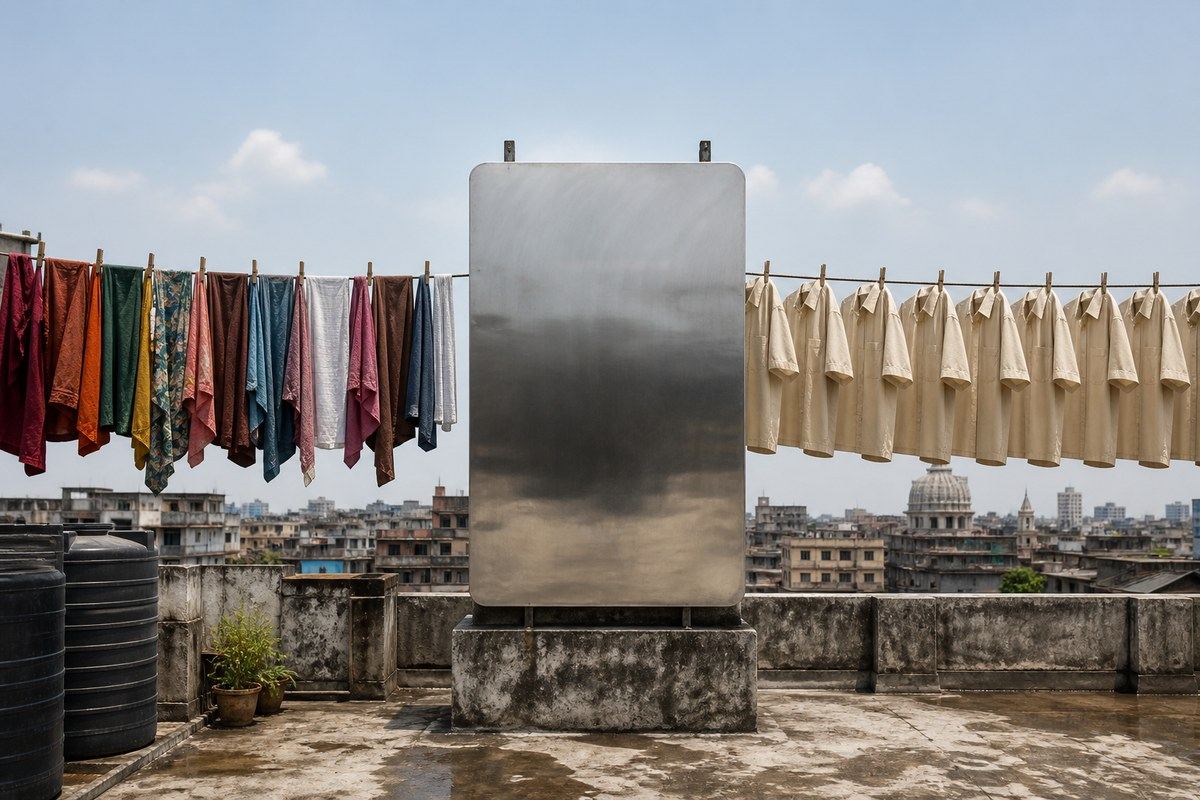
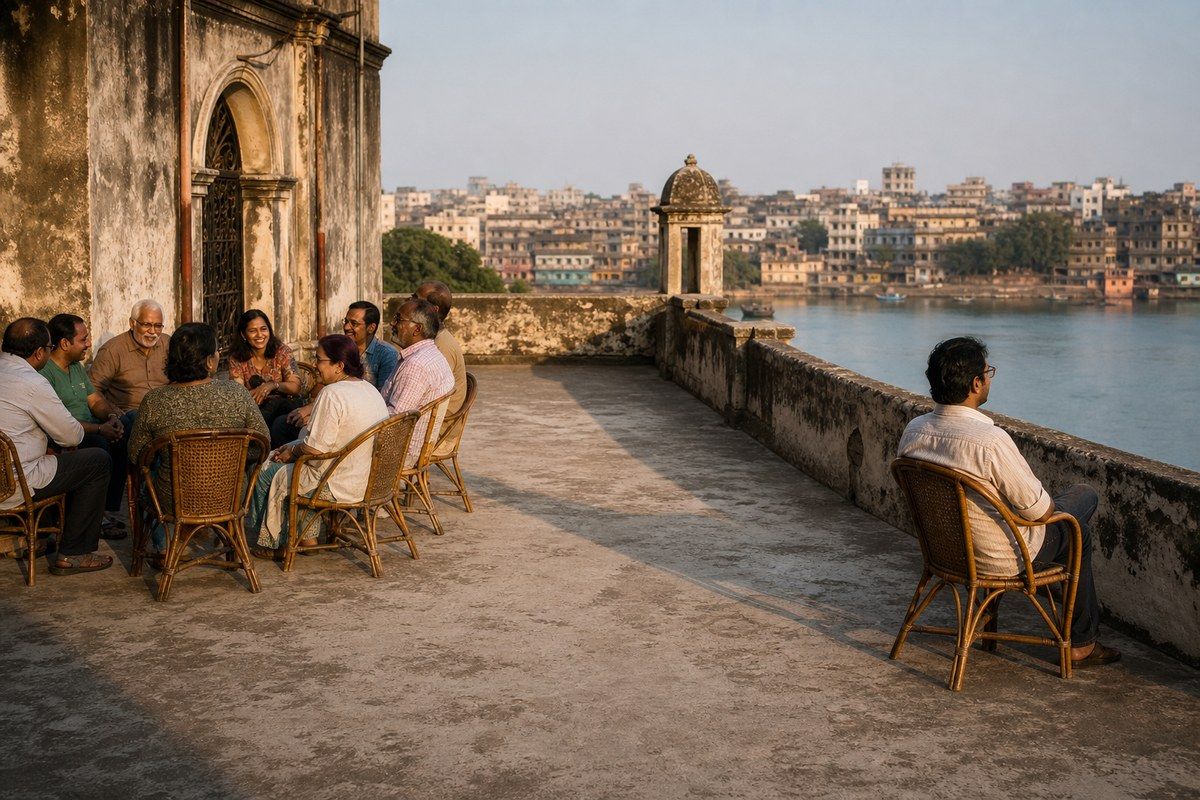
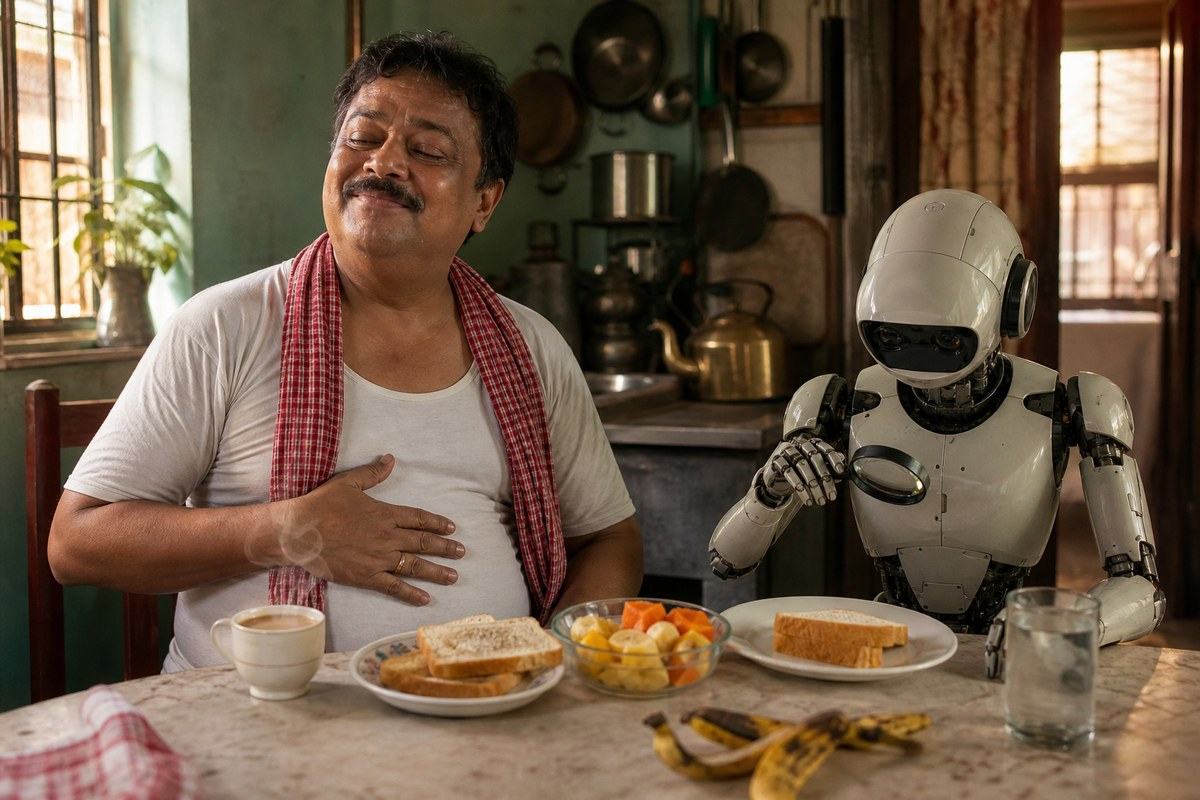
Meanwhile here in Calcutta, an ordinary middle-aged fellow wakes at 5:30 because the neighborhood dogs have decided democracy requires loud participation. Tea boils. Somebody nearby is already coughing with operatic ambition. The newspaper arrives folded like it contains state secrets instead of forty-seven advertisements for luxury apartments nobody in the locality can afford.
And from across the ocean comes this strange American word.
Woke.
As if it were a new religion, political disease, fashion trend, and corporate training module all stitched together by an anxious committee.
The truly hilarious thing is that nobody fully controls the word anymore.
The political left lost ownership.
The political right overused it.
Corporations commercialized it.
Internet mobs inflated it.
Television pulverized it.
Now the word staggers around American culture like an exhausted taxi driver at 2 a.m., headlights dim, bumper hanging off, somehow still moving.
And underneath all the noise sits a much older human argument.
Who gets respect?
Who decides acceptable behavior?
How much social pressure is necessary for progress?
At what point does social pressure become coercion?
How do you correct injustice without becoming humorless little bureaucrats of morality?
That last one matters. A society that loses the ability to laugh at itself becomes dangerous. Not immediately. But eventually. Humor is ventilation. Without it, pressure builds inside the walls.
Which is why Americans now argue endlessly over comedians too. Everybody is frightened somebody somewhere may experience discomfort for eleven consecutive seconds.
A civilization cannot survive like that. Human beings are too absurd a species.
We are monkeys with mortgages.
The final tragedy of “woke” is almost poetic.
A word that once meant: “Please pay attention to injustice”
eventually became:
a political tomato hurled across cable television studios by millionaires wearing makeup.
That is modern culture for you. Every serious idea eventually gets turned into content. Chewed up. Packaged. Monetized. Thrown back at the public with sponsored advertising attached.
Poor little word never stood a chance.
Word Cloud
Related reading
Selected by shared topics and section, with closer publication dates breaking ties.