Political Promises and the Hard Floor of Reality
Uses the speech voice supplied by your browser or device.

Acronyms expanded in this post:
- AI: Artificial Intelligence. software that generates, classifies, predicts, summarizes, or acts on patterns in data.
- IT: Information Technology. the practice of building, operating, and supporting computing systems.
Reality has no manifesto, no party office, no election symbol, and no talent for flattery.
That is its first discourtesy. Political speech can promise subsidized dignity, televised progress, jobs blooming like bougainvillea over broken drains, justice delivered with the punctuality of a Swiss railway, and a future in which everyone’s child gets a laptop, a scholarship, a hospital bed, a clean road, and a small patriotic swelling of the chest. Reality does not object during the rally. It stands quietly at the back, chewing paan perhaps, then presents the bill after the microphones have been packed away.
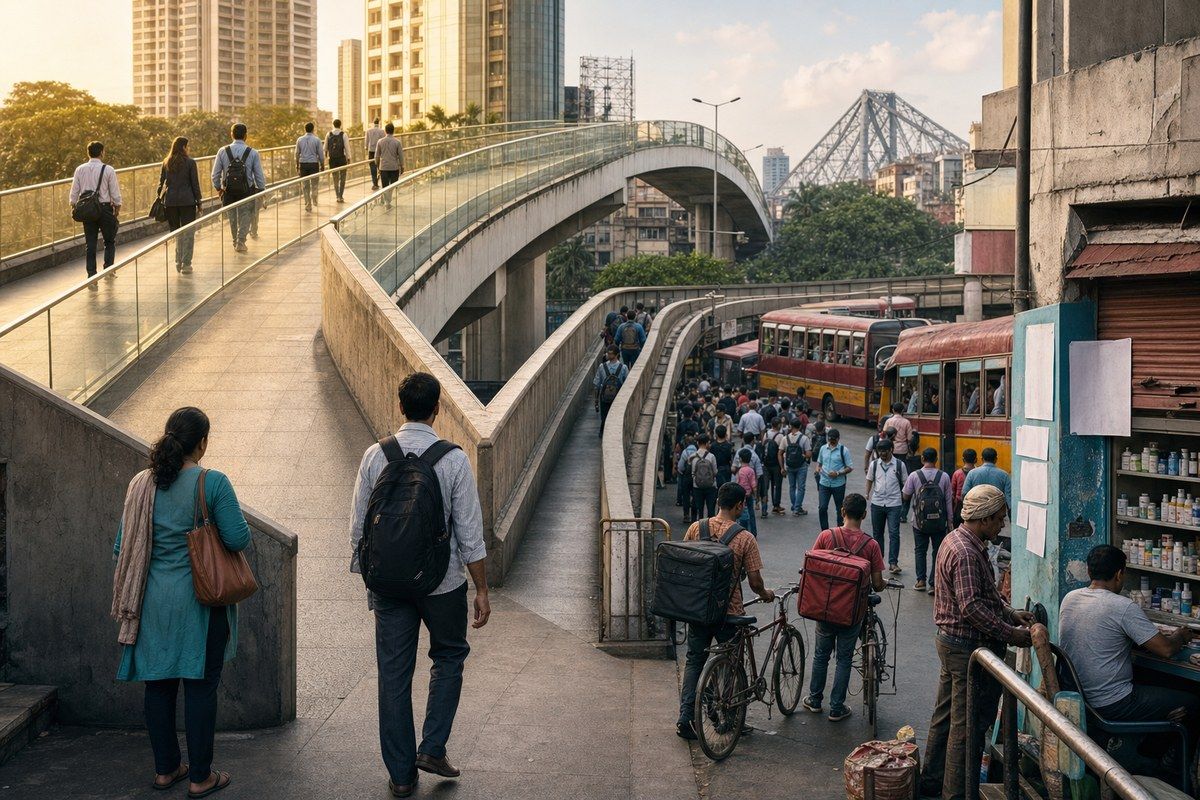
The unpleasant thing about reality is that it is hardest on those who have the least padding. The rich do not experience bad governance as destiny. They experience it as inconvenience. They buy distance. They buy generators, water purifiers, air conditioners, private schools, lawyers, club memberships, diagnostic packages, gated security, airport lounges, and the strange modern ability to live inside a country while touching very little of it. The hardscrabble middle class, lower middle class, and poor live much closer to the machinery. When policy fails, it lands on them not as analysis but as fever, debt, delay, humiliation, queue, bribe, form, rejection, eviction, medicine not bought, school fee postponed, mother’s test skipped, son’s job vanished, daughter’s safety negotiated with the world like a bad loan.
This is why political promises are not harmless poetry. They are credit instruments issued against the pain of people who cannot afford default.
A promise made to the comfortable is often ornamental. A promise made to the desperate becomes architecture. It rearranges hope. It delays anger. It tells a man to wait one more year before despairing, a woman to vote once more before giving up, a family to believe that the next scheme, next leader, next party, next allocation, next bridge, next app, next portal, next subsidy, next election will finally convert suffering into something with a receipt.
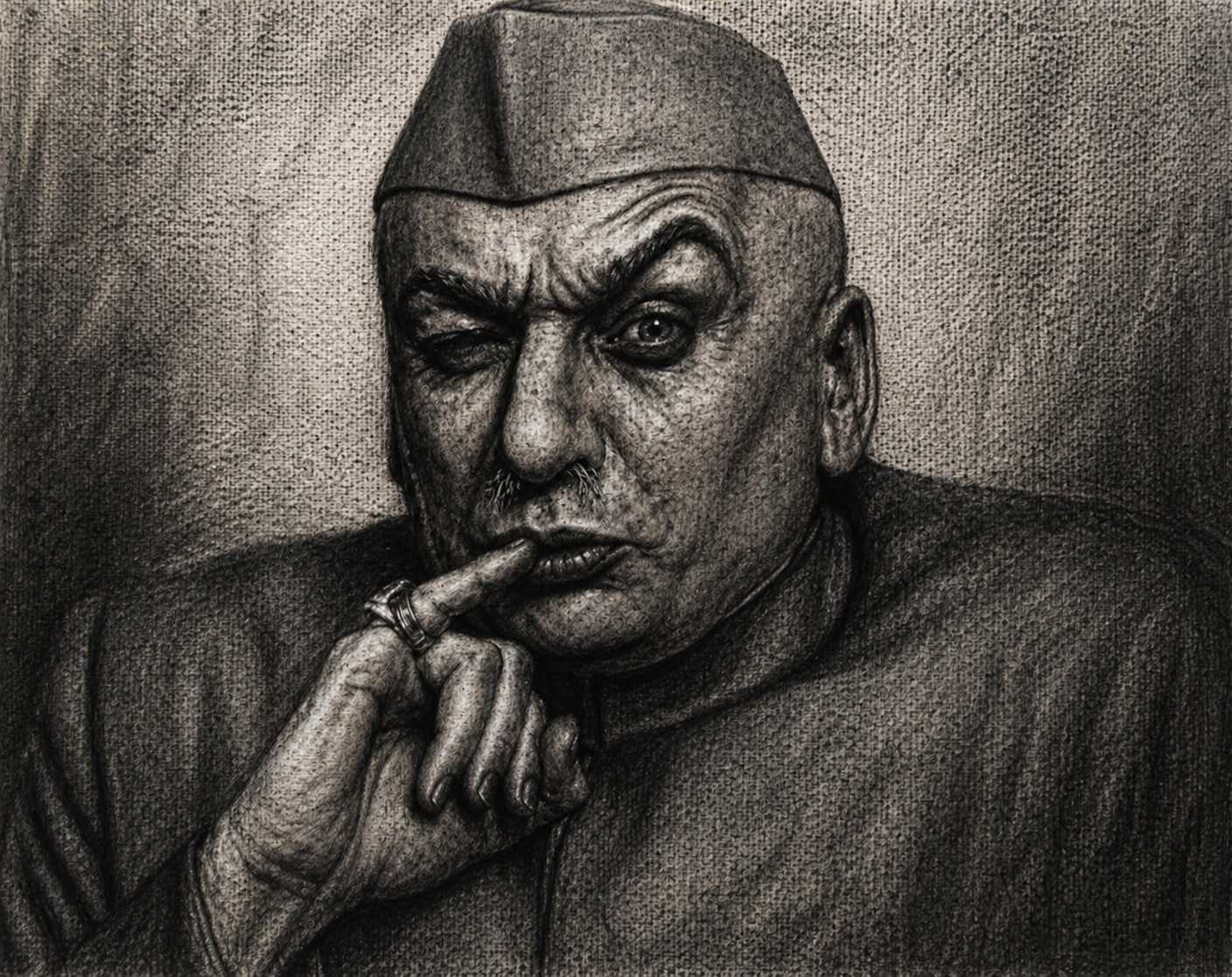
Then comes the old trick. The people elect someone who resembles their anger, their prejudice, their impatience, their wounded pride, their half-digested information, their distrust of expertise, their small cruelties, their religious vanity, their caste arrogance, their class resentment, their fantasy that somebody else is the cause of their own stuck life. And the politician, being no fool, understands the bargain perfectly. He does not need to make them better. He needs to make them feel seen just long enough to acquire power.
After that, the finger rises.
Not always openly. Sometimes it is wrapped in procedure. Sometimes it arrives as silence. Sometimes it appears as “technical delay,” “fiscal constraint,” “legacy issue,” “global headwinds,” “anti-national sabotage,” “previous government’s mess,” “judicial matter,” “committee review,” “administrative bottleneck,” “law and order situation,” or that grand old subcontinental instrument, the file that has gone somewhere invisible to die of old age. But the gesture is the same. The voter gave power upward. The elected man converted consent into immunity.
There is a childish version of politics in which the public is innocent and the politician is the sole villain. This is comforting and therefore usually incomplete. Societies do not merely suffer politicians. They manufacture them. A political class is not an alien fungus growing on a marble pillar. It is distilled from the electorate’s fears, myths, loyalties, laziness, aspirations, hatreds, and clever little exceptions. The same citizen who wants honest governance may also want his cousin’s illegal construction protected, his traffic violation forgiven, his son moved ahead in the queue, his religious feelings privileged, his group flattered, his enemy punished, his freebies delivered, his taxes avoided, and his own moral contradictions treated as culture.
The politician studies this with the serene attention of a crocodile near a bathing ghat.
This does not mean the poor deserve exploitation, or that the middle class deserves contempt, or that all voters are fools. That would be too crude, too convenient, and frankly too pleased with itself. Poverty distorts choice. Bad schooling damages judgment. Exhaustion shrinks civic imagination. Constant precarity makes people vulnerable to theatrical certainty. When your life is already a leaking roof, you do not sit under it reading comparative constitutional theory by candlelight while rain drips into the rice tin. You want someone to stop the leak. If the man with the loudspeaker says the leak was caused by immigrants, elites, minorities, foreigners, feminists, students, journalists, intellectuals, history, or the wickedness of people who eat differently from you, the lie may still feel warmer than the damp truth.
This is the tragedy. The people are responsible, but not equally free. The politician is culpable, but not self-created. The system is rotten, but not mystical. It persists because it converts mutual weakness into durable power.
A manifesto is supposed to be a contract between public intention and public action. In practice, it is often a theatrical menu printed by a restaurant with no kitchen, no accounts department, and no fear of food inspectors. Jobs will be created, but the productive base remains weak. Healthcare will be improved, but hospitals remain understaffed and procurement remains corrupt. Education will be transformed, but teachers are absent, curricula are stale, and examination systems reward memory over thought. Prices will be controlled, but supply chains, energy costs, global shocks, and fiscal arithmetic refuse to salute. Corruption will be ended, but the party machinery depends on the very channels it denounces. Law and order will be restored, but selective enforcement is too politically delicious to abandon.
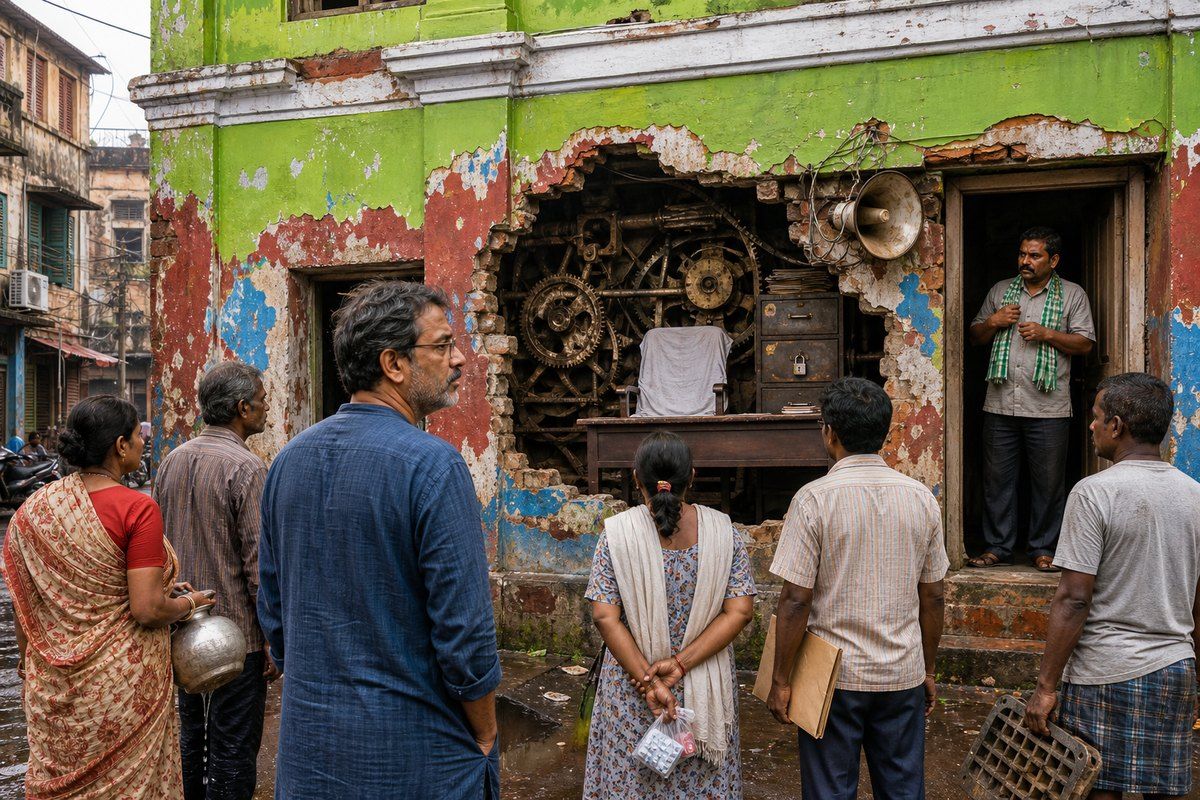
Every promise has two lives. Its first life is rhetorical. Its second life is administrative. The first one belongs to the stage. The second one must survive budgets, personnel, incentives, legal constraints, institutional capacity, local capture, data quality, procurement rules, litigation, implementation timelines, and the thousand small mutinies by which real systems defend their existing arrangements. A government can announce a hospital in four seconds. It cannot staff one in four seconds. It can promise jobs before lunch. It cannot manufacture industries by dinner. It can declare dignity at a rally. It cannot distribute dignity through a corrupted district office where the clerk has discovered that paper, like gold, appreciates under pressure.
The public hears intention. Reality asks for mechanism.
That distinction is everything.
Politics survives by confusing desire with design. People are told that wanting the right thing loudly enough is nearly the same as building it. It is not. A bridge is not built from patriotism. A school is not improved by slogan. A medical system does not become humane because a leader frowns at a podium. A police force does not become honest because the minister says “zero tolerance” with the expression of a constipated eagle. Systems change when incentives change, when budgets match commitments, when local discretion is monitored, when data is honest, when institutions can say no, when courts move within human time, when civil servants face consequences, when citizens can obtain services without begging, when political financing becomes less parasitic, when implementation is treated as the work rather than the boring appendix to the speech.
But implementation is where romance goes to get dengue.
This is why reality keeps punishing the same classes. The wealthy do not require the state to function well in order to survive. The poor and lower middle class do. They need the public school to teach, the government hospital to treat, the ration shop to deliver, the police station not to terrorize, the municipality to drain, the court to move, the bus to run, the examination to be fair, the job market not to be a slaughterhouse disguised as aspiration. Their lives depend on public systems working at the point of contact. That point is exactly where the state is often weakest.
A nation may have magnificent policy documents and still fail at the counter where an old man is told to return tomorrow.
The middle class, meanwhile, lives in a special kind of political hallucination. It is educated enough to feel betrayed, but not powerful enough to be exempt. It pays enough to resent the poor, but not enough to join the protected rich. It despises corruption in general and practices negotiation in particular. It wants meritocracy until merit threatens family advantage. It wants clean cities but cheap domestic help, rule of law but flexible enforcement, modernity without social discomfort, development without displacement, democracy without the annoyance of people who vote differently. Its tragedy is that it sees through many lies but remains dependent on several.
The lower middle class suffers the worst psychological squeeze. It is close enough to poverty to smell the pit and close enough to respectability to feel ashamed of slipping. It lives one medical emergency, one failed exam, one job loss, one rent increase, one unpaid loan, one political riot, one bad monsoon away from collapse. Political promises reach this class with surgical precision because they do not need to promise paradise. They only need to promise not falling.
That is why the language of politics is full of rescue. Save the nation. Save the poor. Save the farmers. Save religion. Save culture. Save youth. Save women. Save democracy. Save jobs. Save the middle class. Save the future. There is always a fire, always a villain, always a savior, always a deadline, always a flag large enough to cover the missing accounts.
Reality, being rude, asks what was actually saved.
Often the answer is power.
Power is the most successful welfare scheme ever designed for those who already possess it. Once acquired, it builds insulation around itself. Elections are supposed to provide accountability, but accountability is not automatic. It requires memory, information, alternative leadership, institutional independence, civic courage, and enough material security for voters to punish failure rather than cling to patronage. Where people are dependent on local brokers for jobs, permits, protection, welfare access, contracts, hospital beds, or police mercy, voting becomes less like judgment and more like survival behavior.
The poor man may know perfectly well that the leader is a thief. But the thief’s local agent can get his paperwork moved. The honest reformer may be admirable, but admiration does not get insulin for your mother by Tuesday.
This is one of democracy’s unpleasant little jokes. Information is necessary, but not sufficient. A voter may know the truth and still be unable to act on it because the local economy of dependence punishes clean choices. You can tell a man the bridge is structurally unsound. If his only route to work runs across it, he will cross.
The deeper failure, then, is not only broken promises. It is broken bargaining power.
Citizens are told they are sovereign. Then they spend five years behaving like petitioners. The ritual says they are masters. The office says they are nuisances. The campaign says their voice matters. The department says come after lunch. The leader says the people are supreme. The constable says move aside. The state worships the voter in aggregate and humiliates the citizen in particular.
This split is the central fraud.
The electorate is sacred before voting day because it is useful. The citizen after voting day is merely a workload.
And yet, people keep believing. Not because they are stupid in some simple way, but because disbelief is expensive. To fully understand that nobody is coming is not a neutral intellectual achievement. It is a psychological injury. Most people need a small installment plan of hope to continue. Political promises provide this. They turn structural abandonment into a manageable calendar. Wait for the next budget. Wait for the next scheme. Wait for the next recruitment cycle. Wait for the next leader. Wait for the next court order. Wait for the next generation.
Waiting becomes a civic religion.
Meanwhile, life proceeds with the quiet brutality of arithmetic. Food prices rise faster than patience. Medical bills arrive with the confidence of invading armies. Private education sells anxiety in monthly installments. Rent eats salary. Salary arrives late. Public transport deteriorates. The job market demands skills that the education system never taught. Artificial Intelligence [AI, software systems that perform tasks previously associated with human reasoning, prediction, language, or pattern recognition] begins chewing through clerical and technical work. Young people prepare for examinations that resemble lotteries run by monks with carbon paper. Older people discover that their bodies have become expensive. Parents age. Children need. Teeth rot. Knees fail. Dreams become smaller, then practical, then faintly comic.
The political class knows this too. It does not need to solve despair. It needs to manage its temperature.
Too much despair becomes unrest. Too little despair becomes independence. The ideal citizen, from the viewpoint of cynical power, is anxious, dependent, distracted, angry at the wrong target, proud of symbolic victories, suspicious of outsiders, grateful for crumbs, and too tired to audit the bakery.
This is where spectacle becomes governance’s loyal servant. If roads are broken, hold a parade. If unemployment grows, rename something. If hospitals fail, announce a medical college. If food hurts the household budget, discuss civilization. If schools decay, introduce moral instruction. If corruption becomes visible, arrest a rival. If women are unsafe, make a speech about motherhood. If young men are jobless, give them enemies. If the poor are restless, give them a scheme. If the middle class is angry, give it a villain on television. If the lower middle class is sinking, give it a slogan that floats for exactly one election season.
The amazing thing is not that this works. The amazing thing is that it has to keep working every few years in almost the same form, like a street magician pulling the same sick pigeon from the same velvet hat while the crowd politely gasps.
But the crowd also knows. That is the strange part. The people are not always fooled. They are often trapped between contempt and dependence. They laugh at politicians, abuse them over tea, forward jokes, mutter darkly in buses, curse the police, mock the bureaucracy, distrust the courts, and still return to the booth because abstention does not repair the drain either. Cynicism does not produce a schoolteacher. Moral superiority does not generate drinking water. Refusing to vote does not prevent the worst people from voting with discipline.
So politics continues as a shabby negotiation with disappointment.
The promise-maker knows he will not deliver fully. The voter knows the promise is inflated. Both participate in a market of exaggeration because the honest version sounds unbearable. “We will marginally improve procurement transparency, reduce leakage in two schemes, and perhaps repair 18 percent of your local road network if the contractor does not vanish” is not a slogan. It is probably closer to useful government, but it will not make a crowd roar. A crowd wants the future served hot.
This is not a defense of lying. It is an indictment of the emotional economy that rewards it.
The most dangerous promises are not the impossible ones. People often recognize those. The most dangerous promises are the plausible lies, the ones that borrow the grammar of policy while hiding the absence of institutional repair. A jobs promise without industrial strategy. A healthcare promise without staffing models. A digital governance promise without grievance redressal. A welfare promise without fiscal sustainability. An education promise without teacher accountability. An anti-corruption promise funded by opaque political money. A law-and-order promise built on selective cruelty. A development promise that counts concrete poured but not lives displaced, wetlands destroyed, debts created, or maintenance ignored.
Reality eventually audits every missing clause.
And the audit is paid in human time.
Time is the poor person’s most stolen asset. The rich lose money and hire representation. The poor lose days. They stand in lines, revisit offices, correct spellings, chase certificates, prove identity, prove poverty, prove eligibility, prove residence, prove existence. Every failed promise becomes paperwork. Every badly designed scheme becomes a pilgrimage. Every corrupt interface becomes a tax on the body. Every delayed benefit becomes interest charged against hunger.
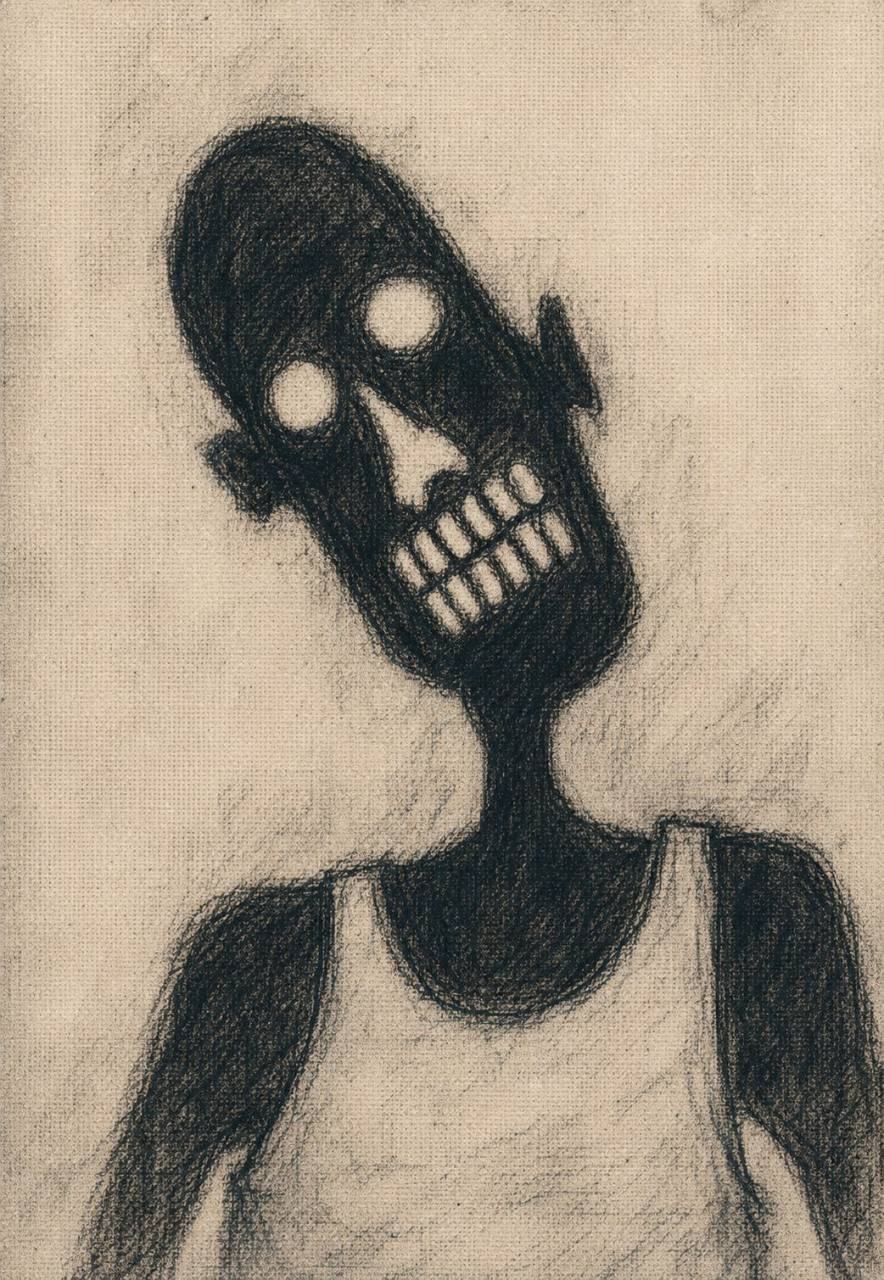
This is why “people die silently” is not rhetoric. It is a demographic fact experienced privately. They die by postponement. They die because the test was too expensive, because the hospital was too far, because the ambulance did not come, because the medicine was skipped, because the job never arrived, because the debt collector did, because the heat was too much, because the drain bred mosquitoes, because the bridge failed, because the police did not care, because the file did not move, because the promised world remained under construction.
No great thunderclap. No cinematic tragedy. Just attrition.
The middle class also dies silently, though with more documentation. It dies through blood pressure, diabetes, loneliness, debt, panic, resentment, and the slow conversion of personality into complaint. Its members do not always fall into poverty, but they live under the permanent threat of downward motion. They develop the moral tics of people who feel cheated but cannot identify the full mechanism. They blame servants, migrants, minorities, traffic, children, parents, neighbors, foreign conspiracies, modern women, old customs, new technology, bad luck, and occasionally themselves. They rarely blame the entire arrangement because the entire arrangement is too large to fit into the hand. Better to grab a smaller neck.
This is how bad politics becomes social poison. It does not merely fail to deliver. It teaches people to misrecognize the source of their pain.
The politician says, “Your enemy is there.” Reality says, “Your enemy is also the structure that made you need an enemy.”
That sentence is harder to campaign on.
One should be careful, however, not to drift into grand despair as if despair were intelligence wearing a black coat. Despair can be accurate and still useless. The fact that no heaven waits at the end, no celestial compensation counter where the clerk says, “Ah yes, you endured potholes, inflation, betrayal, and dental pain; please proceed to eternal light,” does not make life meaningless. It makes life non-refundable.
Ram ram, as they say. Except perhaps the phrase should not be treated as theology. It can be treated as a shrug, a village bell, a little human sound made at the edge of helplessness. People say such things because the alternative is to scream continuously, and even screaming has maintenance costs.
If there is no afterlife, then justice cannot be outsourced to the clouds. If there is no heaven, then compensation must be earthly or not at all. If there is no cosmic accountant, then the unpaid bill remains unpaid. That makes politics more serious, not less. It means every broken public hospital matters. Every false jobs promise matters. Every cynical school reform matters. Every bridge built badly matters. Every riot encouraged for votes matters. Every regulatory failure matters. Every stolen rupee matters because it is stolen from the only life people certainly have.
The secular view is not cold. It is intolerably warm. It says this is it. This fever, this rent, this toothache, this monsoon, this exam, this old mother, this failing city, this one body, this one afternoon.
So what is left?
Not purity. Purity is mostly a luxury good. Not optimism. Optimism, in these matters, often behaves like a motivational speaker who has never visited a municipal ward office. Not revolution as fantasy. Revolutions also require administration the morning after, and the morning after is where many beautiful slogans discover sewage engineering.
What remains is a harder civic modesty.
Ask not only what is promised, but what machinery would deliver it. Ask who pays, who administers, who audits, who benefits, who loses discretion, who gains power, what data is collected, what grievance path exists, what happens when the portal fails, what happens when the local broker intervenes, what happens after the ribbon is cut, what happens in year three when maintenance is boring and nobody is photographing the drain.
This sounds dull. Good. Dullness is where serious public life begins. The opposite of corrupt spectacle is not moral thunder. It is boring competence with teeth.
Citizens should distrust total explanations. Any leader who can explain every problem with one enemy is selling political baby food. Any party that promises dignity without institutional repair is selling perfume for a corpse. Any movement that flatters the people without challenging their prejudices is not emancipating them; it is fattening them for use. Any politics that requires permanent hatred is not a program. It is a furnace looking for fuel.
The voter’s duty is not to become saintly. That will not happen. The duty is to become harder to cheat in the same old ways.
This means memory. Remember what was promised. Remember what was delivered. Remember who changed the subject. Remember who profited from delay. Remember who used identity to hide incompetence. Remember who treated questions as disloyalty. Remember who made administration more transparent and who made it more theatrical. Remember not only the big betrayal but the small pattern. Democracies rot by pattern.
It also means refusing the private exception when possible. A society cannot demand clean politics while treating every rule as an obstacle to be privately negotiated. The citizen who bribes, jumps the queue, excuses his own group, forwards lies, worships strongmen, and then complains of corruption is not outside the system. He is a franchise outlet.
This is uncomfortable because it removes the pleasure of total innocence. Good. Total innocence is for children, martyrs, and public relations brochures.
Still, the burden cannot be placed equally on citizens and rulers. Power must carry heavier blame because power has heavier consequence. A hungry voter’s bad judgment is tragic. A minister’s bad faith is predatory. A poor man’s prejudice is ugly. A party’s industrial-scale manipulation of prejudice is monstrous. A citizen’s ignorance may harm his own vote. A leader’s deliberate corruption of public reason can deform a generation.
The resemblance between people and politicians is real, but it is not symmetrical. The politician amplifies the worst in the public because the worst is politically efficient.
That is the bitter engineering of it.
The clean solution is blocked by several hard constraints. Electoral competition rewards immediacy. Institutional reform is slow. Voters punish pain faster than they reward prevention. Political financing remains hungry. Bureaucracies resist transparency. Courts move unevenly. Media can be captured, exhausted, or converted into noise. Citizens want honesty in general and favoritism in particular. Poverty keeps people dependent. Identity supplies cheap solidarity where public services fail. Technology improves delivery in some places and automates exclusion in others. Every reform becomes a new battlefield because every leak is also someone’s income.
There is no single lever marked “fix politics.” There is only a room full of rusted pulleys, several snakes, and a clerk on leave.
But the absence of a clean solution is not the same as the absence of direction. The direction is toward enforceable promises, transparent fiscal claims, local service guarantees, independent audit, serious civic education, stronger public data, faster grievance correction, reduced discretionary power at the point of service, and political cultures that treat implementation as nobler than announcement. It is toward citizens who ask less often “Who is our savior?” and more often “What is the delivery mechanism?” It is toward parties being judged not by emotional voltage but by administrative truth.
The best politics does not abolish disappointment. It reduces avoidable cruelty.
That may sound small only to people who have never depended on a public counter.
For those living close to the hard floor of reality, small improvements are not small. A working clinic is not small. A fair exam is not small. A pension arriving on time is not small. A police station that records a complaint is not small. A clean drain is not small. A schoolteacher who teaches is not small. A bus that comes is not small. A government office that does not demand worship is not small. These are the quiet infrastructures of human dignity.
And dignity, unlike a campaign promise, must survive contact with Monday morning.
So yes, the situation may keep dribbling into pain. Many people will be unable to defeat the times. Some will perish quietly, without obituary, without compensation, without history noticing the exact shape of their exhaustion. That is not a reason to decorate despair. It is a reason to become less available to fraud.
Live as best as your abilities allow, but do not confuse private endurance with public justice. Endurance is what people do when systems fail them. Justice is what systems owe them so that endurance is not the national religion.
Reality is hard. Politics often lies. People are compromised. Leaders exploit compromise. Time eats everyone.
Still, while alive, one can at least refuse to be fooled cheaply.
Related Posts
Word Cloud
Related reading
Selected by shared topics and section, with closer publication dates breaking ties.