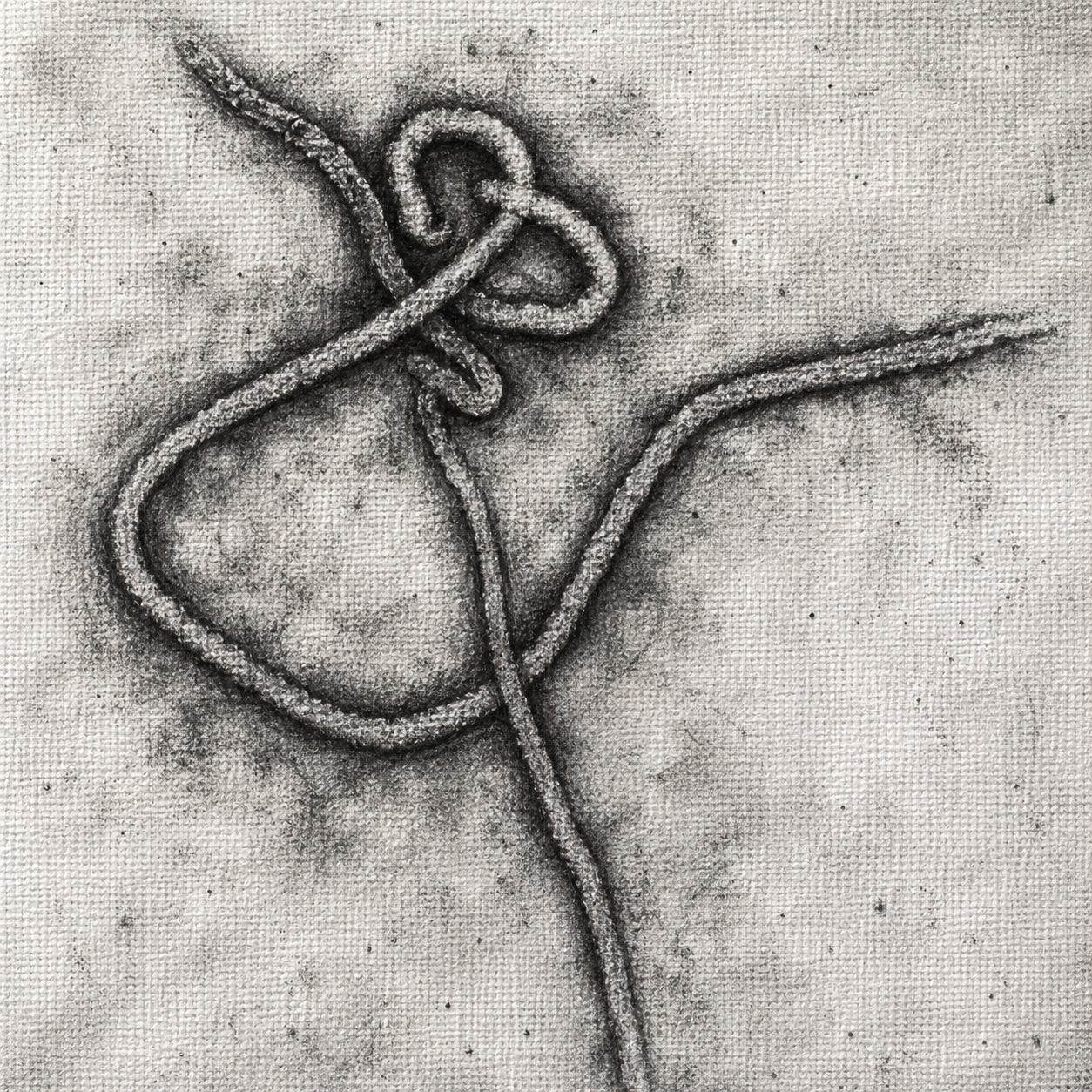
Cicada, BA.3.2
Uses the speech voice supplied by your browser or device.

Acronyms expanded in this post:
- AI: Artificial Intelligence. software that generates, classifies, predicts, summarizes, or acts on patterns in data.
- BA: variant lineage naming. a branch name used in SARS-CoV-2 variant tracking.
- COVID: Coronavirus Disease. the disease caused by SARS-CoV-2.
- IT: Information Technology. the practice of building, operating, and supporting computing systems.
- SARS-CoV-2: Severe Acute Respiratory Syndrome Coronavirus 2. the virus that causes COVID.
The striking thing about BA.3.2 is not that it is merely another Omicron descendant. It is that it behaves like a lineage that somehow stepped out of a side corridor of viral history, reappearing long after its apparent ancestral branch had faded from ordinary circulation. That is why the informal nickname “Cicada” caught on. Not because viruses are insects, obviously, but because BA.3.2 seems to have emerged after a long, quiet interval, much as periodical cicadas surface after years out of sight.
A precision point matters at the outset. BA.3.2 is a World Health Organization (WHO) Variant Under Monitoring, or VUM. It is not the only one on WHO’s list. It sits there alongside other monitored lineages such as NB.1.8.1 and XFG. The point is not bureaucratic tidiness. The point is that “under monitoring” is a surveillance category, not a declaration that a lineage is dominant, more severe, or the single most important thing in circulation.
Still, BA.3.2 deserves attention because its trajectory is odd, and odd trajectories in SARS-CoV-2 evolution are usually where the interesting biology lives.
The lineage was first documented from a sample collected in South Africa on 22 November 2024. Phylogenetically, it descends from BA.3, an Omicron branch that circulated at low levels and then largely disappeared in early 2022. Most successful SARS-CoV-2 variants do not vanish for years and then return in a highly altered form. They rise, compete, get outcompeted, and disappear on a much shorter clock. BA.3.2 did something different. It appears to have evolved off the ordinary epidemiologic stage, accumulated a large mutational burden, and then re-entered view.
That is why the “Cicada” comparison is apt. Evolutionary biologist T. Ryan Gregory used the name because the lineage seems to have emerged nearly three years after its immediate BA.3 ancestor had effectively gone quiet in the visible population. It is not a formal WHO name. WHO uses Pango-style lineage labels for technical tracking. But the nickname captures the central fact better than most headlines do: this was not the usual linear handoff from one dominant public variant to the next.
And that unusual history immediately raises the harder question. Where was it evolving?
The most plausible theory is prolonged evolution in a single immunocompromised person with persistent infection. That hypothesis is neither exotic nor speculative in the hand-waving sense. We have seen versions of this before. Chronic infection creates a peculiar evolutionary environment: the virus is not simply optimizing for short-cycle transmission between hosts. It is instead mutating under prolonged immune pressure within one host, often across tissue compartments that may not be sampled routinely. The result can be saltational evolution, meaning not smooth stepwise drift but a lurch forward with a dense cluster of changes.
That matters because BA.3.2 is heavily diverged in spike. WHO’s initial risk evaluation described it as differing from BA.3 by 53 spike mutations. More recent reporting has framed the practical comparison differently: relative to currently relevant JN.1-lineage vaccine targets such as JN.1 and LP.8.1, BA.3.2 carries roughly 70 to 75 substitutions and deletions in spike. Those two statements are not contradictory. They are simply different reference frames. One compares BA.3.2 to its ancient BA.3 ancestor. The other compares it to what much of the immune landscape has more recently been trained against.
This is where the biology becomes more interesting than the headlines.
BA.3.2 is strongly immune evasive in laboratory studies. Neutralization is reduced. Sera from previously infected or vaccinated individuals do less well against it than against currently circulating JN.1-descended lineages. Pre-Omicron cohorts in particular showed near-complete loss of neutralizing activity in some reports. That sounds alarming, and in a narrow virologic sense it is. But immune evasion alone is not the whole game. A virus must also enter cells efficiently enough to spread.
BA.3.2 appears to pay a price there.
Several studies have pointed to low angiotensin-converting enzyme 2, or ACE2, binding capability and reduced infectivity compared with what one might expect from such a heavily drifted spike. In plain language, the same mutational architecture that helps the lineage dodge neutralizing antibodies seems also to make it worse at grabbing the cellular doorway it uses to initiate infection. That is not a contradiction. It is an evolutionary trade-off. The spike can hide antigenic surfaces from immune recognition and, in doing so, compromise some of the conformational behavior that supports efficient receptor engagement.
This is the part that gets flattened in public discussion. People hear “highly mutated” and imagine inevitable dominance. Biology does not work that way. Mutation load is not a superpower. It is bookkeeping. What matters is which functions were improved, which were damaged, and whether the net package beats competitors in the real world. BA.3.2 seems to be a useful reminder that a variant can become much better at immune escape without becoming proportionately better at transmission.
WHO’s current position reflects exactly that ambiguity. BA.3.2 demonstrates antigenic drift and reduced neutralization in vitro, yet currently approved COVID-19 vaccines are still expected to continue protecting against severe disease. WHO has also said that available data do not indicate increased severity, hospitalization, or death attributable to this lineage. That distinction is important and familiar by now, though too often stated lazily. Vaccine match for infection prevention and vaccine protection against severe disease are not the same thing. The first can erode substantially while the second remains materially useful.
So the real story is not that BA.3.2 has defeated vaccination. It has not. The real story is that the lineage expands the antigenic search space of the virus while not yet showing the kind of sustained competitive growth that would make it an obvious global replacement lineage.
That said, the surveillance picture is now muddy enough that false confidence is easy.
In the United States, BA.3.2 had been detected in wastewater in 29 states and Puerto Rico as of mid-March 2026, alongside detections in travelers, patients, and airplane wastewater. Those numbers are useful, but they are also a little deceptive. Wastewater is an excellent alarm bell and a poor substitute for fine-grained epidemiology. It tells you something is there. It does not always tell you exactly how much of it is there, who is infected, how clinical severity is distributed, or whether the apparent signal reflects stable spread or patchy introduction. Add to that the erosion of routine clinical testing, reduced sequencing, and thinner public-health funding, and you get the modern surveillance paradox: we know enough to notice unusual evolution, but increasingly not enough to map it with confidence.
That decline in resolution matters more than most governments care to admit. When sequencing volume falls, uncertainty does not politely remain in the spreadsheet. It seeps outward into risk communication, vaccine-updating decisions, clinical anticipation, and public behavior. We stop seeing the viral landscape clearly and start inferring it from fragments. BA.3.2 is therefore not just a virology story. It is a systems story about what happens when a still-evolving pathogen meets a tired surveillance architecture.
There is also a subtler lesson here about the wrong mental model for variant evolution.
People often imagine the virus as climbing one obvious ladder toward being “worse,” by which they usually mean more transmissible, more severe, more immune evasive, all at once. Real viral evolution is less cinematic and more like engineering under constraints. Improve one subsystem and you may degrade another. BA.3.2 seems to embody that logic. It acquired a spike profile that gives it substantial antibody escape, yet that same structure may hold the receptor-binding machinery in a less favorable state for efficient entry. This is not a failed variant. It is a constrained one.
And constrained variants matter because descendants can solve the constraint.
That is the strategic concern. Not that BA.3.2 itself will necessarily dominate the world, but that it may furnish a new evolutionary starting point from which fitter descendants emerge. We saw something broadly similar in spirit, though not in exact mechanism, when BA.2.86 drew intense scrutiny and then its descendant JN.1 found a more competitive balance. Evolution often works like that: a strange lineage appears, looks too awkward to win, then one or two additional changes turn awkward into advantage.
This is why dismissing BA.3.2 because it has not yet exploded would be as silly as panicking because it is heavily mutated. Both reactions are shortcuts. The right posture is narrower and harder. Watch its descendants. Watch whether the receptor-binding handicap is compensated. Watch whether growth moves from local irregularity to sustained multi-region expansion. Watch whether the apparent age skew seen in some signals, especially among children, proves biologically real or turns out to be a surveillance artifact. Above all, watch whether public-health institutions still have enough sequencing density to know the answer before the answer becomes obvious the hard way.
Clinically, the message remains rather plain. There is no convincing evidence that BA.3.2 causes more severe disease than other contemporary Omicron-descended lineages. Current vaccines are still expected to reduce the risk of severe outcomes. Antivirals do not appear broadly undermined. None of that makes BA.3.2 trivial. It simply places the concern in the right compartment. This is not primarily a severity story. It is an evolutionary surveillance story with immunologic implications.
The deeper truth is slightly uncomfortable. We are now in a phase of the pandemic in which the virus is still being studied with fine technical sophistication while the public systems meant to observe it in real time are being allowed to thin out. That is not scientific maturity. It is institutional fatigue. BA.3.2, “Cicada,” is therefore memorable not only because of its delayed emergence but because it exposes the mismatch between viral evolution and human attention. The virus continues to search the design space relentlessly. Our monitoring of that search has become intermittent, underfunded, and politically inconvenient.
That is the unique trajectory worth noticing.
Not merely that an old branch seemed to surface after a long silence, but that it did so at a moment when many countries are less able than before to tell, quickly and precisely, whether a strange lineage is a curiosity, a warning, or the first draft of something more consequential.
Related Posts
Word Cloud
Related reading
Selected by shared topics and section, with closer publication dates breaking ties.