Facial Pleasure Receipts
Uses the speech voice supplied by your browser or device.

Acronyms expanded in this post:
- AI: Artificial Intelligence. software that generates, classifies, predicts, summarizes, or acts on patterns in data.
- IT: Information Technology. the practice of building, operating, and supporting computing systems.
The modern face is no longer a face. It is a notarized document. It certifies enthusiasm, compliance, resilience, team spirit, emotional maturity, spiritual hygiene, market readiness, and the absence of inconvenient despair. The old human face, with its storms and bad weather, has been replaced by a service counter display: Thank you for your suffering. Please rate this experience.
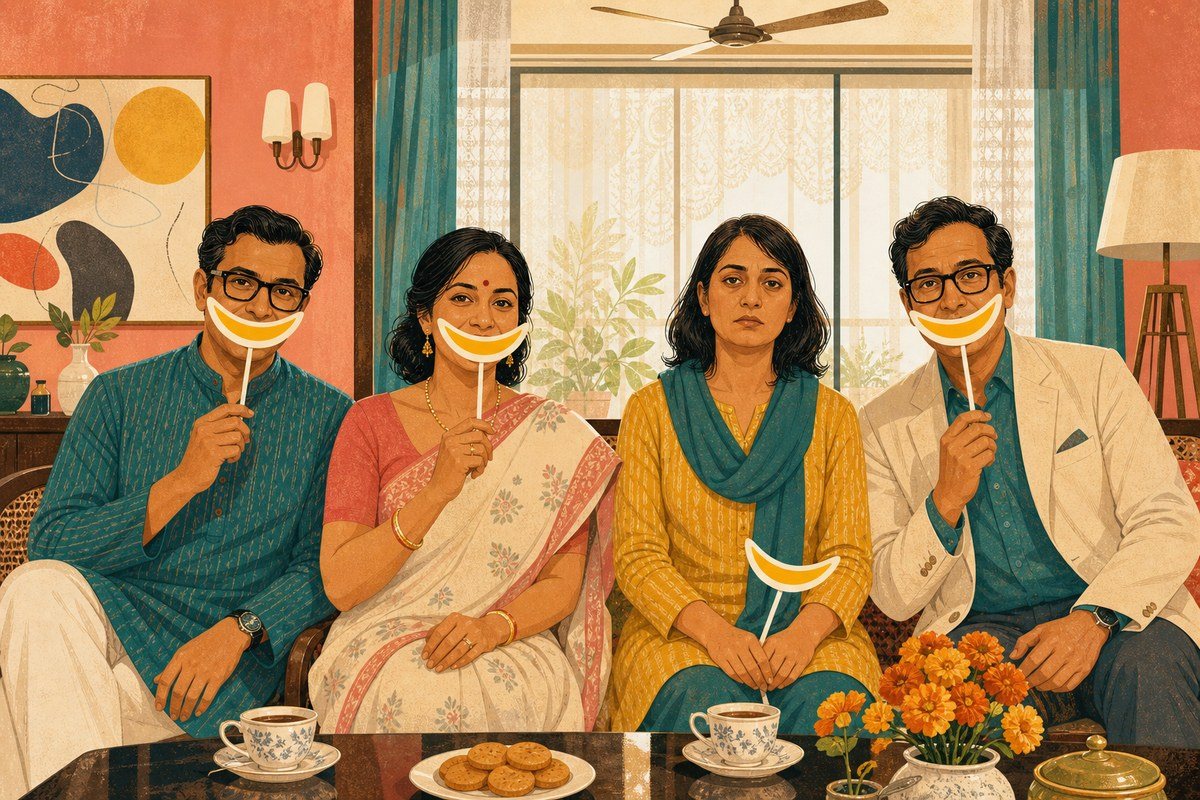
We are asked to produce facial pleasure receipts even when something is rotting inside us. Smile at the meeting. Smile at the wedding. Smile at the hospital billing desk. Smile when the recruiter asks why you are excited about an opportunity that is plainly a small cage with dental insurance. Smile when the neighbor asks how things are, not because he wants to know, but because the question is a password and the answer must be, “Good, good,” the civic hymn of the quietly perishing.
This is not politeness. Politeness was once a modest technology for preventing daily life from becoming knife practice. You said please, held the door, lowered your voice near the sick, and did not discuss boils over lunch unless you were a physician, a sadist, or British. Modern euphemism is different. It does not merely soften reality. It launders it. It puts a lavender sachet in the coffin and calls the corpse “transitioning into a new wellness posture.”
Every age has had its disguises, but ours has industrialized them. A firing becomes a workforce optimization. Exhaustion becomes burnout, which sounds unpleasant but also oddly artisanal, like something you might purchase in a Brooklyn candle shop. Poverty becomes financial insecurity. Exploitation becomes opportunity. Surveillance becomes personalization. Loneliness becomes user engagement. Dying becomes end-of-life care planning, which may be medically necessary language, but in the wrong mouth can sound like a hotel checkout procedure performed by angels with clipboards.
The horror is not that we use euphemisms. Some euphemisms are merciful. No decent person tells a child that grandmother has become a biochemical event. Human speech needs gauze. But gauze can cover a wound, or it can hide the gangrene from the inspector. Modern society increasingly prefers the second use. It wraps the infected limb, sprays the room, dims the light, and asks everyone to comment on the excellent patient experience.
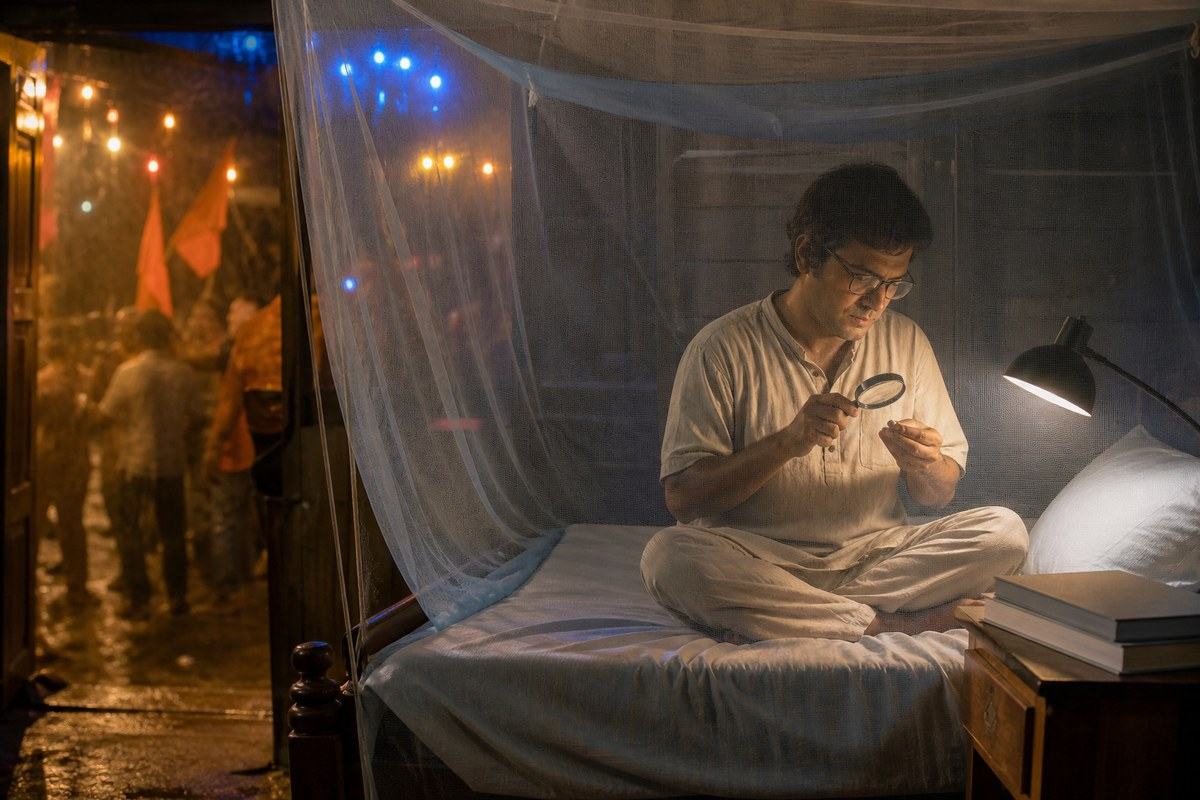
In Calcutta, the pantomime has its own humidity. The city has genius, filth, tenderness, decay, comic resilience, antique arrogance, and a population trained by history to survive on improvisation so elaborate it should have its own ministry. A man with no secure job, no clean air, no reliable public system, and no privacy is still expected to present himself as socially functioning, matrimonially eligible, politically grateful, spiritually rooted, and lightly amused. He may be drowning, but he must not splash. Splashing is considered vulgar.
In America, the same theater is air-conditioned. The lighting is better. The despair has branding. The cosmopolitan professional says “I’m just super busy” when he means his soul has been turned into spreadsheet paste. He says he is “navigating some transitions” when he means the floor has opened under him. He says he is “prioritizing self-care” when he means he is trying not to scream into the refrigerator at 2 a.m. The American genius is not that it avoids suffering. It converts suffering into a dashboard.
The two worlds differ in upholstery, not in principle. In Calcutta, one may be trapped by family reputation, bureaucracy, debt, superstition, social suffocation, and the ancient neighborhood surveillance system run by aunties whose intelligence network would embarrass the Central Intelligence Agency [CIA, the American foreign intelligence service]. In America, one may be trapped by debt, employment precarity, medical bills, polite isolation, algorithmic judgment, and a corporate smile so smooth it appears to have been grown in a laboratory. In both places, the suffering person is told to maintain the surface.
This is the real artificial sophistication of life. It is not sophistication in the old sense, where one had read a little, suffered a little, learned restraint, and acquired the useful knowledge that people are fragile bags of weather. It is sophistication as choreography. You learn when to smile, when to laugh, when to say “interesting,” when to declare excitement, when to conceal contempt, when to agree that a grotesque absurdity is actually a strategic realignment. It is civilization as synchronized lying.
The face becomes the interface between private collapse and public manageability. Inside: grief, panic, envy, boredom, shame, rage, digestive trouble, a childhood injury still glowing like a coal. Outside: “Doing great.” This is not hypocrisy in the simple moral sense. It is adaptive camouflage. People do it because the social world punishes the unedited face. The person who says exactly what is wrong is treated as unstable, negative, intense, unprofessional, dramatic, or worst of all, “not a good fit,” that lovely modern phrase meaning the organism has rejected the transplanted conscience.
There is a deep cruelty in demanding cheerfulness from those who have been structurally cornered. It makes the victim responsible not only for enduring the wound, but for decorating it. Smile through poverty. Smile through racism. Smile through caste humiliation. Smile through a dead-end job. Smile through illness. Smile through family tyranny. Smile through failed institutions. Smile through the soft violence of being told that your pain is merely a mindset problem. The whip has become ergonomic.
Euphemism performs its dirtiest work when it converts moral problems into aesthetic inconveniences. A slum is not a slum; it is an underserved community. A patient neglected by a broken system has experienced a gap in care. A worker made disposable by financial engineering is part of a rightsizing initiative. The words do not merely describe the world badly. They move blame around the room like a magician moving a coin. The sentence ends, and somehow no one has done anything.
This is why synthetic expression is so often paired with synthetic language. The mouth smiles while the vocabulary disinfects the crime scene. “We value your feedback.” “We appreciate your patience.” “Your call is important to us.” “We are committed to transparency.” These are not sentences. They are institutional wallpaper. They cover cracks large enough for whole families to fall through.
The most frightening part is how quickly the mask becomes muscle. At first you smile because you must. Later you smile because you no longer know what your unsmiling face means. The performance colonizes the performer. The office face follows you home. The family face enters the bathroom. The romantic face appears during loneliness. The public face keeps grinning in the dark like a mechanical toy whose batteries should have died years ago.
There is something vampiric about it. Not the theatrical vampire with a cape and a property in Transylvania, but the social vampire: the system that feeds on expression while leaving the person pale and obedient. It does not drink blood directly. Too messy. It drinks affect. It asks for warmth, positivity, engagement, gratitude, emotional availability, and quick responses. It wants the sparkle of life without paying for the conditions that make life sparkle.
Against this, plain speech becomes a small act of hygiene. Not rudeness. Not the adolescent pleasure of saying ugly things because ugly things sound brave. Plain speech is more demanding than that. It says: this is grief, not a transition. This is exploitation, not hustle. This is loneliness, not independence. This is fear, not caution. This is institutional failure, not an unfortunate experience. This is a person in pain, not a case requiring better messaging.
But plain speech has limits. No society can survive total emotional nudity. Nobody wants every bus ride to become a Russian novel. Civilization requires some editing. The question is who benefits from the edit. When a person softens his sorrow to spare a friend, that is kindness. When an institution softens its violence to escape accountability, that is propaganda wearing moisturizer.
Perhaps the honest face need not be a permanently tragic face. The alternative to synthetic smiling is not theatrical misery. It is range. A human face should be allowed weather: irritation, fatigue, doubt, tenderness, blankness, delight, suspicion, grief, and the occasional foolish grin that arrives unannounced like a stray dog. The horror begins when only one expression is permitted, and that expression is compulsory brightness.
A society that cannot tolerate the troubled face becomes stupid in a very specific way. It loses diagnostic capacity. It cannot read distress until distress becomes catastrophe. It cannot hear warning until warning becomes scandal. It cannot see alienation until alienation becomes violence, addiction, withdrawal, collapse, or some private ruin discovered too late by people who say, with terrible innocence, “But he always seemed fine.”
“He always seemed fine” may be the epitaph of the modern age. It is what people say after the mask finally falls off and hits the floor with a noise everyone pretends not to recognize. Fine is the word we use when the truth would require paperwork, courage, money, apology, reform, or love. Fine is the silk sheet over the furniture in the haunted house.
We should be suspicious of every culture, family, company, nation, and polished little social circle that requires cheerfulness as proof of decency. Joy cannot be commanded into existence. It has to grow from tolerable conditions: safety, dignity, health, friendship, meaning, play, rest, justice, some privacy, some beauty, and enough money that life does not become a daily arithmetic of humiliation. Without these, the smile is not evidence of civilization. It is evidence of training.
The human face was not built to be a compliance dashboard. It was built to warn, invite, resist, mourn, desire, question, and occasionally betray us with embarrassing honesty. To demand that it forever advertise pleasure is to make the face into a billboard above a burning building. The flames remain. The billboard says, Welcome Home.
Related Posts
Word Cloud
Related reading
Selected by shared topics and section, with closer publication dates breaking ties.