The Rotten Sack Theory of Indian Politics
Uses the speech voice supplied by your browser or device.

ADR — Association for Democratic Reforms, an Indian civil-society organization that studies elections, candidate affidavits, political funding, criminal cases, and wealth declarations.
FPTP — First-Past-the-Post, the election system where the candidate with the highest number of votes in a constituency wins, even without majority support.
DBT — Direct Benefit Transfer, the system by which government benefits are sent electronically into bank accounts.
EVM — Electronic Voting Machine, the device used in Indian elections to record votes.
MP — Member of Parliament, an elected representative in the national legislature.
MLA — Member of Legislative Assembly, an elected representative in a state legislature.
RTI — Right to Information, the legal mechanism by which citizens can request information from public authorities.
SBI — State Bank of India, the public-sector bank that issued Electoral Bonds under the now-struck-down political funding scheme.
Indian politics is not a basket of rotten mangoes; it is a sack that has learned, over many years, how to keep producing bruised fruit and then act deeply surprised when the room begins to smell.
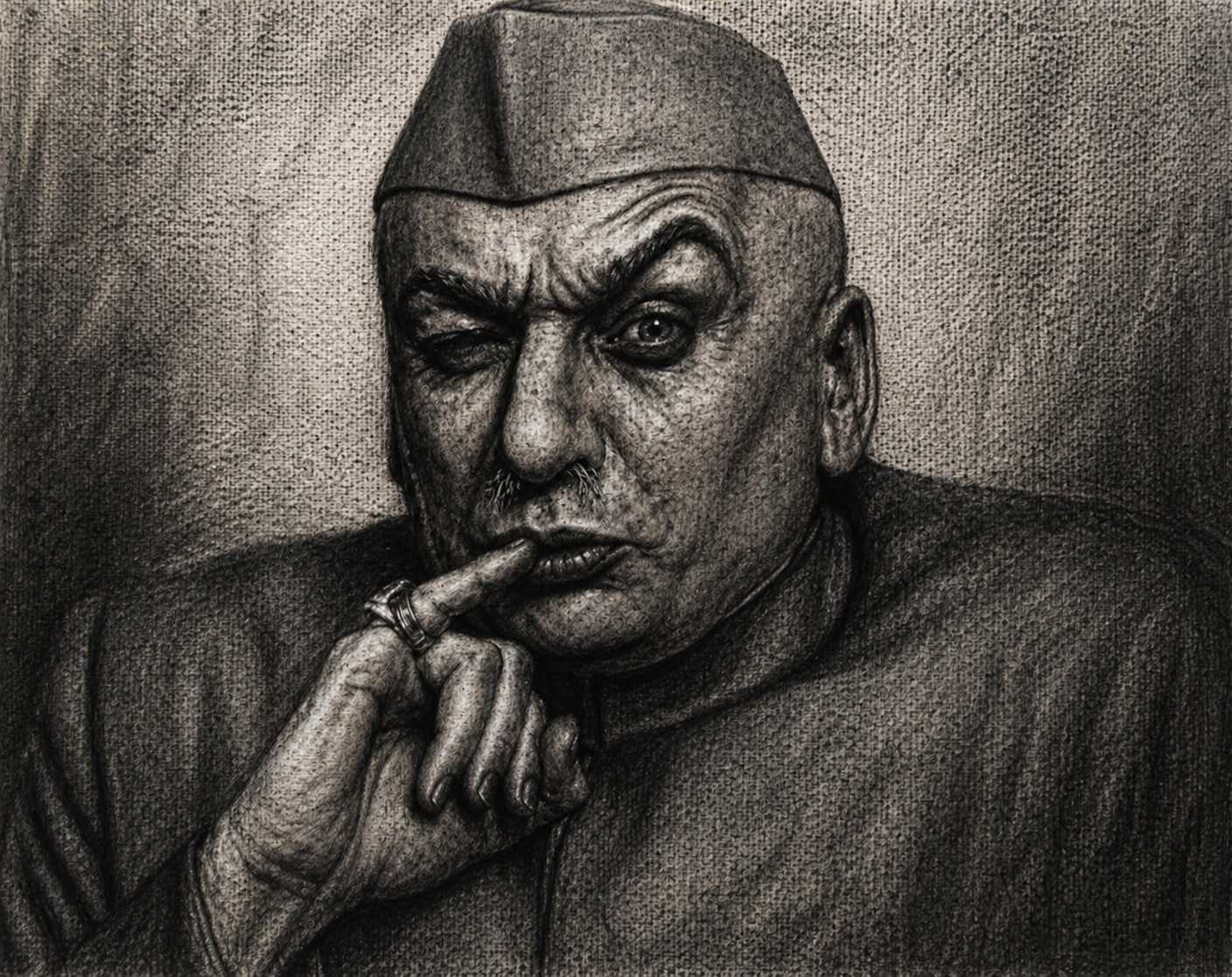
This is the irritating thing. It would be emotionally satisfying to say that politicians are bad because they are bad men and women, born perhaps during an inauspicious hour when Saturn was in a bad mood and the local priest was distracted by lunch. But that is not enough. Too many parties, too many states, too many ideologies, too many decades, same smell. When a pattern repeats across generations, the villain is usually not one moustache-twirling fellow in dark glasses. The villain is the mechanism.
Let us open the sack.
The Indian state that arrived through colonial rule was not built to serve the ordinary person. It was built to count him, tax him, police him, classify him, and keep him quiet enough for revenue to travel safely upward. The British were very good at paperwork. They could make a famine look administratively respectable. They did not invent Indian hierarchy, greed, or cruelty, because no empire needs to import what local society has already manufactured in bulk. But they did harden many things into law, office, district, file, police station, land record, and permanent habit.
Then came independence, and with it a miracle so large that we sometimes forget to be astonished by it. A poor, wounded, partitioned, hungry, mostly illiterate country chose universal voting. Not slowly, not after some polite waiting period for the poor to prove themselves ready, but at once. Every adult citizen had a vote. This was not small. This was one of the great democratic bets of the twentieth century.
But here is the catch, and it is a big one.
India gave everyone the vote before it gave everyone reliable access to justice, police protection, good schools, hospitals, land records, clean municipal services, and fair administration. The vote became universal. The state remained selective. It came quickly for some people and crawled like a tired tram for others.
Into that gap walked the broker.
The local party worker. The councillor’s man. The caste elder. The union fellow. The contractor. The neighborhood dada with white shoes, two phones, and an alarming ability to make files move. He could get the ration card corrected. He could stop the police from making a poor man’s life into chutney. He could arrange a hospital bed, a school admission, a widow’s pension, a municipal repair, a license, a favor, a forgiveness. He was often corrupt. He was also often useful. That is the dangerous part.
The middle-class person says, “Why do voters choose these people?”
The voter, who has a leaking roof, an unemployed son, a sick mother, and a police station that treats him like a stain, may reply, “Because your clean candidate came with a speech. This man came with a solution.”
There, in that small ugly exchange, half the history of Indian politics is hiding.
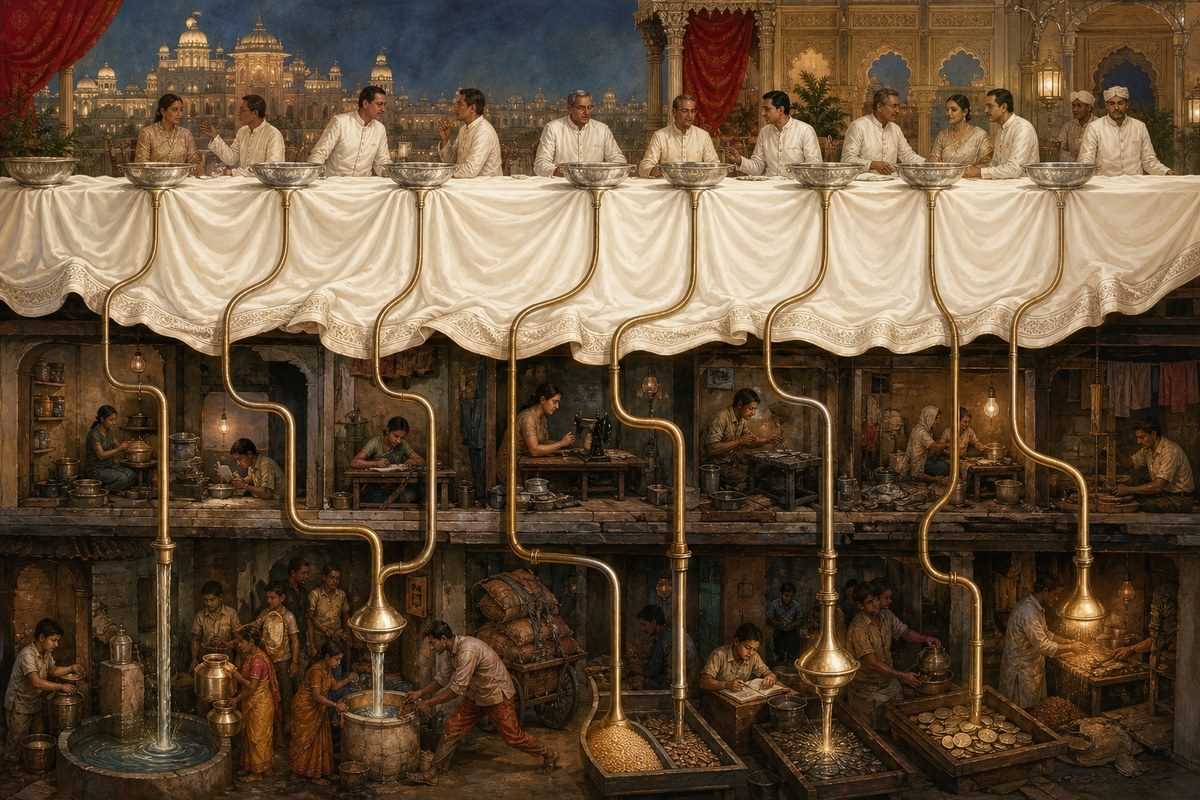
Politics in India became the business of controlling scarcity. Jobs were scarce. Permits were scarce. College seats were scarce. government contracts were scarce. Urban land was scarce. Even justice was scarce. If you had access, you had power. If you controlled access, you had a career. If you could distribute access to your people and deny it to your enemies, you had a vote bank.
The old License Permit Raj made this worse. Permission became a crop. Every file had a season. Every approval had weather. Every officer had a temperature. The state did not merely regulate the economy; it sat on its chest like a fat uncle after Sunday lunch and asked for another sweet. To start, build, import, expand, transport, or sometimes merely breathe in an entrepreneurial manner, you needed clearance. Clearance produced rent. Rent produced networks. Networks produced politicians. Politicians produced more clearance.
Then liberalization arrived in 1991, and many Indians thought the old monster had died. Not quite. It changed clothes. The license window became the land deal. The import quota became the infrastructure contract. The permission slip became the mining lease, the municipal approval, the telecom allocation, the toll road, the real-estate conversion, the public procurement order. The old babu smell remained, only now it had a glass office and a better pen.
And elections? Elections became magnificent, noisy, expensive machines.
India’s FPTP system is simple. Whoever gets the most votes in a constituency wins. Simple systems are not always innocent. In a divided seat, you may not need most people. You need enough people. The right caste clusters. The right religious arithmetic. The right local anger. The right booth workers. The right candidate with enough money, muscle, surname, or local gratitude stuck to him like old glue.
This is why parties often select candidates the way a practical cook selects potatoes in a market. Not the prettiest. Not the purest. The one that will survive boiling.
Can he fund the campaign? Can she mobilize the community? Can he bring the contractors? Can she split the rival vote? Can he manage the police? Can she keep the faction from defecting? Can he win?
That last question eats all the others.
You may think criminal cases should destroy a political career. In a healthy system, yes. In parts of India, they can sometimes decorate it. Not because voters love crime as a hobby, but because power in a weak-law environment has a different smell. The man with cases may also be the man who frightens your oppressor. The man who can stand outside the police station. The man who can make the officer pick up the phone. The man who can get a road patched before the rains, even if he steals half the tar and leaves the other half looking like burnt toast.
This is not a defense. It is a diagnosis.
ADR reported that after the 2024 Lok Sabha election, 251 of 543 elected MPs had declared criminal cases, and 170 had declared serious criminal cases. These were self-declared cases from affidavits, so one must be careful. Some cases in India are politically motivated. Some are nonsense. Some are very much not nonsense. But the scale is not a clerical hiccup. It is a gong.
Then there is money, that silent priest of Indian democracy.
Campaigns cost far more than the official limits pretend. There are rallies, vehicles, workers, posters, social media teams, local feasts, influencers, consultants, booth management, rival management, and the mysterious miscellaneous expenses that multiply at election time like mosquitoes after rain. A candidate who says he fought a major election on the official budget is either a saint, a magician, or someone who should not be allowed near arithmetic.
So money enters. Contractors enter. Businessmen enter. Local financiers enter. They do not enter because they are moved by constitutional poetry. They enter because politics is an investment class with excellent hidden returns. A road contract here. A zoning change there. A police silence. A tax mercy. A transfer. A tender. A phone call.
The Electoral Bonds episode was important because it briefly lifted the curtain. The scheme allowed political donations through banking channels but hid donor identities from the public. Its defenders said it reduced cash. Its critics said it legalized darkness. In 2024, the Supreme Court struck it down and said voters had a right to know. This was not a small judgment. It said democracy is not merely the right to press a button on an EVM. It is also the right to know who may be buying the men standing near the button.
But money is still only one spice in the curry.
Caste, religion, language, region, kinship, and memory all matter because India is not a neat chessboard of individual citizens. It is a civilization of old wounds and old loyalties. Some of those loyalties are ugly. Some are protective. Some are both before breakfast.
For many historically oppressed communities, political mobilization was not corruption. It was entry. It was the first time the village big man had to ask for their vote instead of issuing instruction. It was the first time the poor, the lower caste, the ignored, the mocked, the nameless could say, “Count me.” Democracy did not merely count heads. It gave some heads the pleasure of being noticed.
But recognition can harden into brokerage. A community becomes a vote bank. A grievance becomes a bargaining chip. A leader becomes the permanent gatekeeper of pain. The wound is kept open because the wound wins elections.
This is where our drawing-room morality fails. We say, “Why do people vote by caste?” But often caste was already voting upon them from birth. It decided who touched water, who entered temples, who got land, who got insult, who got school, who got slapped, who got listened to. Democracy did not create caste politics. It gave caste a ballot box and asked it to behave politely.
It did not.
Now look at the parties themselves. Most Indian parties are not internally democratic. They are family firms, personality cults, factional clubs, caste machines, regional corporations, ideological shops, or high-command temples. They ask the nation to practice democracy while running themselves like ancestral sweet shops where the recipe is secret, the cashbox is sacred, and the son is already learning to sit in the big chair.
Dynasty is not only vanity. It is also a low-trust solution. In a system where betrayal is routine, blood becomes paperwork. The son inherits the surname, the donors, the fixers, the faction, the district network, the loyal lawyer, the frightened officer, the photo garlanded at every meeting, and the list of people who must be kept either happy or afraid. Democracy then becomes a public festival built around private succession.
And somewhere in Calcutta, a 51-year-old man drinks overboiled tea from a steel cup, watches the news, hears three spokespersons shouting at each other like crows fighting over a fish head, and wonders if civilization was perhaps a clerical error.
Outside, the lane is damp. A dog sleeps beside a pile of construction sand that has belonged to no visible construction for six months. A party flag flaps from a bamboo pole. Someone has pasted a leader’s face over another leader’s face, which is the closest thing to software update our wall receives. The drain smells philosophical. The neighbor’s pressure cooker whistles. Democracy, like dal, is again overcooked and still somehow underdone.
This small scene is not a joke. It is the scale at which politics is actually felt.
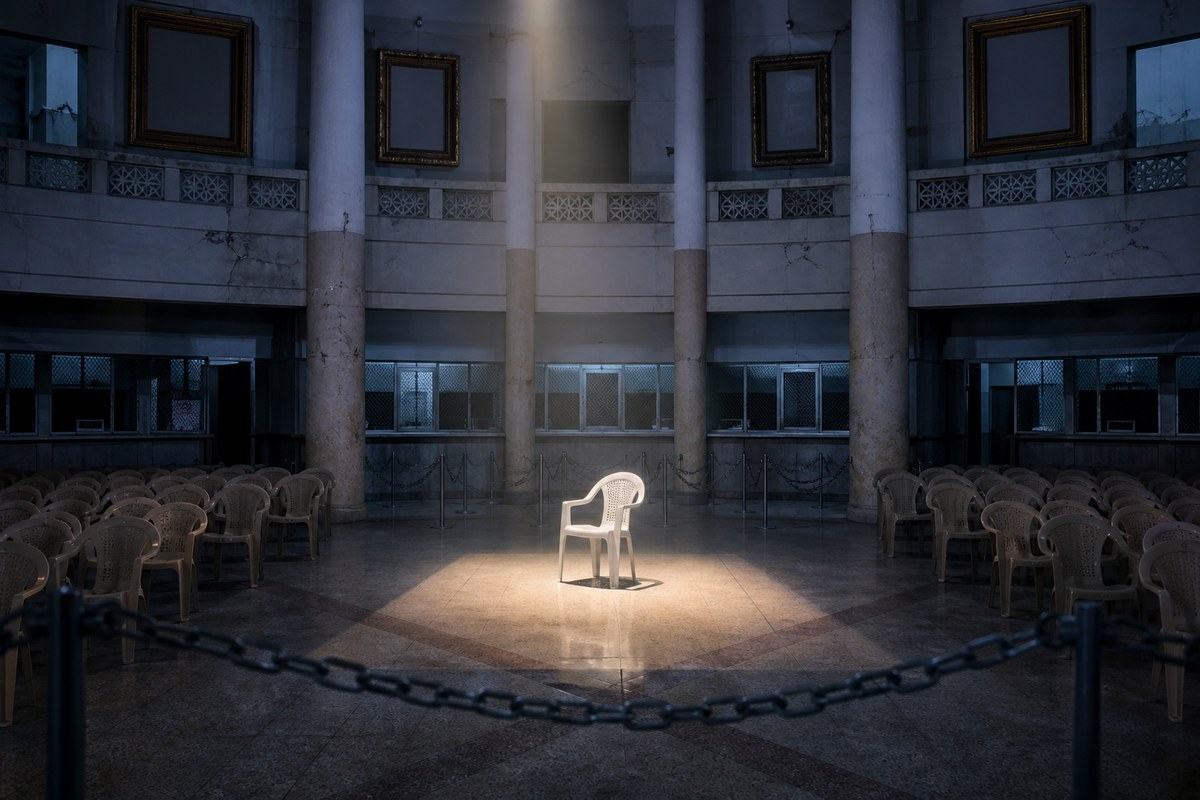
Most people do not meet the Constitution. They meet the ward office. They meet the police constable. They meet the ration dealer. They meet the hospital clerk. They meet the party worker sitting under a fan that rotates with the enthusiasm of a retired crocodile. The republic is not experienced as an idea. It is experienced as a queue.
When the queue fails, the broker wins.
This is why technology alone will not save us. DBT can reduce leakage. Aadhaar can standardize identity. Online portals can reduce some petty harassment. Dashboards can show numbers. Fine. Useful. Necessary even.
But a dashboard can say the toilet was built. It cannot always say who uses it, whether water comes, whether the door exists, whether the beneficiary had to pay a bribe, or whether the local strongman took credit for what the state owed anyway. Technology can remove one middleman and create another. A portal can be a window. It can also be a wall with a password.
PowerPoint reform loves the window. Real reform asks who owns the wall.
This is why the cure will not come at light speed. It will not arrive because a consultant made a diagram with arrows and the word “transformation” in a calming blue font. The people who benefit from opacity are often the people authorized to remove opacity. Asking them to purify the system quickly is like asking a mosquito to design a malaria-eradication strategy while seated on your ankle.
So what is the remedy?
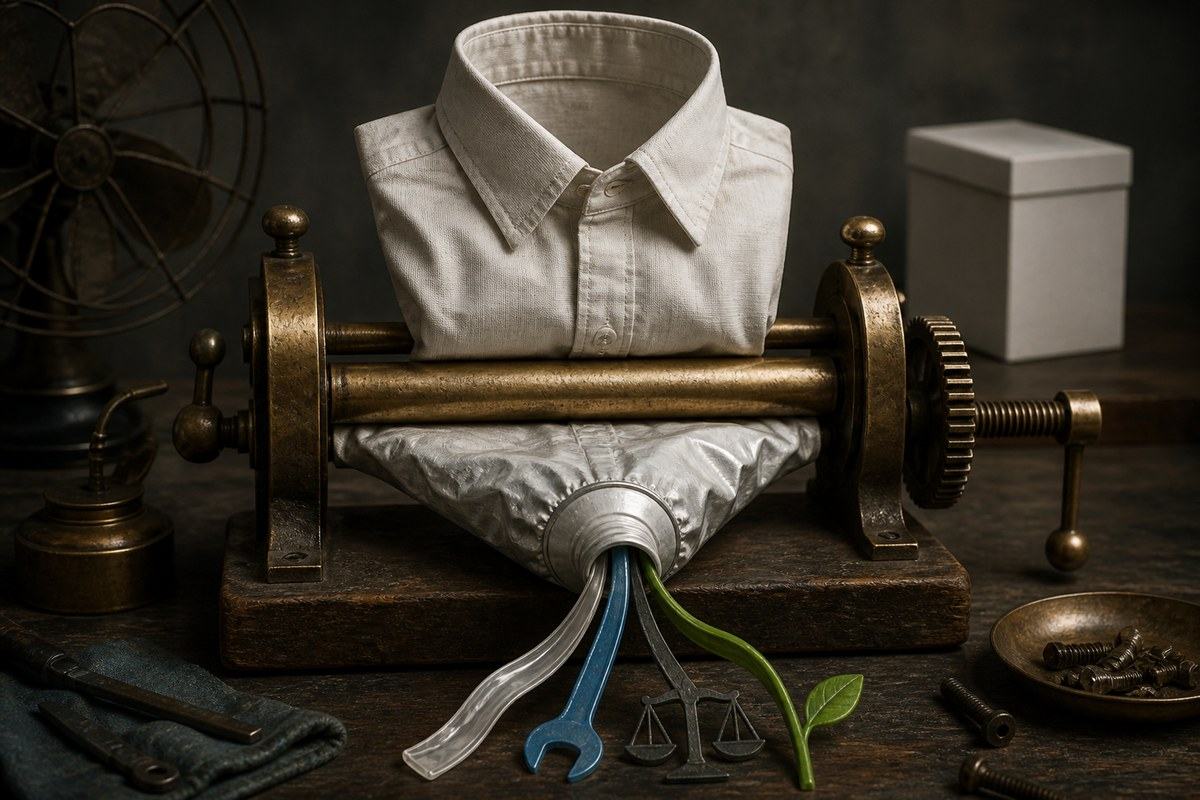
First, name the problem properly. Indian politics is not rotten because Indians are uniquely rotten. Humans everywhere become wonderfully inventive when bad systems reward bad behavior. The real problem is that Indian politics often rewards candidates who can convert money, identity, fear, welfare access, and administrative influence into votes while accountability arrives late, weak, or not at all.
That sentence is not catchy. It will not fit on a protest placard. It is also closer to the truth.
Second, political funding must become transparent. Voters should know who funds parties, how much they give, and when. Timely disclosure matters. Delayed disclosure is often just secrecy wearing a wristwatch. If a company funds a party before receiving a contract, citizens should be able to see the sequence without needing a private detective and two nervous accountants.
Third, cases against elected representatives need fast and fair resolution. Not instant punishment by accusation, because ruling parties can misuse police cases. Not endless delay either, because delay turns power into armor. There must be special courts, strict timelines, witness protection, and real consequences after conviction. Boring? Yes. Republics are repaired with boring tools.
Fourth, police reform cannot remain a polite footnote. A politically controlled police system turns democracy into a negotiation with fear. Transfers, investigations, and enforcement cannot be daily toys of partisan power. The police must be accountable to law, not to the ruling party’s afternoon mood.
Fifth, parties must become democratic inside. Candidate selection should not be a family ritual, a money auction, or a high-command whisper. Parties that refuse internal democracy should not be allowed to pose as holy guardians of national democracy without being laughed at in public, preferably with documentation.
Sixth, local government must be strengthened. If a citizen needs a party worker to repair a drain, get a certificate, fix a streetlight, or access a benefit, then corruption has already won at the first step. The ward office must work. The municipality must work. The panchayat must work. The boring local state is the front line of clean politics.
Seventh, citizens need civic muscle. Not slogan muscle. Practical muscle. How to read a budget. How to check candidate affidavits. How to file RTI requests. How to track a tender. How to complain without being swallowed by the complaint system. How to ask, “Where did the money go?” and not be satisfied when someone replies, “Development is happening.”
But here is the final difficulty, and it is the one nobody likes.
The rot is not outside society. It is inside the ways people survive. The voter who hates corruption may still need the corrupt leader’s help tomorrow. The businessman who curses politicians may still pay for access. The officer who believes in rules may still beg for a safe posting. The party that promises clean politics may still choose the winnable thug over the unelectable saint. The citizen who wants justice may still prefer his own group’s strongman to another group’s honest reformer.
That is not only hypocrisy. It is a trap.
If everyone else is playing dirty, clean hands can look like foolish hands. The honest candidate loses for lack of money. The honest officer gets transferred. The honest contractor gets underbid by someone who has already priced bribery into the quote. The honest voter watches the local fixer deliver faster than the official system. After a while, people stop asking whether the game is fair. They ask who can help them survive it.
This is why the remedy is generational.
Not because nothing can be done now. Plenty can be done now. But trust is slow. Institutional memory is slow. Court reform is slow. Police independence is slow. Party reform is slow. Civic education is slow. Culture changes slowly, then suddenly, then slowly again, like an old ceiling fan deciding whether it wants to live.
The sack was not stitched in one election. It will not be repaired in one election.
Still, despair is lazy. Cynicism is just defeat dressed as intelligence. The practical citizen must be more stubborn. Ask for transparent funding. Ask for faster trials. Ask for police reform. Ask for internal party democracy. Ask for working municipalities. Ask for public data that can be inspected before the scandal grows fungus. Ask small questions again and again until they become large questions.
Who paid?
Who benefited?
Who selected this candidate?
Why is this case still pending?
Why does this scheme carry a leader’s face when it was paid for by public money?
Why must a citizen beg for what the law already promises?
These questions are not glamorous. They are not the sound of revolution. They are the sound of a screwdriver entering an old machine.
Indian politics will improve when rottenness becomes less useful. Not when speeches become cleaner. Not when slogans become shinier. Not when a new party discovers white clothing and moral vocabulary. It will improve when money is harder to hide, cases are harder to delay, police are harder to capture, parties are harder to inherit, welfare is harder to personalize, and citizens are harder to fool.
Until then, the sack will keep doing what sacks do. It will hold what we put into it. It will stain what remains inside too long. And every few years, under flags, drums, dust, television lights, and the great Indian talent for hope against evidence, we will pull out another fruit and ask, with tragic innocence, why it smells exactly like the last one.
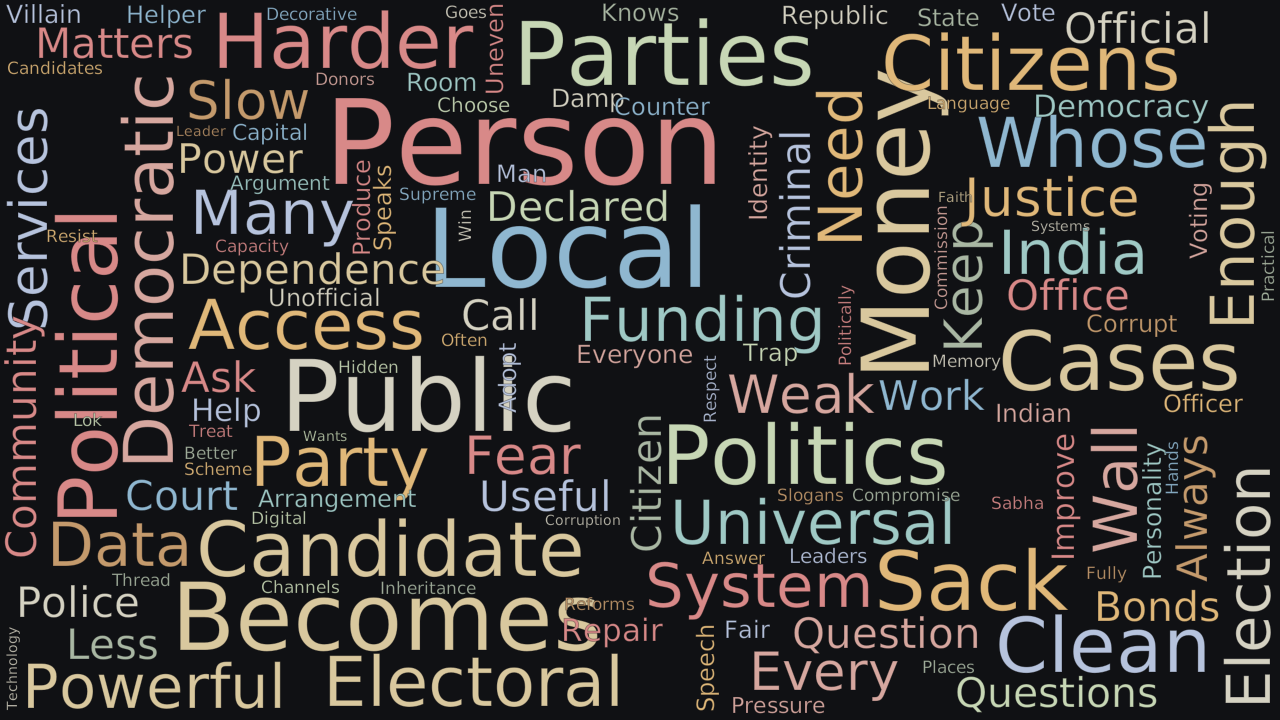
Word Cloud
Related reading
Selected by shared topics and section, with closer publication dates breaking ties.