Existential Arithmetic at Bread Level
Uses the speech voice supplied by your browser or device.

Acronyms used in this post: Artificial Intelligence [AI, computer systems that can generate, summarize, classify, code, analyze, imitate, and automate parts of human knowledge work].
My existential arithmetic has become so simple that even a tired fish seller at Sealdah could do it before sunrise while shouting over three buses, two crows, and one man arguing about coriander.
Can I buy the groceries?
Can I pay the rent?
Can I pay the electricity bill?
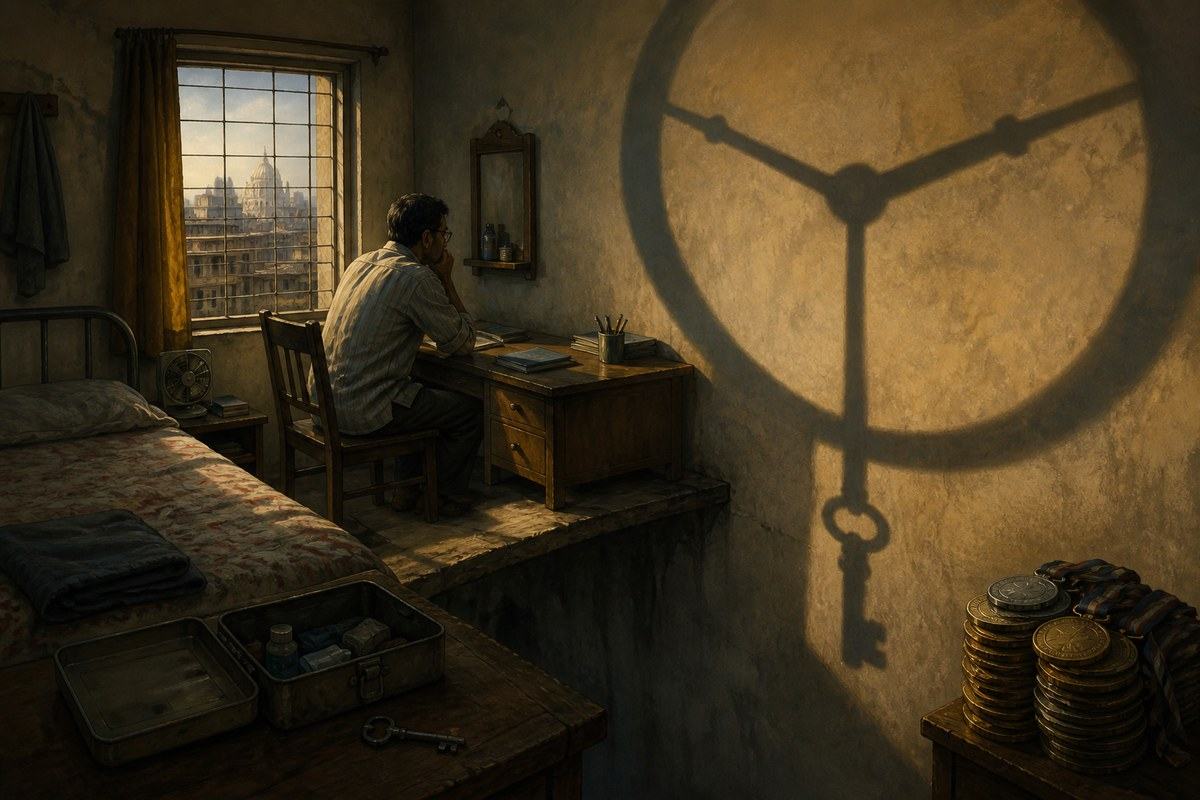
Can I survive one more month without my small private republic falling into the canal?
That is the sum. That is the whole blackboard. No career ladder. No long-term prospect. No inspiring chart with an arrow going up like a patriotic rocket. No five-year plan printed in corporate blue. For a person like me, those phrases have become decorative crockery in a house where the rice tin is making hollow noises.
People say career as if it is still a road.
For many of us it is no longer a road. It is a broken footpath beside an open drain, and you must walk carefully because one loose brick can become a biography.
I have come down almost, but not quite, to the bread level. Bread level is not poetry. It is not philosophy. It is the level where a man asks, with the dignity of a clerk and the panic of a goat near Eid, whether there is enough money for atta, rice, eggs, milk, tea, vegetables, and the monthly tribute to the landlord, that hereditary emperor of the two-room flat.
If the answer is yes, even a thin yes, even a yes wearing torn sandals, then I try to tell myself: today I am okay.
Not successful.
Not settled.
Not glowing with abundance like those people on YouTube who have discovered the secret of life and a ring light.
Just okay.
And okay is not a small kingdom. Okay means the bulb will come on. Okay means the fan will rotate with its old moral seriousness. Okay means the grocer will not look at me like a creditor in a mythological serial. Okay means I can make tea and not turn the entire morning into a court case against myself.
There are days when even the month is too large a unit. A month becomes a monster. Thirty days stand in front of me like thirty policemen asking for documents. Then I reduce the arithmetic again.
Can I get my next meal?
Usually the answer is yes.
This is not a grand answer. It will not make a motivational speaker slap the podium. But it has saved me more times than any grand answer. When the mind begins its usual opera — rent, bills, age, work, shame, the future, the thinning hair of hope, the phone not ringing, the laptop waiting like a disappointed schoolteacher — I ask one rude little question.
Can I eat today?
Yes.
Then shut up for now.
This sounds crude because it is crude. Good. Some truths arrive polished. Others arrive like a fish seller before sunrise, loud, necessary, smelling of work. I have begun to trust the second kind more.
A critic may sneer here. There is always a critic. India has produced more critics than mangoes. He may say, “This is not planning. This is survival. Where is your vision? Where is your future?”
I would like to offer him a plastic chair, one cup of overboiled tea, and the view from an ordinary lower-middle-class Calcutta afternoon.
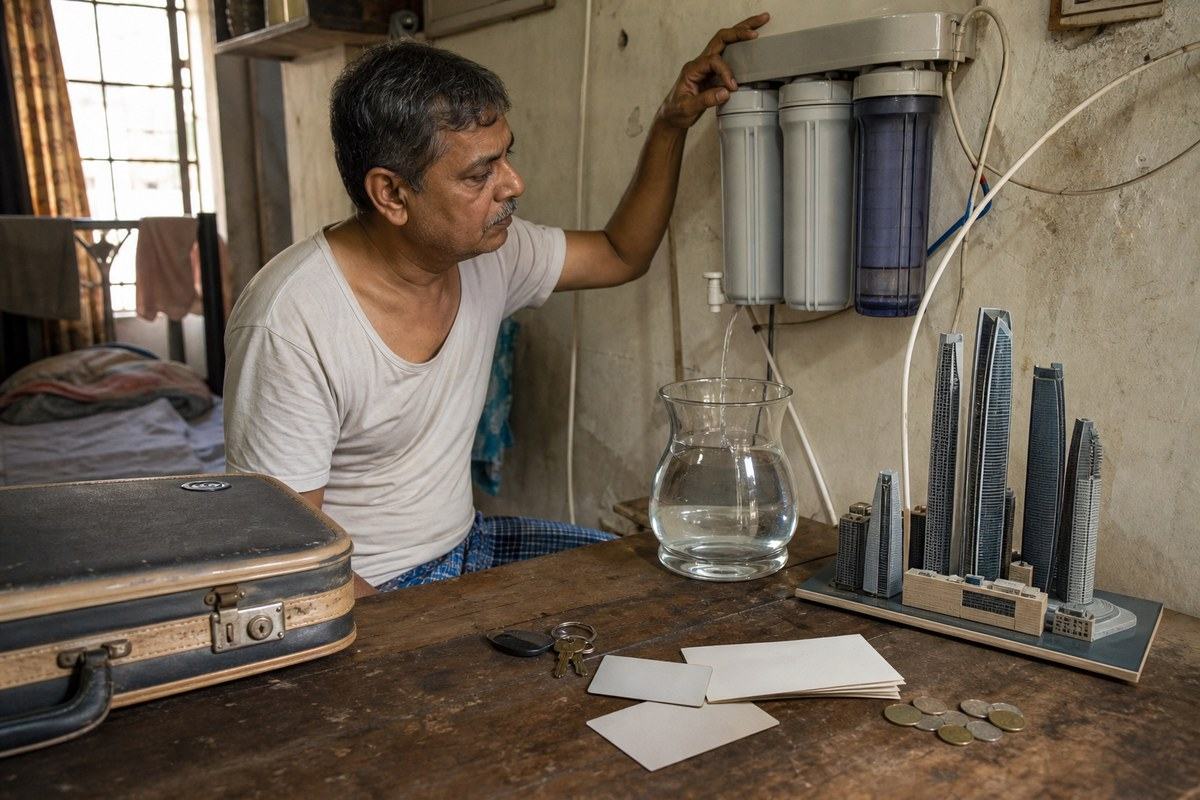
The lane is damp though it has not rained properly. Someone is frying something in oil old enough to remember coalition politics. A pressure cooker whistles like a small factory. A scooter coughs. A child screams with the full legal authority of childhood. A man in a vest is paying the milkman after checking the packet as if it contains state secrets. On my table there is a laptop, a cup, a few unpaid worries, and the ancient question of whether cleverness can still be converted into rent.
Now please explain the future.
Not the brochure future. Not the seminar future. The actual future. The one that sends bills.
The old white-collar promise was simple: study, work, behave, learn the language of offices, collect experience, and the world will keep a chair for you somewhere. Perhaps not a throne. Perhaps not even a comfortable chair. But a chair.
AI has walked into the room and begun counting chairs.
That is the part many people still do not want to say aloud. They will say transformation, productivity, augmentation, opportunity, reskilling, and other words that sound as if they were born in an airport lounge. But underneath the perfume is a colder sentence: a large chunk of educated work was built on converting confusion into documents, and machines have become disturbingly good at producing documents that look acceptable to people who are too busy to know the difference.
Reports.
Emails.
Summaries.
Code.
Slides.
Proposals.
Minutes.
Explanations.
Plans.
Little temples made of text.
The machine looked at all this and said, “I can do a version of that before lunch.”
Not the best version. Not always the true version. Often not even a safe version. But a version. And in many offices, a version is enough to start bargaining down the human being.
That is the nasty little hinge on which the door turns.
People think AI must replace a whole worker before it matters. Wrong. It only has to weaken the worker’s bargaining power. It only has to make the employer wonder, “Do I need this person full-time? Can I hire cheaper? Can I delay? Can I ask one person to do the work of three with a subscription and a smile?” The roof does not need to collapse for the room to become unlivable. One steady leak above the bed will do.
So when someone asks me about career ladder prospects, I feel a small laugh forming somewhere near the liver.
Career ladder? My friend, the ladder has been borrowed by management, monetized by platforms, and possibly converted into a quarterly efficiency initiative. Some people are still climbing. Good for them. I do not begrudge anyone a clean shirt and a predictable salary. But many others are standing below, looking up at a ladder that now ends in fog, while a cheerful automated voice says, “Your call is important to us.”
Of course, not everything disappears. That is too simple, and simple lies are still lies. Work will remain. Real work always remains, because reality is untidy. Someone must still fix the broken system, calm the angry client, find the missing file, notice the false number, understand the human mess behind the official process. The world is not a spreadsheet. It is a leaking bucket being carried through traffic by a man who has also forgotten his umbrella.
But the old confidence has cracked.
This is why my arithmetic has become smaller.
Not because I lack imagination. I have too much imagination. That is the problem. The anxious mind is a cinema hall with no exit sign. It can take one unpaid bill and produce a three-hour film about ruin, disgrace, illness, professional extinction, and dying beside a router that has stopped blinking. Give the mind ten minutes and it will convert a missing email reply into a Greek tragedy with broadband.
So I cheat.
I bring the question down from the sky to the plate.
Can I eat?
Can I make tea?
Is there rice?
Is there dal?
Can I pay the electricity this month?
The body understands these questions. The body does not understand “strategic career repositioning in a post-AI economy.” The body hears that and quietly reaches for antacid. But the body understands tea. It understands rice. It understands the fan. It understands the little click of a switch when the light actually comes on.
That click is underrated.
Civilization may be discussed in think tanks, but for the ordinary man it often arrives as a working switch, a filled water bottle, and enough balance in the account to avoid humiliation at the shop.
There is a kind of honesty at bread level. Not romance. Honesty. You stop calling survival a transition. You stop calling fear an opportunity. You stop polishing sentences for the comfort of people who are not paying your rent. You say, plainly, “I am trying to get through the month.”
Some will find this depressing.
I find it cleaner.
Depression is when the future eats the present. Bread-level arithmetic is when the present takes back one corner of the plate. It says: leave the whole future aside for a moment, that greedy elephant. What is actually in front of you? A cup. A bill. A meal. A room. A small task. A body that is tired but not dead. A mind that is frightened but still capable of making one more calculation.
There is dignity in that calculation.
Not the Instagram kind of dignity, with sunlight on linen curtains. The other kind. The kind found in a man counting coins near the market and still buying two green chilies because food without taste is another form of defeat.
I know the objection. “But one must plan.”
Yes. Obviously. I am not recommending that anyone become a philosophical potato. Learn if you can. Apply if you can. Save if you can. Build if you can. Move if you can. Repair your skills. Update your tools. Keep one eye on the market and the other on your blood pressure.
But planning requires a floor. Nobody plans well while falling. First you must reduce the fall. First food, rent, electricity, medicine, sleep, some human contact, some reduction of panic. Then perhaps you can examine the future without feeling it has come to repossess your lungs.
The world loves telling frightened people to think big. This is sometimes useful and often cruel. A hungry man does not need a vision board. He needs dinner. After dinner, he may become visionary. Before dinner, he is mostly acid and thunder.
There is also a strange freedom in no longer pretending that the old nouns still work.
Prospect.
Trajectory.
Growth.
Ladder.
Security.
Retirement.
These words used to stand like furniture in the middle-class drawing room. Now some of them wobble when touched. Some have termites. Some are cardboard replicas used for public events. We keep them because the room looks bare without them.
But the room is bare.
Better to know it.
And yet, this is not an essay of surrender. I distrust surrender. Surrender wears soft slippers and gradually steals the morning. This is an essay of rationing fear. That is different. Fear may be real, but it does not deserve unlimited data. Let it stand in line like everyone else.
Today’s fear may come in.
Tomorrow’s fear must wait outside.
Next year’s fear can send an email and take a token.
This is how I survive some days. I do not defeat worry. I bureaucratize it. I make it fill forms. I give it office hours. This is very Indian and therefore quite effective. Nothing terrifies a demon like paperwork.
Meanwhile, life continues in its absurd, stubborn, badly edited way. The news mutters about AI, jobs, heat, markets, elections, wars, floods, celebrities, scandals, and some new app that will apparently change everything until the next app changes that. The world keeps producing emergencies with the enthusiasm of a sweet shop before Durga Puja. And in one small room in the shanty boondocks of Calcutta, a middle-aged man checks the price of potatoes and wonders whether tea can be counted as therapy.
Sometimes it can.
Not medically. Do not be foolish. But spiritually, domestically, mechanically. The kettle boils. The cup warms the fingers. The first sip enters the body like a minor government relief scheme that actually arrived. For three minutes, civilization is restored.
Then the laptop opens.
Then the dread returns.
Then the arithmetic begins again.
Can I work a little?
Can I write one paragraph?
Can I send one message?
Can I repair one small corner of the day?
Often the answer is no. Then maybe. Then yes, but badly.
Badly is important. Badly is how many things begin. Ugly paragraphs are important. A polished paragraph is an upper-class thing. It arrives bathed, perfumed, and confident about its English-medium schooling. An ugly paragraph arrives sweating from the bazaar, carrying fish, onions, and the truth. Many good essays begin as ugly paragraphs that refused to die.
Perhaps lives do too.
A life may not be elegant and still be alive. It may not be upward and still be moving. It may not impress anyone and still contain acts of private engineering. Paying rent is engineering. Not screaming at yourself before breakfast is engineering. Making tea when the mind says lie down forever is engineering. Keeping one more month from collapsing is engineering of the most ancient kind.
Bread-level arithmetic is not the whole life.
It is the emergency foundation under the life.
Later, perhaps, one can build rooms again. A small project. A new skill. A client. A post. A repaired confidence. A sentence that earns money. A sentence that earns nothing but returns your face to you in the mirror. These things matter. I am not giving them up.
But I refuse to let the imaginary mansion of the future crush the actual cup of tea in my hand.
So today I count.
Rice.
Rent.
Electricity.
Groceries.
Meal.
If the answer is yes, I am okay for now.
Not forever.
For now.
And for a frightened human being in the age of AI, unpaid bills, vanishing ladders, and motivational nonsense sold in bulk, for now is not a small achievement.
It is the small door into the large room.
I will open it tomorrow if I can.
Word Cloud
Related reading
Selected by shared topics and section, with closer publication dates breaking ties.