The Magnet, the Bulb, and the Battery
Uses the speech voice supplied by your browser or device.

Acronyms and terms: LED [Light Emitting Diode, a small semiconductor device that makes light efficiently without heating a filament like the old bulb]. AI [Artificial Intelligence, software that can imitate parts of human reasoning, language, pattern recognition, and decision-making, though not always with human judgment]. AC [Alternating Current, electricity that reverses direction many times per second and is used in most household wiring]. DC [Direct Current, electricity flowing steadily in one direction, like from a battery].
Before science became a career ladder, a funding proposal, a TED Talk, a start-up pitch, and finally a committee meeting with tea so bad it could qualify as a chemical attack, it was a bulb, a battery, and a magnet on the floor.
That was enough.
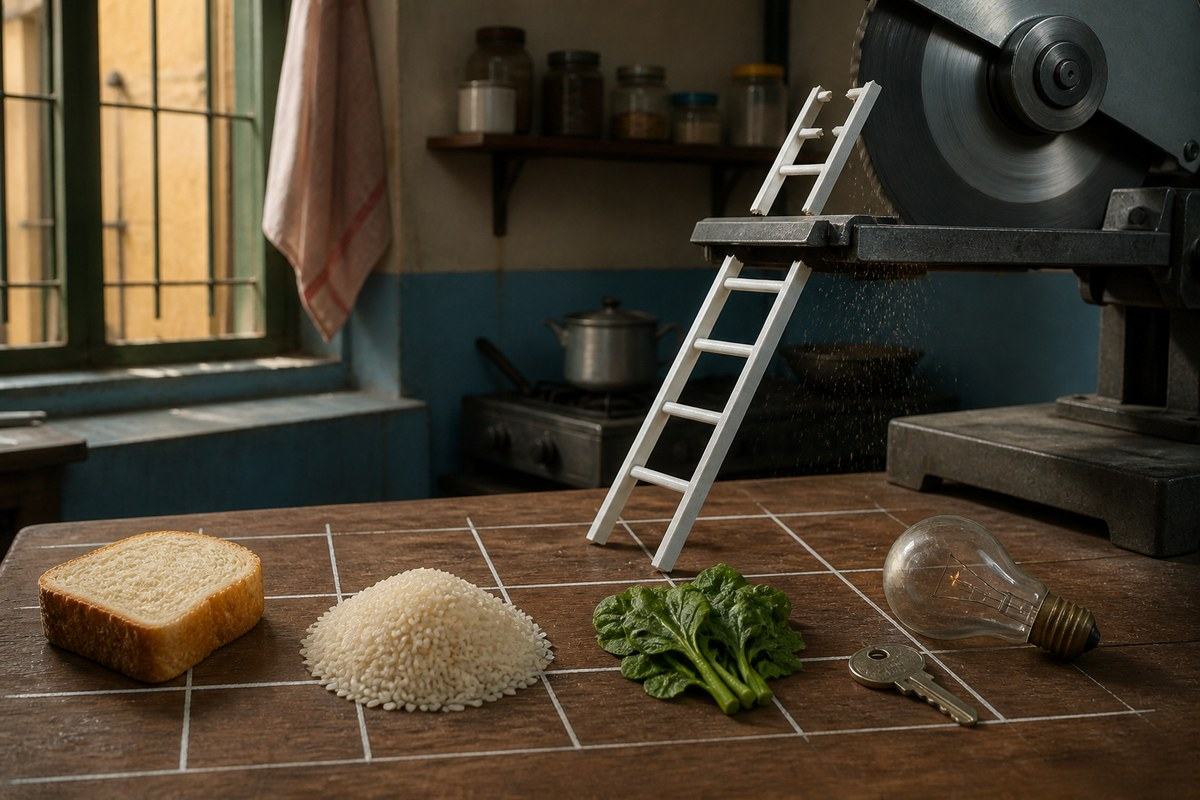
Not enough to impress LinkedIn. Not enough to frighten investors. Not enough to make an uncle at a wedding say, “Very good, very good, future is bright.” But enough for a boy. More than enough. A small bulb connected to a dry cell could do what a thousand motivational posters cannot do. It proved that the world had hidden wiring.
I miss those boyhood days for that reason. Not because childhood was some golden syrup poured over life by a sentimental confectioner. Childhood had its own terrors: exams, mosquitoes, power cuts, adults with moral lectures, and the permanently injured geometry box. But curiosity then was clean. It did not ask whether something was billable. It did not ask whether the discovery could be monetized before lunch. It only asked: why does this glow?
A bulb glowed, and the universe became slightly less smug.
The old incandescent bulb was a magnificent little creature. Edison gets the schoolbook garland, though of course he was not alone, because invention is rarely one man standing heroically in a waistcoat while the rest of humanity politely claps. Many people wrestled with electric light. Still, the principle was deliciously simple. Current went through a filament. The filament resisted. Resistance made heat. Heat made light. The bulb was basically a tiny disciplined tantrum.
This is the sort of thing a child can understand without becoming small.
That is the beauty of real science. It does not always begin with giant equations, marble buildings, or laboratories where people walk around holding clipboards like minor priests. It can begin with one cheap bulb and a battery that has already leaked a little white crust, like an old man chewing paan badly. The light appears. You stare. Something invisible has gone in and something visible has come out. This is not a trick. This is the world showing its accounts.
Now the old bulbs are mostly gone, chased away by LEDs, those sensible, efficient, modern little fellows. I have nothing against them. They save electricity, last longer, and do not behave like tiny furnaces. But they have no romance. An LED is like a polite accountant. An incandescent bulb was like an old para uncle in a sleeveless vest, wasteful, warm, slightly dangerous, and full of stories.
When the old bulb disappeared, something in me felt filed under obsolete stock.
That may be self-pity, of course. At fifty-one, a man must be careful. Self-pity grows very well in Calcutta humidity. Give it one afternoon, two unpaid bills, a slow ceiling fan, and a phone that refuses to ring with good news, and it will climb the wall like money plant. But still, the feeling is real. The world has become efficient in many ways, and yet some warmth has been mislaid.
I had magnets too. Magnets were not objects. They were companions.
I took care of them with a seriousness that would have embarrassed a museum curator. I rubbed them with mustard oil. I washed them with soap. I treated them almost like bath-time friends, as if a magnet had a private dignity that rust would insult. It sounds foolish now, but childhood is full of accurate foolishness. A child knows that things have moods. Adults forget this and then spend their lives buying expensive furniture to feel less lonely.
A magnet was magic, but magic with rules.
It pulled nails. It refused wood. It grabbed iron filings and arranged them into curved little hairstyles, as if an invisible barber had passed through. It attracted, repelled, jumped, clung, sulked, and surprised. You could not see the field, yet the field behaved as if it had been there all along, invisible but bossy, like a local club secretary before Durga Puja.
That invisible field was my first philosophy.
Not temple philosophy. Not examination philosophy. Not the kind where someone with a beard explains suffering while sitting comfortably on a cushion. This was philosophy you could hold in your hand. Here was an object saying: what you see is not all there is.
Faraday understood that better than almost anyone. He began with simple things: wires, coils, magnets, patience. Astonishing patience. Patience of the sort now extinct, like good manners in a comment section. He found that electricity and magnetism were not separate kingdoms. They were cousins, conspirators, members of the same mischievous family. A moving magnet could make current. A current could make magnetism. The world was not a pile of unrelated objects. It was a conversation.
For a boy, that is dangerous knowledge.
Because after that, nothing remains plain.
A switch is no longer a switch. It is permission. A wire is no longer a wire. It is a lane. A battery is no longer a battery. It is a small chemical quarrel persuaded to become useful. A bulb is not a bulb. It is matter being annoyed into shining.
Even my comics belonged in the same kingdom. A serious adult may object here, and serious adults are always objecting, usually because joy has escaped them and must be recaptured by regulation. But a child does not build separate departments in the head. Magnetism, detectives, ghosts, rockets, gods, villains, batteries, bulbs, and comic-book heroes all live in one large, noisy, democratic room.
A hero enters a cave. A magnet pulls a nail. A detective notices a footprint. A bulb lights up. Each is a clue.
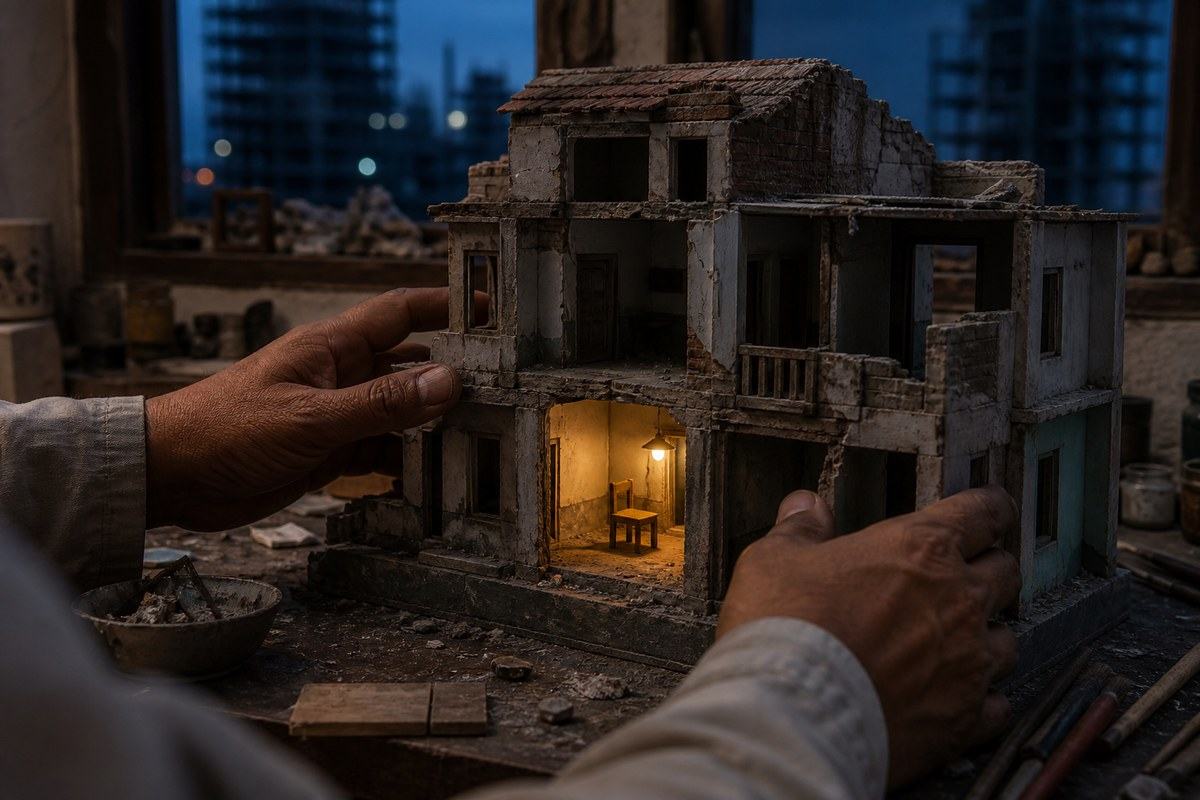
The world had secrets, and I had begun to suspect that secrets were not locked away from ordinary people. This was the great discovery. You did not need to be born in Cambridge or California. You did not need a laboratory coat. You did not even need a proper table. A cracked floor, a battery, a bit of wire, a bulb, and enough stubbornness could open a small window.
Calcutta teaches this in its own shabby way.
Nothing here works perfectly, but almost everything works somehow. A man repairs a fan with a screwdriver older than the Republic. A tea stall keeps civilization running with a kettle, a biscuit tin, and gossip sharper than any newspaper editorial. A bus conductor performs arithmetic, crowd control, and philosophy while hanging half outside the bus like a flag of human risk. A middle-aged man in a not-quite-respectable lane checks the price of onions, the news about AI, the weather, the rent, and his own dignity, all before breakfast. Life is not elegant. It is improvised. But improvisation is also a kind of intelligence.
That is why those childhood objects still matter to me.
They were not expensive. They were not branded. They did not come in packaging that said “STEM learning experience” and cost more than a monthly grocery bill. They were ordinary things. But they taught extraordinary habits. Look closely. Touch carefully. Try again. Notice what changed. Do not believe the first explanation merely because it is convenient. A magnet does not care about your theory. A bulb does not glow out of sympathy. The battery will not flatter you. The circuit either closes or it does not.
This is an excellent moral education.
Much better than many speeches.
Education often arrives too heavily. It enters wearing shoes, drags in the syllabus, pins wonder to the table, cuts it into chapters, assigns marks, and then wonders why the child is no longer smiling. Of course discipline matters. Mathematics matters. Without mathematics, physics becomes gossip with diagrams. But appetite must come first. Before the equation, there must be the itch. Before the law, the astonishment. Before the examination, the private little shock of seeing a bulb glow because your own fingers completed the circuit.
That first glow never quite leaves you.
Even now, when the future appears to be driven by a drunk taxi driver with one hand on the horn and the other scrolling through disaster, I return to those objects. We have AI writing essays, robots folding laundry badly, billionaires planning Mars, politicians explaining poverty from air-conditioned rooms, and phones that know more about our habits than our families do. We have efficiency everywhere and peace almost nowhere. The world has become clever, but not necessarily wise.
This is not new, perhaps. Every generation thinks civilization has finally misplaced its brain. But something feels especially odd now. The machines are getting smoother while people are getting rougher around the edges. The light is cooler. The bills are higher. The promises are louder. The soul, if one may use that unfashionable word without being arrested by modern taste, feels under-maintained.
So I return to the magnet, the bulb, and the battery.
They did not promise happiness. That was not their department. They did not promise career growth, passive income, personal branding, global thought leadership, or any of the modern sweetmeats that rot the teeth of the mind. They promised something smaller and more durable. If you connect this to that, something happens. If you move this near that, something changes. If you pay attention, the world answers.
Not fully. Never fully.
But enough.
That is the old faith I still carry. Not faith that everything will improve. That is brochure language. Not faith that technology will save us. Technology often saves the invoice and forgets the man. I mean the smaller faith: that reality is still readable in fragments. A magnet still pulls. A battery still stores a little argument inside itself. A bulb, given the right circuit, still shines.
And perhaps a man, even one standing in the shanty boondocks of Calcutta with old degrees, unpaid anxieties, a head full of science, and the market value of yesterday’s newspaper, may still look at a simple thing and feel the universe has not entirely withdrawn its invitation.
Word Cloud
Related reading
Selected by shared topics and section, with closer publication dates breaking ties.