The Bengali Hikikomori and the Shrinking Map of His Life
Uses the speech voice supplied by your browser or device.

Acronyms and Terms
Healthcare IT = Healthcare Information Technology, the giant invisible plumbing system of hospitals, insurance, labs, billing, patient records, and regulatory machinery.
Hikikomori = A Japanese term describing people who withdraw almost completely from society and live in prolonged isolation.
BPD = Bipolar Depression, a mood disorder involving alternating emotional states, often including depression, anxiety, agitation, and periods of unstable energy or thought.
The strange thing about becoming a failure is that nobody sends you an official letter.
No peon arrives sweating at your door with a government envelope saying: “Dear Sir, after careful review, society regrets to inform you that your life has quietly drifted into the category of diminished expectations.”
No.
It happens the way paint peels from an old Kolkata wall. Slowly. Moisture first. Then hairline cracks. Then one day half the plaster is lying beside a dead lizard and an abandoned Horlicks bottle and you suddenly realize the wall had been surrendering for years.
That is roughly how middle age arrived for me.
Once upon a time — and all tragic stories begin with “once upon a time,” even the ones involving broadband bills and gastric acidity — I was supposed to become somebody. Not Amitabh Bachchan somebody. Let us not get carried away. But at least one of those respectable, intellectually shiny Bengali specimens who speak calmly at seminars while adjusting rimless glasses and saying things like “larginal utility” and “post-structural framework.”
Instead I became this.
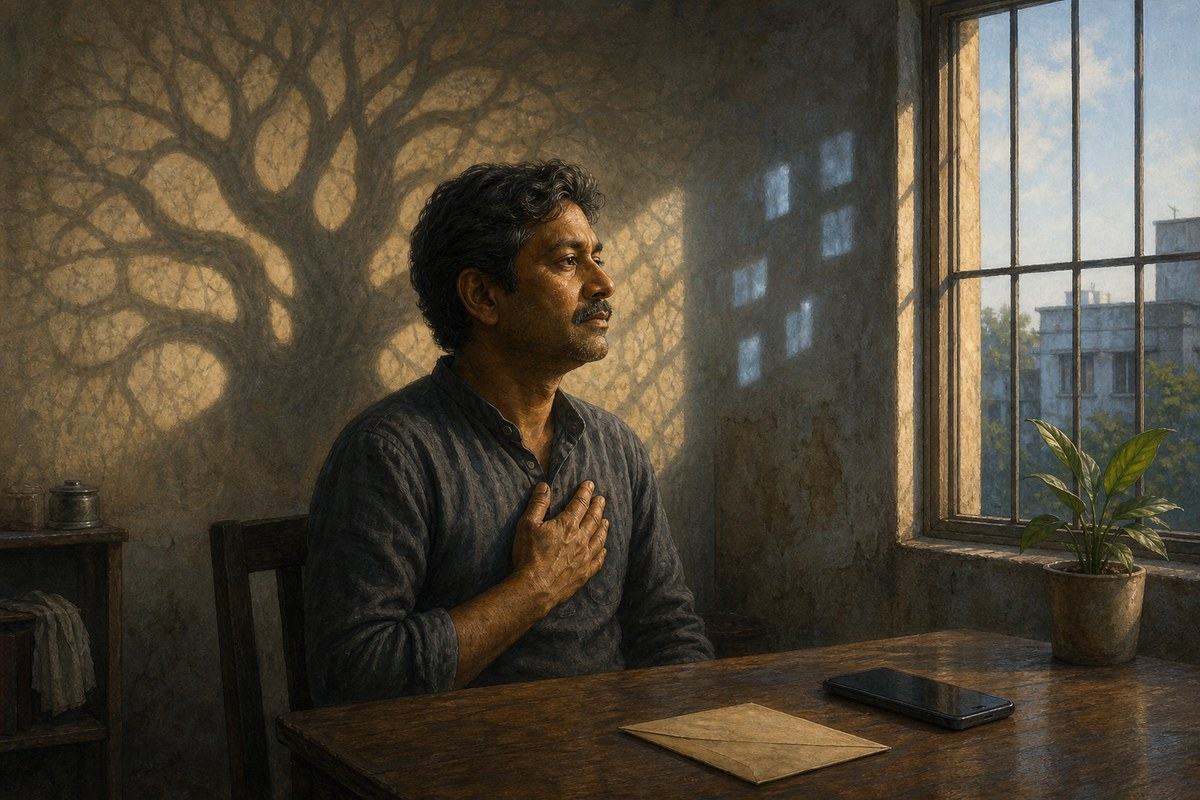
A fifty-one-year-old Bengali bachelor living in the boondocks of Kolkata, sitting under a fan that sounds like a wounded helicopter, doing irregular consulting work in Healthcare IT for American clients while carefully calculating whether ordering chicken rezala this week would constitute financial recklessness.
The irony is delicious in a cruel sort of way.
For fifteen years I worked around gigantic American hospital systems with databases larger than small countries, systems processing millions of patient records every hour, entire digital cathedrals humming day and night. Meanwhile my own life now resembles one of those tiny stationery shops near Gariahat that sells one Lux soap, three geometry boxes, and ten dusty copies of Rapidex English Speaking Course.
Human beings are wonderfully asymmetrical creatures.
Outside my room the world keeps achieving things at a frightening speed. Every week some twenty-three-year-old child with suspiciously white teeth invents an Artificial Intelligence company that “disrupts” civilization. Disrupt is a marvelous modern word. Earlier generations used words like build, repair, improve. Now we disrupt. It sounds less like progress and more like diarrhea.
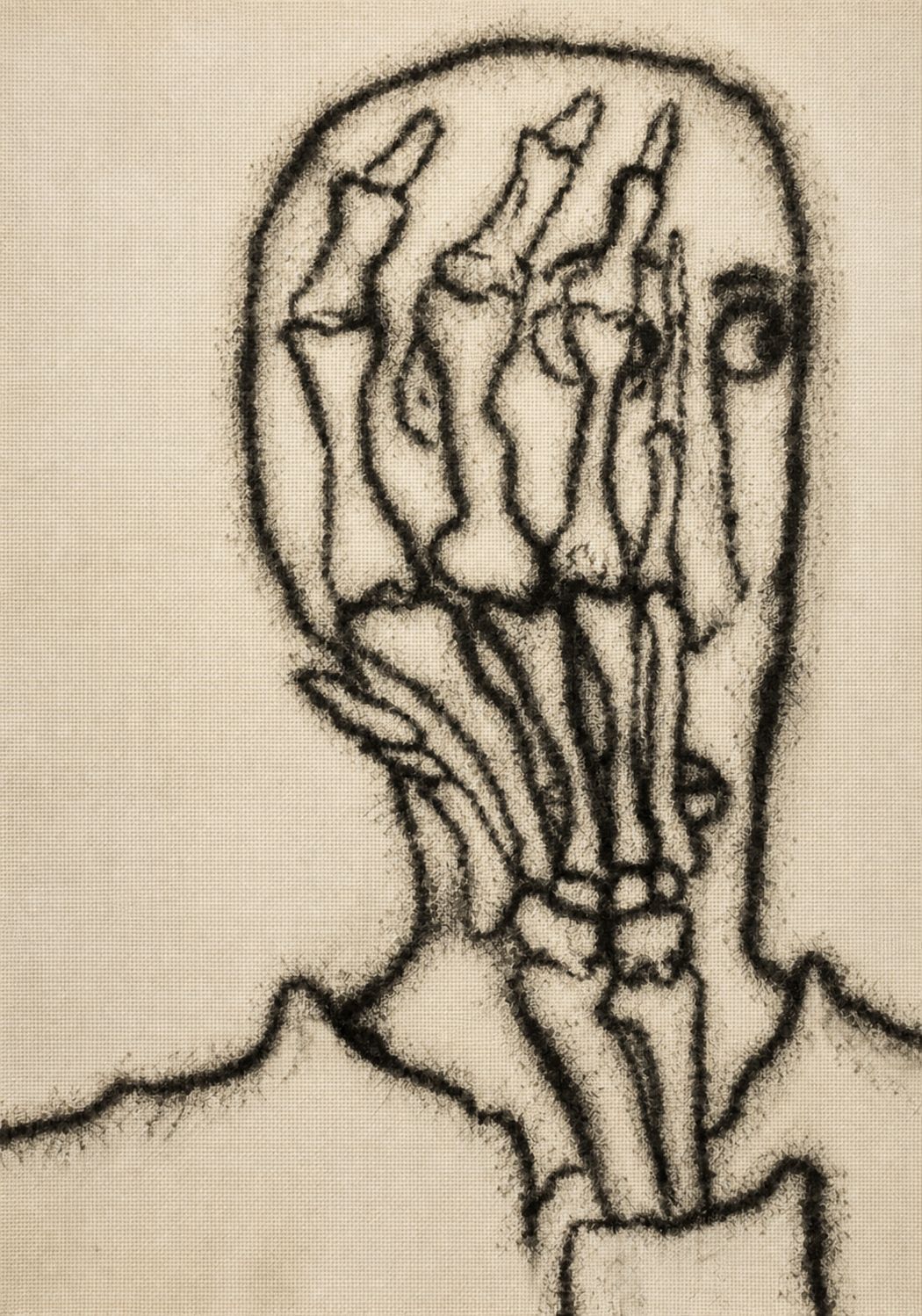
Meanwhile I wake up wondering if today is the day my brain decides to stage another coup.
That is the exhausting part about depression mixed with anxiety. People think sadness is the main event. It is not. Sadness you can understand. Sadness sits quietly like an old aunt after a funeral.
Anxiety is different.
Anxiety is a municipal corporation dogcatcher running through your nervous system at 3 a.m.
Even harmless things acquire claws. Phone calls. Doorbells. Emails. A WhatsApp blue tick. A client saying “Can we talk?” Those four words alone can reduce a middle-aged consultant to the emotional stability of wet bread.
And then comes the truly embarrassing part.
You begin avoiding life itself.
Not heroically. Not poetically. Just incrementally. Like a man stepping around puddles until he realizes he has accidentally walked himself into a swamp.
The Japanese have a neat word for this: hikikomori. Of course the Japanese make even psychological collapse sound elegantly organized. In Bengal we do not have such efficient branding. Here it is simply called “cheleta aar beroy na.” The boy does not go out anymore.
That sentence contains entire graveyards.
Some days I sit by the window watching ordinary Kolkata life proceed with astonishing determination. The fish seller screaming prices like an auctioneer possessed by demons. Auto drivers arguing with the intensity of constitutional lawyers. Somebody frying telebhaja in old oil that smells simultaneously inviting and carcinogenic. Children playing cricket in lanes barely wide enough for oxygen molecules.
And I think: how are all these people continuing?
Where do they get the fuel?
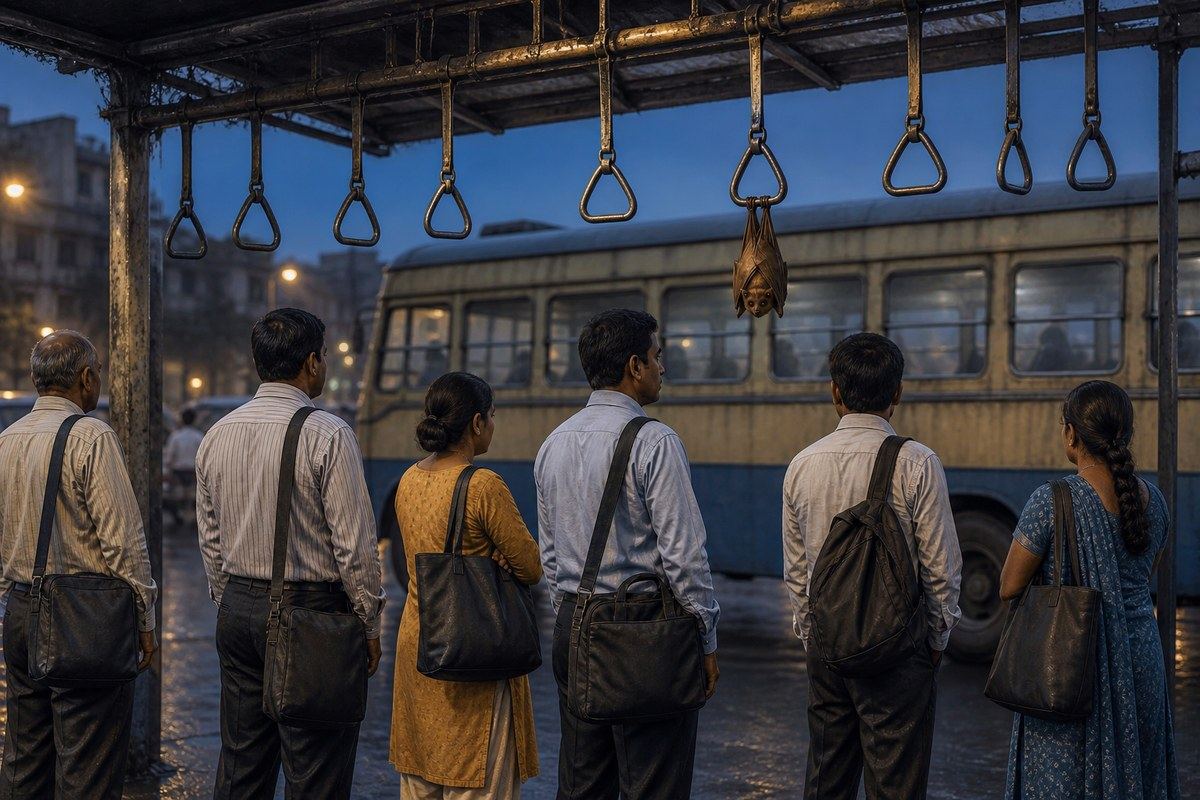
Because modern life increasingly feels like one of those old Ambassador cars held together entirely by rope, prayer, and contradictory noises.
The world insists this is sanity.
That is the joke.
The officially sane world appears completely deranged to me now. Everywhere you look there are educated maniacs managing institutions. Governments behaving like drunk uncles at weddings. Billionaires building rockets while ordinary people cannot afford onions. News channels shouting every evening like they are trying to exorcise Satan through panel discussions.
And social media. Good God.
A platform originally designed for sharing photographs of lunch has somehow evolved into a global psychiatric experiment.
Everybody performing happiness.
Everybody branding themselves.
Everybody becoming a product.
You are no longer merely alive. You must also market the fact.
Meanwhile I cannot even market myself properly. Somewhere inside me there remains the ghost of an intelligent man, but he now wanders around like a retired zamindar searching for servants in a house converted into a warehouse.
That is what underachievement feels like.
Not dramatic failure.
Not bankruptcy.
Not handcuffs.
Just the slow horror of becoming smaller than your younger self expected.
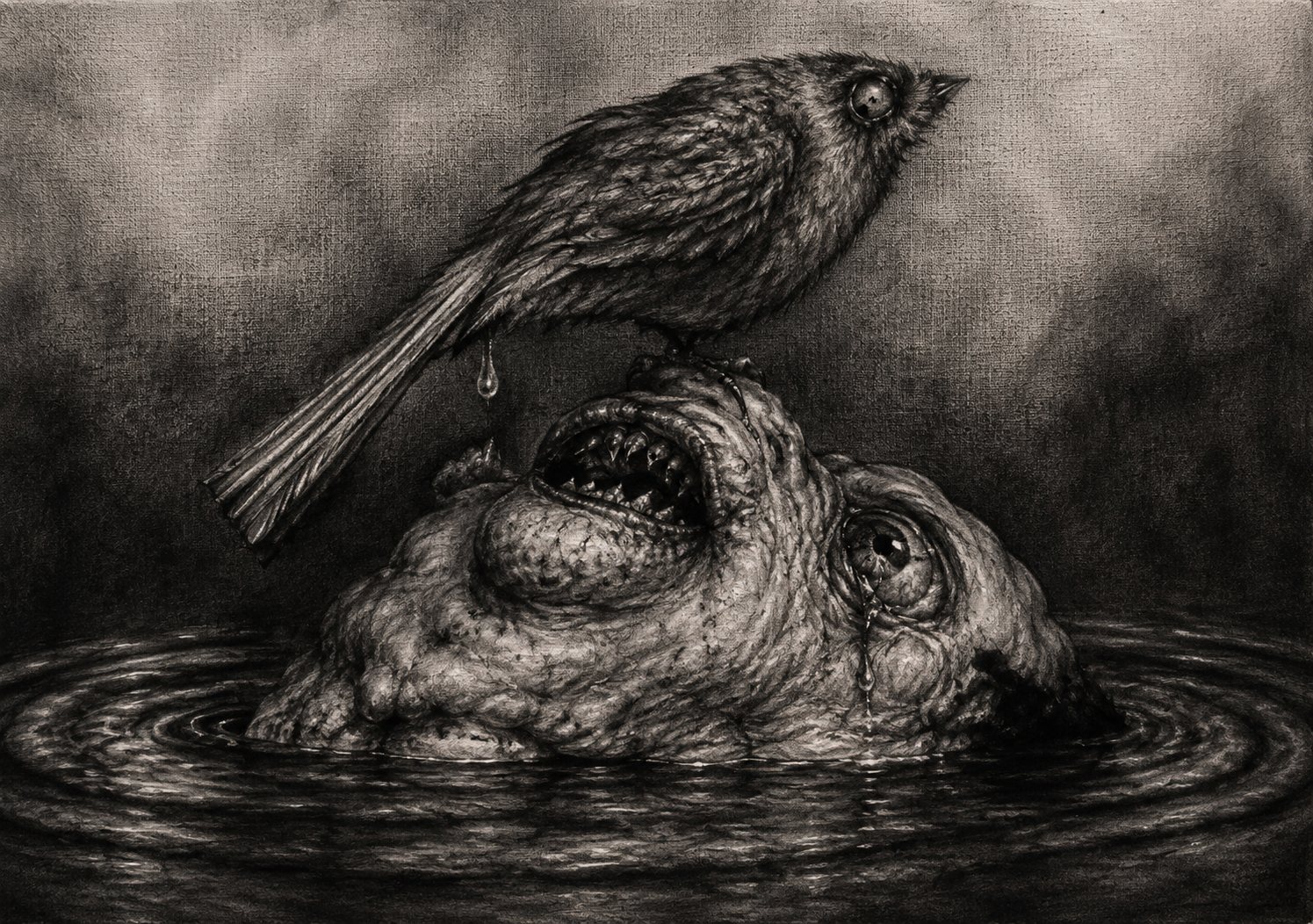
People misunderstand this completely. They think hopelessness arrives with thunder and lightning. Usually it arrives wearing bathroom slippers. Quietly. Casually. It sits beside you while you eat muri and says, “So. This is it then.”
And perhaps worse than failure itself is invisibility.
History only remembers a tiny number of people. The rest of us vanish like vapor from rice. Entire generations disappear without leaving so much as a sentence behind. Somewhere there was probably a brilliant man in 1842 who made excellent jokes about mangoes and understood the stars and loved someone deeply and died unknown beside a pond.
Gone.
Finished.
The universe did not pause for even half a second.
This realization hits differently after fifty.
When you are young, obscurity feels temporary. At fifty-one it begins feeling architectural.
You start understanding why old Bengali men stare silently from balconies.
They are not relaxing.
They are conducting archaeological excavations into their own lives.
Sometimes I wonder whether madness itself is actually the final honest response to modern civilization. Perhaps the madman is merely the only fellow refusing to participate in collective hallucination.
Because look carefully.
We spend our lives chasing money to buy things we barely use in houses we hardly inhabit while destroying our health to maintain schedules invented by people we dislike. Then motivational speakers arrive to explain “mindfulness” at ₹12,000 per seminar.
The whole arrangement feels like a circus designed by tax consultants.
And yet — here is the irritating thing — life still occasionally leaks beauty through the cracks.
A cool breeze in May after unbearable heat.
The smell of rain hitting dust.
A surprisingly good cup of tea.
An old Hemanta Mukhopadhyay song floating from somebody’s kitchen radio.
A stray cat sleeping with the confidence of Mughal royalty.
These tiny things keep sabotaging total despair.
You think you have reached philosophical finality. Then suddenly some roadside egg roll tastes so magnificent that existence receives a temporary stay order.
Human beings are absurdly easy to reboot sometimes.
So no, I no longer believe I am destined for greatness. That train has left Howrah Station long ago and probably derailed near Bardhaman. But I also no longer fully believe the darker verdict either — that I am merely disposable waste.
Depression loves absolute statements.
Reality rarely cooperates.
Maybe some lives are not meant to become monuments. Maybe some are only meant to become observations. A witness account from the edges. A tired Bengali fellow noting down what modern life feels like from inside the machinery.
That is still something.
Not fame.
Not victory.
But something.
And in an age where everybody is shouting, perhaps simply telling the truth in a human voice is already a minor act of rebellion.
Word Cloud
Related reading
Selected by shared topics and section, with closer publication dates breaking ties.