The Aromatics of Stagnation
Uses the speech voice supplied by your browser or device.

Acronyms used: AI — Artificial Intelligence, software that performs tasks we once thought needed human judgment, language, memory, or pattern recognition. US — United States, the foreign country that can turn a Bengali man into a professional and then, years later, become a rumor when his local circumstances collapse.
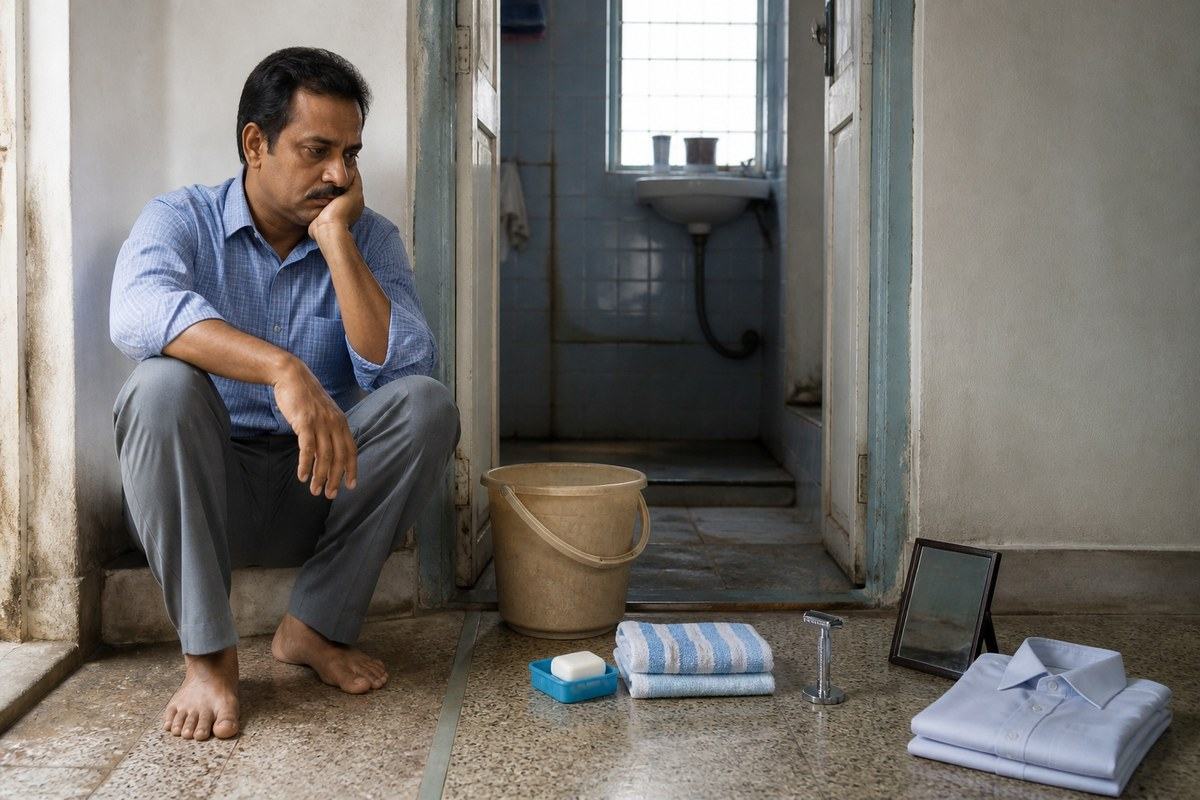
The lemon-scented liquid soap has been staring at me for days.
You may think soap cannot stare. You are wrong. Soap has a moral face. It sits in the wooden rack above the bathroom tap, yellow and optimistic, like a small plastic monk from a citrus monastery, silently offering redemption for ₹149. I sit outside its jurisdiction, smelling faintly of stale bedsheet, wet cupboard, and onions that once had plans.
This is not the pleasant laziness of a Sunday after rice, dal, fried begun, and one piece of fish large enough to create family politics. This is another species. This is the kind of stillness where the bathroom is six steps away but behaves like Ladakh. The towel hangs there. The tap waits. The soap glows. My body says, “We should bathe.” My brain says, “A committee has been formed.”
The committee has not met.
The tablets are doing what tablets do. They arrive in pink, white, blue, and other parliamentary colors, enter the bloodstream, and negotiate with the storm inside the skull. Without them, I might step out into the lane in my underwear, wave at the local tea stall, and announce that I have solved civilization by rearranging three matchboxes and a spoon. With them, the internal cyclone becomes a ceiling fan on a low regulator.
Useful.
But the pills do not make you want to get up. They do not lift your foot. They do not say, “Come on, old boy, one mug of water, then another, then soap, then rinse.” They do not handle the small logistics of being human. They merely prevent the orchestra from setting fire to itself.
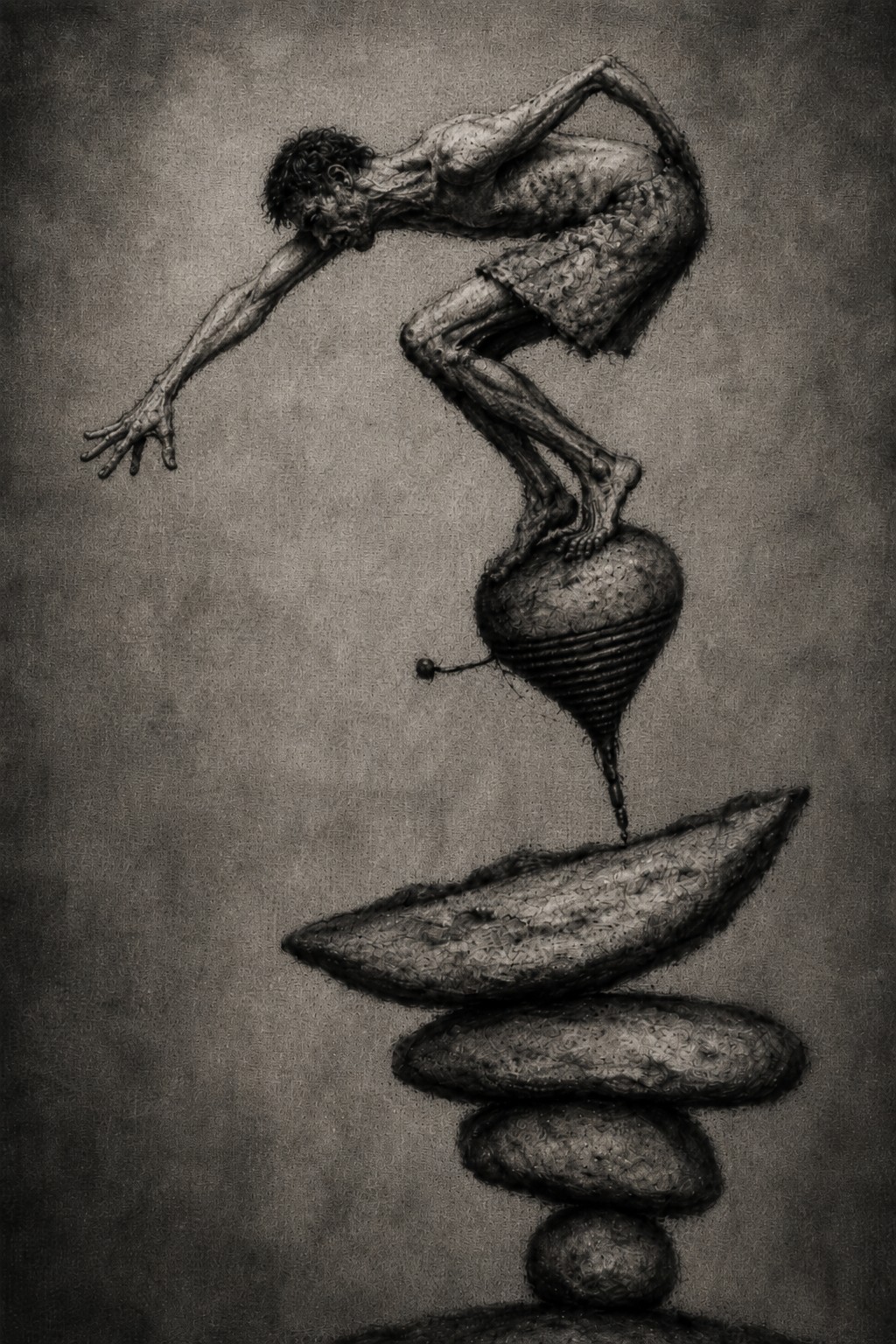
This is the part the cheerful posters miss. Stability is not joy. It is the floor not collapsing. Sometimes the floor remains, and you still lie on it.
I made the mistake of looking into the cupboard mirror. Never do this suddenly. A mirror is not furniture. It is a witness box.
There I was, a short Bengali man in cotton boxers from a lost dynasty, hair in mild revolt, face like a rejected passport photo, standing in a room on the southern fringe of Calcutta where the buildings all seem to have been constructed by men who were annoyed with geometry. I looked less like someone who had spent years working in technology in the US and more like a tired goblin who had been asked to leave his own cave for bringing down property values.
And here is the cruelty.
When you are doing well, your past sounds plausible. When you are not, even your facts start to look like borrowed clothes.
You say you worked in America. People look at your teeth.
You say you studied hard. People look at your slippers.
You say you built systems, handled data, worked late nights, paid Social Security, took risks, came back, tried a healthcare venture, burned money, failed, kept thinking, kept reading, kept breathing. People look at the room.
The room wins.
Respectability is a very poor historian. It does not check records. It checks posture.
This is why the soap hurts. It is not only soap. It is evidence. It says, “Here was a man who intended to remain civilized.” It says, “He bought me. He had plans.” It says, “The distance between intention and action is sometimes the width of a bathroom door, and sometimes the Bay of Bengal.”
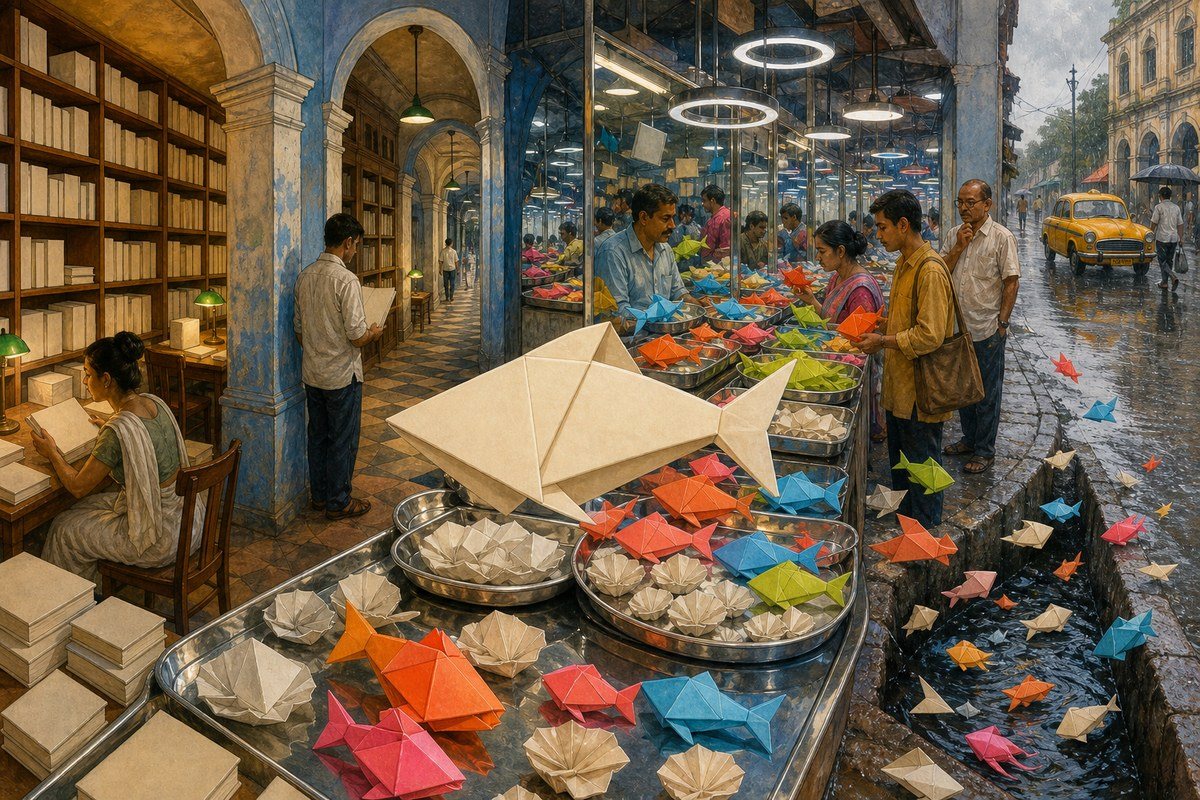
Outside, the city goes on conducting its daily opera of survival. A pressure cooker whistles from some nearby flat. A scooter coughs like an old uncle with opinions. Someone drags a chair across the floor above me with the tenderness of a prison guard. A vegetable seller shouts the price of tomatoes in a tone suggesting both market knowledge and personal betrayal.
The world has not stopped because I have not bathed.
This is rude but instructive.
Meanwhile, the bigger world is also beginning to smell slightly unattended. AI has entered the room with the confidence of a new landlord. It writes. It codes. It summarizes. It makes logos, poems, emails, excuses, and occasionally facts, though not always in that order. It is being sold as magic by people who would sell rainwater back to clouds if venture capital permitted it.
The funny thing is, I am not properly afraid of it.
I am tired enough to admire its stamina.
The machine may invent things, yes. But humans do that too, and then ask for consultancy fees. The machine may produce fluent nonsense. But have you attended Indian corporate meetings? Fluent nonsense has been our national indoor sport for decades. We did not need servers for that. We had conference rooms.
Still, something has changed.
Earlier, a mediocre office worker could survive by being available, agreeable, and slightly skilled at moving information from one container to another. Now a machine can move the container, paint it, label it, summarize it, and write a motivational paragraph about the journey. It may be wrong, but it will be wrong immediately. In today’s economy, speed often wears the crown that accuracy left on the bus.
You think the danger is that AI will replace all jobs.
Not quite.
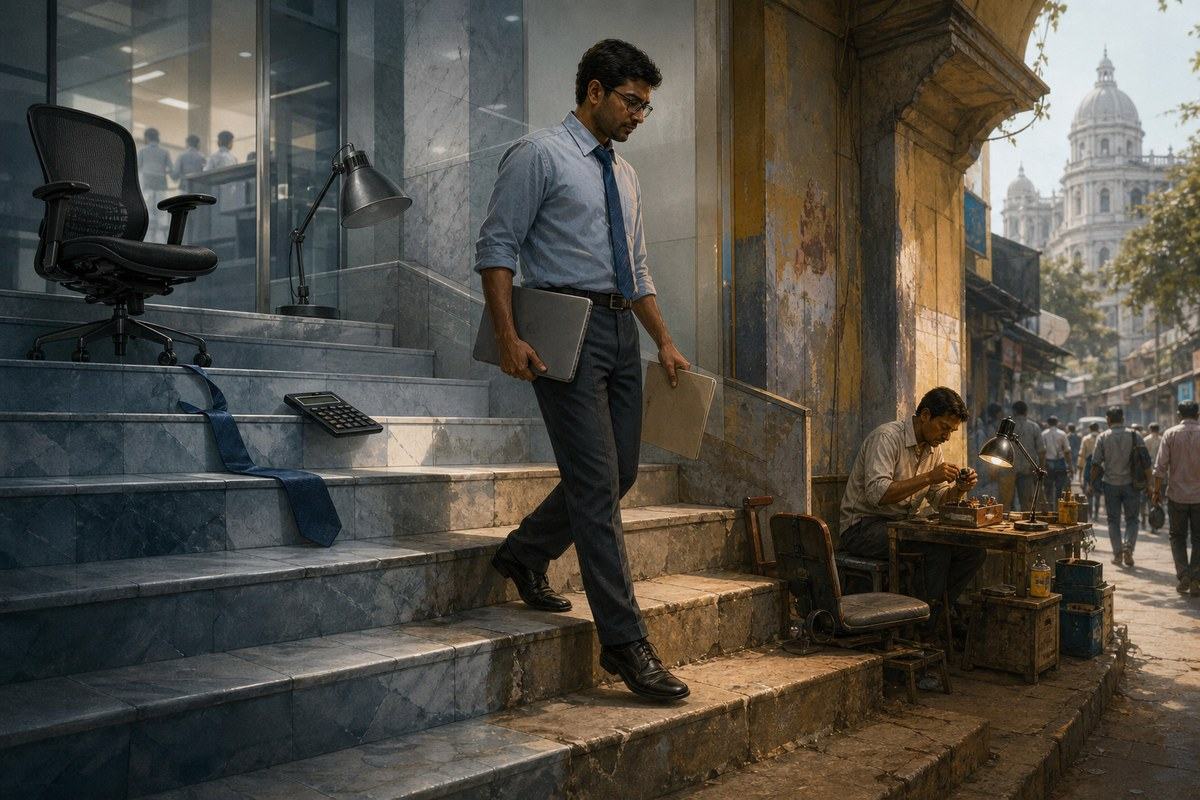
The danger is smaller and nastier. It will remove enough pieces from enough jobs that the remaining human being will not know what he is being paid for. One task gone. Then another. Then the reporting layer. Then the first draft. Then the analysis. Then the follow-up email. Then the little lie called “coordination.” Soon the job remains as a chair, a login, and a person trying to look necessary on video.
That is when the chest tightens.
Not dramatically. No violin. No black-and-white cinema rain. Just a dull weight while the tea gets cold.
Many people are about to discover that unemployment is not only loss of income. It is loss of sequence. Work tells you when to wake, when to wash, when to pretend, when to answer, when to be irritated, when to come home. Remove it, and the day becomes a pond without edges. Some people swim. Some float. Some slowly sink while everyone says, “He is probably resting.”
Resting can become a dangerous word.
Here in Calcutta, especially in the newer apartment blocks and ambitious concrete colonies, we have modernized loneliness beautifully. We have gates, guards, cameras, apps, delivery boys, intercoms, and neighbors whose names we do not know unless they park badly. We have replaced para gossip with digital silence. Earlier, the neighborhood was nosy enough to be a public health hazard. Someone knew if you had fever, debt, guests, fish, or scandal. It was suffocating. It was also a crude emergency system.
Now privacy has arrived wearing perfume.
Nobody knows anything until the smell comes from behind a closed door.
This is progress, apparently.
And yes, old Calcutta was not paradise. Let nobody start singing sentimental songs with a harmonium. The para could be cruel, intrusive, caste-minded, class-minded, and interested in your life for all the wrong reasons. But indifference is not kindness. A wall is not dignity. A food delivery app is not community. A lift full of silent people is not civilization. It is only a metal box with better lighting.
I know this because I am inside the experiment.
A middle-aged single man in a low-budget flat is not a tragic figure every hour of the day. Sometimes he is just a man making tea, looking for the least cracked cup, wondering why the biscuit packet has gone soft despite being sealed with a clothes clip. Sometimes he checks the news and sees another company cutting staff, another minister saying something polished and useless, another expert predicting the future with the calm face of a man whose own lunch is guaranteed. Sometimes he looks at the electric bill and feels a small ancestral panic rise from the soles of his feet.
Then the lizard appears.
There is always a lizard.
Mine was on the ceiling, moving with the seriousness of a tax inspector and the grace of a small gray gymnast. It stopped. It tilted its head. It calculated mosquito futures. Then it advanced.
No anxiety. No career gap. No LinkedIn headline. No venture failure. No need to explain why a man who once crossed oceans now finds a bucket of water intimidating. The lizard had a plan. I had soap.
This, I felt, was unfair.
But unfairness is not news. It is the oldest subscription service.
The mind, when it is ill, does not always scream. Often it becomes administrative. It postpones. It files. It says, “Tomorrow.” It says, “After tea.” It says, “Let us first think about the wider collapse of human labor under automation.” This sounds intellectual, but sometimes it is only a clever monkey avoiding a bath.
I know the monkey. He has my face.
There is a temptation to make all this noble. To say suffering gives insight, failure gives wisdom, depression gives depth, poverty gives authenticity, and all the other decorative nonsense people embroider on pain once it is safely someone else’s. I do not buy it. Suffering mostly gives you pending work. Failure gives you phone anxiety. Depression gives you laundry.
If wisdom comes, it comes limping.
Still, there is one thing failure teaches with brutal efficiency. It shows you the machinery behind respect. You learn how quickly people revise your biography once your income drops. You learn that honesty is admired mainly when it is profitable. You learn that jargon is often perfume sprayed over rot. You learn that many confident men are only loud cupboards with no shelves inside.
You also learn that small acts matter because large ones have become impossible.
Not heroic acts. Not cinematic transformation. Not “today I reclaim my destiny” nonsense set to background music. I mean small, ridiculous, almost insulting acts. Stand up. Open the window. Wash one cup. Put water on your face. Answer one email without hating the species. Use the soap.
Especially use the soap.
Because civilization, when the grand version fails, returns as a small household instruction.
The world may become colder. AI may eat half the clerical forest and burp out dashboards. Tech workers may discover that the future has arrived with a discount coupon and no pension. The lonely towers may continue glowing at night, each window holding one private weather system. India may continue rewarding swagger over substance, packaging over truth, and noise over decency.
Fine.
But there is still the tap.
There is still the mug.
There is still the lemon soap, smug little fellow, waiting in its rack like it knows the ending before I do.
I eventually got up. Not with triumph. With irritation. This is important. Many recoveries begin not in hope but in annoyance. Hope is too grand sometimes. Annoyance is reachable. Annoyance says, “Enough of this.” Annoyance has elbows.
I walked to the bathroom.
The soap did not applaud. The lizard did not pause. The city did not care. Somewhere the pressure cooker whistled again, because Bengal runs on steam, gossip, and carbohydrates.
I turned on the tap.
For a moment nothing happened. Then the water came, brownish for two seconds, then clear.
That seemed about right.
Word Cloud
Related reading
Selected by shared topics and section, with closer publication dates breaking ties.