One More Bhaar Cha Before Night Falls
Uses the speech voice supplied by your browser or device.

Acronyms used in this post:
Healthcare Information Technology [Healthcare IT]: The systems, software, data, and infrastructure used inside hospitals and healthcare organizations.
Electronic Health Record [EHR]: The digital medical chart used by hospitals and clinics.
The tea stall below my rented flat sells exactly three things properly.
Tea. Cigarettes. Illusions.
Everything else is unreliable.
The biscuits taste faintly of cardboard and old rainwater. The omelette arrives in geological time. The owner’s son cannot add properly. Last week he returned three rupees less and argued with me using the confidence of a Supreme Court lawyer defending constitutional law.
But the tea — ah, the tea — the tea could restart a dead marriage.
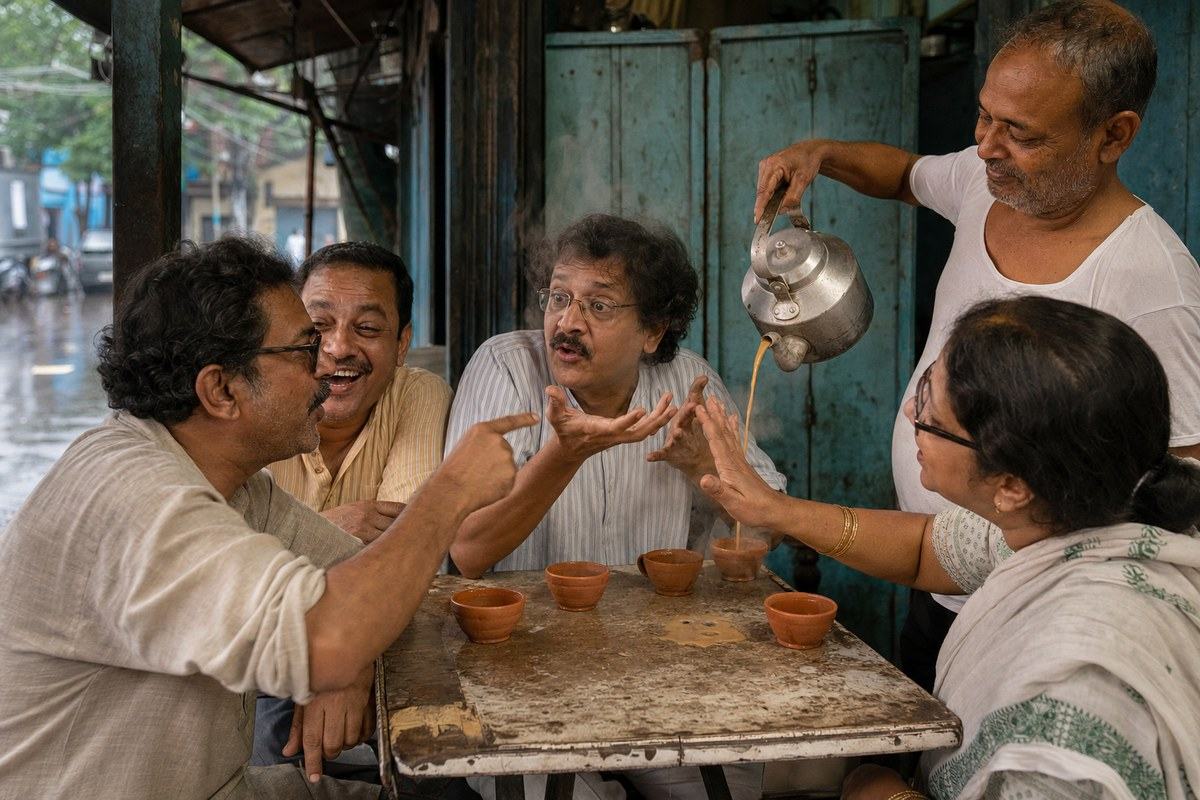
By five-thirty in the evening the stall begins glowing like a tiny lantern beside the drain. The summer heat sits over the lane like an unpaid relative refusing to leave after Durga Puja. The drains smell militant. Somewhere nearby somebody fries green chilies in mustard oil and the air itself becomes argumentative.
And then the men arrive.
Always the same species of men.
Middle-aged Bengali men with expanding waists and shrinking optimism.
Men in loose Bermuda shorts carrying newspapers they no longer trust but cannot stop buying. Men with blood pressure. Men with opinions on geopolitics. Men who have spent thirty years waiting for life to become reasonable and are slowly realizing this may have been a clerical misunderstanding.
The adda begins carefully.
One complains about electricity bills.
Another curses the humidity.
Someone predicts early monsoon with the confidence of the Indian Meteorological Department, which is to say not much confidence at all.
Then suddenly the conversation leaps sideways.
Iran.
China.
Hantavirus.
Cricket.
Petrol prices.
The Strait of Hormuz.
You sit there blinking into your tea wondering how a discussion about mangoes became a naval energy-security briefing.
That is Bengali adda.
No steering wheel. No brakes. No destination.
Yesterday a fellow with chronic acidity announced loudly that if Hormuz closes, oil prices will explode, America will panic, China will panic, India will panic, and ultimately “the common man will be finished.”
“The common man,” incidentally, was saying this while owing four teas on credit.
Another man interrupted him to discuss hantavirus because some rats had recently died near the canal.
Now everybody at the tea stall had become an infectious disease specialist.
One fellow declared cats are “natural virologists.”
Another said rats nowadays are becoming “international.”
A third man quietly continued eating butter biscuits throughout the discussion with the calm dignity of a buffalo observing political unrest.
At this exact moment the neighborhood cow arrived.
Every tea stall in Calcutta has one semi-official cow. Nobody owns it exactly. Nobody feeds it officially. Yet somehow it survives magnificently, like corruption or old Mohammed Rafi songs.
This particular cow wandered directly into the adda and began chewing a cardboard carton near the cigarette shelf while the men continued discussing global pandemics.
Nobody found this strange.
That is another thing visitors never understand about Calcutta. Human beings, cows, stray dogs, goats, crows, mosquitoes, and philosophical despair all coexist here with the loose administrative structure of an underfunded orchestra.
The tea seller pushed the cow gently aside without interrupting his argument about petroleum shipping routes.
“America won’t allow Hormuz to close,” he declared while pouring six teas simultaneously.
This from a man whose tea stall roof collapses slightly every monsoon.
But he said it with conviction.
And conviction is half the Bengali economy.
I usually stand near the side wall beneath a faded Pepsi sign old enough to qualify for archaeological protection. The tea glass burns the fingers slightly. Mosquitoes launch coordinated attacks against the ankles. Somebody’s cheap perfume mixes with sweat, frying oil, damp earth, and bidi smoke until the entire lane smells like exhausted civilization.
You would think this sounds miserable.
And it is.
But not entirely.
That is the trick of this city.
Calcutta never allows despair to travel alone. It sends snacks with it.
The tea stall radio plays old Kishore Kumar songs interrupted by advertisements for liver tonic and coaching centers promising government jobs by means not entirely explained. One man scratches a fungal rash while discussing international diplomacy. Another loudly predicts economic collapse before borrowing ten rupees for cigarettes.
And all around them the city sweats.
The walls sweat.
The buses sweat.
Even the dogs look overheated.
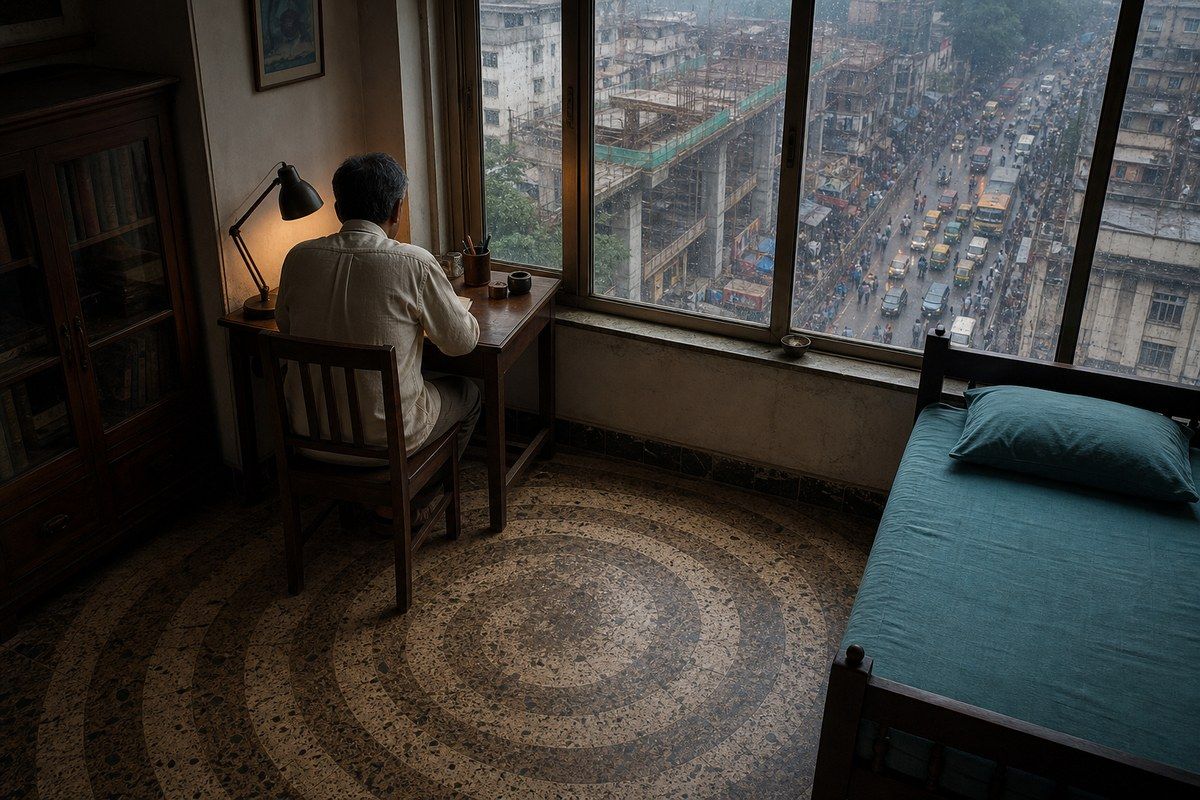
My rented room upstairs feels by evening like the inside of a damp suitcase forgotten in a railway cloakroom. The ceiling fan rotates with the enthusiasm of a government clerk three weeks before retirement. Paint peels from the walls in long exhausted strips. Sometimes at night I lie awake hearing local trains somewhere far away beyond the dark neighborhoods — that long mournful iron howl rolling across the city like somebody dragging chains through memory itself.
That sound does something to Bengalis.
A distant train at night always sounds like departure.
Like somebody else escaping.
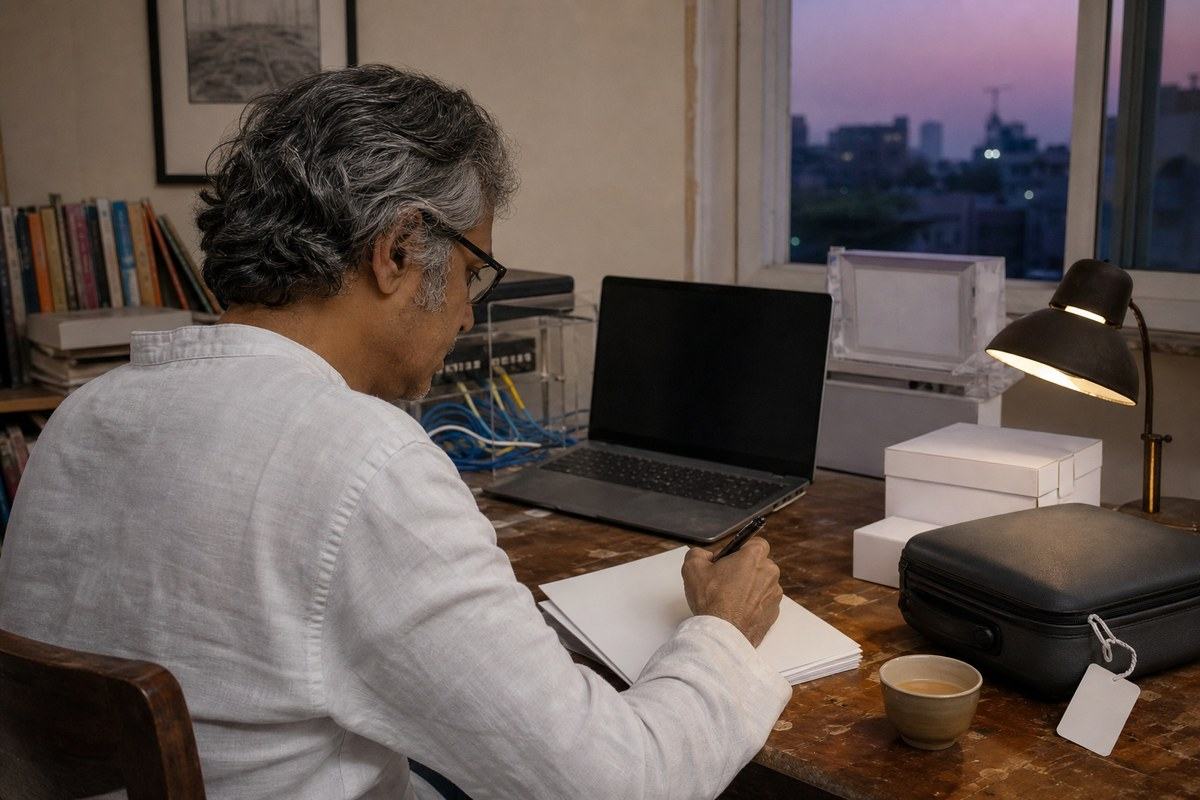
I spent fifteen years in America working in Healthcare IT. Fancy systems. EHR migrations. Endless meetings inside aggressively air-conditioned rooms where people discussed “workflow optimization” while eating sandwiches wrapped with the emotional warmth of printer paper.
And now here I am back in Calcutta standing beside a drain discussing hantavirus with unemployed men and a cow.
Life is not a straight line. It is one of those tangled electric wires hanging above Kolkata streets that somehow continue functioning despite violating every known law of engineering and possibly religion.
The funny thing is this tea stall contains more honesty than most corporate offices I ever worked in.
Nobody here pretends success is guaranteed.
Nobody says “living my best life.”
These men speak openly about cholesterol, failed sons, bad investments, cataracts, rising rents, anxiety, and fear.
Especially fear.
Middle age is when fear becomes domestic.
Not dramatic fear. Not movie fear.
Quiet fear.
Blood test fear.
Bank balance fear.
Phone-not-ringing fear.
Future fear.
One man tonight admitted softly that his daughter wants to move abroad permanently.
Nobody mocked him.
That silence sat heavily for a few seconds.
Then somebody suddenly asked whether modern chickens are genetically modified.
And just like that the adda swerved again.
That is how survival works here.
The mind never stays on pain too long. It keeps changing buses.
By nine o’clock the humidity thickens further. The tea seller washes glasses in water of deeply uncertain ancestry. The cow returns for a second inspection of the biscuit packets. Somebody lights one final cigarette. Somebody remembers cooking gas prices. Somebody else curses politicians in three languages.
Then from far away comes the sound again.
A local train crossing somewhere in the dark.
Metal roaring over tracks.
That lonely long horn floating through humid night air over old houses, tangled wires, sleeping dogs, sweating men, leaking roofs, unpaid bills, unfinished dreams, and one tiny tea stall still boiling sweet tea for whoever remains awake and worried.
Which, in this city, is practically everybody.
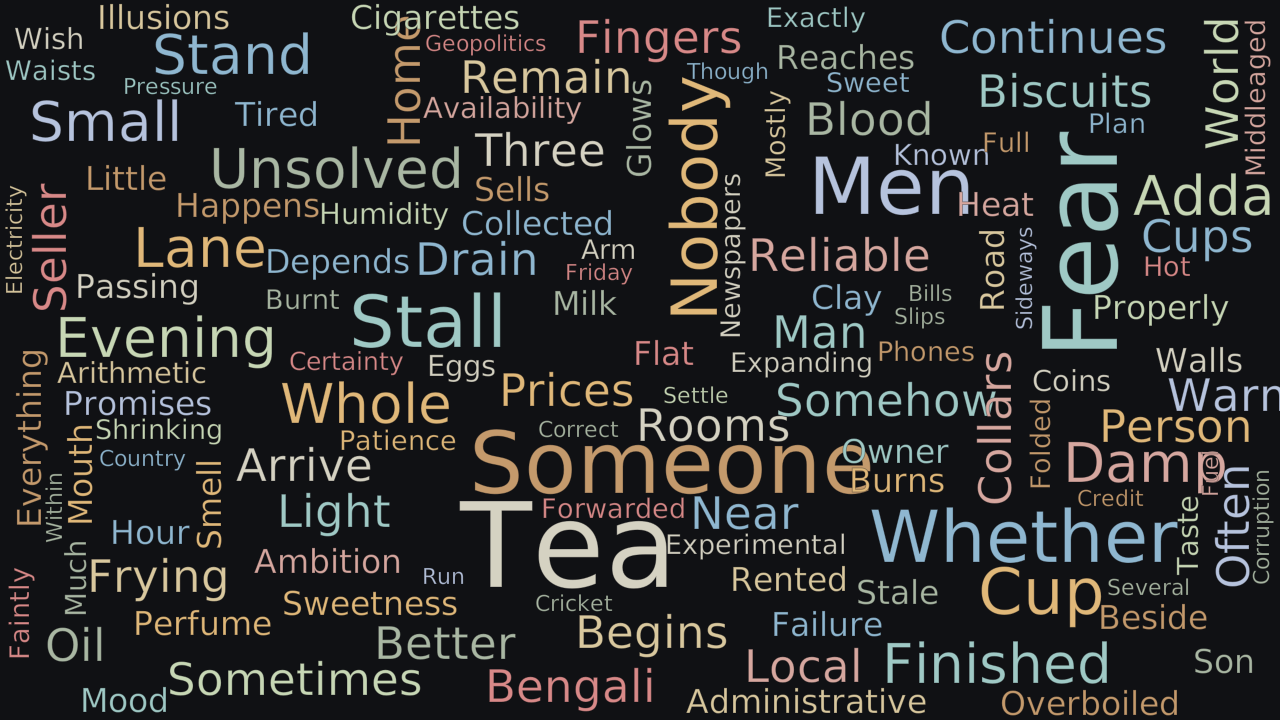
Word Cloud
Related reading
Selected by shared topics and section, with closer publication dates breaking ties.