The Man Held by the Neck
Uses the speech voice supplied by your browser or device.

ADR: Association for Democratic Reforms, an Indian civil society group that analyzes election affidavits, criminal cases, assets, and other public election data.
MP: Member of Parliament, an elected representative in Parliament.
ECI: Election Commission of India, the constitutional body that conducts and supervises elections.
SC: Supreme Court of India, the highest constitutional court in India.
FEOA: Fugitive Economic Offenders Act, a 2018 Indian law meant to deter economic offenders from avoiding Indian courts by leaving the country.
RSF: Reporters Without Borders, an international organization that publishes the World Press Freedom Index.
WIL: World Inequality Lab, a research group that studies income and wealth inequality across countries.
ILO: International Labour Organization, a United Nations agency that studies labor, employment, and work conditions.
GDP: Gross Domestic Product, the total value of goods and services produced in an economy.
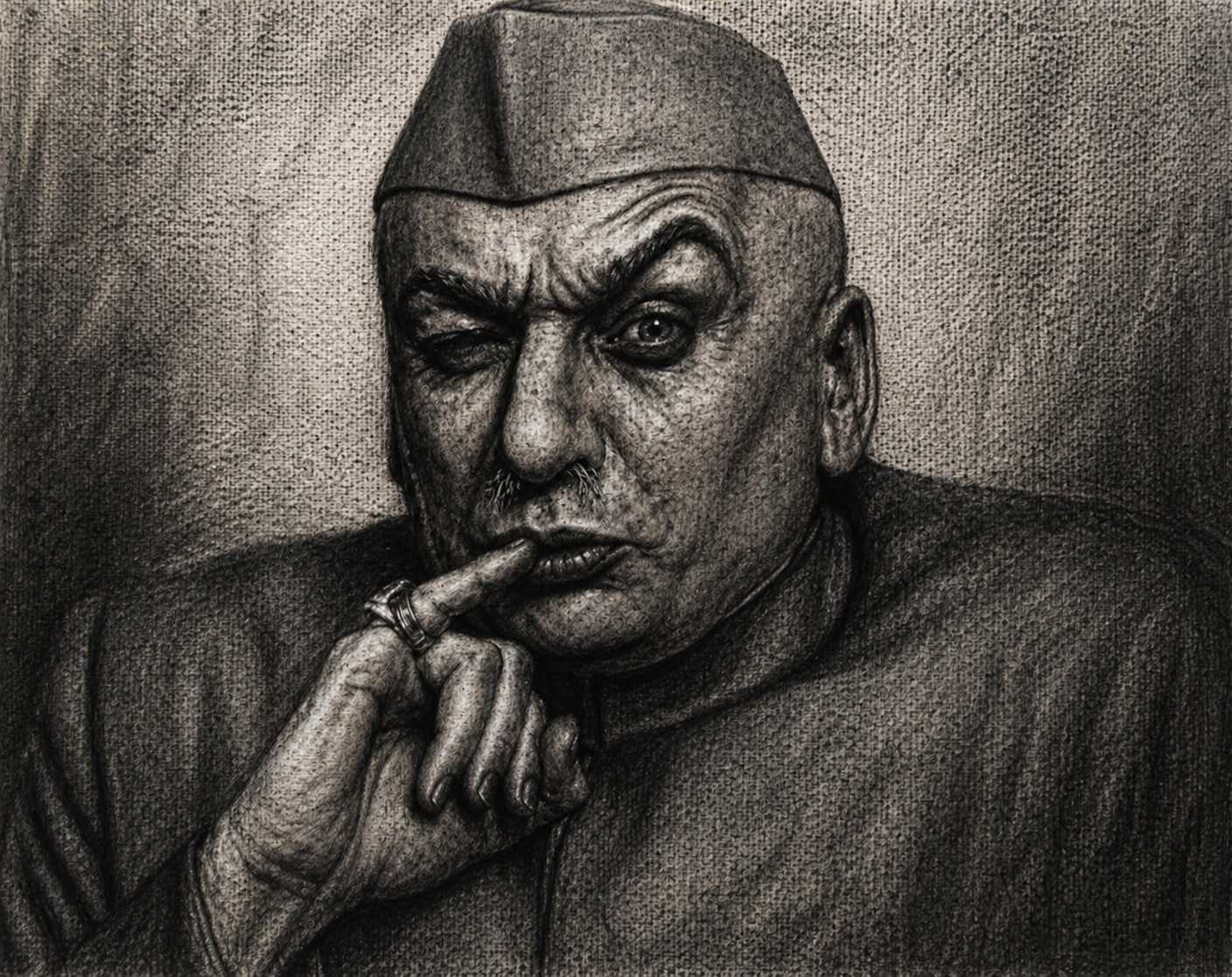
The picture does not whisper; it grabs you by the collar.
There is the common man, thin as a bad salary, eyes lifted toward some invisible department where justice is allegedly kept in stock. There is the large man in the cap, comfortable, amused, moist with power, holding him by the neck as if the Constitution were a kitchen rag and the citizen a stubborn pickle jar. The terrifying thing is not the violence. The terrifying thing is the leisure. He is not straining. He is enjoying himself.
That is how power looks when it has stopped pretending to be embarrassed.
A democracy does not always die in one theatrical night with tanks, curfews, and grim men announcing national salvation in bad microphones. Sometimes it dies in installments, like a refrigerator bought on credit. One month the police become selective. Next month the television becomes devotional. Then universities begin coughing politely before speaking. Then courts grow slow enough for injustice to raise a family. Then the citizen learns the new national yoga posture: neck slightly bent, mouth shut, documents ready.
And still there are elections.
That is the trick.
The polling booth remains. The flag remains. The slogan remains. The inked finger remains. The rallies remain, louder than a marriage band trapped under a flyover. But the citizen slowly discovers that voting is not the same thing as being heard, just as owning a pressure cooker is not the same thing as eating dinner.
In a healthy democracy, the citizen lends power to the ruler. In a subverted one, the ruler behaves as if he has inherited the citizen.
Kakistocracy is a fancy word for rule by the worst. It sounds like a skin disease acquired from a damp government chair, but the thing itself is very old. It is what happens when the shameless outrun the thoughtful, when the bully hires the priest, when the priest blesses the bully, when the banker smiles from the back room, and when the influencer edits the whole mess into a patriotic reel with drums.
You may think the villain is only the goon.
Not quite.
The goon is merely the visible fist. He is the gentleman who arrives at the booth, the land office, the police station, the protest, the campus, the club, the local market, the illegal construction site, the queue outside the hospital, and the mind of the citizen. He is not always physically present. That is his promotion. Once fear has done enough fieldwork, it becomes remote-controlled.
But he needs friends.
He needs the guru, who converts hunger into destiny, unemployment into discipline, humiliation into culture, and obedience into spirituality. He needs the business tycoon, who converts public banks into private oxygen cylinders and then discovers urgent international commitments in London, Dubai, Antwerp, or wherever accountability goes to wear sunglasses. He needs the elderly autocrat, who converts every criticism into treason while forgetting, with touching regularity, the difference between wisdom and seniority. He needs the influencer, who converts half-digested gossip into “breaking analysis” from a chair that looks as if it was purchased with affiliate-link money.
This is not government. This is a traveling circus with police permission.
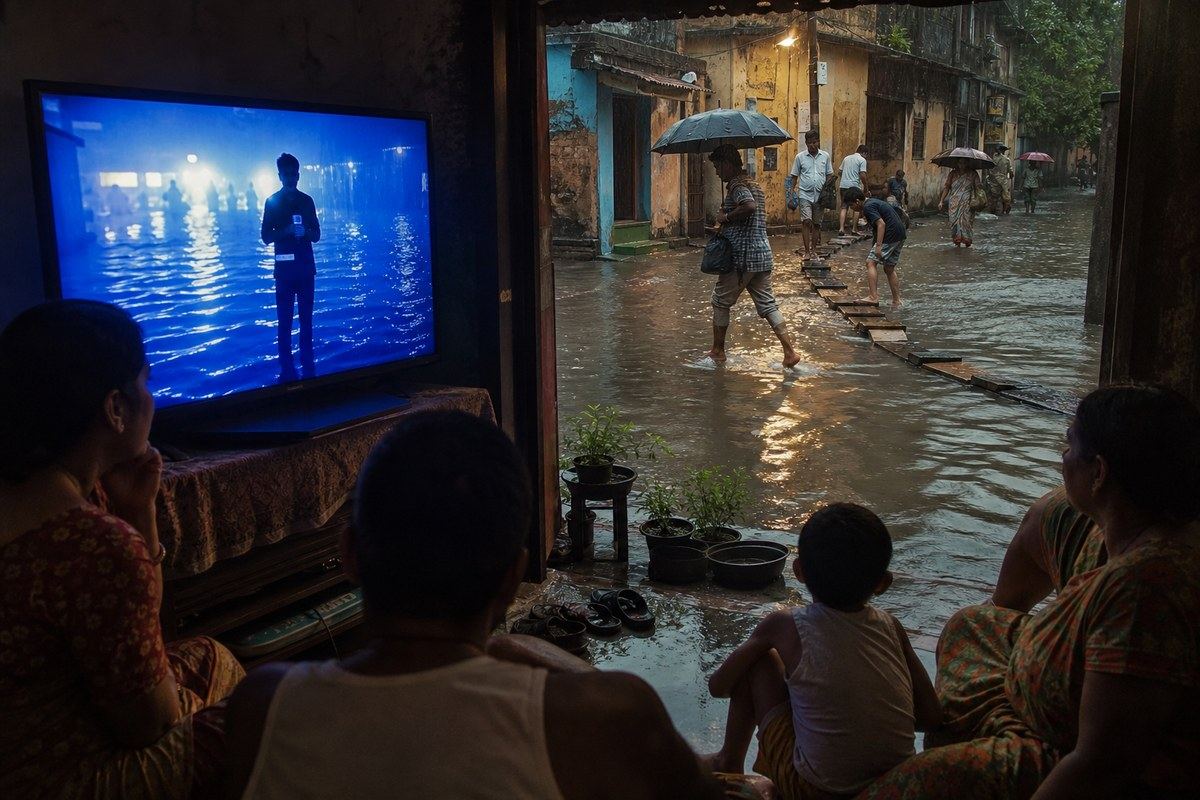
The common man watches all this from his lane in the outer edges of Calcutta, where the drain has a more reliable smell than the job market. Morning arrives with tea, sweat, the cry of the vegetable seller, and the little domestic thunderclap of checking bank balance on the phone. The phone says what it has been saying for years: no miracle today, try again after lunch.
The roof leaks. The news leaks. The future leaks.
Then some minister on television says the nation is rising.
Rising where, exactly? From my end of the city, the nation appears to be standing on one leg in a puddle, trying not to slip while billionaires discuss aspiration in air-conditioned halls named after dead freedom fighters.
Let us bring in some dull facts, because satire without facts is only a drunk uncle with adjectives.
ADR found that in the 2024 Lok Sabha, 251 out of 543 winning MPs had declared criminal cases against themselves. That is 46 percent. Serious criminal cases were declared by 170 winners, or 31 percent. These are not rumors from a tea stall. These are election affidavits, the republic’s own paperwork wearing a worried expression.
And what do we call such candidates?
We call them “strong.”
A clean candidate is “weak.” A thoughtful candidate is “academic.” A decent candidate is “not practical.” A candidate with money, muscle, caste arithmetic, media machinery, ten pending cases, and a smile like a padlock is “winnable.”
There. The diagnosis is complete.
We did not accidentally create a system that rewards thuggery. We built a toll road for it.
Then comes wealth, that polite word for accumulated permission. WIL reported that by 2022-23, India’s top 1 percent held 22.6 percent of national income and 40.1 percent of wealth. Think of that number slowly. Forty percent of the wealth in the hands of one percent. It is like inviting one hundred people to dinner, giving forty percent of the food to one man, and then asking the ninety-nine others to clap because the dining room has excellent GDP lighting.
The poor are told to be patient.
The middle class are told to be proud.
The young are told to be skilled.
The old are told to be nostalgic.
And the very rich are told, softly, privately, and with expensive cutlery, “Sir, would you prefer the policy before or after dessert?”
This is where democracy begins to resemble a sweet shop where the glass counter is public but the kitchen belongs to a few families. Outside, citizens press their noses to the display. Inside, laddoos the size of planets are being moved through side doors.
Some will say inequality is natural. Of course inequality is natural. One person sings better, one person runs faster, one person makes perfect luchis, and another produces circular rubber disasters that could be used in municipal road repair. But political inequality disguised as market success is not natural. Regulatory favoritism is not natural. Bank loot is not natural. Public loss and private escape are not natural. These are not acts of weather. These are plumbing arrangements.
And what plumbing.
The large borrower is a tragic entrepreneur. The small borrower is a defaulter. The large man restructures debt. The small man receives notices. The large man hires counsel. The small man sells jewelry. The large man leaves the country. The small man cannot leave the branch manager’s chair.
India passed FEOA in 2018 because some economic offenders had made a new national sport of borrowing in India and breathing abroad. Vijay Mallya, Nirav Modi, Mehul Choksi: these names became not merely individuals but household metaphors. They entered the language like stains. A man missing after borrowing money is now not merely absent; he has “done a Mallya.” That is how satire becomes vocabulary.
Meanwhile, the common man must prove he exists.
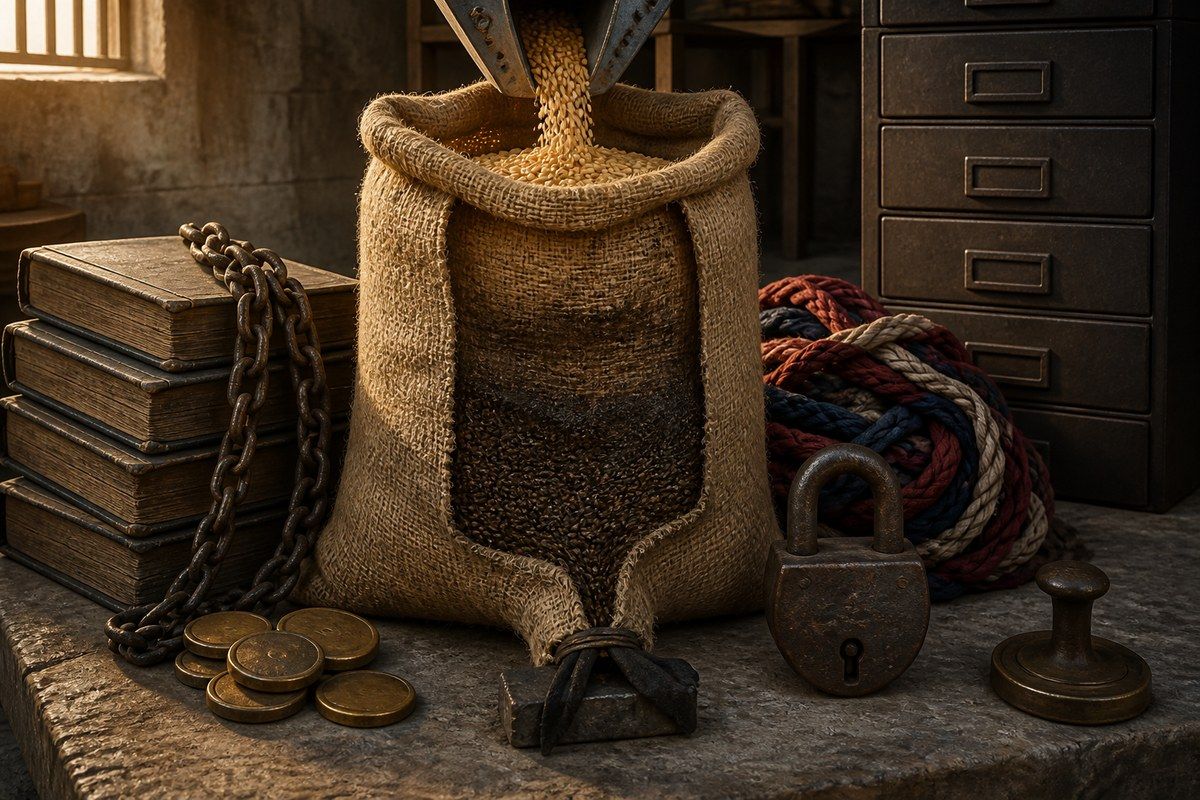
He proves his address, his identity, his income, his caste, his age, his phone number, his mother’s name, his father’s spelling, his bank linkage, his biometric obedience, his eligibility, his non-eligibility, his eligibility after appeal, his appeal after rejection, and his rejection after the portal times out. He stands in line with a folder fat enough to qualify as a dependent child.
The rich man has compliance.
The poor man has photocopies.
A democracy that makes the weak prove everything and the strong explain nothing is not merely unequal. It is comic in the darkest possible way, like a burning house issuing parking tickets.
Then there is political money.
The SC struck down the electoral bonds scheme in 2024 for violating voters’ right to information. This was not a small procedural sneeze. It was the highest court saying, in constitutional language, that citizens cannot make meaningful political choices when money walks through the system wearing a mask. The ECI later published electoral bond data after the court’s directions. For a moment, a curtain lifted. What we saw was not democracy’s clean kitchen. It was a back room with footprints, ledgers, and a smell of old oil.
You think corruption is always a suitcase of cash under a bed.
Actually, modern corruption often wears a suit, carries a board resolution, speaks in neutral English, and says “regulatory alignment.”
This is why the influencer age is so useful to power. It does not need to prove; it needs to distract. It does not need to govern; it needs to trend. Yesterday a bridge collapsed, today a celebrity married, tomorrow a student protested, by evening a panel screams, by night a clip circulates with ominous music, by morning half the country has forgotten the original question.
The original question was simple: who benefits?
But simple questions are dangerous. They fit in the mouth of a common man.
So he is given complicated emotions instead. Rage against neighbors. Pride without wages. History without footnotes. Religion without compassion. Nationalism without public hospitals. Development without jobs. Freedom without fearlessness.
What an extraordinary buffet. Everything except dignity.
The press should help here. That is the theory. In practice, much of the press now behaves like a house cat in a minister’s bungalow: sleek, decorative, and unlikely to scratch the owner. Not all journalists, of course. Many still do brave work under miserable conditions, with lawsuits above them, trolls below them, advertisers beside them, and editors behind them whispering caution into the spine. But the larger media ecosystem has learned the choreography of obedience.
RSF ranked India 151 out of 180 in 2025 and 157 out of 180 in 2026. Freedom House rated India “Partly Free” in 2025. One may object to foreign indices, and sometimes one should. Every index has assumptions. Every ranking has its little attic full of methodology spiders. But when thermometer after thermometer shows fever, the patient cannot keep blaming glass.
Look around.
Students study for exams that get postponed, leaked, litigated, or swallowed by bureaucracy. Graduates collect certificates like dry leaves. Parents sell land for coaching. Young men and women sit in rooms with LED bulbs and plastic chairs, memorizing facts for jobs that may not arrive. ILO’s India Employment Report 2024 pointed to the mismatch between education and available work, especially for educated youth. In plainer language: the country has made millions of young people literate enough to understand their own disappointment.
That is a dangerous achievement.
Because a hungry man may revolt.
But an educated, underemployed, humiliated man first becomes quiet. Then sarcastic. Then bitter. Then available.
Available to sectarian anger. Available to conspiracy. Available to the politics of resentment. Available to the leader who says, “Your problem is not the broken economy; your problem is that other fellow over there.”
The magician waves a flag with one hand and picks your pocket with the other.
And because the trick is old, he performs it with confidence.
The gerontocracy adds another layer of varnish to the coffin. Age can bring wisdom. It can also bring fossilization with a security detail. A society run by old men who neither understand the young nor trust them becomes a museum with police barricades. They speak of sacrifice while occupying every chair. They speak of morality while protecting every crook useful to them. They speak of culture while flattening language, food, music, books, jokes, and memory into one official paste.
India is too large, too old, too quarrelsome, too musical, too hungry, too clever, too vulgar, too tender, and too magnificently disobedient to fit inside one paste tube.
But that does not stop them from squeezing.
What is left for the common man?
This is the question the image asks. Not politely. It asks with knuckles.
What is left after the goon takes safety, the guru takes doubt, the tycoon takes credit, the party takes truth, the influencer takes attention, and the state takes your afternoon for another verification?
Some things remain.
Memory remains. The common man remembers who came during floodwater and who came only during elections. He remembers which leader’s son got the contract. He remembers which officer helped. He remembers which journalist asked the forbidden question. He remembers which neighbor was taken away for a post. He remembers the price of cooking oil. Never underestimate that. Revolutions, reforms, and voting swings often begin not in ideology but in the kitchen.
Humor remains. This is not a small thing. Humor is the last matchstick in the pocket of the powerless. The citizen jokes because he cannot yet scream. He says, “Everything is fine,” in the tone of a man watching a goat drive a bus. He calls the leader “visionary” and then buys onions like a defeated philosopher. He forwards memes, curses softly, adjusts his spectacles, and continues.
Work remains. Invisible work. Women stretching one rupee into three meals. Fathers filling forms. Mothers bargaining with vegetable sellers as if negotiating international treaties. Tutors teaching algebra in rooms where ceiling fans chop the heat into warm slices. Nurses, clerks, drivers, sweepers, mechanics, coders, delivery boys, retired uncles, small shopkeepers, unemployed graduates, all holding up the republic from below while men above give speeches about greatness.
And witness remains.
That upward look in the picture matters. The man being held by the neck has not closed his eyes. He is frightened, yes. He is humiliated, yes. But he is looking. He is registering the insult. He is keeping evidence in the only court power cannot fully capture: memory.
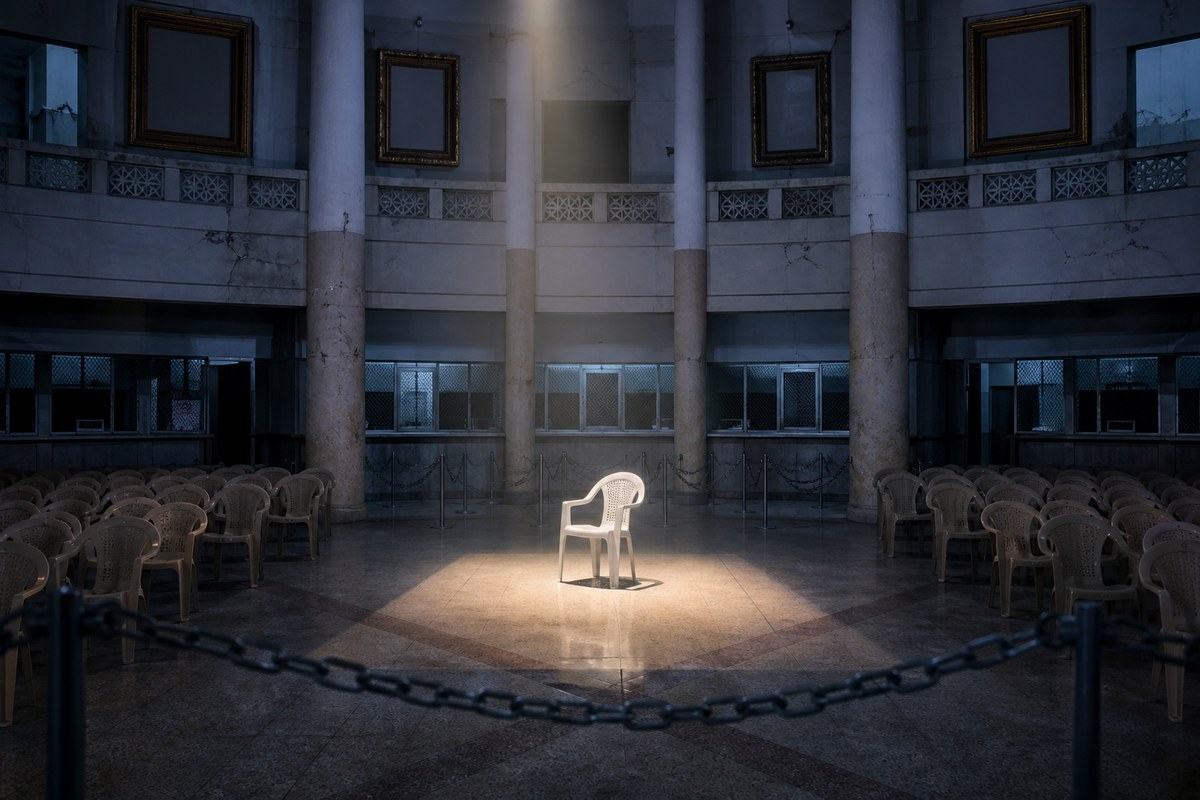
A subverted democracy wants the citizen to feel alone. That is its deepest trick. It wants each man to think his fear is private, his anger foolish, his poverty personal, his unemployment deserved, his helplessness shameful. It wants the citizen to whisper in separate rooms.
But the common man is not alone.
He is millions. He is in Cossipore, Behala, Baruipur, Howrah, Patna, Lucknow, Guwahati, Surat, Kochi, Ranchi, Delhi’s margins, Mumbai’s rented corners, small towns with big coaching centers, villages where the young leave and the old wait. He is the man with a cracked phone screen. She is the woman with the account book. They are the parents outside the exam center. They are the workers under the flyover. They are the clerks who know where files go to die. They are the students who suspect the future has been mortgaged without their signature.
The goon’s hand looks large.
But it is not larger than the country.
That is the one fact power always forgets. It mistakes silence for consent, fear for loyalty, ceremony for legitimacy, and victory for wisdom. It forgets that citizens may bend for years and still not break in the approved direction. It forgets that a republic is not a throne room. It is a memory machine. It stores insult.
Not forever quietly.
So yes, the man is being held by the neck.
But the hand is not history. The hand is only a hand.
And hands tire.
P.S. References: Association for Democratic Reforms and National Election Watch analysis of criminal cases among 2024 Lok Sabha winning candidates; Supreme Court Observer summary of Association for Democratic Reforms v Union of India, 2024 INSC 113, on electoral bonds; Election Commission of India disclosure of electoral bonds data; World Inequality Lab working paper “Income and Wealth Inequality in India, 1922–2023: The Rise of the Billionaire Raj”; International Labour Organization and Institute for Human Development, India Employment Report 2024; Reporters Without Borders India country profile and World Press Freedom Index 2025 and 2026; Freedom House Freedom in the World 2025 India report; Fugitive Economic Offenders Act, 2018.
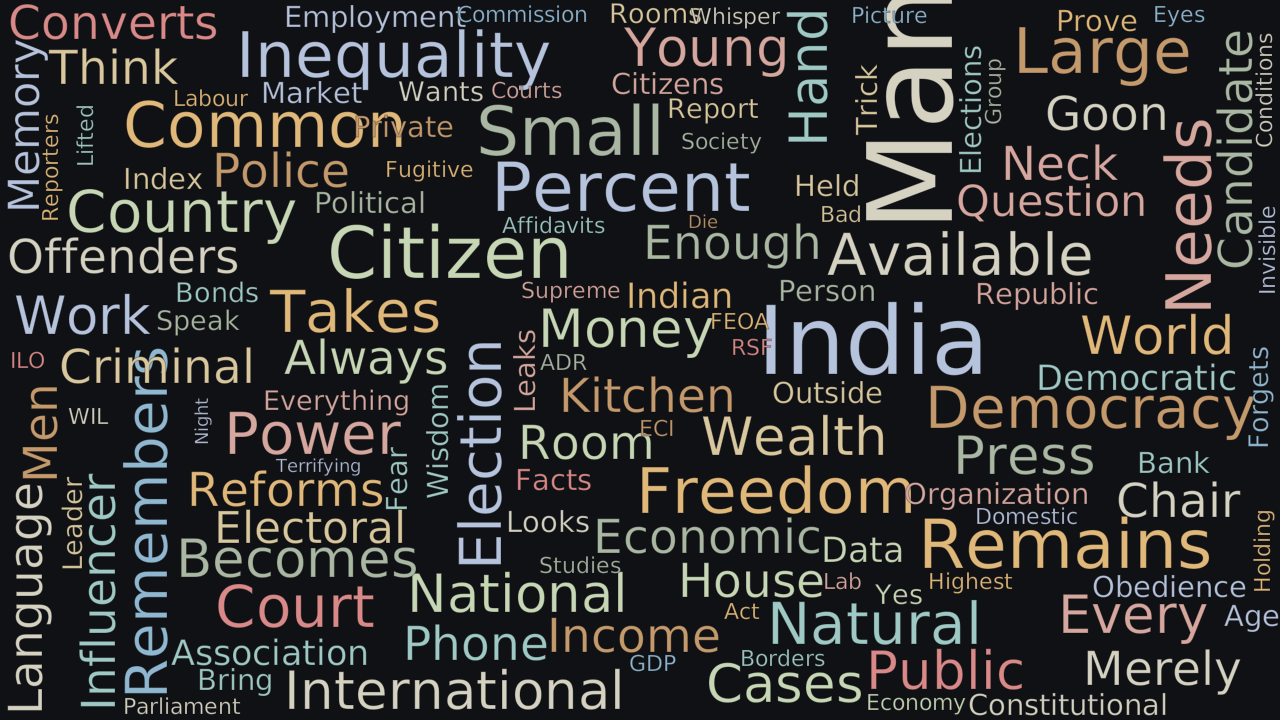
Word Cloud
Related reading
Selected by shared topics and section, with closer publication dates breaking ties.