What India Meant by Demonetization, and Where We Are
Uses the speech voice supplied by your browser or device.

Acronyms used: UPI [Unified Payments Interface, India’s instant mobile bank-to-bank payment system]; NPCI [National Payments Corporation of India, the organization that operates major Indian retail payment systems including UPI]; RBI [Reserve Bank of India, India’s central bank]; GDP [Gross Domestic Product, the total value of goods and services produced in an economy]; ATM [Automated Teller Machine, the cash-withdrawal machine that becomes a small temple during currency panic].
Demonetization was the night the Indian state looked at money and said, “Come to the counter and explain yourself.”
That was the real drama. Not economics first. Not even corruption first. Confession first. On November 8, 2016, the ₹500 and ₹1,000 notes were told to retire at midnight, and ordinary India, which had been preparing for dinner, medicine, bus fare, weddings, wages, rent, school fees, and tomorrow morning’s fish, suddenly discovered that most of its cash had become a government form with Gandhi-ji’s face on it.
This is the sort of thing that sounds grand in a speech and becomes sticky in a kitchen.
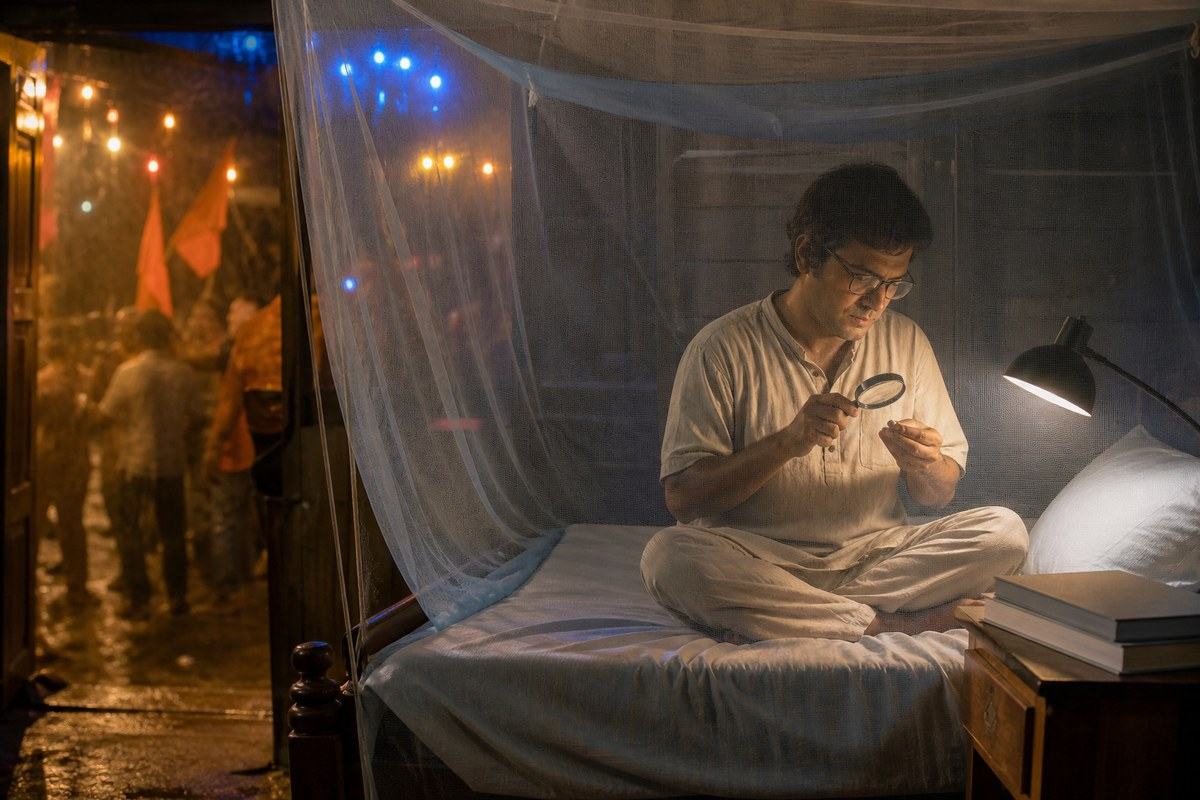
One minute, a note is money. Next minute, it is evidence. You may deposit it, exchange it, defend it, queue with it, sweat over it, explain it, but you may not simply spend it as you did yesterday. Money, that modest servant, had become a suspect.
The official story came with many villains: black money, fake notes, terror funding, corruption, cash addiction. A full Sunday crime serial. Later, another hero entered the plot wearing a clean shirt: digital payments. Suddenly the nation was not merely fighting corruption; it was leaping into the future, preferably by scanning a square code taped to a tea stall.
Now, let us be fair. India had, and still has, serious problems with unaccounted wealth. Anyone who has bought land, hired a contractor, dealt with local permissions, watched election spending, or paid someone who says “bill lagbe?” knows that the formal economy and the real economy are cousins who meet at weddings but do not always speak openly.
But here was the catch.
Black money is not mostly a villain sitting on a mattress stuffed with notes like a greedy uncle in a bad Bengali play. Some cash exists, yes. Plenty. But serious hidden wealth likes better accommodation. Land. Gold. Shell companies. Inflated invoices. Under-reported turnover. Political funding. Benami property. A little here, a little there, like damp in an old Calcutta wall. You do not fix damp by repainting the calendar.
This was the first broken assumption: that killing old notes would kill hidden wealth.
It did not.
Nearly all the demonetized notes returned to the banking system. That fact alone does not prove every rupee was innocent. A crook can also stand in line. But it did puncture the fireworks version of the story, where mountains of dirty cash would simply burn away while honest citizens applauded with patriotic hunger.
The bonfire never arrived.
Instead, something stranger happened. India endured a giant liquidity shock, and then we gave it slogans because otherwise we would have had to call it pain.
A liquidity shock is a cold phrase. It sounds like something an economist says after losing his umbrella. On the ground, it meant a mason missing wages. A maid waiting for payment. A small shopkeeper unable to buy stock. A farmer delaying a sale. A wedding family suddenly negotiating with panic. A bus conductor with no change. A grandmother who had saved cash quietly because banks, husbands, sons, daughters-in-law, and fate are not always reliable institutions.
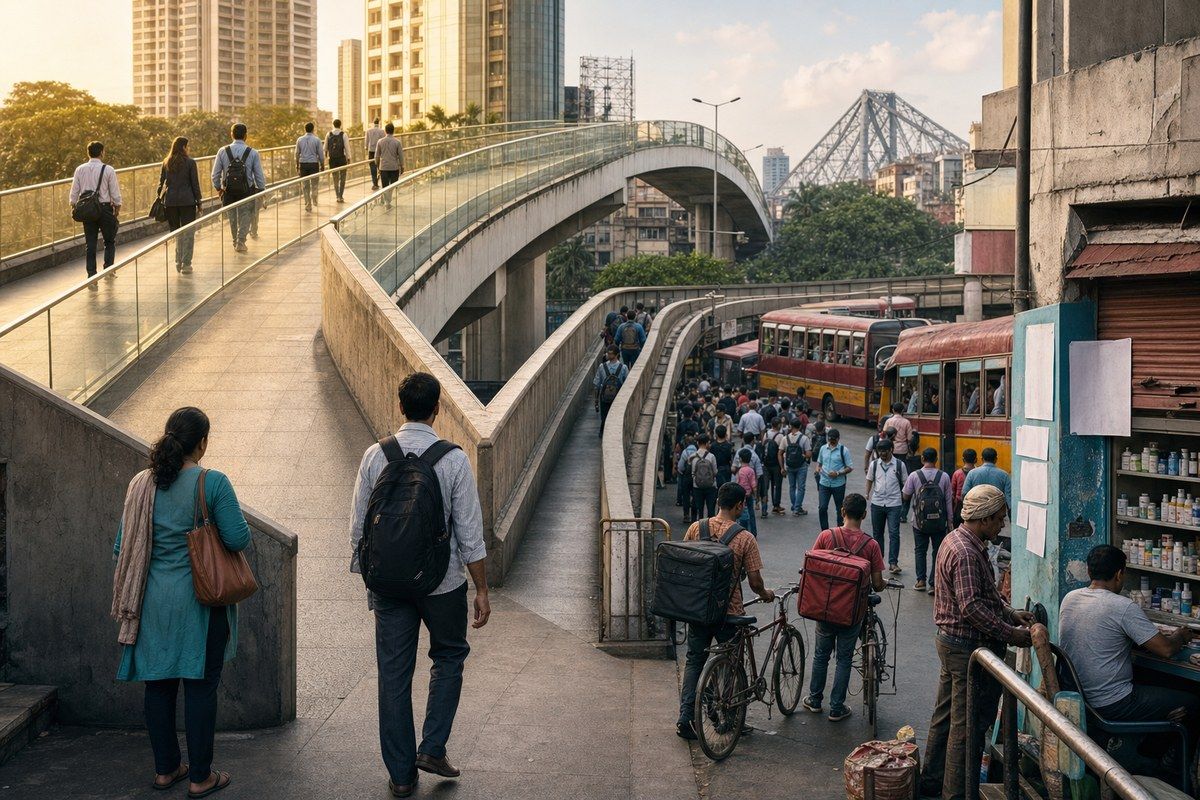
I remember those days from the southern edge of Kolkata, where the city begins to thin out into half-urban stubbornness: broken pavements, tea stalls, pharmacy lights, dogs sleeping as if they own municipal authority, and people discussing national monetary policy while buying two eggs on credit. This is India’s true parliament. No microphones. Better attendance.
The middle class talked of sacrifice. The poor performed it.
That line matters. Because demonetization was experienced differently depending on whether your money lived in a bank account or in a metal box under folded sarees. If you had salary deposits, cards, online banking, and a boss who did not pay you daily, demonetization was an ordeal with moral decoration. If you lived on cash flow, it was a hand pressing down on the day’s throat.
Cash in India is not merely a payment instrument. It is memory. It is trust. It is a promise between people who may not have paperwork but have reputations. The grocer knows who pays late. The tailor knows whose daughter’s wedding is coming. The fish seller knows which customer argues every morning and still pays by Saturday. Cash moves through these little channels like water through narrow lanes after rain.
Demonetization treated cash as if it were the disease.
Often, cash was the bandage.
And yet, because India refuses to be simple, demonetization was not only failure. It was also a shove. A brutal shove, but a shove. It pushed people toward accounts, apps, cards, wallets, and eventually UPI. The tea stall got a QR code. The auto driver got a payment app. The vegetable seller learned to say, “PhonePe korben?” with the weary elegance of a man who has accepted modernity but does not admire it.
But we must not give demonetization too much credit. UPI did not grow because one night the Prime Minister made cash misbehave. UPI grew because many pipes met underground: cheap mobile data, smartphones, bank accounts, identity systems, app design, merchant adoption, and the simple fact that paying instantly without hunting for change is convenient.
Convenience is more persuasive than patriotism.
That is why the story after 2016 is not “cash died.”
Cash did not die. Cash went home, changed clothes, and returned.
The real story is cash-plus-digital. That is India’s actual creature. Not Sweden with samosas. Not Silicon Valley wearing a kurta. India. A place where a man may receive UPI for business, pay rent in cash, buy gold for safety, under-report income from fear, and lecture his nephew about corruption while negotiating a discount without a bill.
This is not hypocrisy alone. It is survival in a system where the rules are many, enforcement is uneven, paperwork is tiring, and trust in institutions is not something people download from an app store.
By 2026, UPI is enormous. That much is not propaganda. It is one of India’s genuinely important public technologies. Money moves between ordinary people at a speed that would have looked like magic to the old bank clerk with ink pad, ledger, and a lunchtime that stretched from archaeology to sunset. Small merchants use it. Students use it. Drivers use it. People who never owned a card machine now accept digital payment.
That is a real gain.
But here is the second trap: digital payment is not the same as formal economy.
A man may accept UPI and still remain informal. His accounts may be rough. His taxes may be partial. His credit may come from a local lender. His business may depend on family labor. His supplier may prefer cash. His fear of the tax department may be larger than his love of transparency. His life has not become formal just because one transaction left a trail.
This is where policy often becomes smug. It sees a QR code and thinks civilization has arrived.
No. A QR code is a doorbell. It is not the house.
The house is credit, taxation, bookkeeping, dispute resolution, consumer rights, business registration, insurance, working capital, enforceable contracts, and the confidence that the state will not suddenly change the rules while you are frying telebhaja in the evening.
Demonetization revealed this gap. Payments can modernize quickly. Livelihoods do not.
That is why India today looks contradictory only if you expect countries to behave like PowerPoint slides. We have soaring digital payments and rising cash in circulation. We have QR codes in tiny stalls and cash-heavy real estate habits. We have bank accounts everywhere and financial anxiety everywhere. We have data trails, but also distrust. We have convenience, but not necessarily confidence.
The floor did not collapse. But it creaked loudly.
The Supreme Court later upheld the legality of the 2016 demonetization decision by majority. One dissent argued that the process should have gone through Parliament. That matters constitutionally. Still, legality does not settle wisdom. A thing can be lawful and still be clumsy. A thing can be bold and still be badly aimed. A thing can be popular and still hurt the wrong people.
This is not a partisan point. It is a plumbing point. If you strike a pipe with a hammer and water comes out, you have not necessarily discovered a spring.
The strange success of demonetization was political, not economic. It gave many ordinary Indians a feeling that the corrupt rich were finally being punished. That feeling was powerful. It made queues tolerable. It made inconvenience noble. It turned suffering into participation.
But the corrupt rich, in most societies, are not famous for helplessness. They have accountants, networks, assets, lawyers, friendly advice, and a gift for becoming mist when the torch arrives. The poor have knees. So they stand.
This is the uncomfortable part. India’s poor often pay the first installment of national virtue.
Meanwhile, life goes on in the local lanes. The price of fish rises. Milk packets arrive late. A middle-aged man in a faded T-shirt checks his phone, sees three missed calls from someone who wants work done but not paid for promptly, and wonders whether the economy is recovering or merely becoming more talented at making him feel behind. Somewhere a news panel shouts. Somewhere a delivery boy waits outside a gated complex. Somewhere a pensioner still keeps cash in an envelope because electricity, servers, passwords, sons, and governments have all disappointed somebody at least once.
That is where the big story touches the small life.
So where are we now?
We are in a better payment economy, not necessarily a cleaner economy. We are in a more visible economy, not necessarily a fairer one. We are in a country where the state can see more, but citizens do not always trust what seeing will be used for. We are in a country where digital convenience is real, but informal insecurity is also real.
The old slogan wanted a cashless India. That was always silly. Cashless India is the dream of someone who has never had a phone battery die during a local purchase, never watched a server fail, never paid a plumber after a storm, never dealt with an elderly relative who treats passwords as if they were snakes.
A better goal is not cashless.
A better goal is less helpless.
Less helpless when cash disappears. Less helpless when apps fail. Less helpless when small businesses try to become formal. Less helpless when citizens need credit without humiliation. Less helpless when the state wants data but offers little trust in return.
That is the lesson demonetization should have taught us. Black money is not mainly a note problem. It is a system problem. Corruption is not hiding only in cash. It is hiding in incentives, permissions, opacity, fear, land markets, political finance, weak enforcement, and the Indian talent for making every rule negotiable after tea.
UPI is a triumph. Demonetization was a shock. These two facts are related, but they are not the same fact.
The government wanted money to confess.
The money returned, digital payments grew, cash survived, and ordinary Indians adapted with the tired genius of people who have been adapting since before any economist found a chart.
That is India after demonetization: not purified, not ruined, not cashless, not simple. Just changed. A country where the QR code hangs beside the weighing scale, the cash drawer still opens, and every citizen quietly asks the oldest financial question in the world before paying:
Which method will cause the least trouble today?
Word Cloud
Related reading
Selected by shared topics and section, with closer publication dates breaking ties.