Bipolar Mood and Calcutta Calculus
Uses the speech voice supplied by your browser or device.

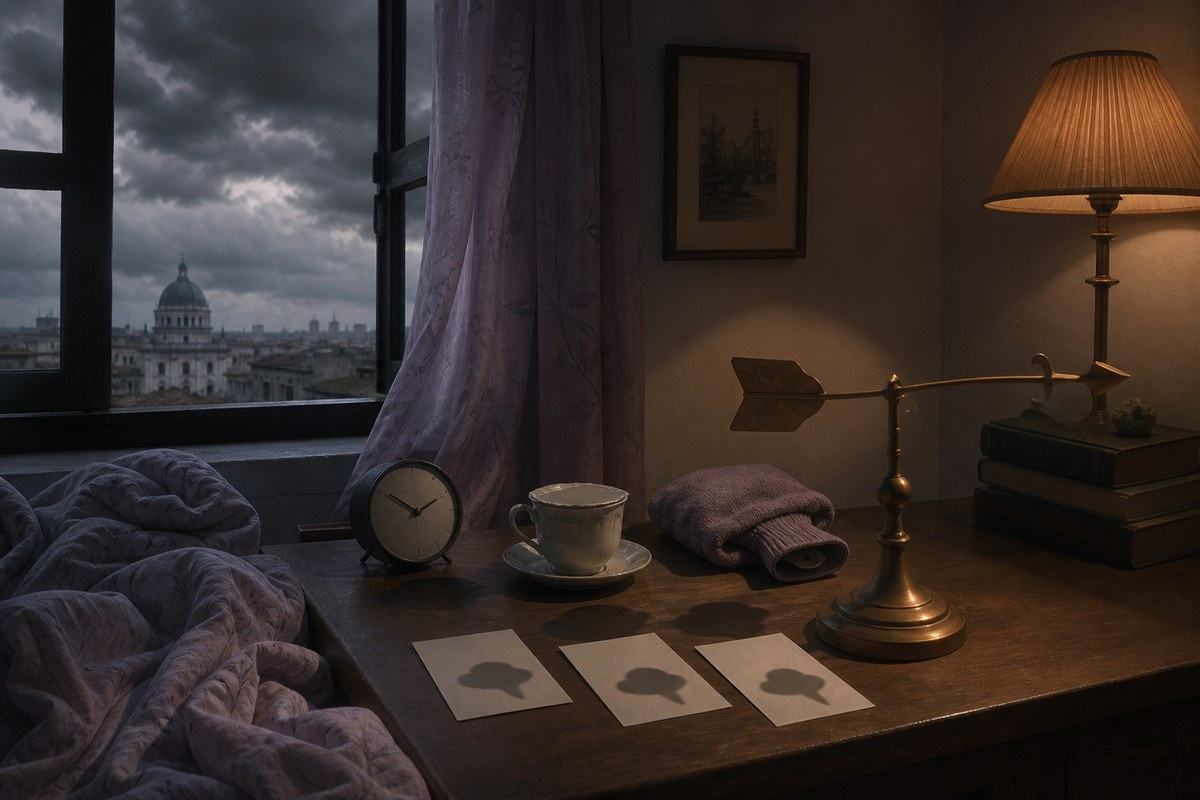
Some moods do not knock on the door. They come in through the cracks, sit inside the ribs, and start chewing the furniture.
That is the trouble with bipolar agitation. It is not always dramatic. It does not always arrive with cinema music, broken glass, or a man standing in the rain shouting important philosophical rubbish at the sky. Often it is smaller and nastier. A little termite army of discomfort. A bad current under the skin. A private itch in the mind that no amount of tea, fan, or sensible advice can scratch.
Then the future becomes unreliable.
Not the grand future. Not the future of civilization, artificial intelligence, democracy, cricket, climate change, or whatever new circus is being shouted about on the phone screen between advertisements for miracle hair oil and discount pressure cookers. I mean the immediate future. The next hour. The next bill. The next message. The next small silence from someone who was supposed to reply.
A normal mind says, perhaps they are busy.
My mind, on a bad day, says, the empire has fallen.
This is why writing these little diary-like posts is a risky business. I am always walking a tightrope between what is happening outside me and what my mind claims is happening. Outside, a dog may be sleeping under a broken scooter. Inside, my brain may be reporting that history has ended badly and I was somehow personally responsible. Outside, the vegetable seller is weighing ridge gourd. Inside, some gloomy clerk in the skull is stamping every file urgent.
One must learn to distrust the clerk.
That is not easy. Mood has confidence. Mood wears spectacles. Mood carries papers. It does not say, “Excuse me, I am a temporary disturbance and should not be taken too seriously.” It says, “I am reality. Sign here.”
So I came back to Calcutta and, in my own shabby way, locked myself in.
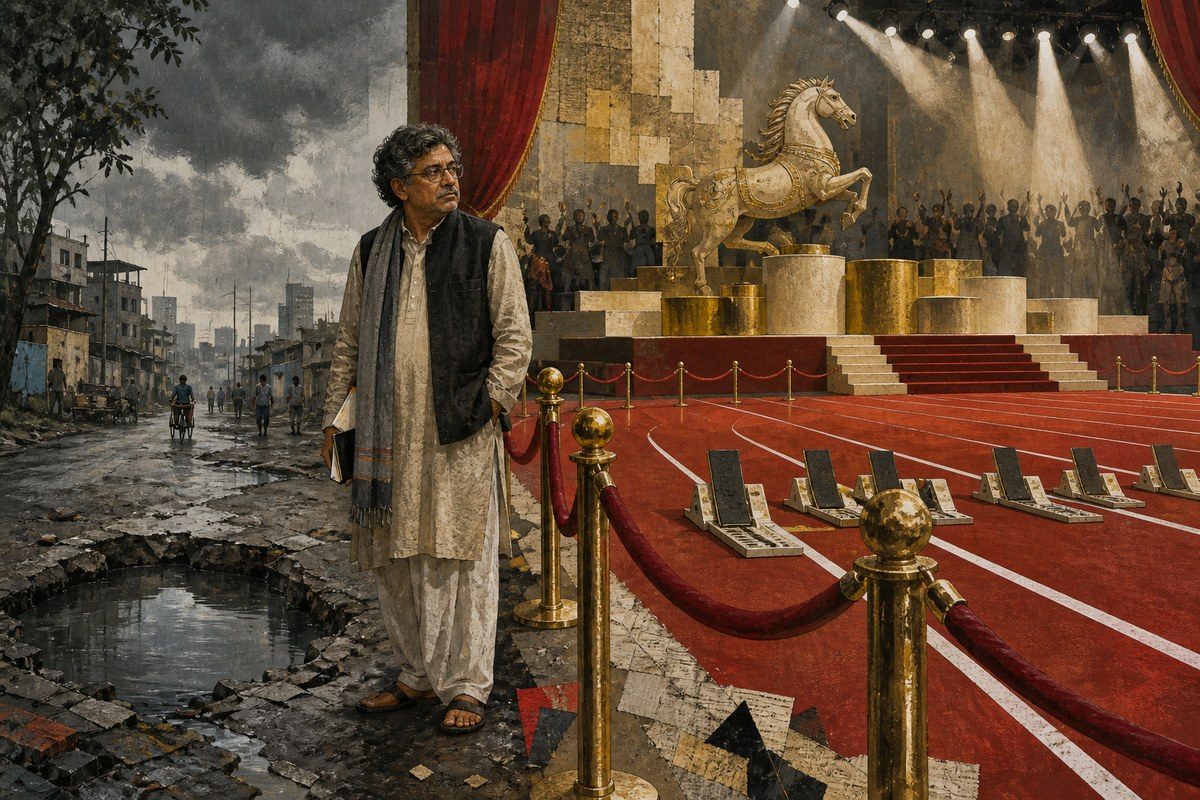
This sounds tragic if said with violin music. It is not. It is partly tragic, partly practical, and partly comic, like most Bengali lives after fifty. I had lived in places where the roads were better, the drains more obedient, and the public systems did not look as if they had been assembled by a sleepy goat with a rubber stamp. I had seen clean pavements, big libraries, polite traffic, and supermarkets where vegetables sat under lights like minor film stars.
But those places have their own knives.
They ask for money with perfect teeth. They ask for performance. They ask you to be employable, energetic, insured, networked, cheerful, and available for meetings where everyone says “great point” with the sincerity of a boiled potato. They have systems. The systems work. Then the systems eat you.
Calcutta does not work properly. That is one of its crimes.
It is also, for a man like me, one of its strange protections.
Here, one can become small. Not defeated-small, though that danger is always there, lurking like a damp patch spreading behind a cupboard. I mean human-small. Market-small. Rice-and-dal-small. One-room-with-books-small. A man may live without constantly proving that he is a sleek machine of ambition. He may be a little frayed at the cuffs. He may go to the bazaar with a cloth bag and come back feeling he has negotiated with existence itself.
Calcutta allows that.
Not kindly. Let us not start singing. The city is no saint. In summer, it becomes a frying pan with voting rights. The heat does not merely fall on you; it occupies you. It sits on your scalp, under your shirt, inside your temper. Then the power goes. The fan stops. The room becomes a tandoor for one middle-aged Bengali, lightly seasoned with anxiety.
You sit there in the dark, sweating like a wrongly accused man.
Then the monsoon arrives and the city reveals its plumbing philosophy, which appears to be: water will find its own path, citizens will adjust, and files will move from one table to another until everyone involved retires. The road becomes a pond. The pond becomes a road. A bus passes with the confidence of a steamer. A man steps into a puddle and disappears up to his knee, discovering, too late, that civic planning has a sense of humor.
Winter is better only if you enjoy breathing history.
The air thickens. Smoke, dust, exhaust, construction grit, burnt leaves, cooking fumes, and the sorrow of old engines gather together like relatives at a family function. You look across the street and see not distance but soup. The sun comes up tired. Everyone coughs with democratic fairness.
And still, somehow, the city lets a lower-middle-class Bengali survive.
That is the real calculation.
Not romance. Not nostalgia. Calculation.
The villagers and suburban sellers still come in with produce. This is the daily miracle, and like most real miracles, it arrives wearing a dirty shirt and asking for exact change. Potatoes, spinach, pumpkin, brinjal, coriander, green chilies, bananas, fish, eggs, onions, tomatoes when they have not become luxury items with political opinions. They come by train, van, cycle, handcart, sack, basket, and spine.
Because of them, a man with a thin budget can still eat.
Do not underestimate this. People who live behind glass doors underestimate food arithmetic. They think survival is a moral quality, like discipline or positive thinking. No. Survival often begins with the price of potatoes. It begins with whether fish is possible this week. It begins with whether the coriander is free, because free coriander is not garnish; it is a tiny green mercy.
A rich man sees a market.
A lower-middle-class man sees a battlefield, a mathematics exam, and a minor opera.
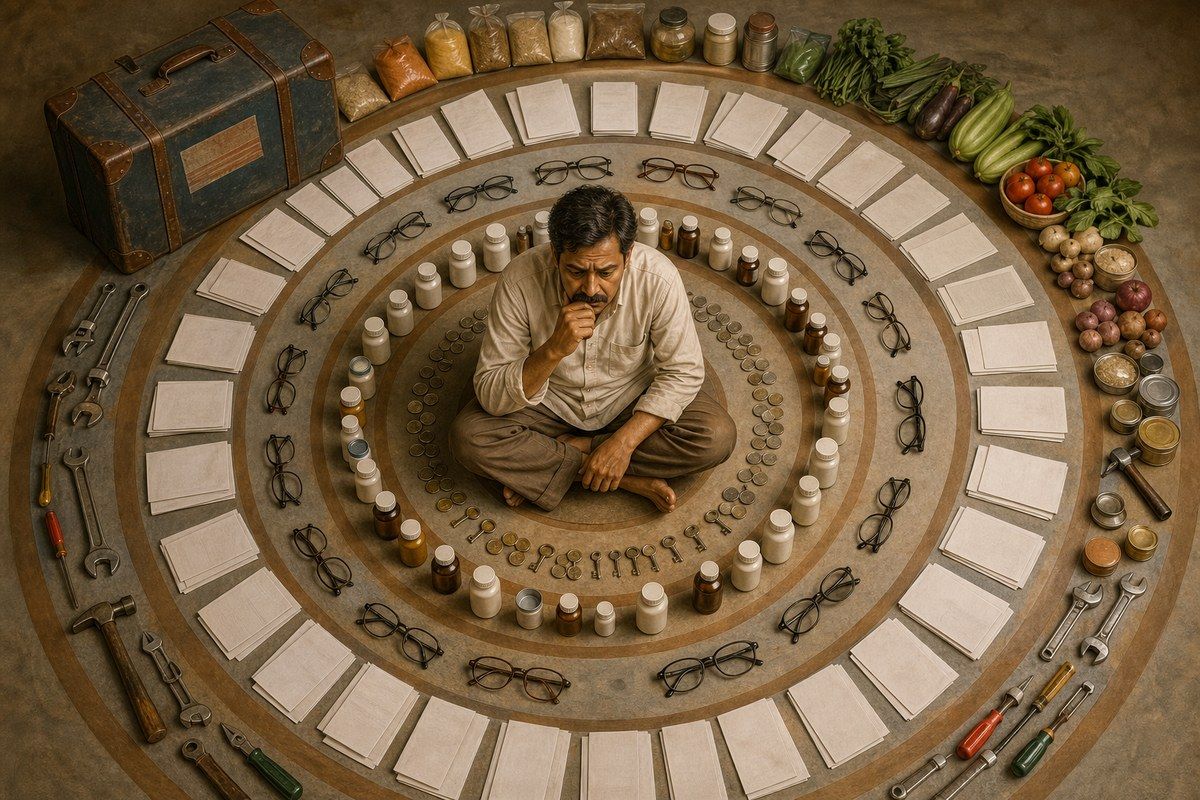
Every morning has its own account book. Rice. Dal. Tea. Oil. Medicine. Electricity. Internet, because without the internet a recluse becomes not a thinker but a man arguing with the wall. Phone recharge. Fish if possible. Eggs if fish is showing arrogance. Vegetables always. Fruit only when the budget loosens its belt.
This is my Calcutta calculus.
It is not the calculus of Newton and Leibniz, with apples and symbols and European seriousness. It is the calculus of how much life can be extracted from a hundred-rupee note before the note starts crying. It is the calculus of standing before a vegetable seller and deciding whether today requires nutrition, thrift, or emotional compensation.
Sometimes all three.
That is where bipolar mood becomes especially treacherous. It distorts the numbers. It makes small costs feel final. It makes a delayed payment look like ruin. It makes loneliness look like a verdict. It makes heat feel personal. A bad mood is a dishonest shopkeeper. It presses the scale with its thumb.
Writing helps me catch the thumb.
Not always. I am not selling enlightenment in a plastic packet. Some days the mind wins the argument before breakfast. Some days even the toothbrush looks accusatory. Some days the room feels like a waiting room for bad news, though no bad news has applied for admission.
But a sentence slows things down.
You write, “I am finished.”
Then you look at it.
Finished? Really? Or merely tired? Hungry? Unpaid? Overheated? Under-slept? Irritated by a power cut? Frightened by a future that has not yet done anything except stand at a distance making faces?
The sentence blushes.
This is why I write. Not because I am wise, but because I am suspicious of myself. A man must have at least one honest witness in the room, and if no other witness is available, a paragraph will do.
Meanwhile, outside, Calcutta continues with its magnificent lack of embarrassment.
A boy in a school uniform eats a telebhaja from yesterday’s oil and looks happier than most philosophers. A tea stall radio argues with the news. Somewhere people are fighting about politics with the stamina of Olympic athletes and the information quality of a cracked loudspeaker. A delivery boy rides through traffic as if reincarnation has already been confirmed. An uncle in a banyan explains the world economy beside a drain that could defeat all his theories in one good rain.
The city is absurd.
Good. So am I.
There is comfort in living among things that do not pretend too much. Calcutta’s paint peels. Its wires hang. Its pavements crack. Its promises arrive late and often without shoes. But it does not stare at me and demand that I become a shining success story by Monday morning. It lets me be a damaged man doing maintenance.
Maintenance is underrated.
Modern life worships transformation. Become new. Become rich. Become fit. Become visible. Become productive. Become a brand. Become a person who wakes at five, drinks green liquid, and uses a notebook to conquer the universe before lunch.
Nonsense.
Some of us are not conquering the universe. Some of us are trying to keep the rice dry, the bills paid, the mind from lying too loudly, and the fan running through June.
This is not failure. This is maintenance.
The city understands maintenance because it has been surviving on it for decades. A bridge is patched. A roof is tarred. A pump is repaired with wire. A family adjusts. A shop reopens after flooding. A man coughs, spits, complains, pays, bargains, eats, sleeps, wakes, and does it again. The whole city is a patched umbrella in a storm, ridiculous but still useful.
Perhaps that is why I remain here.
A cleaner city might have exposed me. A faster city might have crushed me. A richer city might have priced me out of my own nervous system. Calcutta, with its heat and fish smell and old grief and cheap green chilies, gives me room to disappear without vanishing completely.
That distinction is important.
To disappear completely is danger. To disappear a little is rest.
I do not want to romanticize the locked room. A locked room can rot a man. Solitude can become a swamp if one is not careful. The recluse can start believing his own weather reports. He can mistake silence for depth and avoidance for peace. I know this. I am not writing from a mountain top. I am writing from a small room where the fan has opinions.
But the room also protects me from unnecessary theatre.
No office corridor smile. No forced cheerfulness. No pretending that the mind is a neat drawer when it is actually a fish market at closing time. No daily performance of being normal while the inner wiring sparks and smells faintly of danger.
Here, I can do the small things.
Bathe.
Eat.
Take medicine.
Make tea.
Write.
Check the budget.
Ignore the first panic.
Trust the second thought more than the first.
Go to the market before the good vegetables vanish.
This is not a cure. Anyone offering cures too easily should be watched closely, preferably from across the street. But it is a method. A small, unglamorous method. A way of asking the day to come in one piece at a time, instead of as a stampede.
The mind says, disaster.
The market says, how much pumpkin?
The mind says, nobody cares.
The tea says, drink me before I get cold.
The mind says, the future is finished.
The fish seller says, take it or leave it, dada, this is fresh.
Reality, in Calcutta, has a way of arriving wet, loud, bargaining, and smelling faintly of coriander. That helps. It pulls the mind back from its private cinema and says, enough tragedy, now calculate.
So I calculate.
Not perfectly. Not bravely. Often with irritation. Often with fear. But I calculate. I subtract rent. Add rice. Divide hope into small portions. Carry forward one unpaid worry. Write off one imagined catastrophe. Recheck the figures after tea.
And if the fan runs, if the vegetables are decent, if the mind quiets for even half an hour, if a sentence lands without lying, then the day is not won exactly.
But it is not lost.
For now, that is enough arithmetic.
Word Cloud
Related reading
Selected by shared topics and section, with closer publication dates breaking ties.