Professional portfolio
Selected systems work
Healthcare data warehouses, research registries, interoperability and clinical-trial platforms, interactive visualizations, computational notebooks, workflow systems, and the independent publishing infrastructure behind this site.
01 / 10
Healthcare research systems · UTHSCSA / VA Research Center
VA Hospital Research Data Warehouse
Built and supported healthcare research data warehouses integrating VA hospital data, national datasets, and multi-domain clinical sources.
Contribution
- Worked across MUMPS-derived hospital data, flat files, relational databases, pharmacy, laboratory, inpatient, and outpatient sources.
- Designed SQL Server and SSIS transformations that turned operational healthcare data into research-ready structures.
- Implemented cleaning, outlier detection, validation, reconciliation, and provenance-aware data preparation.
- Clinical data
- SQL Server
- SSIS / ETL
- Data quality
02 / 10
Nephrology and chronic-disease research
NIH-Funded FIND Study Registry
Designed registry structures for nephrology and chronic-disease research, balancing protocol-driven data collection with real-world clinical variability.
Contribution
- Structured research data around diabetes, ESRD, nephropathy, and related chronic-disease questions.
- Balanced formal study definitions with missingness, coding variation, and inconsistent operational source data.
- Supported research teams where cohort logic and clinical meaning mattered as much as the statistical model.
- Research registry
- Clinical analytics
- Cohort logic
- Data provenance
Related public analysis
- Healthcare Science When Diabetes Started Asking About Its Ancestors A human, layman-friendly explanation of the FIND study, diabetic kidney disease, family risk, genetics, and why the science felt so alive in San Antonio.
- Healthcare IT Confounding Factors How confounding enters healthcare analytics through workflows, selection, time, missingness, and site differences—and how to design more honest analyses.
03 / 10
Healthcare interoperability and clinical research · ClinZen
HIE and Clinical Trial Data Platforms
Architected proprietary HIE and CTMS platforms that translated clinical workflows, patient data, trial protocols, and operational requirements into structured systems.
Contribution
- Designed database and application structures across interoperability, clinical-trial, and digital workflow requirements.
- Created mobile-enabled clinical data collection tools aligned with CDISC practices and Phase II/III trial workflows.
- Led architecture, data modelling, validation logic, reporting, user workflows, and data-quality controls.
- HIE
- CTMS / CDMS
- eCRF
- Clinical workflows
Related public analysis
- Healthcare IT HIE from First Principles How Health Information Exchange and OpenHIE coordinate patient identity, terminology, provenance, registries, and shared records across health systems.
- Healthcare IT FHIR and the Clerk With the Clipboard How FHIR uses web APIs, resources, profiles, and terminology to exchange health data—and why a standard alone cannot fix fragmented care.
04 / 10
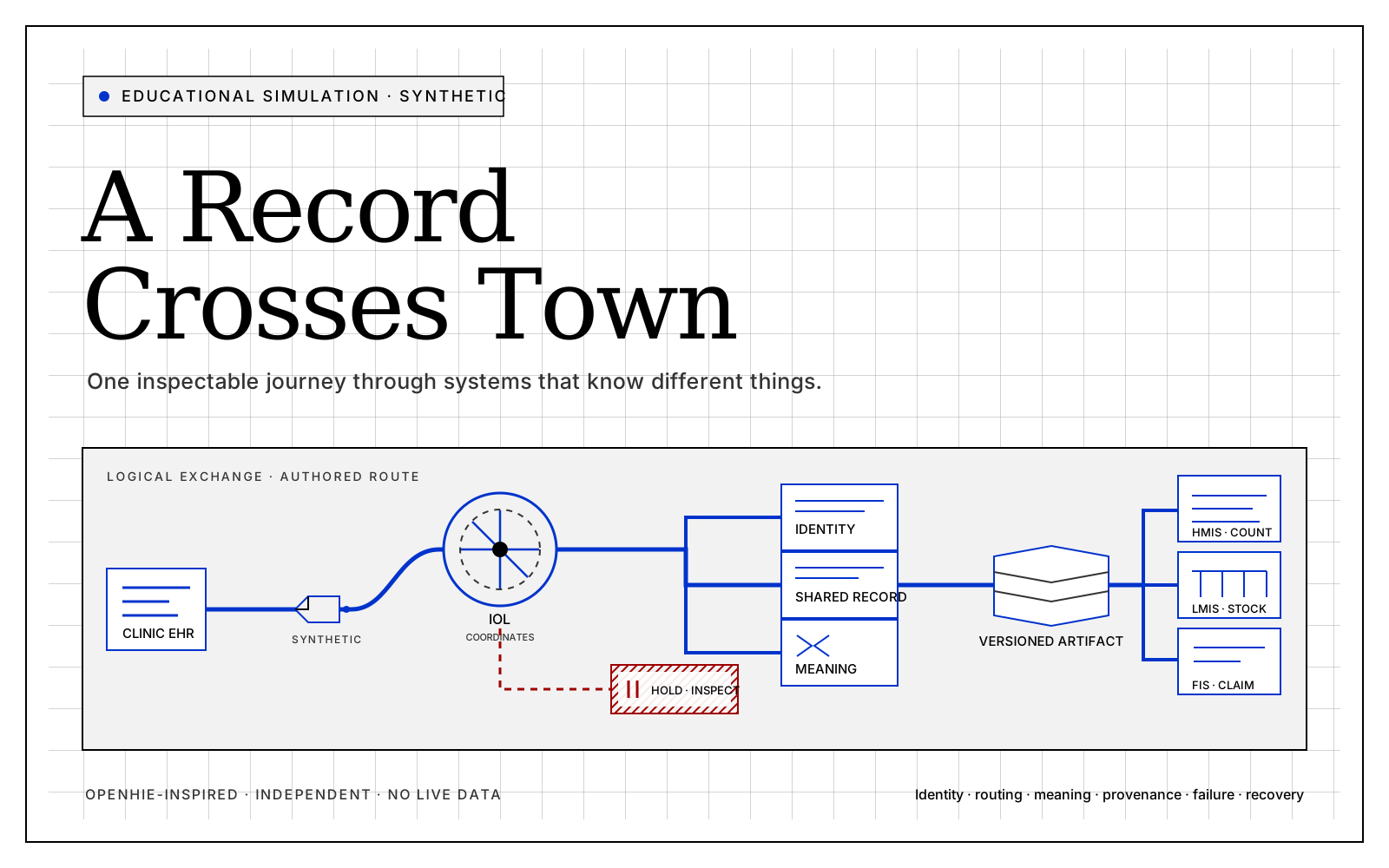
Independent interactive systems explainer · OpenHIE-inspired · wholly synthetic
A Record Crosses Town
A standalone, fully prerendered exhibit that follows one wholly synthetic encounter through identity, trust, routing, terminology, shared clinical storage, supply, finance, aggregate reporting, deterministic failure, and bounded recovery.
Contribution
- Built a typed deterministic simulation with an original semantic architecture map and inspectable payload, difference, lineage, audit, and provenance views.
- Authored twelve failure presets that stop at explicit system boundaries, preserve failed evidence, apply bounded recovery, and replay with stable idempotency semantics.
- Mapped technical claims to official primary sources while keeping every fixture synthetic and every authority store separate.
- SvelteKit
- TypeScript
- HIE architecture
- OpenHIE-inspired
- Data provenance
- Accessibility
Related public analysis
- Healthcare IT HIE from First Principles How Health Information Exchange and OpenHIE coordinate patient identity, terminology, provenance, registries, and shared records across health systems.
- Healthcare IT FHIR and the Clerk With the Clipboard How FHIR uses web APIs, resources, profiles, and terminology to exchange health data—and why a standard alone cannot fix fragmented care.
05 / 10
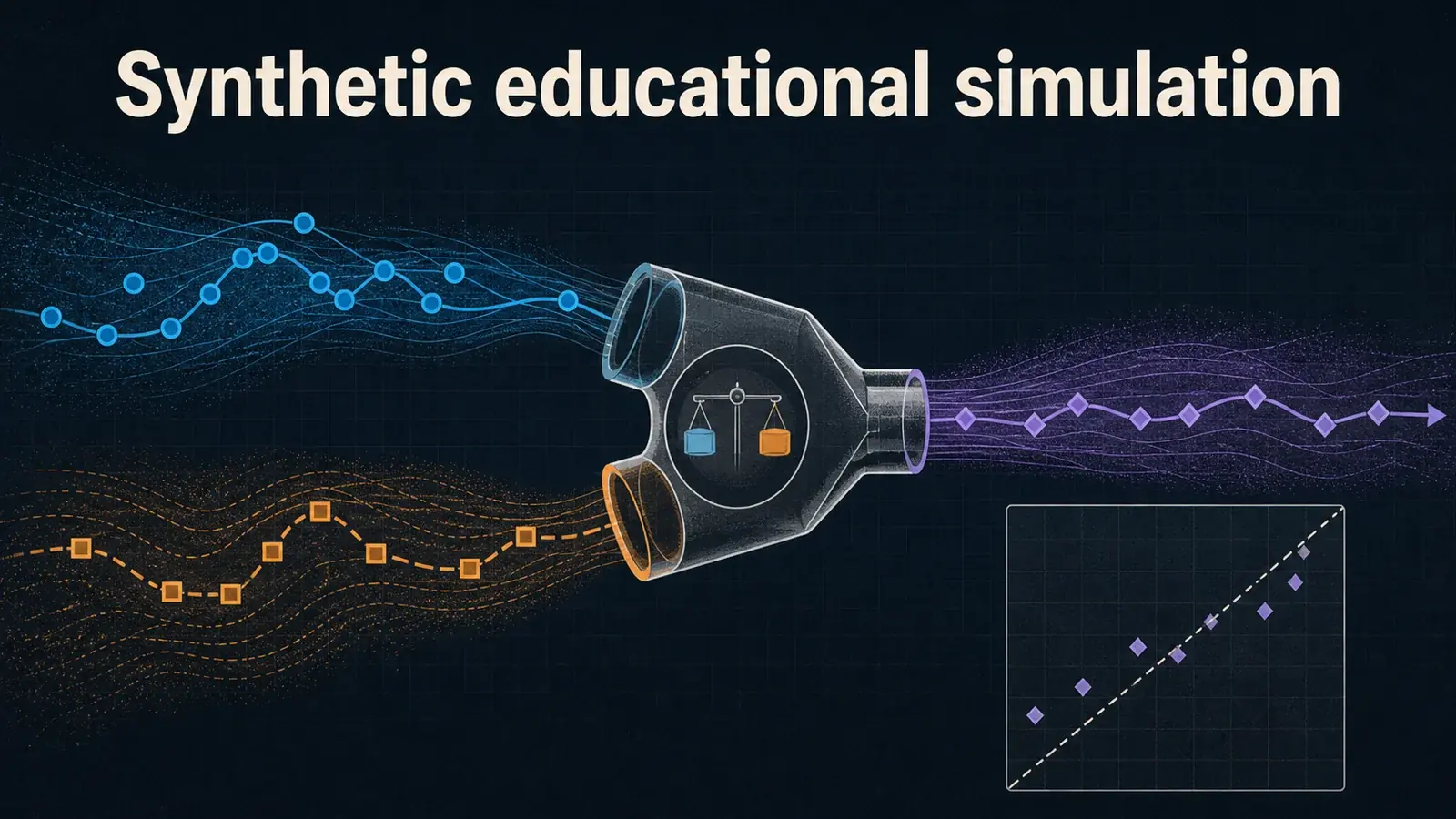
Independent clinical-prediction explainer · wholly synthetic · educational, not clinical
Human + AI ICU Prediction Laboratory
A deterministic interactive laboratory showing when clinician–model probability ensembles improve prediction—and when shared error or population shift defeats the average.
Contribution
- Built a deterministic synthetic-cohort laboratory comparing clinician, model, and weighted-ensemble probability forecasts for one declared binary ICU outcome.
- Exposed discrimination, calibration, shared residual dependence, individual and pooled Brier scores, reliability diagrams, and casewise error overlap using the same reproducible cohort.
- Authored four failure-oriented presets, including shared hospital artifacts and deployment prevalence shift, with explicit educational boundaries and no patient-level claims.
- Clinical prediction
- Human–AI collaboration
- Probability
- Calibration
- Brier score
- SvelteKit
- TypeScript
- Accessibility
06 / 10
Hospital operations research
Functional Job Analysis System
Developed a system for hospital operations research by modelling human work, task overlap, and workflow structure as analysable data.
Contribution
- Translated descriptions of hospital work into explicit, structured information.
- Modelled tasks, overlap, and workflow relationships so operational patterns could be examined systematically.
- Workflow modelling
- Requirements analysis
- Structured data
07 / 10
Research synthesis systems
Meta-Analysis Platform
Created a platform for synthesising heterogeneous research outputs where data alignment, definition consistency, and comparability were core challenges.
Contribution
- Structured unlike research outputs so their definitions and results could be compared.
- Made alignment decisions and comparability constraints explicit instead of hiding them inside reports.
- Research data
- Semantic alignment
- Data modelling
08 / 10
Mojo · Machine learning education · Literate programming
mojoLLM Computational Notebooks
A growing collection of Python-style, browser-readable notebooks that use Mojo to build machine-learning ideas from first principles.
Contribution
- Added a reproducible Jupyter-to-HTML publishing pipeline with isolated, responsive notebook embeds for any Markdown essay.
- Established a first-class mojoLLM category so notebook essays remain browsable as a distinct body of project work.
- Created a from-scratch notebook sequence that moves from one perceptron to an XOR network of three trained perceptrons.
- Mojo
- Jupyter
- Machine learning
- Literate programming
Related public analysis
- mojoLLM A Perceptron from Scratch in Mojo A Python-style Mojo notebook that builds, trains, and tests a single perceptron step by step without a machine-learning library.
- mojoLLM XOR from Scratch in Mojo with Multiple Perceptrons A step-by-step Mojo notebook showing why one perceptron cannot learn XOR and how three trained perceptrons solve it as a tiny two-layer network.
09 / 10
Ongoing laboratory · Science and computing education
Visualizations Interactive Laboratory
An interactive laboratory for exploring physics, chemistry, biology, mathematics, statistics, algorithms, computer science, machine learning, and scientific computing through reactive notebooks, simulations, generative graphics, and GPU shaders.
Contribution
- Built a lazy, server-safe p5.js and WebGL framework for interactive experiments inside ordinary Markdown posts.
- Added native Observable runtime and D3 notebook cells with responsive SVG, reactive controls, accessible descriptions, reduced-motion defaults, and deterministic cleanup.
- Engineered a seeded artificial-life system with inherited genomes, bounded mutation, explicit energy accounting, predator pressure, fixed-step simulation, and reproducible presets.
- Built a WebGL2 Monte Carlo instrument with seeded pseudorandom, stratified, and Halton sampling, bounded GPU point storage, confidence estimates, and an accessible logarithmic convergence chart.
- Created a WebGL2 living-pigment studio with ping-pong texture fields for mobile and deposited pigment, local moisture, velocity, granulation, staining, bounded GPU history, and local artwork/project export.
- Built a safe complex-function laboratory that compiles a constrained expression tree into synchronised 2D domain colouring and clipped log-magnitude terrain, with numerical probes, branch-aware meshes, winding checks, and curated connected Riemann sheets.
- Created a deterministic living-aperture laboratory with analytic and accretive shell engines, transported frames, finite structural ornament, ring-prefix growth history, Web Workers, scientific guardrails, and Three.js export.
- Designed accessible controls, touch and keyboard interaction, reduced-motion behaviour, static fallbacks, and isolated multi-sketch lifecycle management.
- Publishes first-principles lessons with live output and executable source across D3, Observable notebooks, p5.js, GLSL, Canvas, SVG, and WebGL.
- Artificial life
- Evolutionary modelling
- Monte Carlo simulation
- Statistics
- TypeScript
- D3
- Canvas
- WebGL
- Generative art
- GPU simulation
- Complex analysis
- Mathematical morphology
Related public analysis
- Visualizations Hello, Fragment: Your First Shader from Scratch Build a luminous, pointer-responsive fragment shader in p5.js WebGL, learning coordinates, uniforms, colour, time, and interference one visible step at a time.
- Visualizations Hello, Observable: Your First Living D3 Visualization Build a responsive, animated sine-wave explorer from first principles while learning Observable cells, D3 selections, SVG marks, scales, data joins, interaction, and browser-safe embedding.
- Visualizations Artificial Life Lab: Evolve a Digital Ecosystem in Your Browser Grow a seeded digital ecosystem in the browser: microbes inherit traits, forage, reproduce with mutation, face selection pressure, drift, predators, ageing, and death.
- Visualizations The Casino That Calculates: An Interactive Monte Carlo Laboratory A shader-powered laboratory for watching sampled points estimate π, reveal statistical error, and demonstrate how Monte Carlo methods converge.
- Visualizations Create Art: A Living Pigment Studio Paint with digital pigments that spread, mix, dry, granulate, and continue evolving after every stroke.
- Visualizations Complex Functions as Landscapes: A 3D Domain-Colouring Laboratory Explore complex functions in synchronised 2D and 3D: read log-magnitude terrain, phase colour, zeros, poles, branch cuts, winding, and Riemann sheets.
- Visualizations The Living Aperture: A Gastropod Shell Laboratory Grow procedural gastropod shells aperture by aperture, sculpt logarithmic coiling and ornament, compare molluscan forms, and inspect model boundaries.
10 / 10
Independent publishing · Editorial infrastructure
SuvroGhosh.IN Editorial Publishing System
Designed and maintain the static-first SvelteKit publishing system behind this site and its large long-form archive.
Contribution
- Built an mdsvex publishing pipeline with Pagefind search, archive facets, topic pages, reading paths, RSS, and structured metadata.
- Added accessible article navigation, themes, text-to-speech, reading progress, tables of contents, and resilient media handling.
- Automated incremental post tagging, word-cloud generation, search indexing, image optimisation, and content validation during builds.
- SvelteKit
- Information architecture
- Accessibility
- Build automation