When Diabetes Started Asking About Its Ancestors
Uses the speech voice supplied by your browser or device.

Acronyms used here: FIND means Family Investigation of Nephropathy and Diabetes, a large research study that asked why kidney disease runs more strongly in some families with diabetes than in others. DKD means diabetic kidney disease, the kidney damage that can happen after years of diabetes. DNA means deoxyribonucleic acid, the inherited instruction book packed into our cells. ACR means albumin-to-creatinine ratio, a urine test that gives an early clue that the kidney filter is leaking protein. eGFR means estimated glomerular filtration rate, a blood-test-based estimate of how well the kidneys are filtering. GWAS means genome-wide association study, a way of scanning many genetic differences across many people to see which ones travel with disease. AI means artificial intelligence, computer systems trained to find patterns, make predictions, or generate answers from data.
Diabetes is not one disease walking politely in one pair of shoes. It is a crowd. Some people carry it for thirty years and remain almost annoyingly sturdy. Others develop kidney trouble as if the disease found a private entrance into the body and slipped in at night.
That was the little mystery that made the FIND study exciting.
Not exciting like a film hero jumping from a burning tram. Exciting in the quieter, more dangerous way science is exciting when it looks at an ordinary disaster and says, “Wait. This is not random. Something is hiding here.”
Back in San Antonio, when I was around that work, the question felt enormous. Why do some families seem to collect DKD the way old houses collect damp patches? Why does one diabetic person leak protein in the urine and move toward kidney failure, while another person with diabetes, same broad diagnosis, same human chaos, somehow escapes? What is the difference? Food? Poverty? Blood pressure? Bad luck? Inheritance? Some unpleasant committee of all of them?
A doctor can say, “Control your sugar,” and that is true.
But it is not enough.
That is like telling a man in a flooding room, “Avoid water.” Useful, yes. Nobel Prize, no.
The kidney is one of those organs we ignore because it does not have the glamour of the heart or the drama of the brain. The kidney does not write poetry. It does not fall in love. It sits quietly in the back of the body, filtering blood like a patient clerk sorting thousands of forms before lunch. Waste goes out. Protein stays in. Salt is adjusted. Water is balanced. Blood pressure is influenced. All this happens while we are eating muri, arguing about politics, checking phone notifications, and wondering why the milkman has again become a philosopher of price inflation.
Then diabetes arrives.
At first nothing spectacular may happen. No thunderclap. No violin. The kidney filter gets strained slowly. Sugar, pressure, vessel injury, inflammation, genetics, time—all these gather like relatives at a Bengali wedding, each claiming importance, each blocking the doorway. One day a urine test finds albumin where albumin should not be. A quiet leak. A whisper from the filter.
This is where FIND comes in.
FIND did not ask merely, “Do diabetic people get kidney disease?” Everyone already knew that. FIND asked the better question: “Why do some diabetic families get hit harder?”
That sounds small.
It is not small.
It is the difference between looking at rain and looking at drainage. In Calcutta every monsoon teaches this lesson with municipal cruelty. Rain falls everywhere, but waterlogging is selective. One lane becomes a pond, another lane survives, one tea stall puts bricks under the stove, one scooter dies heroically in brown water, and one uncle in rolled-up trousers announces, falsely, that this happened because people no longer respect discipline. But the real answer lies in slope, drains, encroachment, old pipes, garbage, bad planning, and yesterday’s political compromise hardened into today’s puddle.
Disease is like that too.
Diabetes may be the rain. DKD is the waterlogging. FIND wanted to inspect the drains.
Families were central to the study because inheritance leaves patterns. Not perfect patterns. Not Bollywood-villain patterns. Biology is subtler than that. But if a disease appears more often among relatives than chance would expect, the scientist becomes interested. Not convinced. Interested. Science, at its best, is professional suspicion with clean handwriting.
The idea was not that one evil gene sits somewhere in the body wearing dark glasses and smoking under a lamppost. That is the cartoon. Real diabetes complications usually come from many small pushes: genes, blood pressure, sugar control, body weight, kidney structure, ancestry, stress, medicines, diet, income, care access, and the sheer bad manners of time.
Genes are not destiny.
But they are not decorative either.
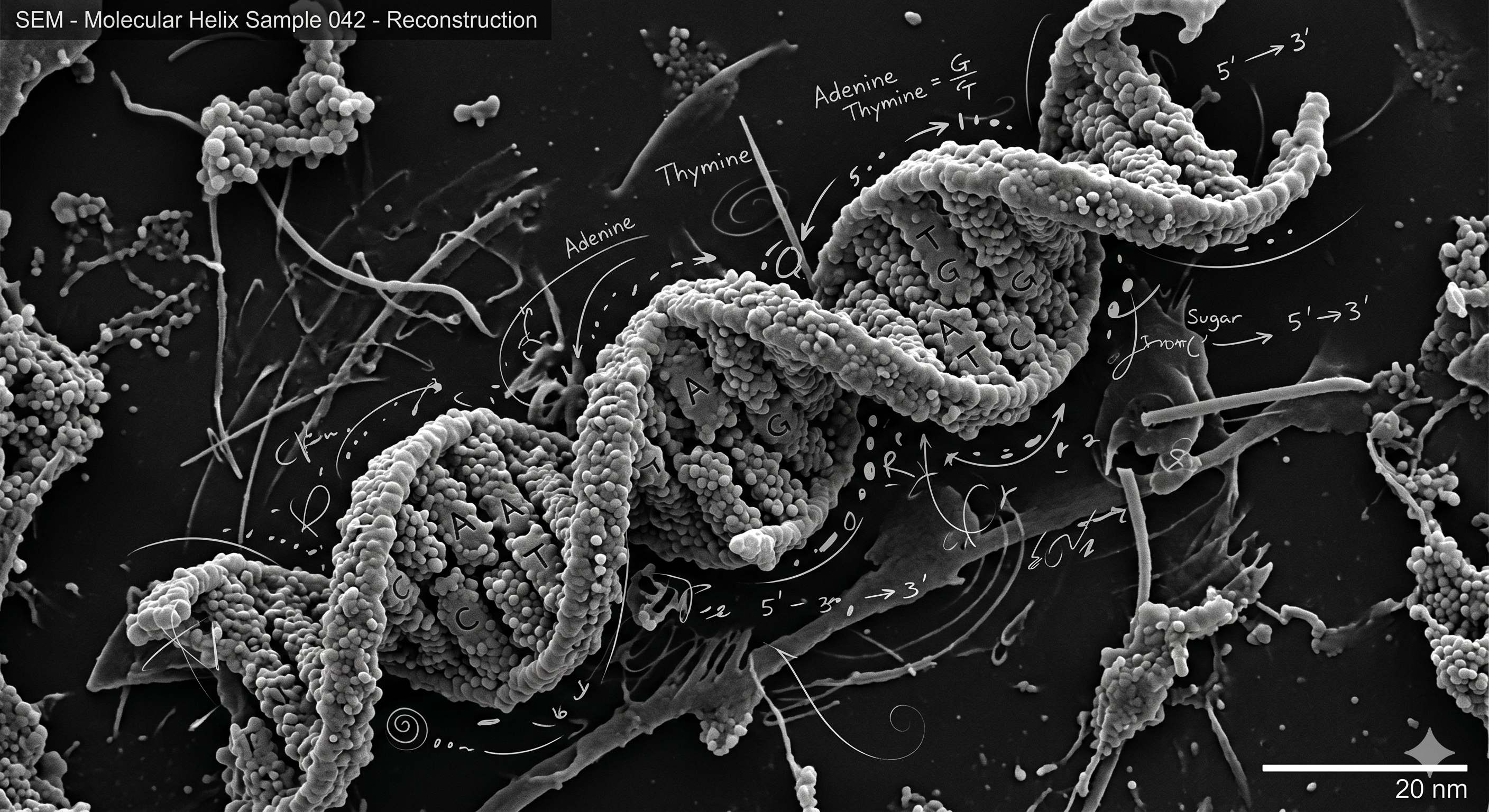
Think of DNA as the old family recipe book. It does not cook the meal by itself. Someone still buys the potatoes, burns the onions, forgets the salt, borrows the pressure cooker, and argues about who ate the last fish piece. But the recipe book influences what can be made easily, what goes wrong often, and which mistakes produce disaster.
That is why FIND mattered. It tried to connect the family story to the biological story.
In practice this meant collecting careful information from real people. Not textbook people. Not those clean diagram people who stand in medical illustrations with suspiciously perfect posture. Real people. Families. Diabetic relatives. People with kidney disease. People without kidney disease. Urine values. Blood values. Family trees. Medical histories. DNA samples. Dates. Diagnoses. Relationships.
Here the romance of science becomes paperwork.
And paperwork, when done badly, can murder truth.
A person may have diabetes for twenty years, but if the record says ten years, the study bends. A person may have kidney failure from another cause, but if it is labeled DKD, the signal bends. A family relationship may be coded incorrectly. A urine test may be missing. A date may float loose like a slipper in rainwater. The computer will not know your noble intention. It will simply digest the error and produce a confident-looking nonsense.
This is one of the great lessons I learned in American clinical research. Data are not facts. Data are facts after they have survived measurement, definition, labeling, storage, transfer, cleaning, and interpretation. By the time a human life becomes a row in a database, it has passed through many hands and several chances for mischief.
In San Antonio, that felt very real.
The science was not floating above the city. It was grounded in communities, especially Mexican American families where type 2 diabetes had a heavy footprint. The study had a local human weight. It was not just “subjects,” that cold word which makes people sound like screws in a drawer. It was families carrying risk across generations, sometimes in DNA, sometimes in food habits, sometimes in hard work, sometimes in stress, sometimes in systems that notice illness late and bill promptly.
A family inherits more than genes.
It inherits recipes, neighborhoods, warnings, silences, debts, pharmacy habits, distrust, jokes, fatalism, and the peculiar belief that if one ignores a symptom long enough, it may become embarrassed and leave.
It usually does not.
Now, FIND used methods like linkage analysis and GWAS. These sound terrifying, but the basic idea is not so hard. Linkage analysis is like following a rumor through a family wedding. You may not know who started it, but you notice it keeps appearing near the same cluster of relatives. GWAS is more like laying out thousands of tiny spelling differences in DNA and asking, “Do any of these appear more often in people with DKD?”
Neither method gives an instant answer.
This is important.
Modern readers are trained by phones to expect revelation in three seconds. Tap, scroll, outrage, snack, sleep badly. But real science is not a reel. FIND was not a magic blood test. It was a long search through messy human biology. It found regions of interest, possible genetic signals, hints worth following. It helped sharpen the map. It did not produce a single golden key.
And that is not failure.
That is how complex disease speaks.
Not in slogans. In murmurs.
The beautiful thing about FIND was that it refused to flatten the question. It did not say DKD is only sugar. It did not say DKD is only genes. It did not say every population is the same population with different lunch. It looked across families and ancestry groups and tried to understand why risk gathers unevenly.
That unevenness is the whole story.
In Calcutta we know unevenness in our bones. One man has an inverter. Another has a candle. One family has a specialist on speed dial. Another has a plastic folder of prescriptions and a bus route. One person can test ACR and eGFR every year. Another waits until swelling, weakness, and fear force the issue. Biology enters society, and society enters biology. They do not remain in separate rooms like polite guests.
This is why a study like FIND should matter to us here.
India has diabetes everywhere now. In the para. In the office. In the sweet shop line. In the thin man with the large belly who says, “But I hardly eat anything.” In the aunty who takes medicine only when the number looks rude. In the uncle who believes walking from the bed to the balcony is cardio if done with authority. We joke because otherwise the facts are too heavy.
But the kidney is not joking.
The early stage of DKD can be silent. No dramatic pain. No cinematic collapse. A small leak in urine. A slow fall in filtration. Then a bigger problem. Then the family begins to learn words it never wanted: creatinine, dialysis, fistula, transplant, restriction, cost.
So what should a lay reader take from FIND?
Not panic.
Never panic. Panic is the worst physician. It charges heavily and gives bad advice.
Take curiosity. Take vigilance. Take the idea that diabetes is not just a sugar number but a long relationship between blood vessels, kidneys, family risk, food, pressure, medicines, and time. Take the idea that if diabetic kidney disease runs in a family, that fact deserves attention. Take the idea that urine albumin testing is not a luxury decoration. Take the idea that eGFR is not just a strange number printed beside creatinine to make the report look educated. These are windows.
Small windows.
But windows.
There is also a larger lesson for anyone who loves science. FIND shows how modern medicine often advances: not by one genius shouting from a balcony, but by many people collecting difficult evidence slowly. Families participate. Nurses measure. Coordinators call. Labs process. Analysts clean. Statisticians argue. Databases behave badly. Investigators revise assumptions. Papers appear years later, modestly dressed, carrying more uncertainty than the public expects.
This is the opposite of the social media mind, where every answer must arrive powdered, perfumed, and shouting.
The truth often arrives tired.
Still, when it arrives, it changes the room.
For me, the memory of those San Antonio days remains bright because I was near a question that had moral force. This was not abstract cleverness. It was not science as decorative brain jewelry. It was science asking why some families lose kidneys, money, strength, and years. It was science trying to see whether the family tree contained clues before the dialysis chair became the final classroom.
There was excitement in that.
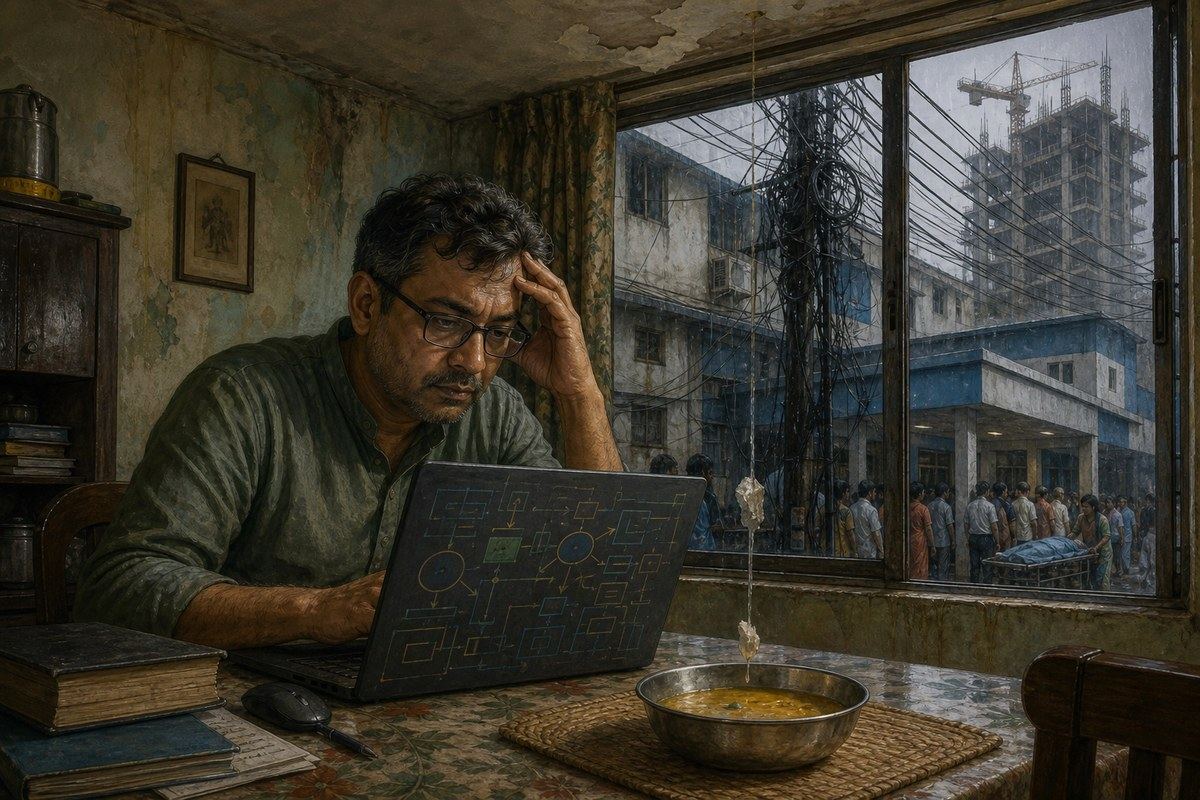
A young man from Calcutta, educated in computer science, working in American healthcare research, looking at clinical data and thinking: this row is a person, this variable is a wound, this missing value may hide a story, this family tree may contain a warning. You do not forget that easily. Even later, when life becomes less grand, when consulting income is uncertain, when the laptop waits like a disappointed schoolmaster, when the morning tea tastes faintly of survival, that old excitement still glows somewhere.
Because it was real.
FIND taught me that disease has ancestry, architecture, habit, environment, and memory. It taught me that a kidney can fail in the body, but the explanation may be scattered across generations. It taught me that data must be humble before life. It taught me that science is not always a thunderbolt. Sometimes it is a lantern carried carefully through a crowded house at night.
And in that house, if you look patiently enough, you may find the hidden crack in the wall.
P.S. References: The FIND study design and methods were described in the Journal of Diabetes and Its Complications. Public study information is available through the National Institute of Diabetes and Digestive and Kidney Diseases repository, ClinicalTrials.gov, and NCBI dbGaP. Later genetic analyses from FIND appeared in journals including PLOS Genetics.
Word Cloud
Related reading
Selected by shared topics and section, with closer publication dates breaking ties.