Why 2026 Is Still the 21st Century
Acronyms and Terms Used
AD — Anno Domini. Latin for “in the year of the Lord.” Traditional year numbering system used after the birth of Christ.
BC — Before Christ. Traditional label for years before AD.
CE — Common Era. Modern secular equivalent of AD.
BCE — Before Common Era. Modern secular equivalent of BC.
Uses the speech voice supplied by your browser or device.

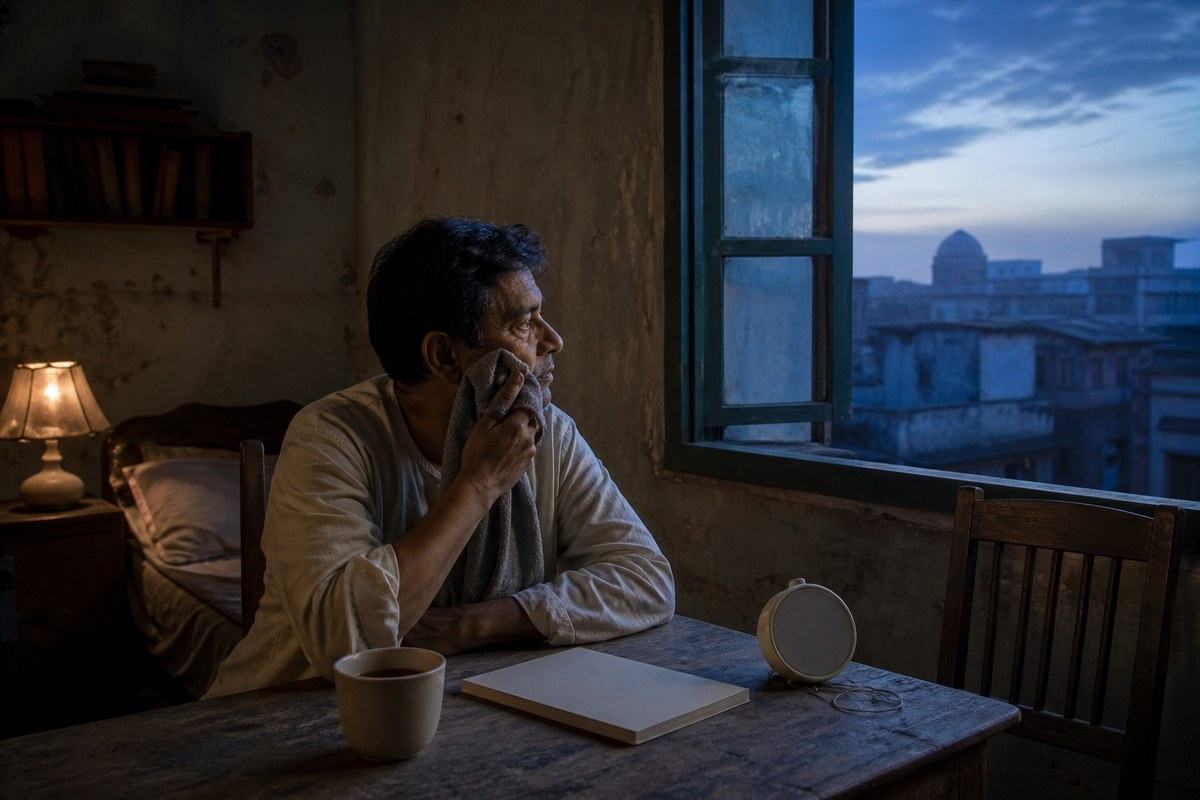
A few mornings ago the power went out again.
Not dramatically. Kolkata power cuts no longer arrive with the operatic flourish they had in the 1980s. They now slip in quietly like aging pickpockets. One second the fan is turning. Next second the room becomes a warm lungi full of trapped May air and distant scooter horns.
I was sitting there sweating into my tea, scrolling through headlines about artificial intelligence replacing jobs, billionaires building apocalypse bunkers, and another politician promising “transformational growth” with the confidence of a man selling miracle hair oil to bald goats.
And then my brain wandered, as it unfortunately does.
Why exactly are we calling this the 21st century when the year is 2026?
Look at the number properly.
Twenty.
Not twenty-one.
The thing practically introduces itself.
And yet every educated person on earth calmly says “21st century” as if there is nothing strange about it. News anchors say it. Professors say it. People on LinkedIn say it while posting motivational nonsense beside photographs of mountains.
Nobody pauses.
This fascinates me.
Because humans are extraordinarily good at walking around logical potholes without looking down into them. Civilization depends on it. If everybody stopped every five minutes to inspect contradictions, society would grind to a halt by lunchtime.
Most people inherit reality the way Bengalis inherit old furniture. Heavy teak cupboards. Slightly crooked. Smells faintly of naphthalene and dead lizards. Nobody knows exactly where it came from but everybody accepts it as permanent.
I grew up in one of those half-religious Bengali households where certainty floated around loosely like incense smoke. My parents were decent sensible people, but explanations were often assembled from folklore, schoolbooks, neighborly hearsay, snippets of scripture, and the occasional declaration from somebody’s aunt who had once met a guru on a train.
Which is honestly how most civilizations operate beneath the varnish.
As a child I developed the annoying habit of asking follow-up questions.
Adults hate follow-up questions.
The first answer is usually manageable. The second begins exposing loose wiring.
The century puzzle bothered me for years because the explanation was never intuitive. People simply repeated it like railway announcements.
Then one day I found the answer.
And the answer, absurdly enough, is that the calendar has a missing year.
There is no Year Zero.
History jumps directly from 1 BC to AD 1 like a man leaping over an open drain during monsoon season. No pause. No neutral middle square. Just hop.
That tiny missing zero bends the arithmetic forever afterward.
The 1st century was years 1 through 100.
Not 0 through 99.
Because zero did not exist in that numbering system.
Then the 2nd century became 101 through 200.
The 20th century became 1901 through 2000.
And the 21st century began only on January 1, 2001.
So yes, 2026 belongs to the 21st century even though the number itself looks like it should be sitting comfortably in the 20th.
It feels wrong because your brain expects counting to begin at zero. Modern people are trained by odometers, computers, elevators, cricket scoreboards, and mobile phone percentages. Zero is everywhere now. But the old calendar system was assembled in a world before mathematical neatness became fashionable.
Human beings are forever trapped inside old decisions made by dead people.
That sentence explains more of society than most political science textbooks.
The mathematical shortcut is simple enough.
Take the year.
Divide by 100.
2026 divided by 100 becomes 20.26.
Now round upward.
You get 21.
That is the 21st century.
Simple.
But here is the interesting part: even after understanding it, the thing still feels faintly crooked. Like a shirt buttoned one hole wrong.
And that tiny discomfort tells you something important about the human mind.
We do not really understand most of the systems surrounding us. We merely become accustomed to them.
There is a difference.
A huge difference.
People think familiarity means truth.
It does not.
It just means repetition stopped triggering alarms.
Once you notice this, you begin seeing it everywhere.
Why do months have these bizarre lengths? Why is February treated like the neglected stepchild of the calendar? Why do governments announce “temporary” measures that survive longer than dynasties? Why do software subscriptions now resemble medieval taxation? Why are modern phones more powerful than NASA computers from the Moon landing yet somehow worse at making phone calls?
Small contradictions pile up around us like unwashed cups in a bachelor’s room.
Most people learn not to inspect them too closely because daily survival already consumes enough mental fuel. Fair enough. If you are commuting two hours in Kolkata humidity, fighting bank apps, worrying about rent, aging parents, cholesterol, layoffs, and whether the fish smells trustworthy, you may not have spare neurological bandwidth for calendar philosophy.
I understand that deeply.
At fifty-one, living in the frayed edges of Kolkata after years in American healthcare IT systems, I sometimes feel like a man who accidentally wandered backstage during a magic show and can no longer enjoy the performance properly. You see the hidden ropes. The painted plywood. The exhausted assistants smoking behind the curtain.
Meanwhile the audience keeps applauding.
Even now, when I hear phrases like “the future of humanity” spoken by television experts who cannot reliably predict next Tuesday’s petrol price, I remember the century problem.
Humans speak confidently about things they have not fully inspected.
Often the inspection would take only five minutes.
But people avoid that little mental wobble. That unpleasant moment when certainty slips.
Curiosity sounds glamorous in books. In real life it mostly means becoming mildly dissatisfied forever.
You notice one crack.
Then another.
Then another.
The calendar has no year zero.
The economy runs on confidence tricks.
Politics runs on selective memory.
Social media runs on emotional slot machines.
And somewhere in the middle of all this, an ordinary middle-aged Bengali man sits in a warm room during a power cut wondering why 2026 belongs to the 21st century while mosquitoes conduct aerial operations around his ankles.
Which, when you think about it, is probably the most 21st-century thing imaginable.
Word Cloud
Related reading
Selected by shared topics and section, with closer publication dates breaking ties.