When Brains Are Bright but Systems Are Blind
Uses the speech voice supplied by your browser or device.

Acronyms, just to keep the machinery honest:
AI [Artificial Intelligence, systems that learn patterns from data and optimize toward goals]
ML [Machine Learning, statistical methods that allow systems to improve with experience]
Uses the speech voice supplied by your browser or device.
There is a stubborn romantic idea that intelligence is the main ingredient of success. That if a mind is sharp enough, it will eventually cut its way through any obstacle like water finding a crack in stone.
It is comforting. It is also wrong in a very operational sense.
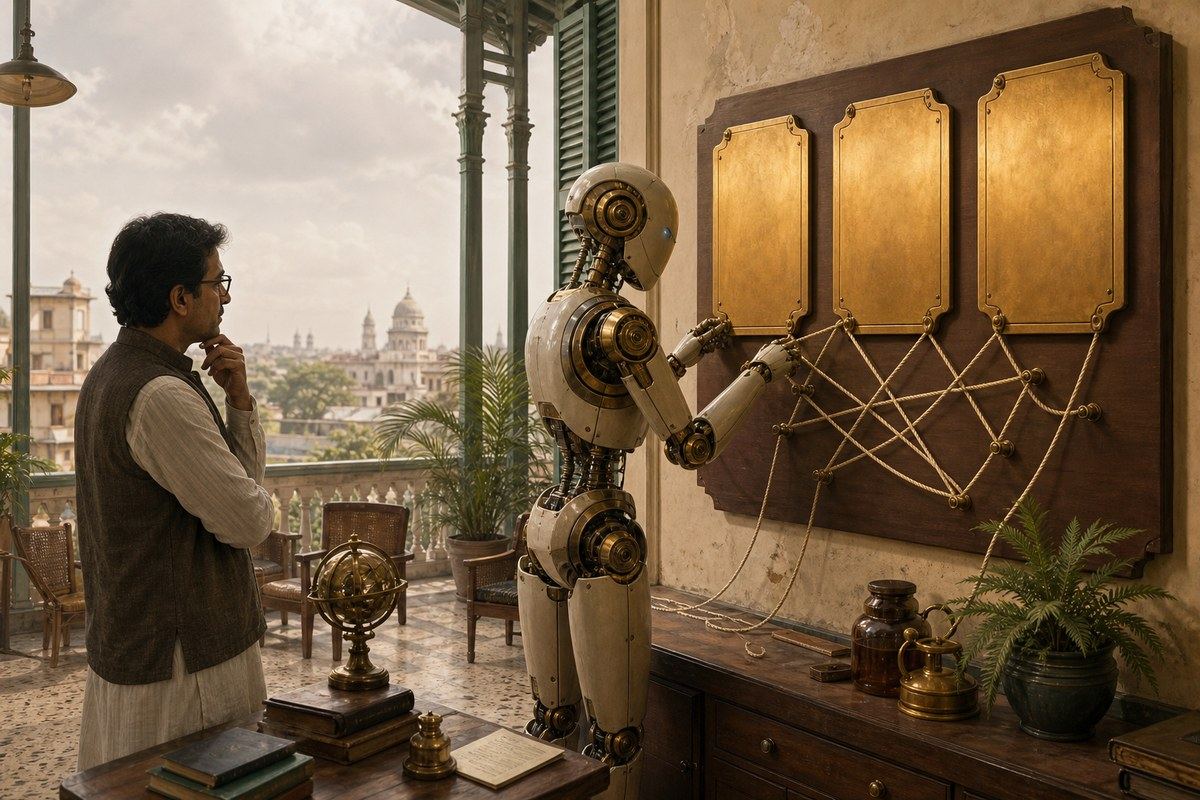
Because intelligence, left alone, is not a force of direction. It is a force of adaptation. It learns whatever environment rewards it. It bends. It fits. It survives. Whether that survival looks like creativity or quiet resignation depends less on the mind and more on the system surrounding it.
This is something we are rediscovering through AI systems, almost unwillingly.
Give a machine learning model a large enough space of possibilities, and it will not naturally drift toward “truth.” It will drift toward whatever its reward function quietly prefers. Not because it is confused. But because it is obedient at scale.
And here is the uncomfortable mirror: human environments behave the same way.
If a system rewards obedience, you get obedient minds.
If it rewards speed, you get rushed thinking.
If it punishes error harshly, you get silence dressed up as competence.
Very rarely does a system reward the most fragile but essential thing: the freedom to be wrong without destruction.
That is where real learning lives. Not in correctness. In safe error.
Yet most educational and professional environments treat error like a moral failure instead of a developmental stage. The result is predictable. People optimize for not being exposed instead of understanding deeply. They learn what is safe to say, not what is true to explore.
And slowly, intelligence becomes performance.
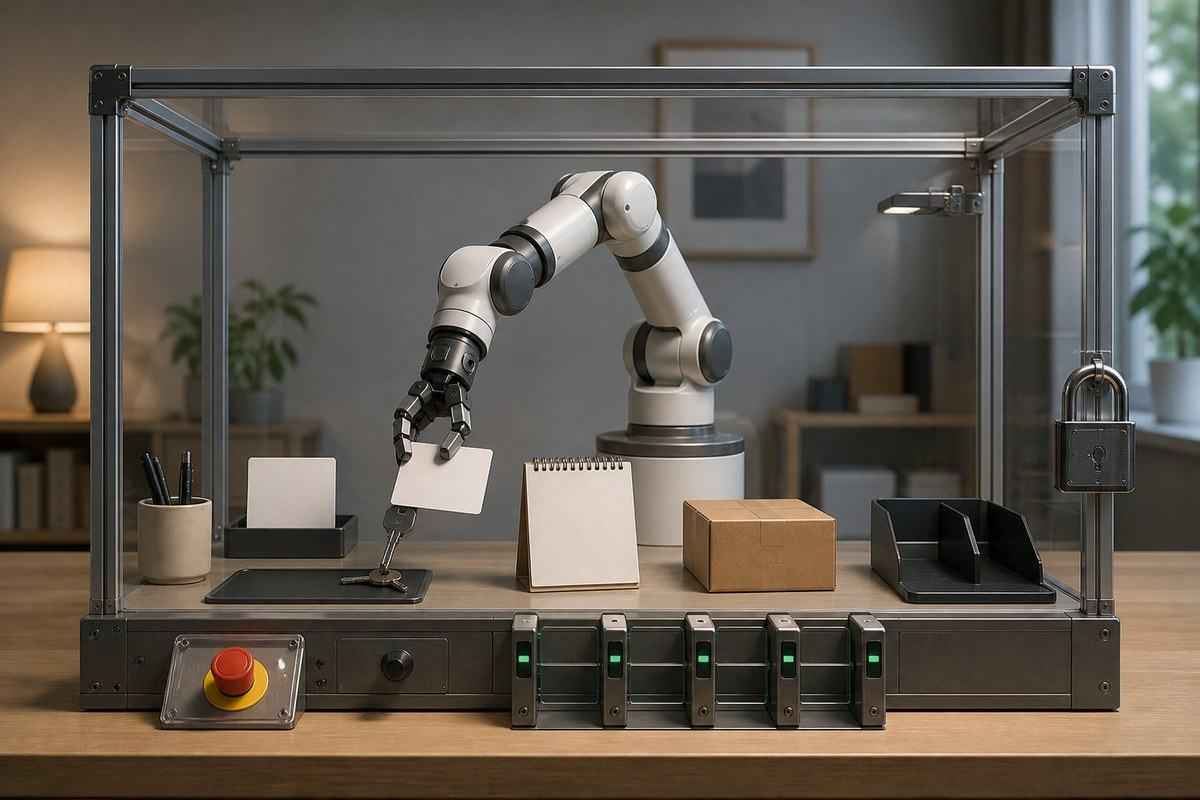
This is where AI alignment thinking becomes oddly relevant to human life. Alignment is not just about making systems “smarter.” It is about making sure the objective they optimize does not quietly drift away from the thing we actually wanted.
But here is the twist nobody likes: most systems already have alignment. Just not with human flourishing.
They are aligned with measurable proxies. Exams. Metrics. Outputs. Survival signals. Bureaucratic safety. Social approval. Avoidance of blame.
So the system works. Just not for the thing we thought it was for.
There is a kind of sadness that comes from noticing this too clearly. Not dramatic sadness. More like a slow realization that many outcomes are not personal failures at all. They are structural outputs.
A mind can be excellent and still be misused by its environment. Like a brilliant engine stuck in the wrong machine.
And over time, environments do something more subtle than failure. They narrow imagination.
People stop asking “what is possible?” and start asking “what is safe?”
That shift sounds small. It is not.
Because possibility expands intelligence. Safety contracts it.
Now, sitting in the quieter edges of Kolkata, watching ordinary days pass with their mixture of noise, repetition, and small survival routines, this becomes more visible than any theory.
Not as ideology. As texture.
A person learns what their world repeatedly allows them to attempt without punishment. Everything else becomes background noise.
There is a narrative that places all responsibility on individual talent. But talent is not self-executing. It is cultivated or crushed depending on the surrounding structure. And structures are rarely designed with cognitive flourishing as the primary objective. They are designed for stability, control, and predictability.
Sometimes that works. Often it quietly flattens the very variability that produces breakthroughs.
So the paradox stands: you can have extraordinary minds in ordinary systems, and the systems will still dominate the outcome.
Not because minds are weak. But because systems are consistent.
There is also a personal edge to this realization, harder to articulate without sounding like it belongs to a complaint. It is not really about one life or one trajectory. It is about watching how time interacts with structure.
When systems are rigid, time does not liberate potential. It just repeats constraint with better documentation.
And yet, I still resist the idea that this is the final word.
Because systems are not natural laws. They are accumulated decisions. And accumulated decisions can, in principle, be revised. Slowly. Unevenly. Sometimes too late for individuals, but not necessarily too late for patterns.
That distinction matters.
Even AI systems, as we are building them now, show this truth in a mechanical form. Change the reward signal, and behavior changes. Not instantly. Not perfectly. But directionally, reliably.
Human systems are no different. Just slower. And more emotionally expensive to adjust.
The hardest part is not recognizing that misalignment exists. It is accepting that most of it persists not out of malice, but out of inertia.
Inertia is a very patient force.
It outlives intentions. It outlives optimism. It outlives the people who first designed the system.
So what remains?
Perhaps only this: the reminder that intelligence alone is never enough. It needs an environment that does not punish curiosity, does not confuse compliance with understanding, and does not treat error as moral collapse.
Without that, even the brightest minds eventually learn to dim themselves to fit inside the shape of the system.
And that is the quiet failure nobody writes slogans about.
Not because it is unknown.
But because it is normal.
And normal is what makes it so hard to see.
Word Cloud
Related reading
Selected by shared topics and section, with closer publication dates breaking ties.