The Lake That Lit Up Genes: Maracaibo, Memory, and Huntington’s Disease
Uses the speech voice supplied by your browser or device.

Acronyms used in this article
HD — Huntington’s Disease, a progressive inherited brain disorder
DNA — Deoxyribonucleic Acid, the molecule carrying genetic instructions
HTT — Huntingtin gene, the gene mutated in Huntington’s Disease
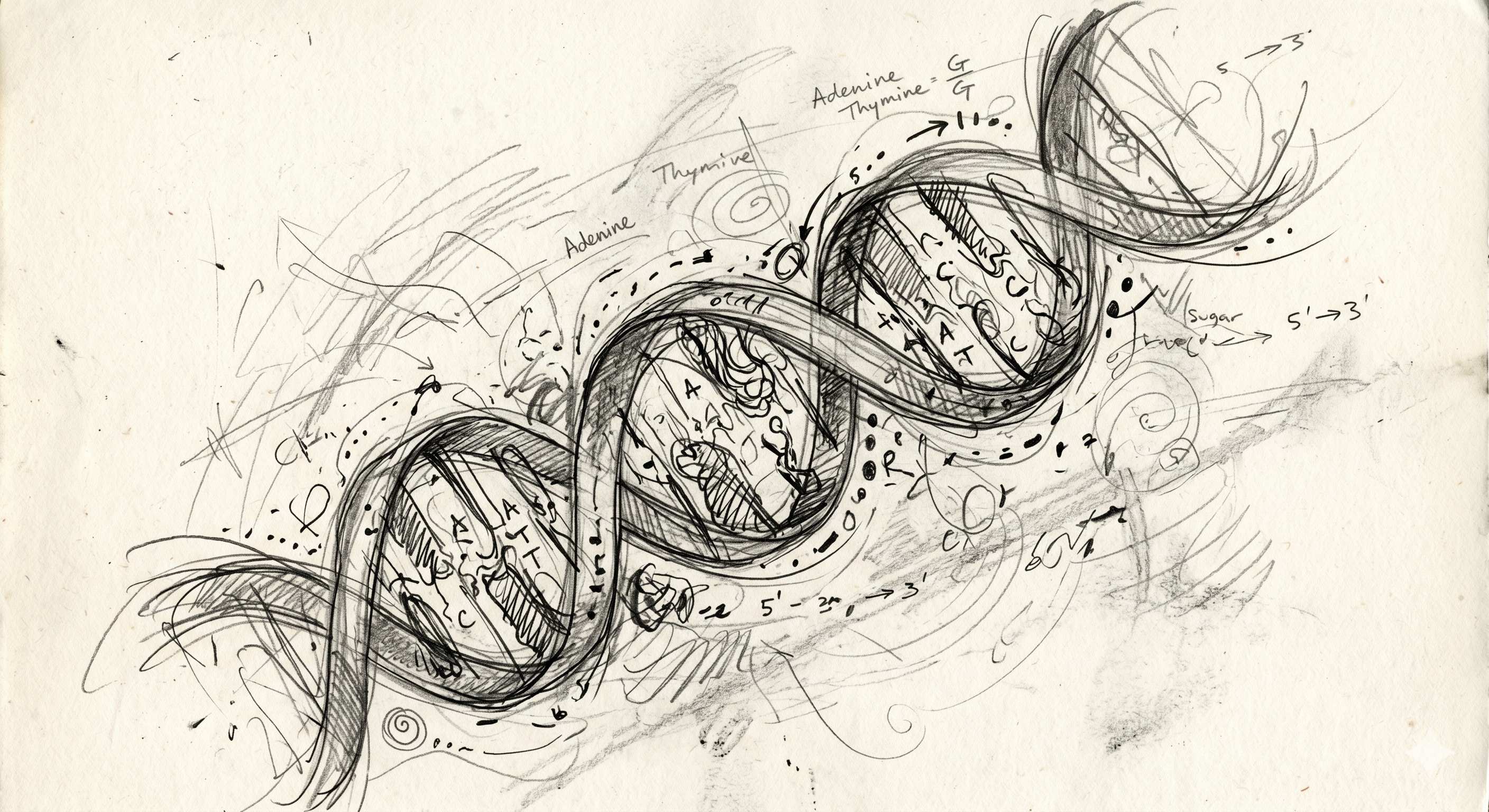
CAG repeat — a three-letter DNA sequence repeated abnormally in the disease
Uses the speech voice supplied by your browser or device.
The strange thing about medical breakthroughs is they rarely look like breakthroughs while they are happening. They look like paperwork, mosquito bites, long boat rides, and people arguing over sample labels in humid air that refuses to behave.
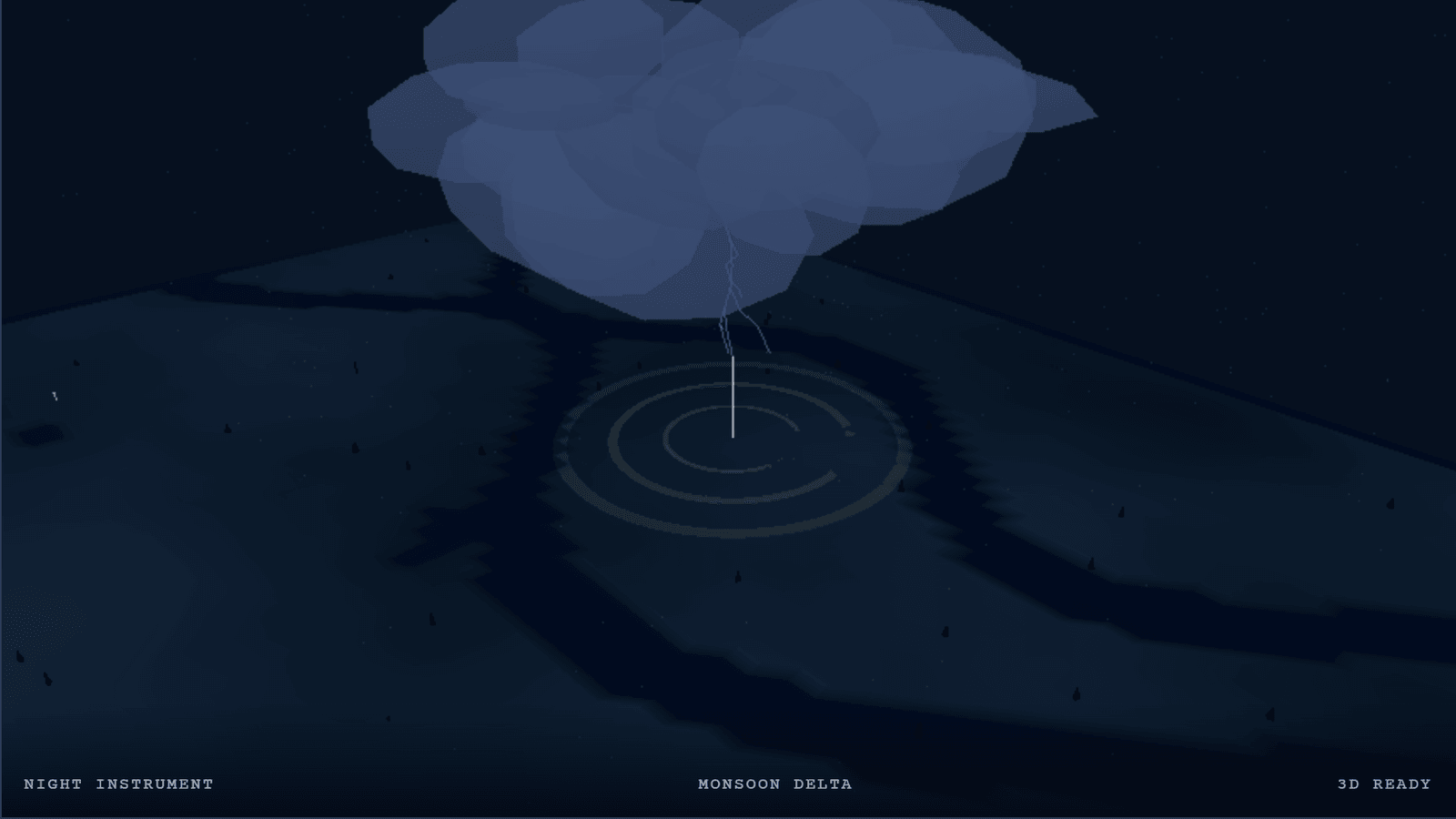
Somewhere near Lake Maracaibo in Venezuela, the air itself seems impatient. Lightning doesn’t visit there occasionally. It practically rents a room in the sky. Night after night, it flashes like a broken camera shutter stuck on “infinite exposure.”
And into that electric sky walked scientists looking for something very unromantic: a repeating error inside human DNA that causes Huntington’s Disease.
Not drama. Not mythology. A spelling mistake in the code of life.
Now pause there. Because if you are sitting in a small room in Calcutta, maybe near a ceiling fan that only works when it feels emotionally motivated, this already sounds absurd. Why would a deadly neurological disease be hiding near a lightning lake in South America? That is not how stories are supposed to behave.
But biology never got the memo about storytelling etiquette.
Huntington’s Disease is one of those inherited conditions where the brain slowly loses control over movement, thought, mood, everything that quietly makes a person feel like “themselves.” No infection. No trauma. Just inheritance. Half your children, statistically speaking, may carry the same fate.
It was first described in the 1800s by George Huntington, a physician who noticed something unsettling: entire families passing down involuntary movements and cognitive decline like a cursed heirloom.
But description is not understanding. Medicine lived with that discomfort for a century.
Now enter a different kind of scientist, Nancy Wexler, who had a personal reason for refusing to leave the mystery alone. Her work eventually pulled attention toward a remote cluster of families around Lake Maracaibo, where Huntington’s wasn’t rare. It was almost a family tradition nobody wanted.
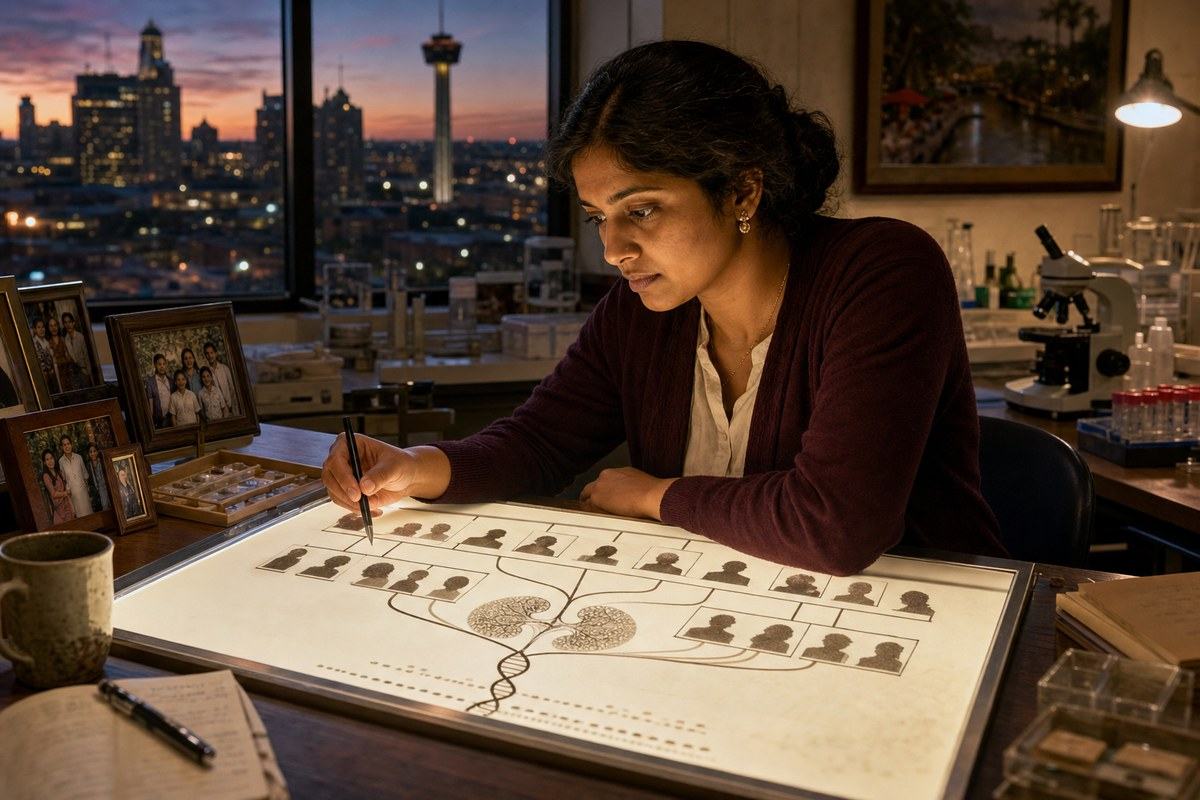
Imagine this: a village where almost everyone can trace the same neurological tragedy through family trees as neatly as monsoon water tracing cracks in a wall.
It is here that science does something almost rude in its efficiency.
Instead of waiting for technology to fully mature, researchers start doing something primitive and brilliant at the same time: they trace inheritance patterns like detectives tracking footsteps in wet mud. Who has it. Who doesn’t. Who is related to whom. Which marker travels with the disease like a shadow that refuses to detach.
This is linkage analysis, and it feels less like modern genetics and more like village gossip elevated into mathematics.
Now here is the trick that makes it beautiful.
They are not yet looking at the exact gene. They are not even sure where it sits. They are just watching nearby DNA markers, like streetlights along a road, trying to figure out which street leads to the crime scene.
And somehow, in the early 1980s, one marker on chromosome 4 starts behaving suspiciously. It keeps showing up with the disease across generations. Not always visible. Not directly causal. But stubbornly associated.
That is the moment the hunt becomes real.
Because suddenly Huntington’s Disease is no longer “somewhere in the body.” It has coordinates.
Now let me digress for a second, because this is where my mind always slips.
When I was still consulting in the US, working with hospital data systems, I used to see similar illusions. Everyone thinks data problems are about missing values or bad entries. But most of the time it is not missing data. It is misplaced meaning. The system thinks it is talking about one thing, while another thing quietly happens underneath.
That gap between “transport” and “meaning” is where most healthcare IT failures live. And genetics, strangely, runs into the same trap.
A DNA marker is not the disease. It is just a signal riding nearby. Confusing the two is like thinking a train station sign is the train itself.
Back in Maracaibo, the fieldwork becomes almost cinematic but not in a glamorous way. Boats. Heat. Paper forms. Family interviews stretching across generations. Entire genealogies reconstructed like stitching together a torn photograph using only memory and repetition.
And here is the uncomfortable truth: these communities are not just “study sites.” They are people living with an inherited clock ticking in their nervous system. Science advances. Their lives remain structurally unchanged for a long time.
Eventually, the real gene is found. The HTT gene. The culprit is not dramatic in appearance. It is almost childish in its mechanism. A small sequence—CAG—repeats too many times. Like a word stuck in a loop. Like a sentence that refuses to end.
At a threshold, biology begins to break.
Not because something foreign enters the system. But because repetition itself becomes toxic.
That idea still unsettles me more than most complex medical theories. Because it suggests failure is not always invasion. Sometimes it is redundancy.
Now picture a typical morning in my part of Calcutta. Power might be fluctuating. Tea boiling too fast on a small stove. News on a phone about some new breakthrough in AI, some political noise, some cricket argument nobody will resolve.
Life continues in fragments. And somewhere in that noise is the same principle that governed Maracaibo: systems breaking not from shock, but from accumulated patterns that exceed tolerance.
That is the hidden bridge between a Venezuelan lightning lake and a Bengali morning with cheap tea.
Science often pretends it is about discovery. But in reality it is about translation. Turning patterns into names. Names into mechanisms. Mechanisms into partial control.
Huntington’s Disease still has no cure. That is the part textbooks often soften. We can identify it early. We can trace it. We can map it. But we cannot yet stop the cascade once it begins.
And this is where the real lesson sits, quietly, without ceremony.
Finding a genetic marker is not the same as solving the disease. It is only the moment you realize you have been reading the wrong layer of the book.
Underneath all of it, there is still a family near Lake Maracaibo wondering what inheritance really means when it is not wealth or land, but neurological certainty.
And there is still that lightning, refusing to stop, as if the sky itself is rehearsing the same question over and over again without ever reaching closure.
If biology has a sense of irony, it chose a very bright place to reveal a very dark inheritance.
And we are still trying to read what it means when repetition becomes destiny.
Word Cloud
Related reading
Selected by shared topics and section, with closer publication dates breaking ties.