Ebola From First Principles: The Small Thread That Can Frighten a Planet
Uses the speech voice supplied by your browser or device.

Acronyms and terms used in this post:
WHO — World Health Organization; the United Nations public health agency that coordinates international disease alerts and outbreak response.
CDC — Centers for Disease Control and Prevention; the United States public health agency that monitors diseases, issues travel guidance, and supports outbreak control.
DRC — Democratic Republic of the Congo; the central African country where the current Bundibugyo outbreak was first reported in Ituri Province.
EVD — Ebola virus disease; the severe illness caused by several related Ebola-type viruses.
BVD — Bundibugyo virus disease; Ebola disease caused specifically by Bundibugyo virus.
PHEIC — Public Health Emergency of International Concern; a formal WHO alert meaning an outbreak may require coordinated international action.
RNA — Ribonucleic acid; a molecule used by many viruses to carry genetic instructions.
DNA — Deoxyribonucleic acid; the long-term genetic archive used by humans and most living organisms.
PCR — Polymerase chain reaction; a laboratory method that detects tiny amounts of genetic material from a pathogen.
PPE — Personal protective equipment; gloves, masks, gowns, face shields, and other barriers that protect healthcare workers.
ICU — Intensive care unit; a hospital unit for very sick patients needing close monitoring and organ support.
Ebola is not a flying curse, not a jungle ghost, not the sort of thing that leaps across a tea stall because someone sneezed near the muri tin. It is worse and better than that. Worse because it can kill with a cold efficiency that makes the blood go quiet. Better because it has rules.
And rules are useful.
A tiger with rules is still a tiger, but at least you know which side of the fence to stand on.
The first rule is this: Ebola usually spreads through direct contact with body fluids from someone who is sick or dead from the disease. Blood. Vomit. Diarrhea. Saliva. Semen. Contaminated bedsheets. Needles. Gloves used badly. A funeral cloth touched with love and no protection. It is not, in the ordinary sense, an airborne nuisance like influenza or COVID-19, drifting around the room like gossip in a para club.
This is why the sensible person does not panic.
This is also why the sensible person does not sleep.
The present worry is Bundibugyo. Not Zaire, the celebrity villain of the Ebola family. Not Sudan, another old and dangerous member of the clan. Bundibugyo. A rarer fellow, first identified in Uganda in 2007, now linked to the outbreak in the DRC and Uganda that made WHO ring the international bell in May 2026. That bell is called a PHEIC. It does not mean the planet has entered a pandemic. It means: stop yawning, pay attention, send help, organize fast, and please do not wait for the fire to reach the curtain before looking for water.
On 5 May 2026, WHO was alerted to a high-mortality illness in Mongbwalu Health Zone in Ituri Province in the DRC. By 15 May, laboratory testing confirmed BVD. By 17 May, WHO declared a PHEIC. Reports from the region spoke of suspected cases, deaths, health workers affected, and spread across borders into Uganda. Numbers in an outbreak move like fish in muddy water. Today’s precise count becomes tomorrow’s correction. The direction matters more than the arithmetic: this was not a routine fever cluster quietly dissolving into paperwork.
Let us open the small machine.
A virus is not fully alive in the way a crow is alive, or a dog, or the mosquito that enters your room at 2:17 a.m. with the confidence of a tax inspector. A virus is a packet of instructions wrapped in protein and fat. It does not eat. It does not think. It does not scheme. It simply lands on the right kind of cell and says, with the arrogance of all tiny tyrants: make more of me.
Ebola is an RNA virus. Its genetic material is RNA, not DNA. That sounds technical, but here is the kitchen version. DNA is like the family recipe book kept in the old steel almirah. RNA is like a working copy scribbled on paper and carried to the stove. Some viruses bring their own scribbled instructions and force the cell to cook poison in bulk.
Ebola’s RNA is negative-sense RNA, which means the cell cannot read it directly. The virus must first turn it into a readable form. Imagine arriving at a railway counter with a ticket written backward and also bringing the only clerk in the station who can read backward. That is not magic. That is molecular cheek.
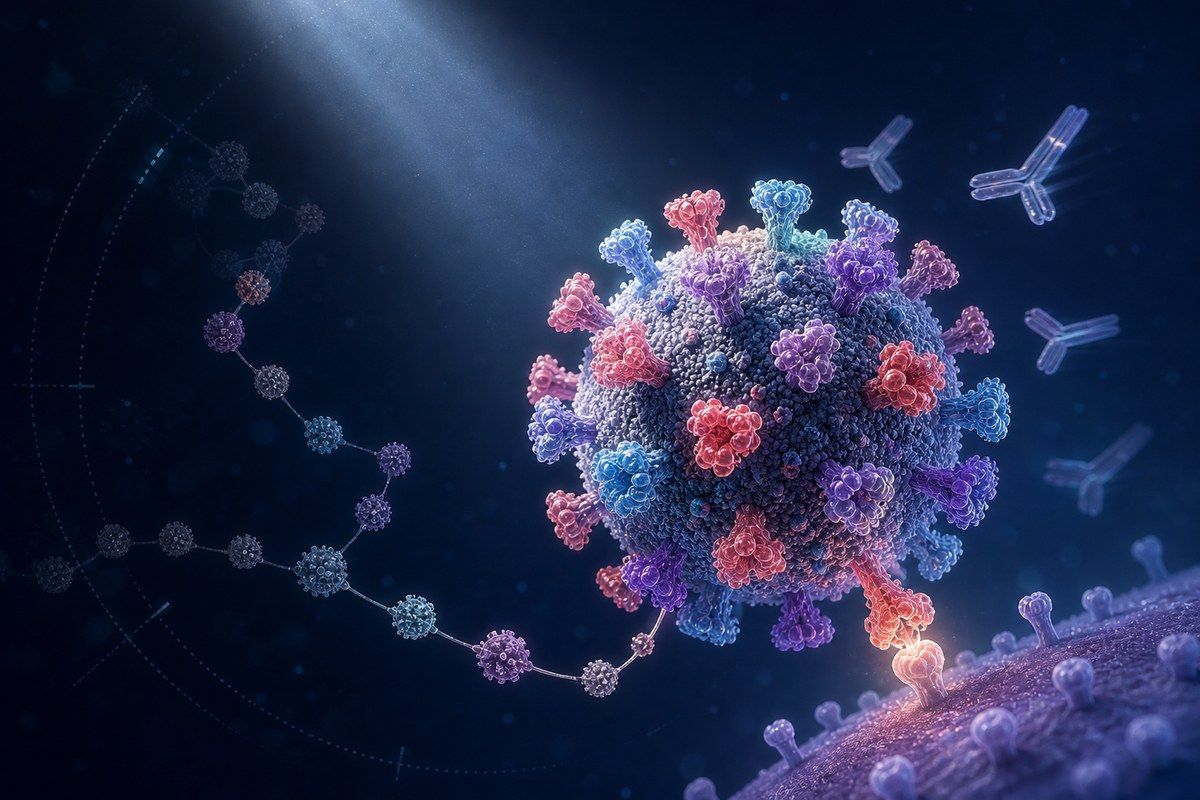
Under an electron microscope, Ebola often looks like a thread, a hook, or a bent piece of black sewing cotton. This is where its family name comes from: filoviruses, thread-like viruses. The picture is almost elegant, which is rude of it. One expects a killer to look like a killer. Instead it looks like a scrap from a tailor’s floor.
But once inside the body, the elegance ends.
Ebola attacks immune cells, blood vessel linings, the liver, clotting pathways, and the delicate plumbing that keeps fluids where they belong. The movie version loves bleeding eyes. Real Ebola is usually more ordinary and more terrible: fever, weakness, muscle pain, vomiting, diarrhea, abdominal pain, dehydration, shock, organ injury. The body becomes a city where the pumps fail, the roads flood, the police radio crackles, and nobody knows who is in charge.
Bleeding can happen. But bleeding is not always the main drama. The main drama is collapse.
This matters because early Ebola can look like malaria, dengue, typhoid, influenza, or one of those nameless fevers that pass through neighborhoods and leave everyone blaming the weather, the water, the government, and the previous night’s egg roll. Fever. Headache. Body pain. Fatigue. Sore throat. These are not dramatic symptoms. They are the symptoms of half the illnesses on earth.
So symptoms alone are not enough.
You need history.
Where was the person? Did they travel from an outbreak zone? Did they care for someone sick? Did they attend a funeral? Did they touch blood or body fluids? Did they work in a clinic where the fever cases were not yet named? Did a nurse fall ill? Did a family bury someone quickly and quietly because fear had already entered the house?
That is the detective work.
Then comes PCR. PCR does not ask the virus to confess politely. It looks for the genetic signature. If the viral RNA is present, PCR can amplify the signal until the laboratory can see what the naked eye cannot. In an outbreak, this is the difference between rumor and response.
Now the important correction: Ebola is not one virus in the casual way people say “Ebola” over tea. It is a family of related troublemakers.
Zaire is the famous one. It caused the catastrophic West African epidemic from 2014 to 2016. It has also benefited from the most serious modern vaccine and treatment development. For Zaire, we have approved vaccines and monoclonal antibody treatments that can change outcomes when used properly and early.
Sudan is another dangerous species. It has caused serious outbreaks, especially in Uganda and nearby areas. But the Zaire vaccine story does not simply copy and paste onto Sudan. Biology dislikes lazy copying. So do viruses.
Bundibugyo is the current worry. Rarer. Less familiar. Less supported by approved, strain-specific tools. That is why it makes public health people sit up straighter.
Taï Forest is rare in humans. Reston has infected monkeys and pigs and has caused human infection without known human disease. Bombali has been found in bats and has not yet been shown to cause human disease.
You see the trap. One word, “Ebola,” hides several biological cousins. Some are proven killers. Some are strange visitors. Some have better countermeasures than others. Saying “there is an Ebola vaccine” without saying which Ebola is like saying “there is a bridge somewhere” while standing before a river with wet shoes.
For Bundibugyo, the glamorous medicine shelf is thinner. That does not mean helplessness. It means old-fashioned public health becomes king.
Find cases.
Isolate cases.
Protect healthcare workers.
Trace contacts.
Monitor contacts for 21 days.
Test fast.
Handle bodies safely.
Explain clearly.
Do not insult the community.
Do not arrive with a loudspeaker and the bedside manner of a brick.
Safe burial is especially hard, because here the virus strikes at something ancient and human. We touch our dead. We wash them. We gather. We cry. We do the last things with our hands because words are too small. Ebola takes that love and booby-traps it.
That is the cruelty.
Not just the fever. Not just the vomiting. The way it turns care into risk.
This is why outbreaks spread in families and clinics. A mother cleans her child. A brother lifts a patient. A nurse changes bedding. A friend helps with transport. A funeral becomes a chain. No villain needed. Only decent people doing decent things before anyone has told them the rules of the tiger.
The incubation period is usually 2 to 21 days. This means a person may be exposed, feel normal, travel, pass through a city, and become sick later. But, and this is a large but, people are generally not considered contagious before symptoms begin. That makes Ebola more containable than diseases that spread silently before the person even feels ill.
Containable is not the same as harmless.
A match is containable. So is a kitchen fire, if you notice early.
I am writing this from Calcutta, where life already has enough small emergencies. The fan groans. The milk packet sweats on the counter. A dog sleeps in the lane as if capitalism has personally failed him. Somewhere nearby a pressure cooker whistles with the authority of a minor dictator. It is easy from here to say, “DRC is far away, Uganda is far away, Africa is far away.”
That sentence has become less useful in the age of connecting flights.
Distance is now a pause, not a wall.
Still, let us not become fools in the other direction. For an ordinary person in Calcutta with no travel exposure, no contact with a suspected patient, no body-fluid exposure, and no work in outbreak response, the risk is very low. You do not get Ebola by reading about Ebola. You do not get Ebola from a WhatsApp forward typed by someone’s excitable cousin. You do not get it because a stranger coughed two seats away in an auto.
But a city should know what to do before it must do it.
That means fever plus travel history should not be treated like a boring formality. Hospitals should know where to isolate a suspected case. Staff should know PPE before fear teaches them badly. Airport screening should be sensible, not theatrical. Laboratories should have referral pathways. Public messages should be plain enough for a tired person to understand after a long day.
The outbreak region has its own difficult reality. Ituri is not a clean diagram in a public health textbook. It has insecurity, movement, fragile infrastructure, poverty, and exhausted health systems. Roads matter. Trust matters. Rumor matters. A broken bridge can become an epidemiological fact. So can a frightened village. So can a missing glove.
This is the part people miss. Ebola is biological, but an outbreak is social.
The virus travels in fluids. The outbreak travels in systems.
It travels through clinics that were not warned. Through families who were not believed. Through burial customs not safely adapted. Through borders crossed for work, trade, refuge, fear, or necessity. Through governments that delay. Through journalists who overheat the stove. Through international attention that arrives late with polished shoes and phrases like “capacity building,” which often means the people on the ground have already been drowning for weeks.
The reservoir is thought to involve fruit bats. Spillover happens when human life presses into animal ecology: hunting, handling carcasses, forest disruption, mining, food insecurity, markets, caves, farms. It is rarely one dramatic moment. More often it is a long negotiation between hunger, land, money, and microbes. A virus that sits quietly in one species may behave like a drunk landlord in another.
Again, no mysticism required.
Just contact.
Just opportunity.
Just biology with bad timing.
The beginner’s mental model should have three layers.
First, the virus: a thread-like RNA packet that enters cells and copies itself.
Second, the body: immune confusion, vessel damage, fluid loss, shock, organ stress.
Third, the outbreak world: families, clinics, funerals, roads, borders, money, rumor, trust, PPE, laboratories, and leadership.
Most panic stares only at the first layer. Most control depends on the third.
That is why a poor outbreak response can make a bad virus look supernatural. It is not supernatural. It is being assisted by human disorganization, which has always been one of civilization’s most generous sponsors of disaster.
What should a Calcutta reader do with all this?
Not panic.
Not joke it away.
Not forward nonsense.
Know the rules. Ebola spreads through direct contact with infectious body fluids and contaminated materials, especially when a person is symptomatic or dead. Early symptoms can look ordinary. Travel and exposure history matter. The 21-day window matters. Healthcare workers and family caregivers are at highest risk when protection fails. Bundibugyo matters because it is not the same as Zaire, and the vaccine-treatment comfort available for Zaire cannot be casually assumed here.
There is a small moral in this, though I dislike moralizing because it usually arrives wearing polished shoes and asking others to suffer efficiently. The moral is simply this: public health is not panic prevention after panic begins. It is memory. It is rehearsal. It is boring preparedness done before the drums start.
Ebola is frightening because it is intimate. It enters through care. It punishes touch. It makes the sick dangerous to the loving. That is why its control cannot be only police barricades and airport forms. It must include trust, explanation, gloves, safe care, safe burial, and quick diagnosis.
The thread under the microscope is small.
The world it exposes is not.
And that is why, sitting here in the southern fringe of Calcutta, sweating under a May fan that sounds like it has unpaid debts, I do not think Ebola is our immediate household terror. Not today. Not for most of us.
But I do think it is a warning with a passport.
Word Cloud
Related reading
Selected by shared topics and section, with closer publication dates breaking ties.