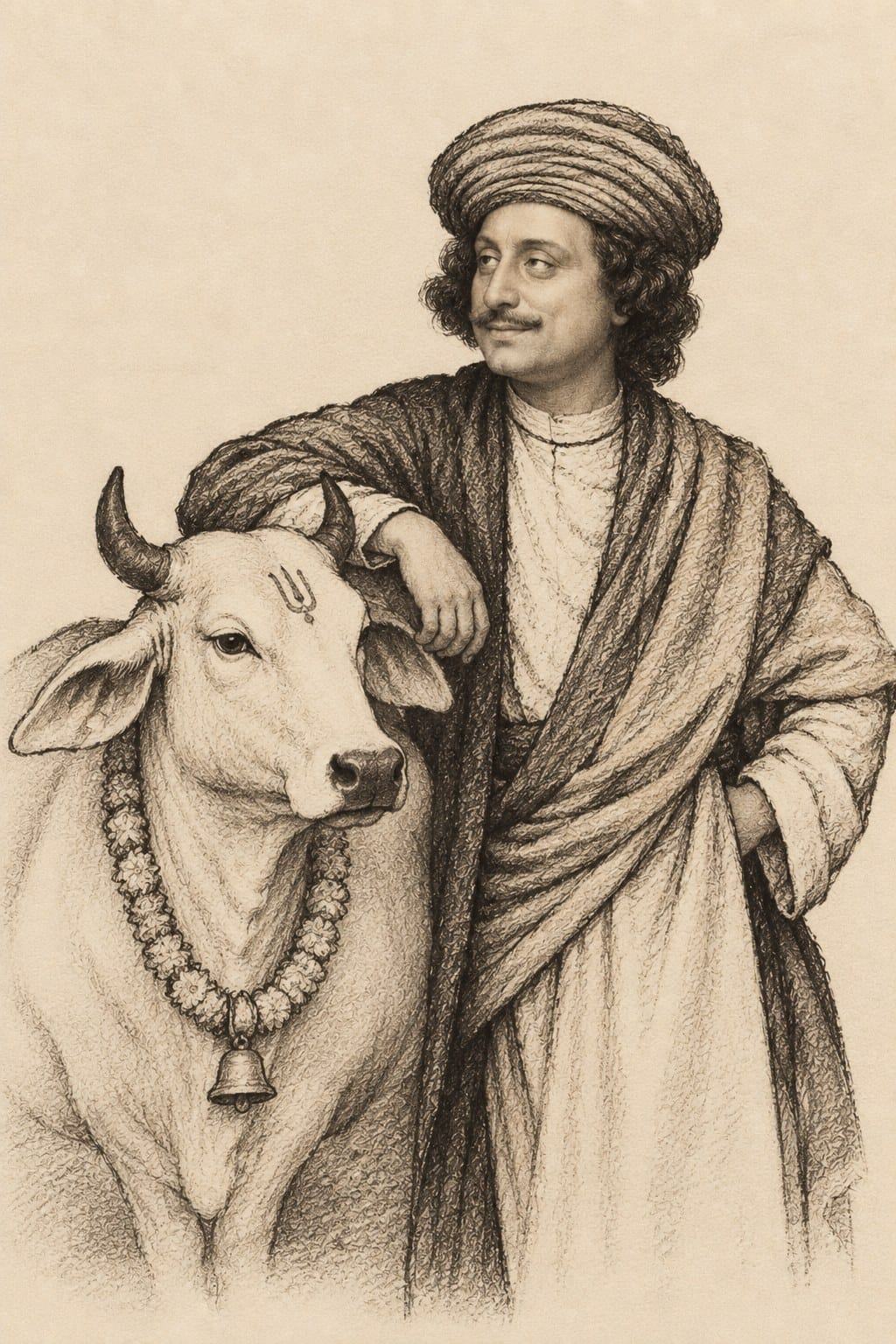
Milk Cha and the Small Engine of Attention
Uses the speech voice supplied by your browser or device.

Acronyms and terms:
CTC — Crush, Tear, Curl. A tea-processing method that makes small, hard granules from tea leaves. It brews fast, gives strong color, and behaves well with milk.
Some teas are for admiring life. Some teas are for surviving it.
This is not a small distinction. A delicate Darjeeling liquor tea is a lovely thing, pale and fragrant, with the manners of an elderly schoolteacher who still says “excuse me” to furniture. It asks you to sit near a window, look at a tree, and become faintly better than you were ten minutes ago. Very good. Very civilized. Almost suspiciously civilized.
But there are afternoons in the shanty boondocks of Calcutta when civilization is not the immediate problem.
The immediate problem is that the ceiling fan is slicing hot air into thinner hot air, the bank account is looking like a joke written by an enemy, the phone is silent in the particular way phones are silent when money is expected, and the mind is roaming about the room like a goat that has entered a stationery shop. It chews one thought. Then another. Then a corner of an old regret.
At such a moment, Darjeeling liquor tea is too polite.
It relaxes me. That is the trouble.
Relaxation is wonderful when the day has earned it. But concentration is a different animal. Concentration does not arrive wearing a shawl and carrying a book of poems. Concentration arrives like the local electrician, slightly irritated, mildly late, but with the correct screwdriver.
This is where milk cha with sugar walks in, not elegantly, but usefully.
A strong Assam-style CTC tea has muscle. Not poetry muscle. Rickshaw-puller muscle. It gives color quickly. It has body. It can take milk without fainting dramatically into the cup. Add a little sugar, and suddenly the drink stops being a beverage and becomes a small domestic rescue operation.
The brain, poor overworked babu that it is, notices.
Attention is not just a noble mental virtue. It is a bodily negotiation. The eyes, the stomach, the hand around the cup, the small rise in alertness from caffeine, the comfort of milk, the quick sweetness on the tongue, the smell of boiling tea coming from the kitchen like a rumor of hope. These things matter. They are not decoration. They are the little stagehands of the mind, pulling ropes in the dark while the actor pretends he is doing Hamlet by himself.
You think you are deciding to work.
Sometimes your cup is deciding for you.
By the bye, even the word cha carries a small passport. Bengali cha comes from the Chinese word chá, which travelled across languages, markets, ports, kitchens, and empires until it landed in our cups as if it had always belonged there. This is worth remembering in India, where we manage the impressive trick of importing half our household life from China while casually insulting our own brothers and sisters from the North East with the slur “chinki,” as if geography were a license for stupidity. The cup in our hand knows better. It says culture has never respected our neat little prejudices. It crosses borders, takes local train connections, changes pronunciation, marries milk, meets sugar, and becomes Bengali without asking permission from any television panel. If anything, we should as Indians, drink more cha to focus on catching up to the Chinese.
It quietly helps us to get work done.
Now let nobody become foolish here. Milk cha is not treatment. Sugar is not therapy. Caffeine is not a psychiatrist wearing a brown overcoat. A bankrupt, bipolar, depressed, anxious, attention-scattered Bengali does not become magically efficient because one saucepan has made encouraging noises on the stove. Life is not that kind. It has never shown that level of customer service.
But.
A cup can change the next twenty minutes.
And sometimes the next twenty minutes is the only piece of life small enough to lift.
That is the secret. Not productivity. Not self-improvement. Not some imported nonsense about optimizing your morning routine while smiling at a fern. Just twenty minutes. One paragraph. One invoice. One email. One bug. One sink full of cups. One small task dragged across the finish line with the dignity of a wounded footballer.
Milk cha helps because it is not asking me to contemplate. It is asking me to begin.
Darjeeling liquor tea has an airy beauty. It floats. Milk cha lands. It lands on the table with a soft brown thump and says, “Come on, enough floating. Do the work.”
There is also memory inside it. That matters too. The Bengali brain does not drink tea in isolation. It drinks tea with tram bells, exam mornings, para gossip, newspaper ink, rainwater smell, old steel kettles, cheap biscuits, and mothers shouting from another room that the tea is getting cold. Even if one is fifty-one, single, worried, and living at the edge of the city where the roads look unfinished in a permanent philosophical sense, that smell still knows the way in.
A cup of liquor tea says, “Rest.”
A cup of milk cha says, “You have survived worse.”
Which is true, though one prefers not to compile the full list.
The milk is important because it domesticates the bitterness. The sugar is important because life is already bitter enough without conducting an additional laboratory experiment in self-denial. The strong tea is important because pale milk tea is an insult. It looks like something that has overheard the word tea from a distance.
No. A proper cup must have color. Brown, warm, serious, a little glossy. The shade of a clay road after rain. The shade of a railway platform cup held between two tired hands. The shade of “not yet defeated.”
And the leaf must be built for the job. Darjeeling under milk often feels like a singer trapped under a mattress. Wonderful voice, wrong arrangement. A strong CTC leaf, on the other hand, is made for this rough-and-ready domestic music. It does not bring violin fragrance. It brings drumbeat. If you mix in a little aromatic leaf, fine, let there be a small hill breeze hiding in the background. But the backbone must come from the strong stuff.
This is not snobbery. This is household engineering.
Every kitchen knows this principle. You do not make luchi with the temperament of tissue paper. You do not fight summer with lukewarm courage. You do not ask a delicate thing to perform a muscular job and then blame it for being delicate. That is not taste. That is mismanagement.
The world outside, meanwhile, continues its circus. Prices rise. Roads are dug up and then apparently abandoned for future archaeologists. Leaders speak into microphones as if volume were a substitute for thought. Somewhere, some app is promising to change humanity while failing to deliver groceries before the rain. The news comes like a parade of brass bands falling into open drains.
In such a world, the cup becomes a border post.
Inside this cup: heat, sweetness, tannin, milk, familiarity.
Outside this cup: everything else.
For a few minutes, that border holds.
I sit with it. I blow on it. I take the first sip too soon and burn my tongue slightly, because wisdom has never been my strongest department. Then the brain, that reluctant clerk, looks up from its dusty ledger. Not happily. Not heroically. But enough.
Enough is underrated.
The work begins in a small way. One sentence. Bad sentence. Second sentence. Slightly better. Delete first sentence. Sip. Curse mildly but internally. Continue. The room is still hot. The money problem is still there. Depression is still sitting in the corner like an unpaid landlord. Anxiety is tapping a pencil. But something has shifted. The afternoon has a handle now.
That is what good milk cha gives me.
A handle.
Not enlightenment. Not cure. Not the fragrant mountain air of a better life. Just a handle on the next small thing. A little brown engine for a mind that has stalled near the crossing.
Later, when the work is done, or at least given a decent bruise, Darjeeling may return. Then it can do its delicate magic. Then it can be pale, floral, graceful, almost musical. Then it can sit in the evening and teach the nerves how to lower their voice.
But when the day is biting, when the mind is sliding off the chair, when attention is not a temple lamp but a matchstick in a storm, give me milk cha with sugar.
Not fancy.
Faithful.
A small cup of traction in a slippery world.
Word Cloud
Related reading
Selected by shared topics and section, with closer publication dates breaking ties.