The Calcutta Summer of 2026
Acronyms used in this post:
IMD: India Meteorological Department, India’s national weather forecasting agency.
NCDC: National Centre for Disease Control, India’s public-health surveillance and disease-control agency.
IHIP: Integrated Health Information Platform, India’s digital disease-surveillance reporting platform.
HAP: Heat Action Plan, a government plan for warning, preparedness, worker protection, health response, and public cooling during extreme heat.
KCAP: Kolkata Climate Action Plan, the city’s climate adaptation and emission-reduction planning framework.
HI: Heat Index, the “feels like” temperature when humidity is combined with air temperature.
WBT: Wet-Bulb Temperature, a heat-and-humidity measure that tells us how well sweating can cool the body.
ENSO: El Niño–Southern Oscillation, the Pacific Ocean climate cycle that shifts between El Niño, La Niña, and neutral phases.
KMC: Kolkata Municipal Corporation, the civic body governing the city.
AC: Air conditioning, mechanical indoor cooling.
ORS: Oral Rehydration Salts, a cheap salt-sugar-water mixture used to treat dehydration.
Calcutta is not frying like Rajasthan. Calcutta is being pressure-cooked.
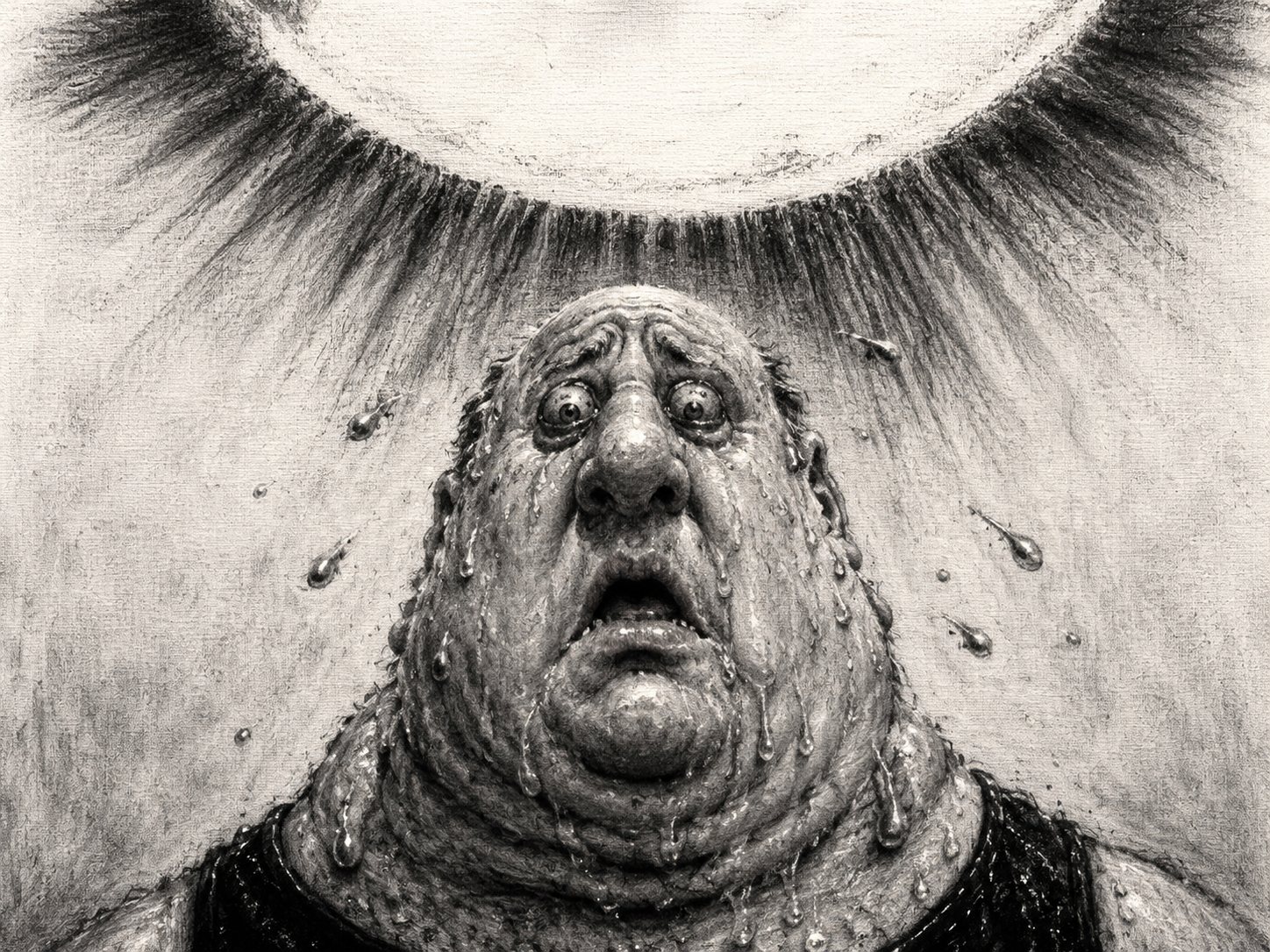
That is the small but important difference. In Delhi or Vidarbha or parts of Rajasthan, the heat sometimes arrives like a brass band with no manners: 44°C, 46°C, the sort of number that makes newspapers reach for red fonts and schoolchildren secretly hope for closure notices. Calcutta’s heat is craftier. It does not always shout. It sidles in with humidity, shuts the window, steals your sleep, and then sits on your chest like an overweight uncle after lunch.
You look at the thermometer and think, 36°C, 37°C, 38°C. Bad, yes, but not the end of civilization. Then you step outside in Garia or Behala or Dum Dum or Kasba, and within three minutes your shirt has surrendered, your spectacles are fogging, and the air feels as if someone boiled a pond and poured it into your lungs.
This is the Calcutta summer of 2026.
Not merely hot. Sticky. Sleepless. Expensive. Unequal.
And that last word matters most.
Because heat is never democratic. It may fall from the same sky, but it lands on different roofs.
On one roof there is AC, inverter backup, filtered water, a fridge full of cold bottles, and a person on WhatsApp saying, “Eta ki gorom re baba.” On another roof there is tin, tar, one slow fan, a shared toilet, and a child trying to sleep while the room holds the day’s heat the way a cheap steel tiffin holds the smell of yesterday’s fish curry.
Same city. Different planets.
IMD warned in April 2026 that India was facing above-normal heatwave days across parts of east, central, and northwest India, with hot and humid weather expected in coastal and eastern states including West Bengal. That little phrase, “hot and humid,” is where Calcutta enters the story quietly, wearing rubber sandals and carrying a plastic water bottle.
A dry 42°C is bad. A humid 37°C can also be dangerous because the body’s cooling system depends on evaporation. Sweat must evaporate. That is the trick. Otherwise you are simply leaking water like an old municipal tap.
In Calcutta, sweat often does not evaporate properly. It hangs around, doing nothing useful, like a clerk who has misplaced your file but is confident it will emerge after lunch. The Bay of Bengal supplies moisture. Concrete stores heat. Traffic exhales heat. Buildings block wind. Ponds vanish. Trees disappear from precisely the places where people need shade most. Then we pretend the problem is “weather,” as if weather alone built the city so badly.
You think the villain is the sun.
Not quite.
The sun is only the famous criminal. The gang includes humidity, bad housing, informal labor, weak enforcement, shrinking green cover, poor drainage, overloaded clinics, indifferent employers, and the grand old Indian talent for issuing advisories that evaporate before reaching the pavement.
During the West Bengal election period in April 2026, voters in many districts were advised to cast ballots before 11 a.m. because the peak heat window between late morning and afternoon could become dangerous. That is sensible advice. It is also revealing. If a voter needs shade, water, timing, and medical readiness to stand in a queue for a few minutes, what exactly do we think happens to a mason on a roof for six hours?
This is where the polite language collapses.
“Stay indoors” is not advice for a delivery rider.
“Do not go out between 11 a.m. and 4 p.m.” is not advice for a domestic worker who must reach three houses before noon.
“Drink plenty of water” is not advice for a man at a labor chowk who is paid only if someone picks him for the day.
“Use ORS” is not a heat policy.
It is a sachet.
Helpful, cheap, necessary. But still a sachet.
India has a vast heat-exposed workforce. Construction workers, street vendors, municipal cleaners, security guards, delivery boys, traffic police, rickshaw pullers, brick-kiln workers, loaders, fruit sellers, cooks, farmers, factory hands. In Calcutta, many of them live close to the work, but far from comfort. They are visible everywhere and counted almost nowhere with the seriousness they deserve.
A city survives on people who cannot afford to stop.
That sentence should sting a little.
The Ministry of Labour and Employment did issue a national heatwave advisory in April 2026 asking states and employers to reschedule work, provide water, rest areas, cooling arrangements, ice packs, health checks, ventilation, and special care for daily-wage and casual workers. Good. Necessary. Correct.
Now comes the old Indian question, large as Howrah Bridge: who enforces it?
If a large factory ignores safety rules, there is at least a place to inspect. If a construction contractor pushes men through the afternoon because cement has arrived and the client is shouting, where does the advisory go? Into the air, mostly. It flutters above the site like a political banner after the rally is over.
The poor are often told they are “resilient.” This is one of those words that should be handled with tongs. Sometimes resilience means courage. Often it means nobody came to help.
A rickshaw puller who keeps working in 39°C humid heat is not proving a motivational point. He is doing arithmetic. Rice, medicine, rent, phone recharge, school fees, debt. The body negotiates with the wallet, and the wallet usually wins.
Until the body stops negotiating.
Heat does not always kill dramatically. It often works like a quiet moneylender. It adds a little interest every day. Bad sleep. Less appetite. More dehydration. Higher blood pressure. A dizzy spell. A kidney under strain. A diabetic patient becoming unstable. An elderly person slipping from discomfort into collapse. A worker losing wages because the afternoon became impossible.
Then the death certificate says heart attack, stroke, kidney failure, brought dead.
Heat, the original conspirator, slips away in a white shirt.
This is why NCDC’s 2026 advisory matters. It asked states to track heatstroke cases and deaths, emergency attendance, and total deaths through IHIP from March 1 onward. It asked for health-facility readiness, ambulance preparedness, cooling measures, local mortality review, and heat-related death investigation.
That sounds dry. It is not.
It is the difference between seeing the tiger and counting only the bite marks.
If a city counts only obvious heatstroke, it will miss the wider heat damage. Calcutta does not need only a heatstroke registry. It needs heat-aware hospitals, heat-aware clinics, heat-aware ambulances, heat-aware ward offices, heat-aware labor enforcement, and heat-aware death review. Otherwise the numbers will look smaller than the suffering, and some official will say, “Situation under control,” which in India often means the situation has not yet embarrassed the correct person.
Here is the catch.
Calcutta already has plans. KCAP talks about ward-level temperature and humidity monitoring, green infrastructure, shaded intersections, reflective roads, heat units in hospitals, climate-smart slums, and a formal HAP. These are useful ideas. Some are excellent ideas. But a plan is not a shaded bus stop. A plan is not a cool roof over a one-room house. A plan is not a drinking-water point that works at 2 p.m. in May. A plan is not a contractor being fined for turning men into kebabs on a concrete slab.
Calcutta is full of documents. Some are important. Some are decorative. Some sleep in files and come out during meetings wearing fresh perfume.
The city does not need another handsome PDF to admire itself in.
It needs boring execution.
Boring is underrated. Boring is water at bus stops. Boring is shade over markets. Boring is public buildings opened as cooling rooms. Boring is school buildings used as daytime relief centers during extreme heat. Boring is heat warnings in Bangla that ordinary people can understand. Boring is ward-level humidity data. Boring is checking whether a cooling center actually has electricity, water, chairs, fans, and toilets. Boring is a list of elderly people living alone. Boring is telling construction sites that afternoon work must stop when thresholds are crossed, and then actually showing up to inspect.
Boring saves lives.
The glamorous solution is AC. And yes, AC saves lives too. Let us not become saints with hand fans. A hospital ward needs cooling. An elderly person in a sealed room needs cooling. A heat shelter needs cooling. Some homes need AC because biology is not impressed by moral lectures.
But AC is also a private escape from a public failure. It cools the room and heats the street. It saves those inside and worsens the load outside. It increases electricity demand. It divides the city into cooled boxes and boiling corridors. If AC becomes the only answer, then the answer belongs mainly to people who can pay the bill.
A city cannot AC its way out of bad planning.
That is like trying to solve a leaking roof by buying a nicer bucket.
The stranger thing is that Calcutta still has natural advantages, or had them before we began treating them as real-estate snacks. Trees, ponds, wetlands, open courtyards, shaded lanes, older buildings with high ceilings and thick walls, slow verandas, water bodies that cooled neighborhoods without asking for a subsidy. The East Kolkata Wetlands are not empty land waiting for some developer’s glossy brochure. They are part of the city’s lungs, kidneys, and sweat glands, all at once. Destroying them and then buying cooling technology is not development. It is stupidity with a loan agreement.
Meanwhile, life continues with its little absurdities. Somewhere a man is arguing about politics under a tea-stall tarp while both debaters are visibly melting. Somewhere a school WhatsApp group is deciding whether children should carry extra water, as if eight-year-olds are infantry. Somewhere I am sitting in the southern fringe of the city, middle-aged, underemployed, overeducated, and slightly roasted, trying to write calmly while the fan above me rotates with the enthusiasm of a government subcommittee.
The fan makes noise.
The air does not move.
This is also climate change: not always a grand cinematic disaster, sometimes just an ordinary room becoming harder to inhabit.
And the global machinery is not comforting. ENSO has been shifting toward El Niño conditions in 2026, though scientists are rightly cautious about declaring strength too early. Climate change does not need El Niño to create heat risk, but El Niño can add spice to an already over-spiced stew. The deeper problem is that the baseline has moved. What used to be an extreme summer now becomes a rehearsal. What used to be a warning becomes a season.
This is the part we do not like.
The future is not waiting politely in 2050 wearing a laboratory coat. It is already here, sweating in an election queue.
So what should Calcutta do?
Not everything. Not all at once. That is how committees produce large binders and small results.
Start with the body.
Measure heat as the body feels it: temperature, humidity, night-time heat, shade, wind, and exposure. Use HI and WBT where they matter. Publish ward-level risk. Tell people not just that it will be hot, but what kind of hot. Dry hot. Humid hot. Hot night. Dangerous afternoon. Worker-risk day. Elderly-risk night.
Then protect time.
Move school hours. Move outdoor labor. Move municipal work. Move queues. Move public events. In heat, time is infrastructure. A shaded 8 a.m. is not the same city as an unshaded 2 p.m.
Then protect place.
Shade the bus stops. Shade the markets. Shade the voting queues. Shade the clinic entrances. Shade the labor chowks. Paint low-income roofs white or reflective where feasible. Restore water bodies. Stop murdering trees and calling it beautification. Build cooling rooms where poor people can actually enter without feeling they have trespassed into someone else’s class position.
Then protect records.
Count heat properly. Not perfectly. Properly. Include suspected heat-related deaths. Review patterns. Look at excess deaths. Track emergency visits. Train clinics to ask about exposure. Let the data tell the truth even when the truth is politically inconvenient.
Then protect workers.
No heat plan is serious if it does not change the working day of the poor.
This is the whole argument, really. Calcutta’s summer of 2026 is not only about climate. It is about whether the city sees its own people. Not as voters for one month. Not as labor for hire. Not as “resilient communities” in NGO English. People. Bodies. Kidneys. Skin. Sleep. Sweat. Wages. Children. Old parents. Rent. Medicine.
Heat has a way of exposing lies. It shows which neighborhoods have trees. Which workers have rights. Which hospitals are ready. Which homes are ovens. Which plans are real. Which officials can count beyond press releases. Which comforts are private and which protections are public.
The old Calcutta joke is that we can survive anything: flood, strike, bandh, price rise, power cut, bad roads, political speeches, and fish prices that behave like speculative assets.
Maybe.
But survival is a low ambition for a great city.
The question is not whether Calcutta can endure the heat. Of course it can. Calcutta endures everything, sometimes out of courage, sometimes out of habit, sometimes because nobody offers an alternative.
The better question is whether Calcutta can stop confusing endurance with policy.
Because one day soon, perhaps this summer, perhaps the next, the air will become too wet, the night too warm, the clinic too crowded, the worker too tired, the room too sealed, the fan too useless.
And then someone will say, as someone always says, “Who could have known?”
We knew.
We are knowing right now.