How Are You and Other Small Cruelties
Uses the speech voice supplied by your browser or device.

Acronyms expanded in this post:
- AI: Artificial Intelligence. software that generates, classifies, predicts, summarizes, or acts on patterns in data.
“How are you?” is not a question. It is a tiny social trap, varnished with politeness, carried around by otherwise harmless people like a folding knife in the pocket of civilization. It arrives with a smile, this little nuisance, this three-word mugging in daylight, and expects me, a lower-middle-class, ambition-starved, middle-aged Bengali zero-watt fuckface, to perform emotional accounting on command.
How am I supposed to be?
The question pretends to be gentle, but it is really a summons. Produce wellness. Produce manageability. Produce the face that says the plumbing inside the skull is functioning, the lights are on, the ledgers are balanced, the wife has not fled, the career has not curdled, the future has not been pawned for smaller and smaller packets of dignity. Nobody asks “How are you?” because they want an answer. They ask because society has agreed that before we exchange information, we must first exchange counterfeit evidence of normalcy.
Honesty, therefore, is impossible.
What am I meant to say? “I am marinating nicely in chronic disappointment, thank you. The sauce has reduced over several decades and now has notes of regret, caffeine, unpaid bills, and ancestral humidity.” Or perhaps something brisker. “How am I? Profoundly fucked, but still ambulatory, which seems to satisfy most regulatory requirements.”
This would be truthful. It would also be unforgivable.
The truth, when introduced into small talk, behaves like a dead rat dropped into a drawing room. People do not admire its biological accuracy. They recoil. Friends develop urgent appointments. Relatives look wounded, as if your despair has shown poor manners. Coworkers, those grave priests of laminated normality, suddenly remember a spreadsheet. Nobody wants the actual report from the interior ministry of your life. They want the weather bulletin. Mild. Manageable. Slight chance of gloom. Carry on.
So I say “fine.”
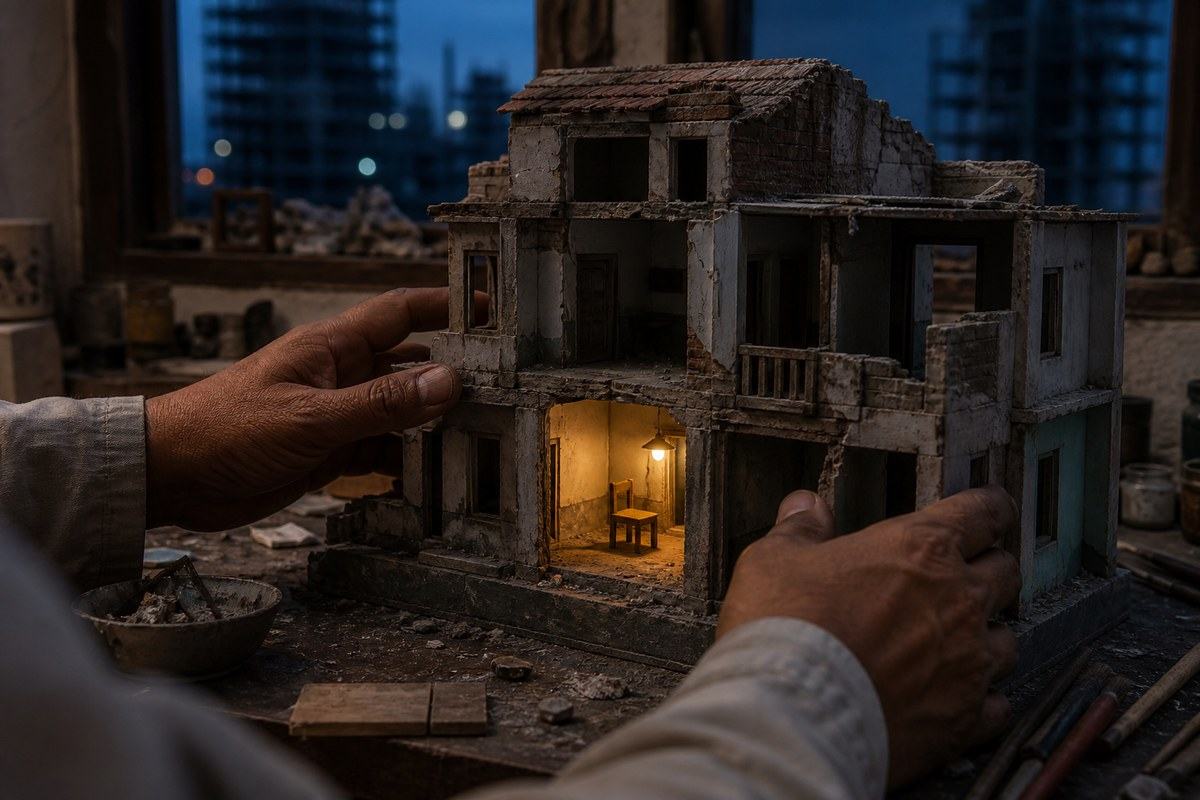
Fine. That damp little rag of a word. That universal bandage applied to wounds nobody intends to inspect. Fine is what people say when the actual answer would require furniture, witnesses, and perhaps municipal permission. Fine means the structure is still standing, though the walls have begun discussing collapse among themselves. Fine means I have not yet screamed in a pharmacy. Fine means the rot is private.
And every time I say it, I feel the small treason of it.
Not a grand betrayal. Not a Judas-kiss under a painted ceiling. A smaller, sadder betrayal, like diluting milk, flattering a fool, smiling at a man who has just explained something incorrectly with great confidence. Saying “fine” is a middle-class survival reflex. It is the verbal equivalent of putting newspaper over a cracked window and calling it interior design.
But even lying requires craftsmanship, and here too I am deficient.
Say “fine” too flatly and people smell smoke. Say it too brightly and they suspect a hostage situation. Say it with irony and one risks being asked a follow-up question, which is how civilization collapses. The correct “fine” must be tuned like a cheap violin in monsoon weather: not cheerful, not bitter, not hollow, not theatrical. A slight upward tilt, a small exhalation, one polite flicker of the eyes. Enough to satisfy the customs officer of conversation.
This is where class enters, dragging its ancient sack of humiliations.
The lower-middle-class Bengali condition is not poverty in the noble, cinematic sense, nor comfort in the upholstered, after-dinner sense. It is a mezzanine existence. Too educated to be innocent, too insecure to be free, too proud to beg, too broke to be eccentric. You are trained to aspire, then punished for believing the training. You grow up surrounded by books, exam results, moral lectures, borrowed furniture, and the constant suggestion that with discipline and English and correct posture, life will eventually improve.
Then life, with magnificent comic timing, does not.
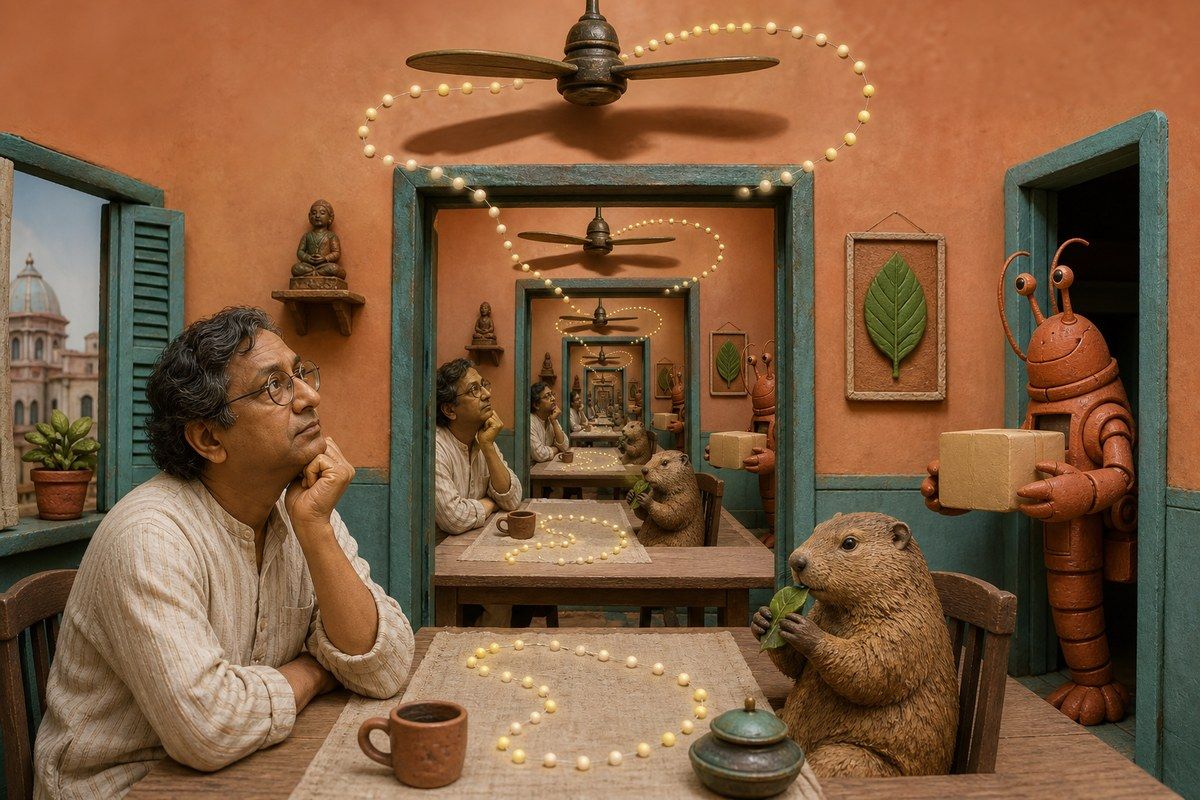
The lower-middle-class man is suspended between appetite and apology. He knows the names of European philosophers but still worries about the price of cooking oil. He can discuss probability, empire, cricket, Tagore, antibiotics, and the collapse of institutions, but cannot answer “How are you?” without feeling that he has been asked to justify his presence on earth. He is neither tragic enough to be moving nor successful enough to be irritating. He is simply there, like an old ceiling fan making a noise nobody has the money or will to fix.
Middle age adds its own decorations.
Middle age is not a season. It is an audit. The file is opened. The clerk clears his throat. Youthful ambition, once a charming fever, is reclassified as evidence of poor forecasting. Dreams become documents. Hope becomes a suspicious transaction. The future, which once stood at a distance waving its handkerchief, now sits across the table with reading glasses and asks what exactly one has achieved.
Not much, apparently.
The zero-watt bulb is the correct emblem. Once, perhaps, there was filament. A faint glow. Some domestic promise. Now there is a bulb-shaped memory of light, screwed into the socket out of habit. It does not illuminate anything. It merely proves that the ceiling still has arrangements for brightness.
And yet the world continues to ask “How are you?” as if the answer might be found in tone rather than archaeology.
What is really being asked is not “How are you?” but “Can you confirm that your private ruin will not inconvenience this interaction?” The answer must be yes. Yes, my decay is contained. Yes, my disappointment has been packed safely in checked luggage. Yes, I will not leak autobiography onto your shoes. Yes, I understand the terms of social participation and will now produce the agreed-upon sound.
Fine.
The obscene part is not that people lie. Lying is one of humanity’s more successful technologies. Without lying, marriages would burn, offices would empty, festivals would become tribunals, and every family lunch would require police tape. The obscene part is that we pretend the lie is kindness. We polish it. We teach children to use it. We make emotional tax forms out of ordinary speech and then act surprised when everyone becomes a small fraud with good manners.
Of course, one could answer differently. One could say, “I am surviving.” That has dignity, but too much dignity. It invites interpretation. One could say, “Could be better.” That smells of complaint. One could say, “Same old.” That is acceptable, but it risks truth by proximity. One could laugh, shrug, nod, deflect, ask the question back quickly enough to create a fog of mutual evasion.
“How are you?”
“Good, good. You?”
There it is. The full ballet. Two damaged mammals in clothing, exchanging noises that mean nothing so the afternoon can proceed.
And perhaps that is the most unbearable part. The question is not evil. The people asking it are not necessarily cruel. Most are merely obeying the old choreography. They are frightened too, though often with better upholstery. They too have unsaid answers locked behind their teeth. They too have mornings when the ceiling looks accusatory. They too have learned that honesty must be rationed, like water in a siege.
But knowing this does not make the question less irritating. A mosquito is not morally responsible for being a mosquito. One may still wish it dead.
So when someone asks me “How are you?” I stand there, briefly, before the little guillotine of etiquette. Behind my face, a committee assembles. One member proposes honesty and is immediately removed for recklessness. Another recommends cheerfulness and is beaten with a rolled-up newspaper. A third suggests silence, but silence has poor employment prospects. Eventually the old bureaucratic compromise is reached.
Fine.
Out it comes. Small. Bland. Socially edible.
And the world, satisfied, moves on.
Meanwhile I remain what I was before the question arrived: middle-aged, underlit, over-examined, lower-middle-class, Bengali, angry, tired, comic against my will, tragic without sufficient grandeur, standing in the corridor of life with one fused bulb and no receipt.
How am I?
Unanswerable, obviously.
But thank you for asking.
Related Posts
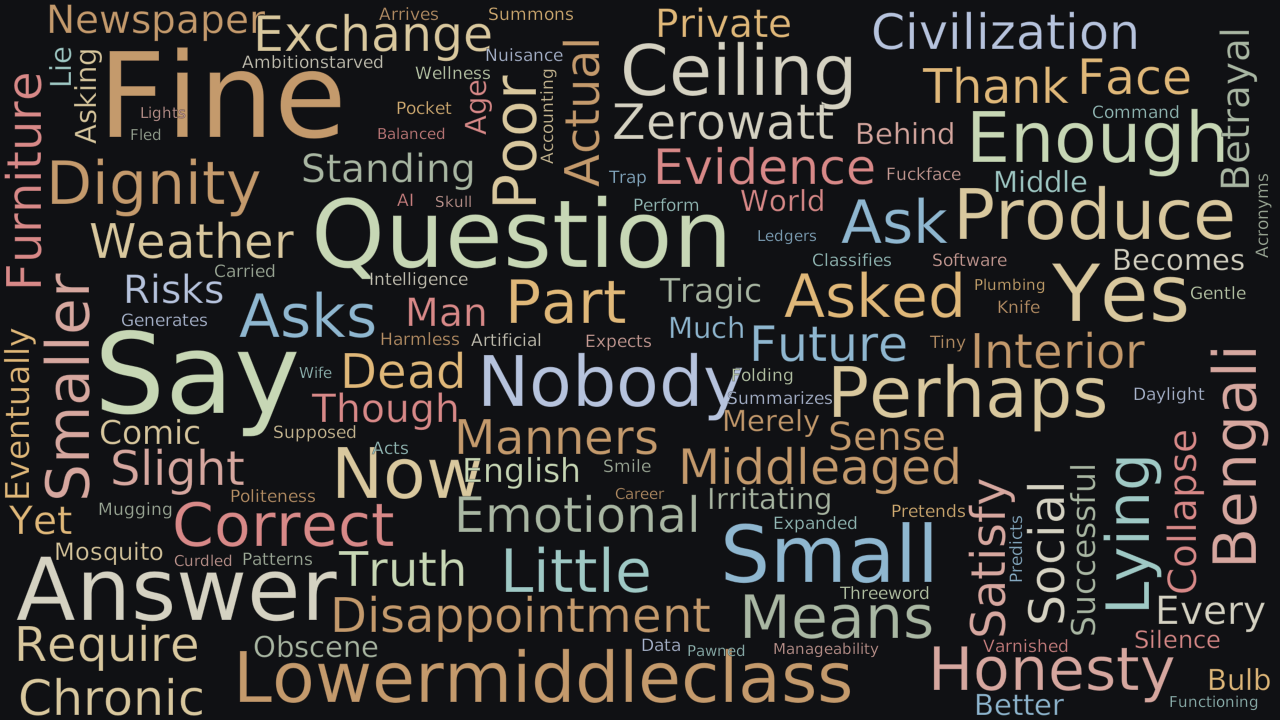
Word Cloud
Related reading
Selected by shared topics and section, with closer publication dates breaking ties.