The Generational Bengali Tunnel Visions: A Symphony of Selective Blindness
Checking article narration…

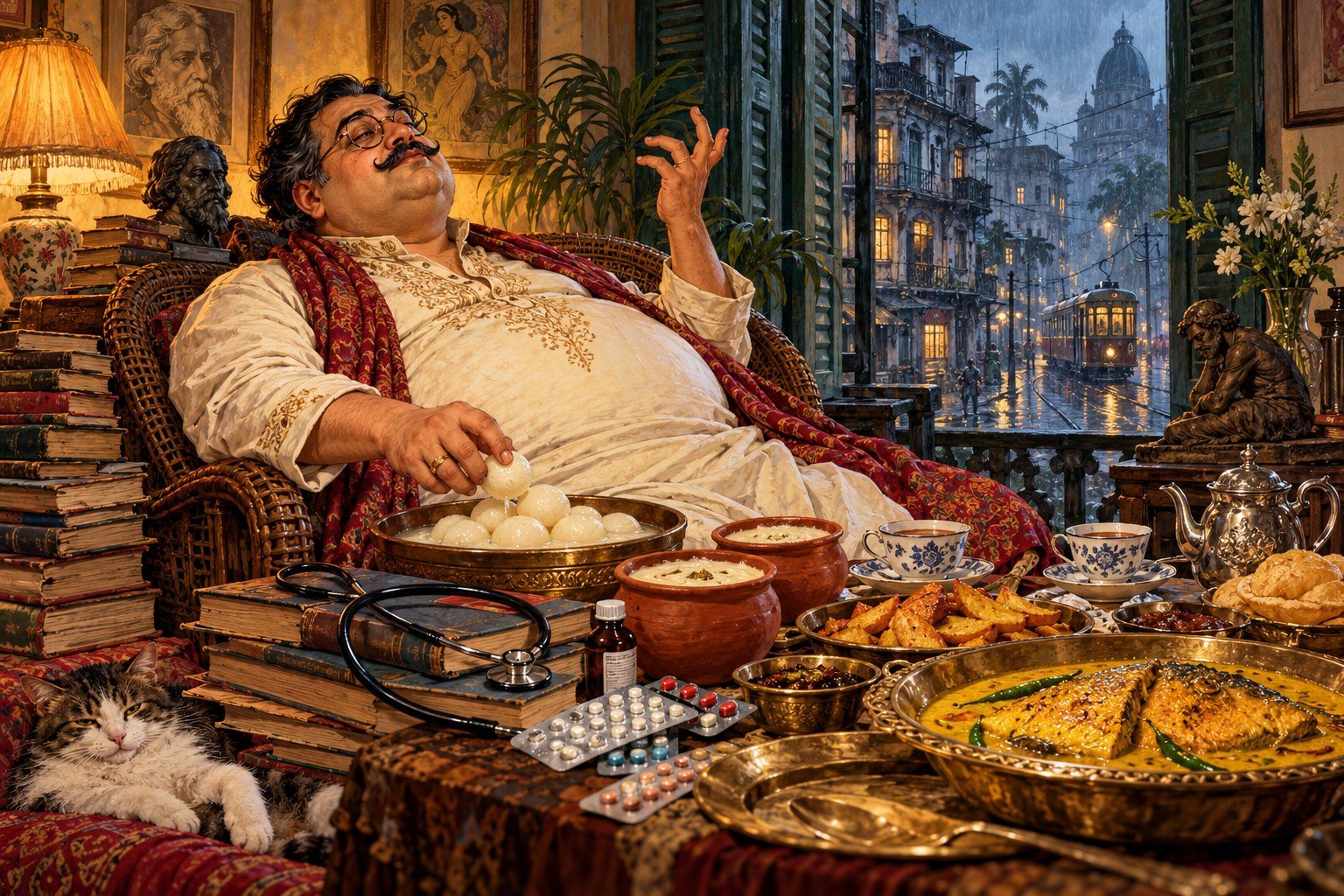
Let’s start by taking Bengali culture and rolling it around in the mouth like chewing tobacco—sweet, bitter, vaguely carcinogenic. We Bengalis, especially those of us gracefully aging in the smoggy embrace of Calcutta, pride ourselves on intellectual grandiosity, yet we’re masters at nurturing hereditary blindness: our cherished tunnel visions. These visions, each generation’s personal kaleidoscope of bullshit, have passed down the ages through parents preaching Rabindra Sangeet by day, viciously backstabbing neighbors by tea-time, and quoting Marx, Buddha, and Tagore all in the same breath before bedtime. To call it hypocrisy would be cruelly accurate, but we’re not here for cruelty. Well—okay, maybe just a bit.
If one peers deep enough—assuming they haven’t already gouged their eyes out—they’ll find every Bengali generation passionately hoarding its own romanticized ignorance, protecting it from the harsh glare of reality. But where did this delightful cultural cataract begin? For answers, or at least lies convincingly packaged as answers, we must journey to the age of Rammohun Roy, that venerable reformer whose name literally meant “the charming joy of Ram.” Oh, irony of ironies: a man who saw through centuries of societal bullshit yet inadvertently set the stage for subsequent generations to selectively edit out uncomfortable truths, choosing instead to swoon in poetic nostalgia and fervent intellectual masturbation.
Each generation of Bengalis wears their unique form of tunnel vision like bespoke spectacles—handcrafted to blur selectively. Our grandparents, survivors of Partition and pre-Independence glory, valiantly turned one cataract-laden eye towards romantic revolutionary rhetoric, the other firmly shut against caste horrors, religious chauvinism, and all the morally ambiguous choices made to cling to their beloved “bhadralok” status—a term originating from “bhadra” (civilized) and “lok” (people), yet suspiciously lacking civility when engaging with domestic help.
Then came our parents, proudly marching through the radical Sixties and Seventies in Calcutta, chanting Marxist slogans, waving red flags, conveniently neglecting to remember the bloodshed, the nepotism, the slow-motion cultural suicide in the name of revolution. “Amar Sonar Bangla” (My Golden Bengal), we sang, conveniently mistaking the metallic taste of poverty and corruption for gold. Yet, even while facing shortages of cooking oil and dignity, their eyes glazed dreamily over Naxalbari—uttered reverentially as though invoking a deity—in wilful ignorance of the subsequent carnage, betrayals, and vanished idealism now fading in sepia photographs.
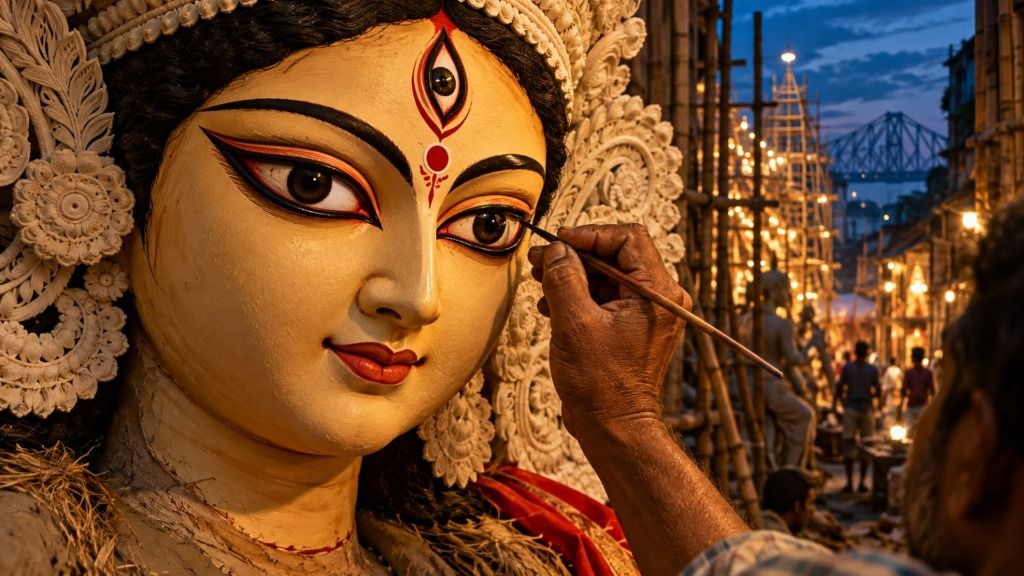
And then there’s our generation—oh fuck, what a beautiful train-wreck we are. Raised in liberalization’s chaotic infancy, we learned English from American television, morality from pornography and cheap literature, wisdom from overpriced tuition classes, and Bengali culture via Durga Puja souvenir magazines—the ultimate exercise in commercialized kitsch posing as cultural pride. Tunnel vision, our generational trademark, mutates here into a violent oscillation between self-loathing and self-aggrandizement. We pride ourselves in “world-class” aspirations, American education, healthcare research credentials gained in the West, then retreat immediately to the comforting warmth of nostalgia, sucking on memories of Calcutta’s street food, monsoon flooding, cricket matches, political fuckery, and summer power-cuts, as if each blackout was a divine blessing instead of government incompetence.
You see, our tunnels—these beautifully Bengali blind spots—are not built by ignorance alone. They’re constructed brick by sentimental brick, cemented by nostalgia, reinforced by the steel rods of our refusal to confront ugly truths. We avoid acknowledging that our beloved Calcutta (yes, fuck you, Kolkata is still a sanitized fantasy) is also home to thriving nepotism, spectacularly inefficient governance, and a cultural elite worshipping Tagore by day and moral duplicity by night. And behind every cringe-worthy Facebook group waxing lyrical about “heritage” is the selective amnesia of Calcutta’s murky colonial past, hypocritically lamented yet oddly cherished, a fetish for Victorian architecture untroubled by colonial oppression’s festering sores.
This delightful tradition of tunnel vision—generational myopia—exists precisely because it comforts. Reality’s sharp, unforgiving edges frighten us, yet who can resist retreating into a selectively idealized past? Certainly not a Bengali. Not when poetry feels nicer than reality; when nostalgia warms better than whiskey; when cultural pride tastes sweeter than logic. Each generation deftly passes on this torch of convenient ignorance like a relay baton: “Here you go, beta, wear it proudly—remember to complain eloquently, criticize selectively, and never, ever look straight ahead.”
And thus the Bengali condition perpetuates: each new generation inheriting the perfect formula for selective blindness, squinting through the telescope of nostalgia at half-remembered sunsets, beautifully blurry with comforting distortions. History repeats itself, first as tragedy, then as farce, and finally, in Calcutta, as a fucking Broadway musical with songs nobody quite remembers, but we hum along regardless, eternally out of tune yet passionately insistent.
As they say in Sanskrit—elegantly disguising the cynical Bengali heart beating beneath—“Māyā moha andhakāre nimagnaḥ santi mānavāḥ” (“Men are submerged in the darkness of illusion and attachment”). And if there was ever a culture proudly submerged, confidently drowning, it’s ours—so raise your glasses of overpriced single malt, comrades, let’s toast once more to our favorite blindness. Who needs truth when tunnel vision feels this goddamn satisfying?
#Bengali #Calcutta #Culture #Generations #Tradition #History #Society #Nostalgia #TunnelVision #Satire #Identity #Cynicism #Humor #suvroghosh #suvrotica
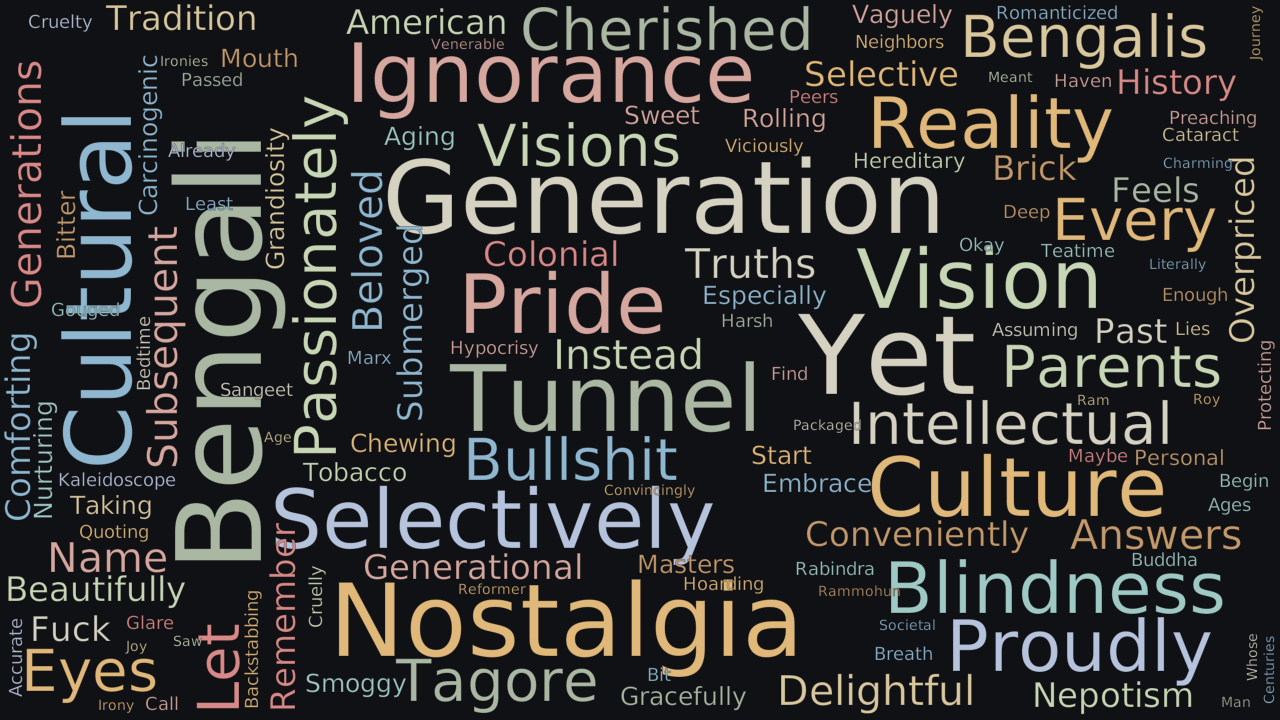
Word Cloud
Related reading
Selected by shared topics and section, with closer publication dates breaking ties.

Comments
Read the conversation or leave a thought for review. Comments load when this section is in view.