The Soft Bengali Underbelly: A Lurid Inspection
Checking article narration…

Listen carefully, because this is not the sweetened tale of rosogollas bobbing innocently in syrupy innocence, nor the forgiving embrace of misti doi that coats tongues tenderly, masking an addiction harder to shake than benzodiazepines prescribed by your family hypochondriac doctor who insists you’re dying every Sunday after lunch. No. This, dear reader, is the greasy exposé, the unvarnished glimpse beneath Bengal’s culturally embroidered kurta—revealing an obscene paunch of privilege, sugar, lethargy, and unapologetic gastronomic excess.
They call Bengal the cultural hub, the seat of intellectual orgasm, the epicenter where brains fertilized by Hilsa fat and Rabindra-sangeet spawn poetic utterances about clouds that never quite rain. Yet beneath all that literary foreplay and bhadralok politeness simmers a heaving abdomen: a diabetic monstrosity engorged on a daily diet of starchy sentimentality, punctuated by deep-fried regret and saccharine nostalgia.
In Calcutta—never, dear gods, Kolkata, lest we summon the self-righteous ghost of political correctness—diabetes isn’t just a disease, it’s heritage. A birthright. A genetic lottery ticket redeemable at your friendly neighborhood insulin peddler, every chemist’s shop as holy as Dakshineswar temple, every blister pack popped as ritualistically as Durga Puja drums. We blame the Portuguese, naturally; after all, they brought us the potato and the dubious legacy of frying it in ghee, which transformed the humble tuber into a cholesterol-packed murder weapon more effective than British rifles at Plassey.
Potatoes. Let that sink in. Tubers introduced by colonialists. We Bengalis turned them from bland colonial imports into gastronomic crack cocaine—aloo posto, aloo bhaja, aloor dum—because life wasn’t lethargic enough already. And to counteract this carb-induced inertia, we’ve invented a splendid arsenal of nonexistent ailments, promptly diagnosed by uncles who pronounce diseases with solemn expertise but can’t pronounce “cholesterol” without adding two extra vowels.
And speaking of language, dear suffering reader, ever wondered why Bengali words sound impossibly poetic, yet faintly medicinal? Take “amontrito,” which means invited, yet suspiciously sounds like a rare fungal infection you’d catch after wading through the Hooghly. And “poribar,” family, resembling the proprietary name of a dubious antifungal cream sold by sweaty salesmen visiting doctors’ chambers on Monday mornings bearing oily smiles and expired freebies. Language, disease, and cuisine merge insidiously, much like Kolkata’s drainage system fuses sewerage and drinking water after every monsoon downpour—one big bacterial broth served annually.
Indeed, beneath our Bengali veneer—elegant, erudite, effeminate, et cetera ad nauseam—lurks a far softer underbelly, one that jiggles gelatinously beneath the belt of cultural pretension. We parade our glorious history—Tagore, Satyajit Ray, J.C. Bose—in one breath while in the next, we gasp breathlessly from clogged arteries and angina provoked by the gentle exertion of crossing Rashbehari Avenue. We feign athleticism annually for cricket matches that resemble waddling seals chasing balls—but never catch one without spraining at least one ligament (an ailment instantly healed by five liters of Horlicks).
The irony is spicy yet gentle, like mustard fish marinated in denial. Bengal helped pioneer modern medical education in India yet produced hypochondriacs who buy antibiotics in bulk, hoarding them in cupboards alongside jars of mango pickle older than the Constitution. We boast an apparently inexhaustible supply of doctors, yet we die like flies because “going for a walk” is more mythical and less plausible than achieving enlightenment through meditation at Dakshineswar.
And we romanticize! Oh, we romanticize our suffering magnificently. Gastritis isn’t mundane acid reflux—it’s a poignant existential crisis. Diabetes isn’t poor lifestyle management—it’s symbolic retribution from an angry goddess displeased because we forgot to light incense sticks last Tuesday. And indigestion, God forbid, is not dietary recklessness but punishment for daring to savor just one extra fish fry.
You want soft Bengali underbelly? Prod gently and watch how quickly the poetic, sweetened pretensions rupture, oozing forth an unholy mess of nostalgia, medical melodrama, and profound, hyperglycemic self-pity.
Yet—let’s admit the guilty, greasy truth: we wouldn’t trade this grotesque paunch, this rotund monument to culinary decadence, for all the quinoa salads and keto-crazy fads of the West. Let them preach kale smoothies and Zumba classes. Bengal stands gloriously unfit, defiantly diabetic, blissfully bloated, and culturally constipated, turning every bout of constipation into epic poetry.
After all, beneath every illustrious heritage hides a soft belly—and ours jiggles magnificently.
#Calcutta #Bengali #Culture #Food #Obesity #Diabetes #Hypochondria #Nostalgia #Medicine #Colonialism #suvroghosh #suvrotica
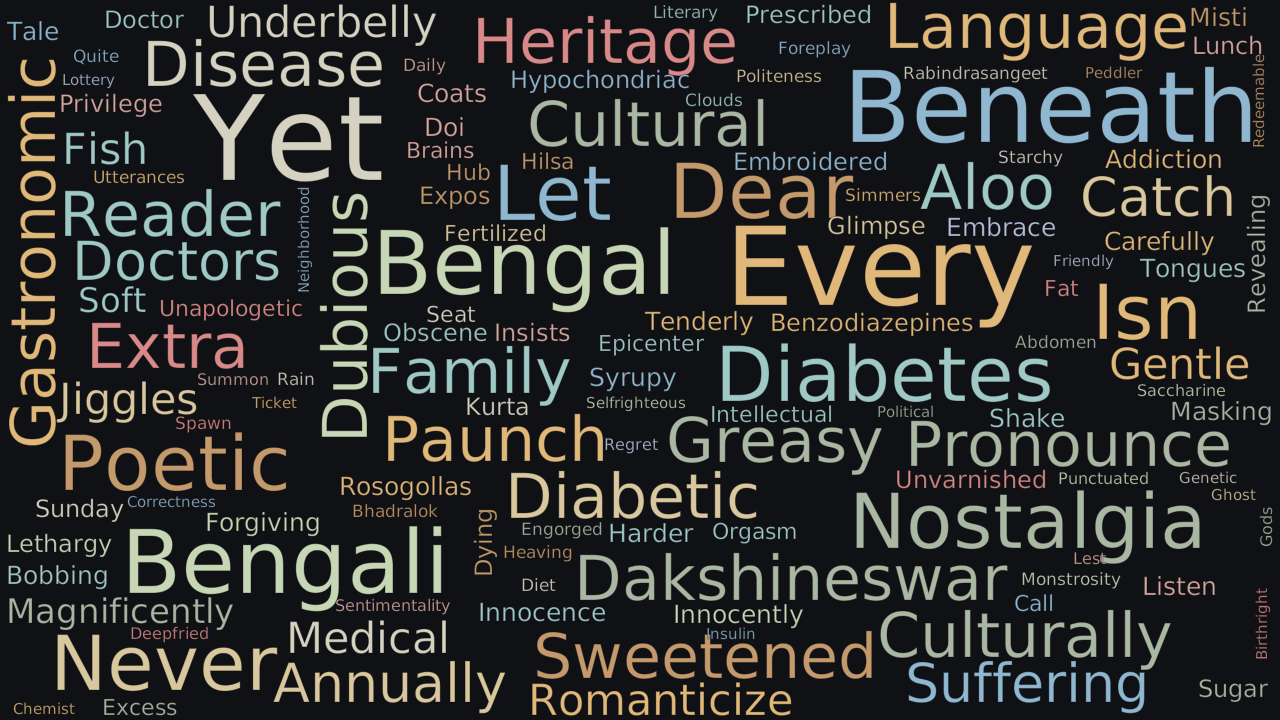
Word Cloud
Related reading
Selected by shared topics and section, with closer publication dates breaking ties.


Comments
Read the conversation or leave a thought for review. Comments load when this section is in view.