Shouldering the Chips: A Bengali Odyssey Through Calcutta’s Public Transport
Uses the speech voice supplied by your browser or device.

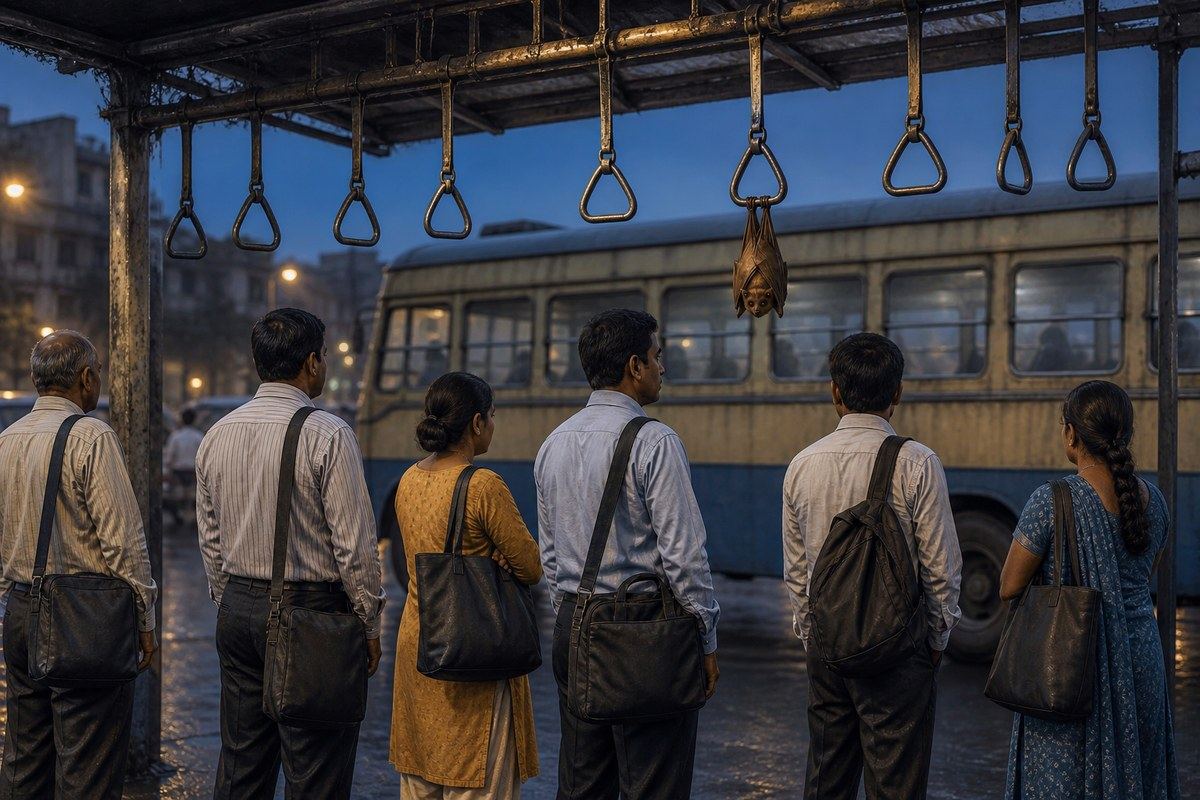
A Calcutta minibus in summer is not a vehicle. It is a pressure cooker that has lost faith in civilization.
You think you are boarding it to go from one place to another. That is the innocent view, the view of tourists, children, and people who still believe chairs are a normal part of human transport. The real purpose of a Calcutta minibus is more ambitious. It takes a group of ordinary citizens, folds them like old election posters, seasons them with sweat, diesel, dust, hair oil, panic, and faint resentment, then delivers them to their destination slightly wiser and much less fragrant.
I have ridden these contraptions often enough to know the routine. The bus approaches like a wounded tin animal. It does not stop. Stopping is for weak machines and European documentaries. It merely slows, in the manner of a suspicious goat, and expects you to make a decision about life, death, balance, footwear, and sewage within half a second.
You raise one hand. The driver looks directly through you, as if you are a philosophical problem. The conductor hangs at the door, shouting the route with the deep emotional tenderness of a man auctioning fish in a cyclone. You run. Your slipper skids. Your bag swings. One foot enters the bus, the other remains briefly in Bengal’s medieval drainage history.
Then, somehow, you are inside.
Inside is the wrong word. Inside suggests space. Inside a minibus, you are not inside. You are included.
A schoolboy’s bag is lodged under your ribs. A gentleman’s elbow has discovered your liver and decided to settle there permanently. Someone’s umbrella is touching your ear with unsettling confidence. A packet of green chillies is pressed against your thigh. A man near the window is reading the newspaper with the calm of a retired judge, though six of us are breathing his previous breath.
This is how a city teaches humility. Not through sermons. Through armpits.
And then there are my chips.
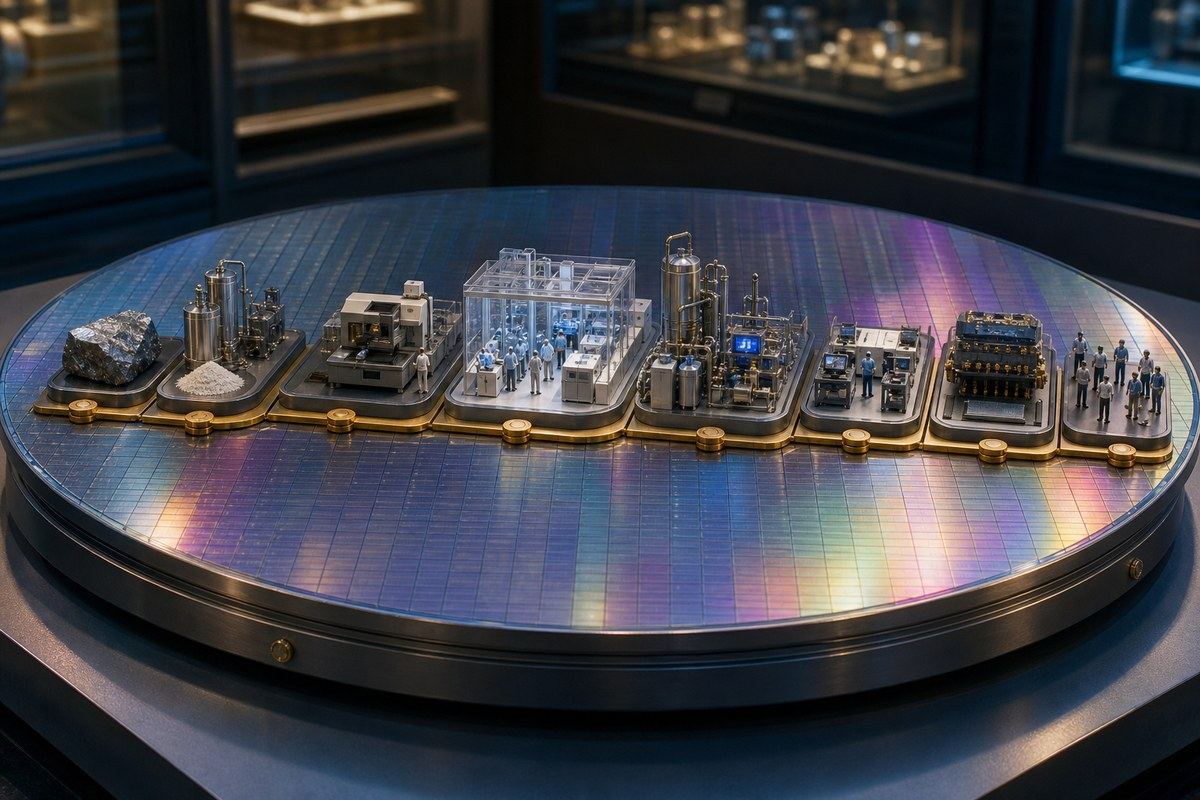
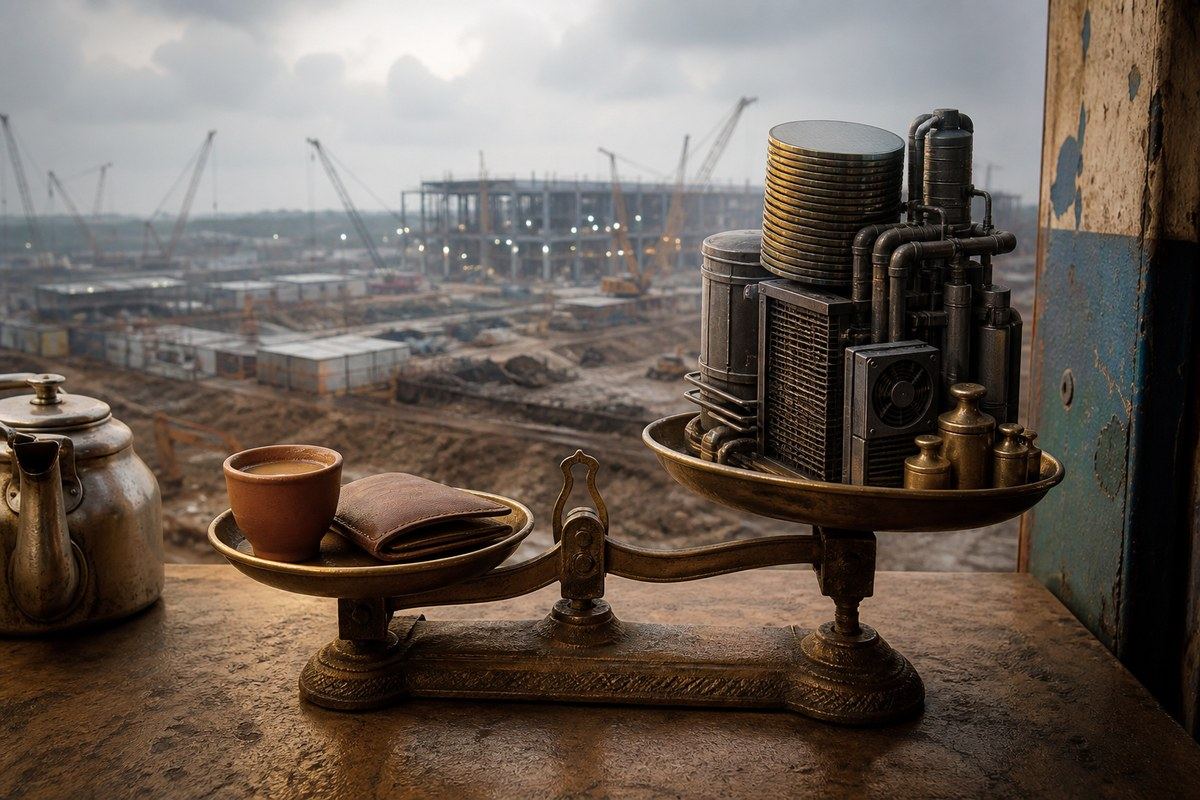
Every Bengali carries chips on the shoulder. Some carry small ones, like muri. Some carry large ones, like sacks of potatoes from Sealdah. Mine are carefully aged. Colonial insult. Football sorrow. Family disappointment. Failed ambition. The old East Bengal-Mohun Bagan weather inside the skull. A faint Marxist aftertaste. A suspicion that somebody somewhere is getting a better deal by pretending to be simpler than he is.
We do not throw these chips away. We preserve them. We polish them. We pass them down silently through tea, scowls, and unnecessary corrections of other people’s English.
So there I stand, fifty years old, lower middle-class, single, tired, sweating in the southern fringe of Calcutta, earning barely through consulting when the mind permits, carrying the biography of a man who once lived in America and now negotiates with minibuses like a minor character in a heatstroke epic. Outside, the city continues its usual performance: horns, dogs, hawkers, plastic bags, cables, tea stalls, scooters, banners, half-built dreams, and a sky the color of boiled tin.
The heat enters everything. Your shirt becomes a confession. Your face becomes a legal document. Your back develops its own river system. Calcutta humidity is not weather. It is a relative who comes to stay for three months and uses all the towels.
In America, where I spent fifteen years learning systems, rules, databases, hospital workflows, and the extraordinary human ability to make simple things complicated, buses usually had schedules. Not always good schedules, but schedules. Here we have instinct, astrology, conductor lung capacity, and the driver’s private relationship with destiny.
A Calcutta bus route is not managed. It is interpreted.
This is why the boarding ritual has the beauty of a circus act performed during a municipal collapse. The bus slows near the stop but not at the stop. The passengers move toward it like fish smelling food. Someone shouts. Someone climbs. Someone gets down. Someone wants change. Someone wants to know whether it goes to Gariahat. The conductor says yes, no, maybe, move in, give fare, do not block the gate, who has taken the ticket, why are you standing like a lamppost, all in one breath.
You may think this is chaos.
Not quite.
Chaos has freedom. This has tradition.
There is a choreography. Terrible, yes, but real. The old woman gets a little space because even in decline Bengal still has a few working switches of decency. The office clerk protects his lunch carrier as if it contains state secrets. The student with headphones pretends not to hear anything, which may be the most advanced survival technique yet discovered. The conductor performs mental arithmetic faster than many software systems I have seen in production.
And the driver. Ah, the driver.
He drives as if the bus has personally insulted him and must be punished between stops. He accelerates into impossibility. He brakes at the last molecule. He steers around potholes by locating larger potholes nearby. Every turn rearranges the passengers into new social groups. By the time you reach Rashbehari or Garia or Jadavpur, you have been briefly married to three strangers and divorced from two bags of vegetables.
Still, I must be fair. There is life in this madness.
A city reveals itself most honestly in public transport. Not in malls, not in political speeches, not in glossy videos with drone shots and English subtitles. Watch a bus at 9 a.m. Watch who gives up a seat. Watch who pretends not to see. Watch who counts coins twice. Watch who stands despite fever. Watch the woman holding a child, a bag, and her own irritation with better balance than most governments manage with full cabinets.
That is Calcutta. Irritating, theatrical, crumbling, tender for three seconds, then irritating again.
The middle class, of course, has its own comedy in all this. We complain, but in a disciplined way. We do not revolt. We adjust. We bend the neck, tighten the jaw, protect the wallet, and discuss civilization as if civilization is something happening in another district. Educated people want clean roads, clean buses, clean politics, clean air, clean everything, but also no trouble, no confrontation, no inconvenience, no risk. So we become experts in muttering.
Muttering is our national indoor sport.
Meanwhile the city grows hotter. The buses grow older. The passengers grow quieter. Climate change is no longer some white-paper phrase floating above conferences. It is the wet shirt sticking to your back at 10:15 in the morning. It is the old man’s breath in the bus. It is the child looking faint near the window. It is the metal roof storing heat like revenge.
One day, perhaps, some committee will discover that human beings are not meant to be transported like wet laundry in a sack. They will produce a plan. The plan will produce a subcommittee. The subcommittee will produce a report. The report will produce dust. And the bus will continue, honking through it all like a philosophical duck.
Here is the catch, though. I still love the city in flashes.
Not continuously. That would be madness.
But in flashes. A tram bell. A tea stall. A sudden breeze through a cracked bus window. A boy selling guavas with the seriousness of a surgeon. A tired conductor returning two rupees honestly when nobody would have noticed. A passenger saying “dada, ekhane boshun” to someone older. A rain-dark road. The smell of frying telebhaja from a lane that should not, by any logical standard, contain hope but somehow does.
Then the bus hits another pothole and hope shifts three inches to the left.
My scowl returns.
It is a good scowl now, mature, well-seasoned, almost architectural. The face of a Bengali man who has read books, lost money, seen America, returned to Calcutta, fought depression, survived bad weather inside and outside the head, and still must argue with a conductor over change.
This is not bitterness alone. Bitterness is too simple. This is comedy wearing a damp shirt. It is civic criticism with sweat in its eyes. It is the knowledge that ordinary people should not have to be heroic just to reach office, college, market, clinic, tuition, or home.
That is the real chip.
Not the crowd. Not the heat. Not even the armpit, though let us not underestimate the armpit. The real chip is that suffering has been normalized so thoroughly that if you complain, someone will call you soft.
Soft?
My friend, if you can stand inside a Calcutta minibus in June, pressed between a steel rod and a man carrying live fish, while the driver brakes like history itself has failed him, you are not soft. You are a reinforced structure.
But reinforced structures also crack.
So I continue. Ticket in hand. Shirt defeated. Soul mildly steamed. Shoulder full of chips. Somewhere between alive and annoyed, between comic and tragic, between home and wherever this bus claims it is going.
Calcutta moves.
So do I.
Neither of us does it gracefully.
Word Cloud
Related reading
Selected by shared topics and section, with closer publication dates breaking ties.