Rakhi and the Currency of Oblivion
Uses the speech voice supplied by your browser or device.

The festival of Rakhi, that annual carnival of sibling theatricality, has just slithered past my door like a snake that couldn’t be bothered to bite, and I sat here in Calcutta, in my apartment that smells of old books and older ambitions, watching the whole pantomime unfold on Instagram with the detached nausea of a man watching his own autopsy on closed-circuit television. There was a time, you see, when I was not merely alive but prosperous, when my bank account had more zeros than a government press release, when I was what the homeland calls with that peculiar mixture of envy and contempt, an NRI—a Non-Resident Indian, which in the taxonomy of Indian social stratification ranks somewhere between minor deity and tax evasion scheme. In those halcyon days of American healthcare research, fifteen years of peering at data sets and pretending that statistical significance was the same as meaning, Rakhi arrived with the punctuality of a Swiss train and the fanfare of a royal coronation. Parcels would traverse oceans, gifts would accumulate like barnacles on the hull of my sister’s affection, greeting cards would arrive with the slim rakhi smuggled inside like contraband hope, and the whole apparatus of filial piety would crank into motion with the well-oiled efficiency of a machine that knew exactly what it was being fed.
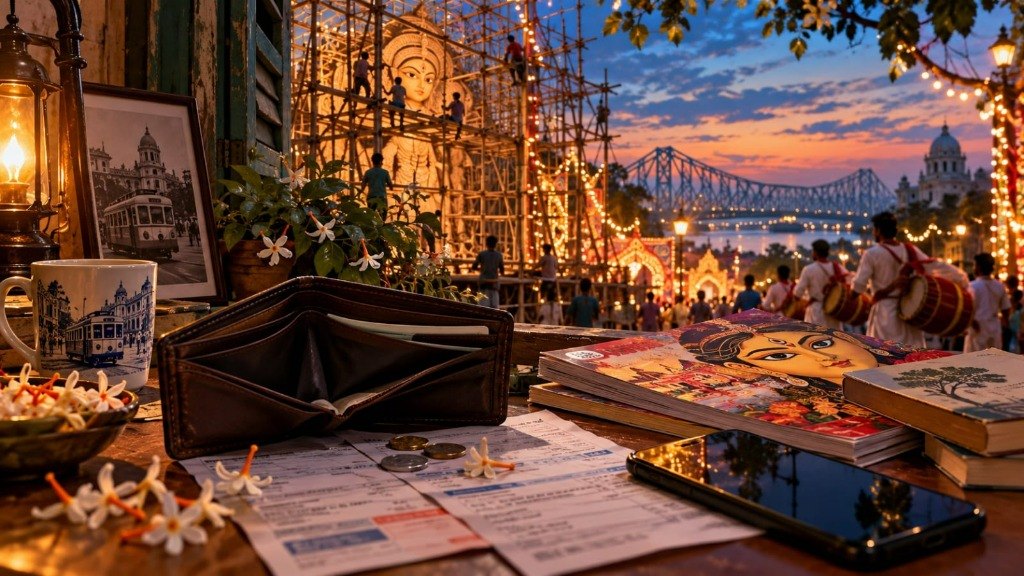
Now I am poor. Penniless, if we are being precise, which we are not, because precision is a luxury of the funded, and I am funded by nothing more than the diminishing returns of memory and the compound interest of regret. And now, now that the dollar-rupee rate no longer favors my bragging rights, now that my financial hemorrhaging has reached the terminal velocity of a stone dropped from the Howrah Bridge, my own sister has forgotten the festival. Forgotten, or perhaps strategically misplaced the obligation, which is the same thing in the economy of familial love, where affection is denominated in currency and memory is a function of net worth. The rest of the trolley of humanity—that magnificent conveyor belt of cousins, uncles, aunts, neighbors, and that one guy who always claimed we were related through some convoluted genealogical pretzel—that entire ecosystem of obligatory well-wishing has evaporated like spit on a Calcutta sidewalk in May. They were there, oh they were there, when I could translate my salary into rupees and watch their eyes perform the arithmetic of envy; they were there when I could play the benevolent NRI, the prodigal son who returns bearing gifts and American anecdotes and the implicit promise that some of that foreign magic might rub off on them. Now no one gives a flying fornication whether I have a pulse, let alone whether that pulse is irregular, arrhythmic, or has flatlined entirely.
A person never realizes what his life is until he is in the midst of adversity, which is a truth so ancient it has Sanskrit roots and yet so freshly painful it might have been minted this morning in the mint of my own misery. When times are good, everything is colored rainbow, or so the self-help industrial complex would have us believe, but the truth—and here I must insist on the truth, because satire without truth is merely cruelty without the courage of its convictions—the truth is that the rainbow is a lie, a prismatic deception, a refraction of light that has nothing to do with the substance beneath. When times are good, the world is not rainbow-colored; it is the color of diarrhea, a hue of yellow and brown that pretends to masquerade as gold, as prosperity, as the warm glow of human connection, when in reality it is simply the digestive byproduct of consumption, the body’s honest commentary on what it has been forced to swallow.
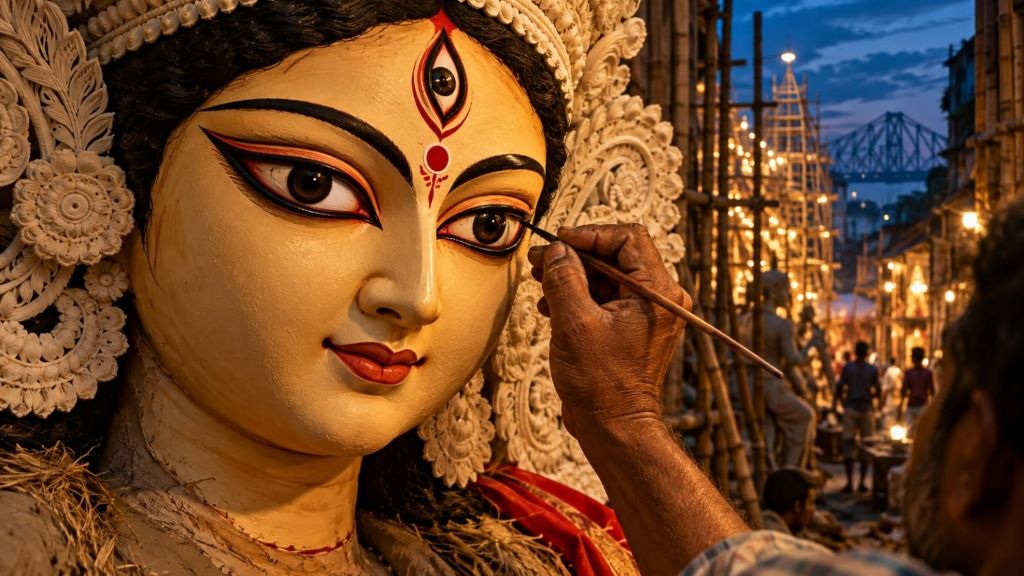
And what have we swallowed? We have swallowed the myth that festivals are about love, that Rakhi is about protection, that the thread a sister ties on her brother’s wrist is a sacrament rather than a transaction. The word itself, rakhi, from the Sanskrit rakṣā, meaning protection, which comes from the root rakṣ, to guard, to keep, to preserve—and oh, how we need preserving, we fragile vessels of ego and artery, we who guard nothing so jealously as our own self-interest. The etymology is a comfort, a warm blanket of antiquity, until you realize that the oldest words are often the most efficiently weaponized, that rakṣā is less a promise than a promissory note, and like all promissory notes in the Indian subcontinent, it is honored only when the guarantor’s credit is good.
We are, each of us, walking balance sheets of obligation, ledgers with legs, and the moment our assets dip below the waterline of social utility, the phone stops ringing. This is not cynicism; cynicism is what the comfortable call the truth when the truth makes them uncomfortable. This is merely the honest accounting of a bankrupt man who has finally learned to read his own books.
Consider the neuroscience of it, if you will, for I find that science is the only language that does not lie, the only tongue that admits its own limitations in the very act of speaking. The brain, that three-pound universe of electrochemical gossip, is not designed for unconditional love; it is designed for survival, and survival has always been a matter of calculating who is useful and who is deadweight. The hippocampus encodes social memory, the amygdala tags it with emotional valence, the prefrontal cortex runs the cost-benefit analysis—and before you can say “but we are more than our brains,” the decision has been made, the rakhi has been forgotten, and the neuronal firing rate that once spiked at the mention of your name has been repurposed for more profitable computations. The default mode network, that constellation of midline structures that activates when we daydream about ourselves, is not dreaming about you anymore. You have been pruned from the neural arbor, and like all pruned branches, you were dead long before the gardener’s shears arrived.
The hypothalamic-pituitary-adrenal axis, that ancient biological stress pathway, does not distinguish between a saber-toothed tiger and a sister’s silence; both register as threat, both flood the system with cortisol, both remind the organism that it is alone in a world that rewards connection and punishes solitude. And here I am, in Calcutta, cortisol-saturated and awake at three in the morning, listening to the city’s nocturnal orchestra of stray dogs and distant temple bells, and I realize that the HPA axis is older than Rakhi, older than Sanskrit, older than the first thread ever tied on the first wrist, and it has been telling the same story all along: you are alone, and alone you will die, and no thread can save you.
The vagus nerve, that wandering nerve that connects brain to viscera, that biological substrate of gut feelings and heartache, is sending signals I can no longer ignore. The polyvagal theory, that elegant framework of social engagement and defensive shutdown, maps perfectly onto my current state: dorsal vagal collapse, the reptilian retreat, the playing-dead that is not play at all. When the social signals stop, when the rakhi does not come, the vagus does not philosophize; it immobilizes, it conserves, it prepares the body for the long winter of isolation. We are, at our most basic, social mammals, and social mammals do not thrive when the tribe expels them; they enter a state of physiological hibernation, a walking coma, a slow dissolve into the chemical soup from which we all emerged.
But here is the twist, the unexpected grace note in this symphony of abandonment: the same neurochemistry that makes us suffer also makes us free. Cortisol, the stress hormone, sharpens attention. The amygdala, the fear center, teaches prudence. The prefrontal cortex, the seat of reason, learns from every betrayal and recalibrates the algorithm of trust. The brain does not simply record pain; it metabolizes it, transforms it, uses it as the raw material for a new kind of consciousness, a consciousness that no longer mistakes social convention for love, that no longer confuses the festival with the feeling, that can hold the thread in one hand and the truth in the other without needing them to be the same thing.
The amygdala regulates the stress response, the amygdala processes the fear of social exclusion, the prefrontal cortex constructs the narrative that makes it all palatable—this is the holy trinity of festival attendance, the neurochemical basis of why we send rakhis and Diwali sweets and wedding invitations to people we would not spit on if they were on fire. , the so-called love hormone, spikes during social bonding, but here is the delicious irony, the chemical punchline: oxytocin also spikes during in-group identification and out-group hostility. The same molecule that makes you hug your sister makes you shun the poor cousin. The same neurotransmitter that ties the rakhi severs the connection. We are, at the molecular level, ambivalent little machines, and our festivals are the software patches we apply to hide the bugs.
And so I sit here, in Calcutta, never Kolkata, because names matter and Calcutta is the name of the city that existed before the real estate developers and the political rebranding consultants got their hands on it, Calcutta is the name of the city that smells like the Hooghly at low tide and sounds like the tram bells that no longer ring, Calcutta is the name of the city that remembers even when its inhabitants have forgotten. I sit here and I watch the festival recede into the rearview mirror of another August, and I think about the etymology of rakṣā, about guarding and keeping and preserving, and I realize that the only thing being preserved here is the illusion, the carefully maintained delusion that we are a culture of connection when we are in fact a culture of calculation.
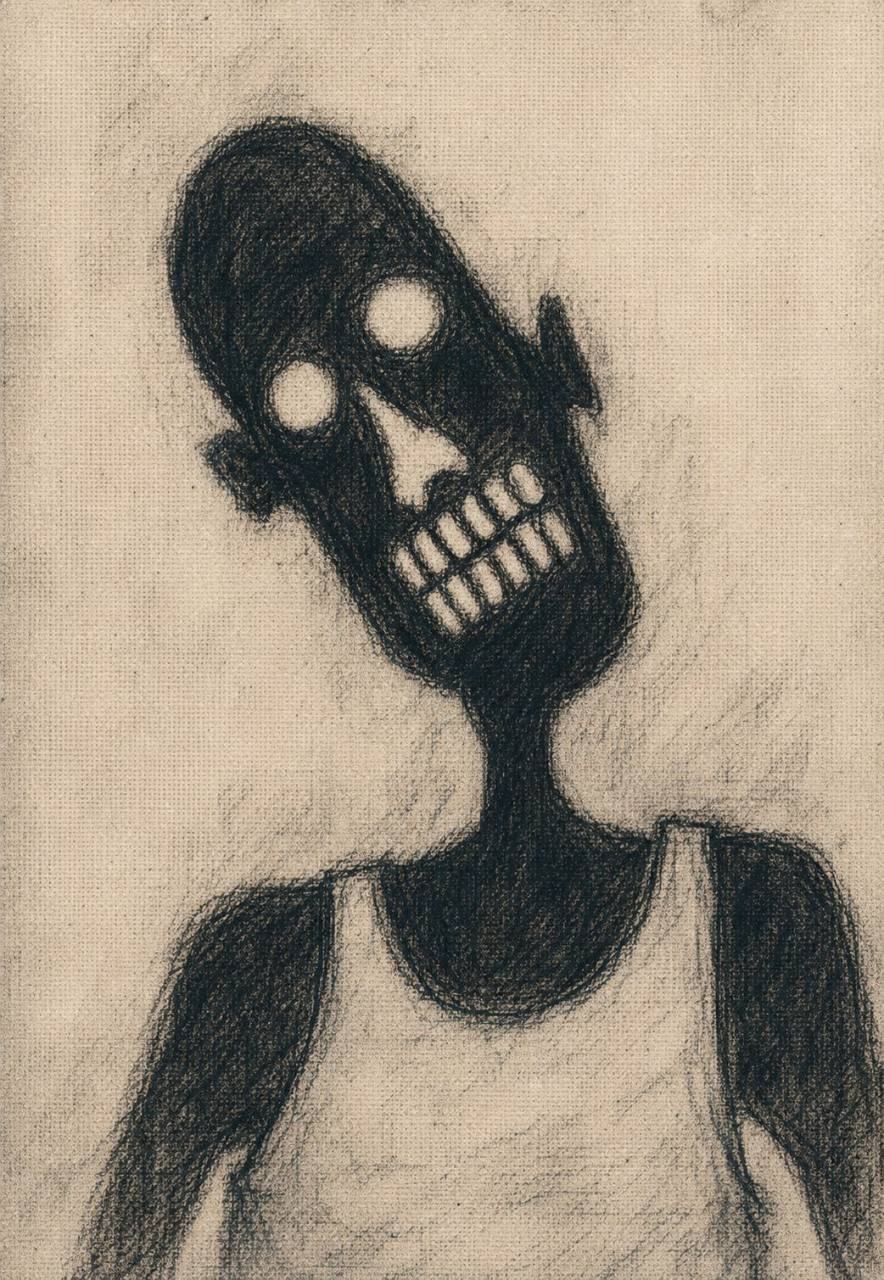
The adversity has stripped me bare, has performed the psychological equivalent of a colonoscopy on my social life, and what it has found is not cancerous but revealing: the polyps of pretense, the benign tumors of transactional affection, the inflamed tissue of conditional love. And in this stripping bare, in this exposure of the intestinal truth of human relations, there is a strange, perverse liberation. I no longer have to pretend. I no longer have to send the rakhi, receive the rakhi, perform the pantomime of protection when the only thing anyone is protecting is their own interest. I am free to be forgotten, free to be ignored, free to watch the festival from the outside with the clear eyes of the economically excommunicated.
A person never realizes what his life is until he is in the midst of adversity, and what I have realized is that my life, like most lives, has been a carefully curated exhibit in the museum of social expectation, and now that the museum has closed for renovations—permanent renovations, it seems—I am free to wander the empty halls and read the placards and understand that the artifacts were never as valuable as the curators claimed. The rakhi thread, that slender filament of cotton and sentiment, is just thread. The protection it promises is just promise, and promises, like the dollar-rupee rate, fluctuate with the market.
The color of my life is not rainbow. It is yellow and brown, the honest hues of the digestive process, the colors of what remains when the body has extracted what nourishment it can and expelled the rest. And in this expulsion, in this daily act of biological honesty, there is more truth than in all the festivals combined, more reality in a single bowel movement than in a thousand tied threads. The body does not lie about what it has consumed; the body tells the truth in the toilet bowl. The soul, if we are generous enough to grant ourselves one, tells the truth in the silence after the festival, in the unreturned messages and the empty mailbox and the phone that does not ring.
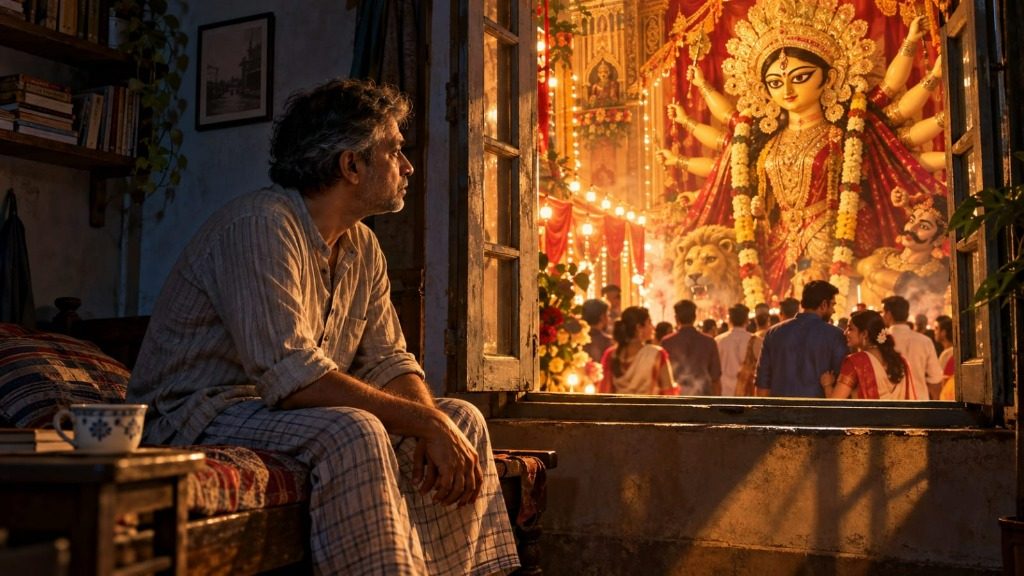
So let them forget. Let the trolley of humanity roll on without me, its wheels greased by the oil of mutual benefit, its passengers waving at each other with the frantic enthusiasm of people who know that the ride only continues as long as everyone pays their fare. I will be here, in Calcutta, in the brown and yellow truth of my own digestion, watching the rainbow dissolve into its constituent lies, and I will raise a glass—not of champagne, for champagne is for the funded, but of tap water, for tap water is honest—to the festival that forgot me, and to the forgetting that has set me free.
Sarvam khalvidam brahma—all this, indeed, is Brahman, or so the Chandogya Upanishad assures us, though I suspect the sage who composed that line had not yet experienced the particular Brahman of being ghosted by his own sister during a festival of protection. All this is Brahman, all this is illusion, all this is the color of what we have eaten and cannot digest. Rakhi has come and gone, and I remain, unthreaded, unguarded, and finally, uncomfortably, awake.
P.S. References: Chandogya Upanishad 3.14.1; rakṣā etymology from Sanskrit root rakṣ, PIE rek- (“to protect, to cover”); oxytocin social bonding literature (Kosfeld et al., 2005, Nature).
Word Cloud
Related reading
Selected by shared topics and section, with closer publication dates breaking ties.