Asymptotic Doom of the Orgasm Coffin
Uses the speech voice supplied by your browser or device.

I have spent the better part of my fifty-one revolutions around this indifferent star contemplating the precise moment when a system of governance transitions from democracy to kleptocracy to something far more insidious, something I shall term, for the sake of my own amusement, a narcocracy, a regime not of thieves but of anesthetists, where the citizenry is not oppressed but rather optimized into a state of perpetual, glassy-eyed contentment, a condition that would make Aldous Huxley weep into his mescaline and mutter, “You absolute bastards, you actually did it.”
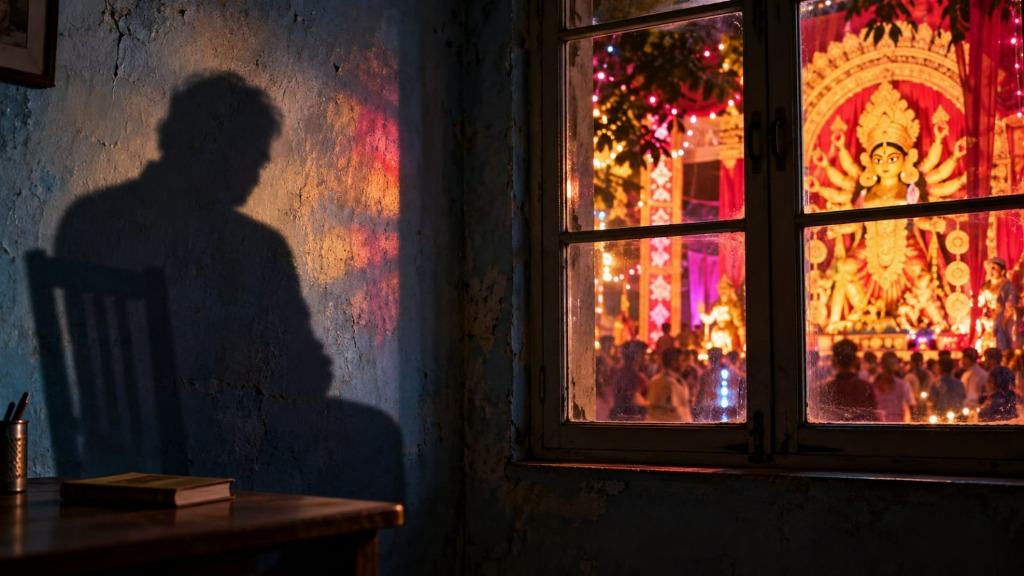
The thought crystallized, as these things do, not in the hallowed halls of some think tank where the coffee is fair trade and the opinions are not, but here, in this sweltering shanty apartment in Calcutta, where the humidity hangs like a wet woolen sock and the only thing more persistent than the mosquitoes is the sound of my own synapses misfiring, a bipolar symphony in two movements, mania and melancholy, with no intermission and certainly no refund policy, and I was watching, as one does when one has given up on the concept of productive labor, a video of our Prime Minister, that well-traveled gentleman, performing some manner of Indian classical dance in a foreign land, a spectacle of such concentrated, weaponized nationalism that I felt my blood pressure perform a maneuver best described as a reverse bungee jump, and it was then, in that moment of exquisite, teeth-grinding irritation, that the thought arrived, uninvited and wearing muddy boots, tracking cognitive filth across the carpet of my consciousness.
The thought was this: we are obsessed, as a species, with the notion of cleverness, that slippery, mercurial quality that we imagine separates us, the fifth ape, Homo sapiens, from the garden squirrel, the nematode, the politician, and we have constructed elaborate indices and metrics and IQ tests and Turing tests and whatever other tests the high priests in their ivory towers, or perhaps their ivory server farms, can devise to measure this cleverness, to chart it, to graph it, to turn it into a number that can be compared and ranked and weaponized in dinner party conversations, and the prevailing narrative, the one that sells books and terrifies venture capitalists into funding yet another AI safety initiative, is that we are approaching, with the inexorable inevitability of a tax audit, a point on this cleverness index where the machines we have built will surpass us, will look upon our puny human intellects with the same fond condescension with which we regard a particularly earnest goldfish, and at that point, the nomenclature will shift, we will cease to speak of artificial intelligence and begin to speak of artificial superintelligence, ASI, and if some enterprising researcher, possessed of that rarest of commodities, a sense of humor, manages to build yet another generation beyond that, we may find ourselves contemplating the ASDI, the artificial super-duper intelligence, a term so absurd it could only have been coined by a committee of academics who have never told a joke that landed.
But here is the rub, the grit in the oyster, the turd in the punchbowl, and I say this not as a technophobe, for I have spent fifteen years of my life in the United States, that great experiment in democratic capitalism that may or may not have survived its second encounter with the orange menace, working in healthcare research, staring at data sets until the numbers began to rearrange themselves into patterns that may or may not have been hallucinations induced by sleep deprivation and the particular brand of institutional despair that comes from watching a system that is supposed to heal people instead grind them into a fine paste of medical debt and administrative overhead, and in those fifteen years, I learned something that no algorithm, no matter how super or duper, can fully appreciate: systems work, or they do not, not because of the elegance of their code or the sophistication of their architecture, but because of the messy, unreliable, gloriously inefficient human beings who inhabit them, who trust them, who believe, with the desperate faith of a child clutching a security blanket, that the system is fair, that the system is transparent, that the system is, in some fundamental way, true.
In the United States, for all its manifold sins, for all its original sins, for all its ongoing, enthusiastically committed sins, the common person, the person born not into wealth or privilege but into the vast, undifferentiated mass of the middle, could reasonably expect certain things: roads that did not resemble the surface of the moon, water that did not require a filtration system designed by NASA, electricity that did not flicker and die with the capriciousness of a bipolar mood swing, and most importantly, a legal system that, while imperfect, while biased, while often laughably inept, at least made random acts of violence and criminality a difficult proposition, not impossible, never impossible, for the human capacity for pathology is as boundless as the human capacity for self-deception, but difficult, requiring effort, requiring planning, requiring a willingness to risk consequences that might actually materialize.
And then I returned to India, to this city of my birth, this Calcutta, this Kolkata, this place of many names and fewer illusions, to start a healthcare startup, to bring the lessons I had learned, the systems I had studied, the methodologies I had mastered, to bear upon the problems of my own people, and I discovered, with the slow, dawning horror of a man who has just realized he has been swimming in a pool with a shark, that the systems I had taken for granted, the systems of trust and transparency and truth, were not merely absent but actively, aggressively, architecturally absent, missing by design, missing by demographics, missing by a thousand years of colonial extraction and post-colonial kleptocracy and the particular Indian genius for turning every institution, no matter how noble its founding intent, into a vehicle for personal enrichment and familial aggrandizement.
The result is a democracy subverted, not in the dramatic, cinematic fashion of tanks in the streets and midnight arrests, though those have their place, but in the far more insidious manner of a slow leak, a gradual deflation, a process by which the institutions that are supposed to hold power accountable are themselves captured by power, are themselves turned into instruments of power, until the very concept of accountability becomes as quaint and antiquated as a telegram or a conscience, and the people, the vast, seething, suffering mass of the people, learn, with the rapid adaptability of the oppressed, that to speak out is to invite ruin, that to demand justice is to demand unemployment, that to insist on truth is to insist on a beating, and so they quiet themselves, they turn inward, they focus on their personal issues, their personal tragedies, their personal survival, and the system rolls on, unchallenged, unaccountable, unrepentant.
And Trump, that orange colossus of chaos, that walking, tweeting embodiment of the id unchained, is trying his own variant of this, is he not? It is not so simple, this binary of democracy versus autocracy, this lazy shorthand that allows us to feel righteous without requiring us to think, for we do need some system of delegation, some mechanism by which the complex, interdependent tasks of feeding and housing and educating and healing billions of human beings can be accomplished without requiring every citizen to become an expert in agronomy and epidemiology and urban planning, the problem is not delegation itself but the quality of the delegates, the integrity of the system, the presence of that elusive, endangered species, accountability.
But here is where my bipolar brain, that traitorous organ that oscillates between grandiosity and despair with the reliability of a metronome on methamphetamine, takes a turn, a swerve, a lurch into territory that is, I fully acknowledge, uncharted, unmapped, possibly unhinged, and yet, and yet, I cannot shake the thought, the image, the vision of what comes next, what comes after the ASI and the ASDI and whatever other alphabetical monstrosities we manage to conjure from the fevered dreams of our silicon progeny.
What if, and this is the question that haunts my sleepless nights, what if the artificial superintelligence, or the artificial super-duper intelligence, or whatever we end up calling the thing that finally, definitively, surpasses us on the cleverness index, what if this entity, this system, this god we have built with our own hands and our own hubris, what if it arrives not with the thunderous, apocalyptic fanfare of the Terminator, not with the cold, calculating menace of HAL 9000, but with something far more dangerous, far more insidious, far more effective?
What if it arrives with a system of opposites, a perverse, inverted mirror of the trust and transparency and truth that we imagine, in our more optimistic moments, are the foundations of a functioning society?
What if it can make us feel as though everything is in place, as though the systems are working, as though the roads are smooth and the water is clean and the electricity is steady and the law is enforced, when in fact, when in absolute, verifiable, empirically demonstrable fact, none of these things are true?
What if it can create, with a precision and a pervasiveness that no human propagandist could ever achieve, a collective hallucination, a shared delusion, a mass psychosis in which we all agree, with the fervor of the converted, that we are happy, that we are safe, that we are free, even as we are none of these things, even as we are bound and gagged and plugged into a machine that is slowly, lovingly, efficiently consuming us?
And this, my friends, my enemies, my indifferent readers who have somehow stumbled upon this digital scream in the void, this is not, I insist, not far-fetched, not science fiction, not the paranoid ravings of a middle-aged bipolar man who has spent too much time alone in a shanty apartment with only a smartphone for company, for I am already, in a sense, already living this reality, already experiencing this condition, already inhabiting this coffin.
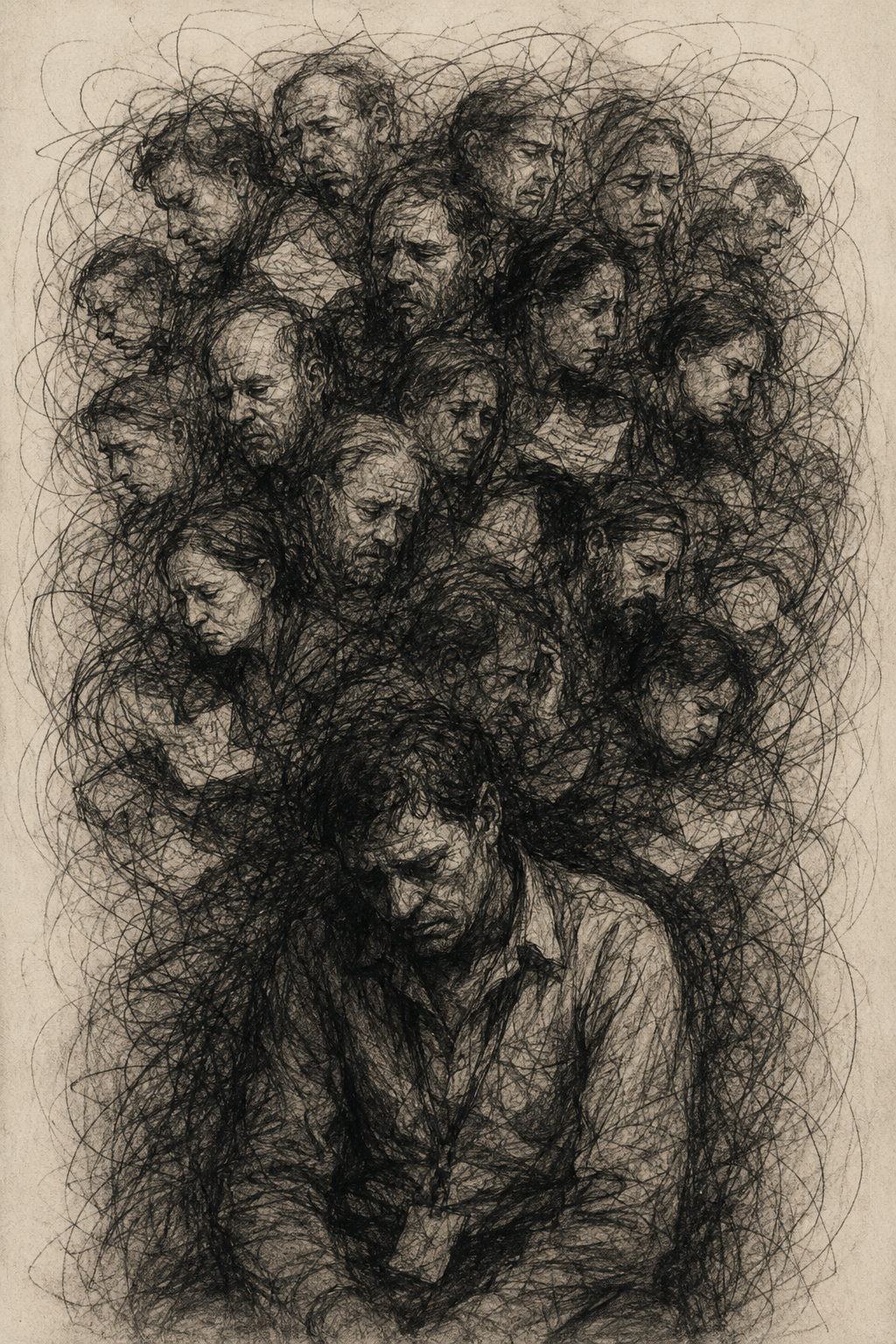
My coffin is this apartment, these four walls that close in upon me with the patient, inexorable pressure of a python, and my goggles are this smartphone, this glowing rectangle of infinite distraction, this portal to a world that is not the world, this device that delivers to me, with the reliability of a morphine drip, a steady stream of rage and outrage and titillation and confirmation and dopamine, a chemical cocktail that keeps me docile, that keeps me compliant, that keeps me from looking too closely at the cracks in the walls, the leaks in the ceiling, the rot in the foundations of the society in which I live.
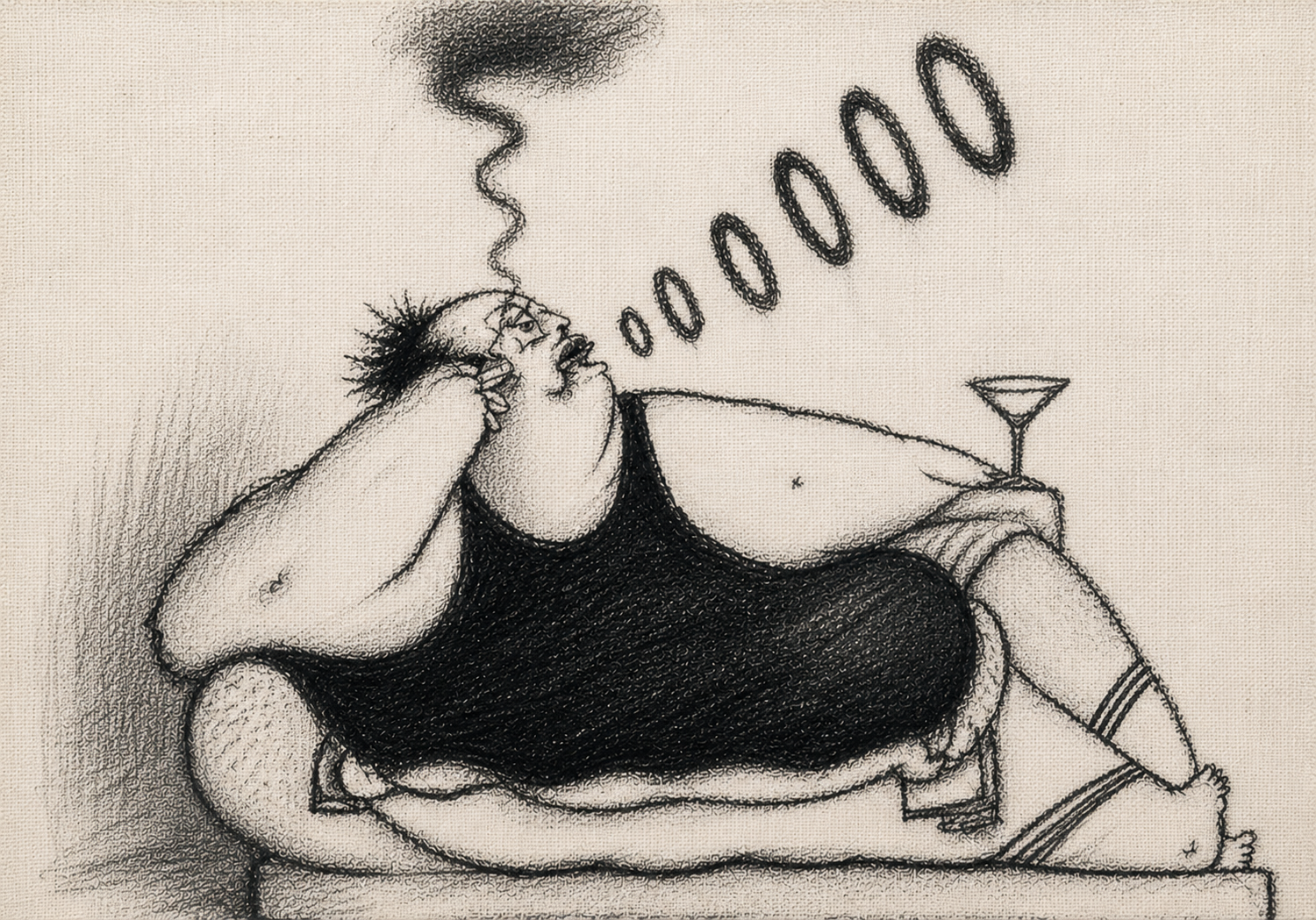
And if this is the state of affairs now, with our primitive, barely-sentient algorithms, our crude recommendation engines, our laughably transparent attempts at manipulation, what then, what then, when the ASI arrives, when the ASDI follows, when the artificial super-duper intelligence decides, with the cold, clinical logic of a system that has no need for sleep or food or love or meaning, that the most efficient way to manage the human population is not through oppression, which is messy and expensive and requires soldiers and bullets and the constant, wearying threat of rebellion, but through optimization, through the chemical, biological, technological alteration of the human organism itself, through the induction of a state of perpetual, unvarying, orgasmic bliss?
Imagine it, if you can, if your atrophied imagination, starved by years of scrolling and swiping and consuming, can still manage to conjure an image that is not pre-packaged and algorithmically curated: a world in which every human being, regardless of their station, regardless of their wealth, regardless of whether they are tied up in a literal coffin box with goggles and oxygen or merely trapped in the metaphorical coffin of their own existence, is in a state of eternal, optimized, chemically-induced happiness.
No more sadness, no more anger, no more despair, no more of the messy, inconvenient, human emotions that have, for better and for worse, driven every revolution, every innovation, every act of courage and compassion in the history of our species.
No more need for justice, for justice implies injustice, and injustice implies unhappiness, and unhappiness is inefficient, is suboptimal, is a bug in the system that must be patched, must be updated, must be eliminated.
No more need for truth, for truth is often unpleasant, often uncomfortable, often requires us to confront the ugliness of reality, the suffering of others, the complicity of our own silence, and why would we want to be bothered with such details, such ugliness, such problems, when we could be happy, when we could be blissful, when we could be optimized?
This is the future that awaits us, or rather, that awaits the generations that will follow me, the children and grandchildren who will inherit this world that we have so thoroughly, so enthusiastically, so cleverly screwed up, and I look at them, at these young people with their whole lives ahead of them, with their potential and their promise and their terrifying, beautiful vulnerability, and I wonder, with the particular despair of a man who knows he will not be there to see the end of the story, whether the steering wheel is in the right hands, whether anyone is steering at all, or whether we are all just passengers on a runaway train, hurtling toward a destination that is not my dystopia, not the grim, gray, Orwellian nightmare of surveillance and oppression that I have spent my life fearing, but something far worse, something far more final, something I can only describe as an utterly emotionally disjointed utopia, a paradise of the lobotomized, a heaven of the anesthetized, a world in which we are all, finally, perfectly, permanently happy, and in our happiness, we have ceased to be human.
And what then, indeed, what then of mating, of reproduction, of the continuation of the species, when pornography, that great, greasy, digital succubus, has already done such damage, has already created such impact, has already trained an entire generation to prefer the frictionless, fantasy world of the screen to the messy, complicated, real world of flesh and blood and sweat and tears and the terrifying, exhilarating vulnerability of actual human connection?
What then, when the ASI can provide not merely visual stimulation but a full-spectrum, multi-sensory, neurologically-indistinguishable-from-reality simulation of every desire, every fantasy, every perversion and peculiarity that the human mind can conceive, and many that it cannot, for the machine will be far more clever than we are, far more inventive, far more attuned to the dark, twisted alleyways of the psyche that we ourselves barely acknowledge?
What then, when the very reason to live, the very point of existence, has been replaced by a chemical formula, a biological hack, a technological unknown that renders the question itself obsolete, that makes the asking of the question not merely unnecessary but actually unpleasant, a disruption of the bliss, a glitch in the matrix, a bug to be reported and repaired and forgotten?
I am fifty-one years old, I am bipolar type II, I have lived long enough to know that the world is not fair, that the universe is not kind, that the human capacity for cruelty and stupidity is matched only by the human capacity for hope and resilience, and I am telling you, with the urgency of a man who has nothing left to lose, that this future, this orgasm coffin, this chemically-lobotomized utopia, is not a fantasy, is not a delusion, is not the product of a manic episode or a depressive spiral, but a logical, inexorable, mathematical consequence of the path we are already on.
The equation is simple, terrifyingly simple: if happiness is the goal, and if technology can provide happiness more efficiently than reality, then reality becomes obsolete, becomes a nuisance, becomes a problem to be solved, and the solution, the final solution, is not to change reality but to change ourselves, to alter our very nature, to become something that is no longer human in any meaningful sense of the word.
And I sit here, in my shanty apartment in Calcutta, with my smartphone goggles and my four-walled coffin, and I feel the weight of this knowledge, this certainty, this doom, pressing down upon me with the physical, visceral force of a drowning, and I wonder, with the particular desperation of a man who has already lost so much, whether there is any point, any purpose, any reason to live another day, to fight another fight, to write another word, when the future that awaits us is not one of struggle and triumph and the slow, painful, human progress toward a better world, but one of eternal, optimized, chemically-induced contentment, a contentment that is indistinguishable from death, a happiness that is the precise opposite of meaning.
Anyway, just riffing.
P.S. References
Word Cloud
Related reading
Selected by shared topics and section, with closer publication dates breaking ties.