The Zamindars Are Not Dead
Uses the speech voice supplied by your browser or device.

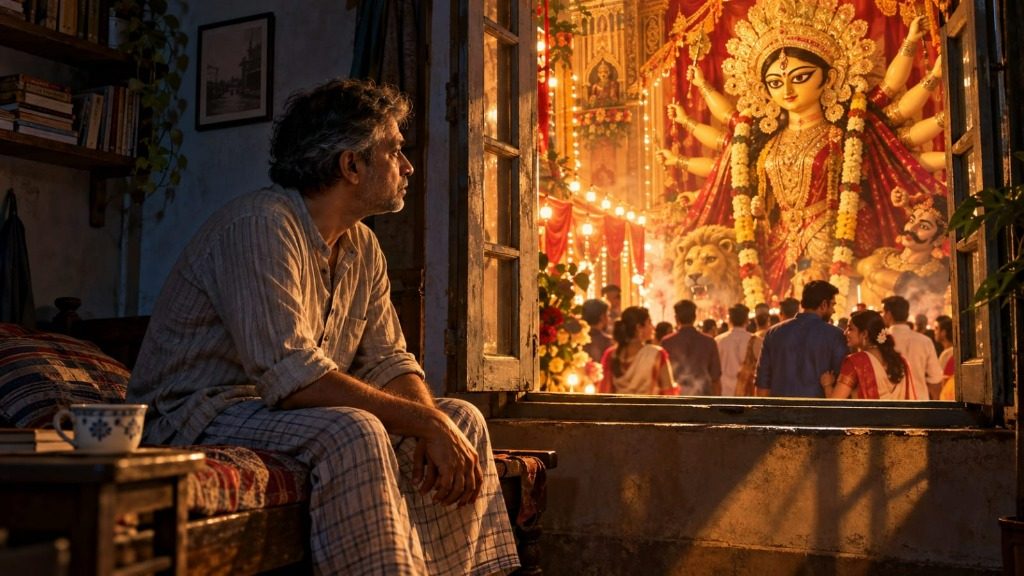
The zamindars are not dead, improbable as it may sound, and I have seen it reflected in the evolution of tastes, in what the prevailing time thought was fashionable, leaning into the rich and aristocracy more specifically and more importantly what delineated them from the poor and the shoddy, the people easily put into mean generalizations, in India we had the caste system to speed up who could be what up until a certain time but now no more, now it’s whoever is the greater trickster whoever can lick the longest and the hardest has read Machiavelli or the Indian version Arthashastra or at least the bootleg version of Robert Greene sort, no education is not only not required it’s a detriment, a huge problem in fact because it introduces unnecessary hurdles of scruples morals and empathy when the zamindari point of view is ruthless because a lot of royalty including zamindars came from ruthless people who took over other people’s money and land not meek sheep, so it is now except it’s micro spread over in small doses as criminals in parliament to those who will pick your pockets except they do it over the wire cyber criminals and AI will make this sort of zamindari really bloat really really bloat while we the commoners who can hardly make two ends meet will soon find it hard to find safe ways to stay alive or stow away our little crumbs for later and starve in very non elite ways at the corner of a Calcutta street.
There is a particular stench to inherited cruelty, and it does not dissipate with democracy—it merely changes its cologne. The zamindar, that magnificent parasite of the Bengal countryside, did not vanish when the Permanent Settlement crumbled in 1793 or when the East India Company finally admitted it had been running a protection racket with better stationery. No. The zamindar mutated. He became a Member of Parliament. He became a cryptocurrency evangelist. He became the voice on the other end of a phishing call asking for your OTP with the same unctuous warmth his great-grandfather employed while evicting tenant farmers onto the winter mud.
Consider the mathematics of it, because nothing exposes the skeleton of exploitation quite like an equation stripped of its flesh. The Gini coefficient, that elegant little number dreamed up by Corrado Gini in 1912, measures inequality on a scale from 0 to 1, where 0 is everyone sharing a single roti and 1 is one man owning all the rotis, the wheat fields, the mills, the trucks, and the very concept of hunger. India’s Gini hovers around 0.35 by official measures, which is adorable, like measuring the depth of the Ganges with a teaspoon. The Credit Suisse Global Wealth Report tells a different story: the top 1% in India owns more than 40% of the nation’s wealth. Forty percent. That is not an economy. That is a zamindari with Excel spreadsheets.
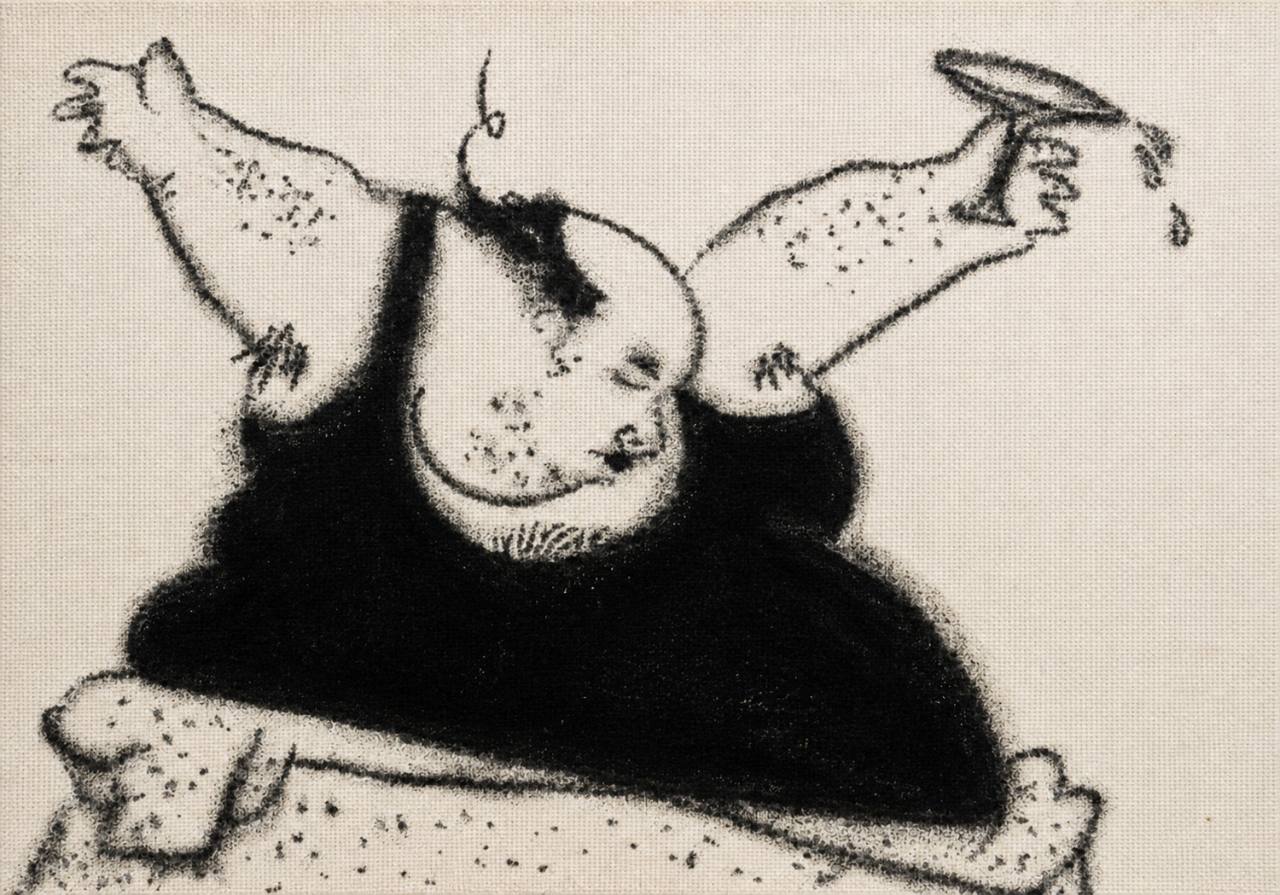
And the evolution of taste—oh, the taste!—this is where the corpse twitches most visibly. What the aristocracy consumes, the middle class apes; what the middle class apes, the poor die trying to afford. In the age of the nawabs, it was attar and ivory and poetry so ornate it required three servants to carry the metaphor. In the age of the industrialists, it was Scotch whiskey and Swiss watches and sending sons to Oxford to learn how to pronounce “schedule” with a sh- sound. Now? Now it is NFTs and biohacking and retreats in Tulum where one pays twelve thousand dollars to be deprived of Wi-Fi and defecate in a composting toilet, which is the ultimate aristocratic flex: I have so much money I will pay to suffer like a peasant, but aesthetically.
The word zamindar itself comes from the Persian zamīn (land) and dār (holder). Land-holder. Not land-worker, not land-steward, not land-lover. Holder. As one holds a breath. As one holds a grudge. As one holds a population by the throat. The etymology is instructive because it contains no verb of labor, no suggestion of cultivation, only possession—raw, unearned, hereditary possession. And this is the genome that persists, replicating through centuries like a particularly stubborn retrovirus.
The caste system, that other great Indian innovation in social stratification, at least had the decency to be explicit. You were born a Brahmin or a Shudra, and while the injustice was grotesque, it was grotesque in daylight. You could see it. You could curse it. You could, on rare and glorious occasions, burn it. But the new zamindari operates in the twilight of algorithms and offshore accounts. It wears the mask of meritocracy. It tells the Dalit engineer in Bangalore that he simply didn’t network enough, didn’t optimize his LinkedIn, didn’t learn to code in the right language at the right time while the zamindar’s son—who once struggled to spell “Python”—now runs a venture capital fund because his father knew a guy who knew a guy who once golfed with Narayana Murthy.
I have bipolar type II, which means I spend a good portion of my waking hours in a state of low-grade hypomania that makes the absurdities of the world glow with a particular, almost radioactive clarity. And what glows most brightly is this: the zamindar never needed to be smart. He needed to be ruthless. He needed to be early. He needed to be willing to take what was not his and then hire poets to write songs about how generous he was for allowing the previous owners to continue breathing. This is the Arthashastra in action, that ancient Indian treatise on statecraft attributed to Kautilya (also known as Chanakya), which is essentially a 2,000-year-old manual on how to screw people over while maintaining plausible deniability. “The king shall despise none,” it says, right before detailing how to poison your enemies, fabricate evidence, and use prostitutes as intelligence assets. It is the original bootleg Robert Greene, and every parliamentarian in India has read it, or at least had an assistant summarize it in a PowerPoint.
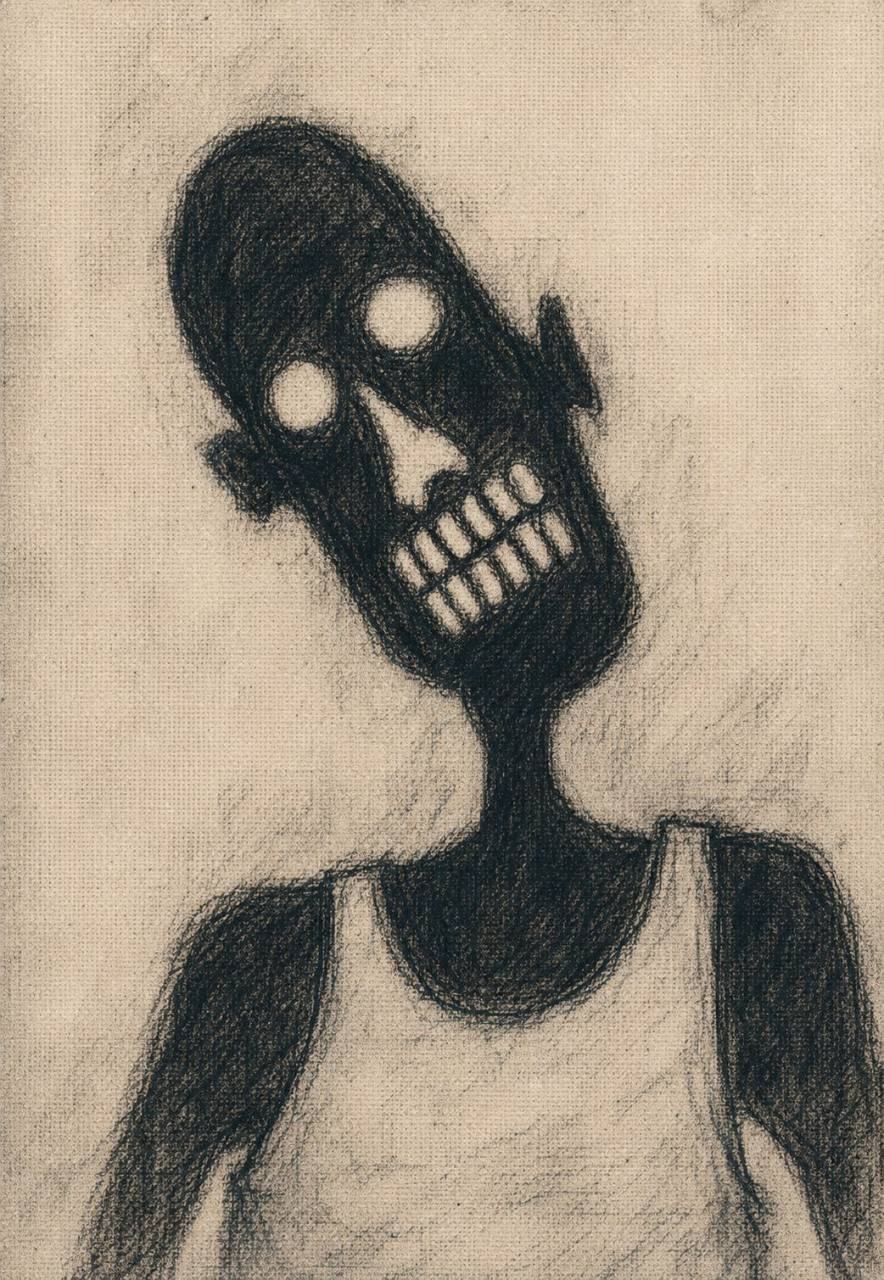
The cybercriminal is the micro-zamindar, the pocket-sized parasite. He does not own land; he owns your Aadhaar number. He does not evict tenants; he empties bank accounts. The scale is smaller, the methodology more democratic—anyone with a smartphone and a moral vacuum can play—but the logic is identical: extraction without creation, profit without production, wealth transferred rather than generated. And AI, that magnificent idiot savant we are currently fellating into sentience, will supercharge this. Deepfakes will impersonate your mother asking for money. Algorithms will predict your financial vulnerability with the same precision once used to predict monsoon failures. The zamindar will not need a ledger; he will have a neural network. He will not need enforcers; he will have ransomware. And the corner of the Calcutta street where the starving gather will be livestreamed as content, monetized as tragedy porn for the elites scrolling through their feeds in air-conditioned rooms, feeling a brief, delicious spasm of compassion before ordering avocado toast.
There is a Sanskrit verse from the Mahabharata, that great encyclopedia of Indian dysfunction: “Dharmasya glanir bhavati bharata”—when righteousness is in decline, O Bharata. The full context is Krishna’s lecture to Arjuna about duty, but the phrase that sticks is the glani, the decline, the sliding, the slow rot that feels like progress until you realize you are standing in a swamp. We are in a state of glani so advanced that we have mistaken the swamp for a spa. We call it “disruption.” We call it “innovation.” We call it “the gig economy” when what we mean is the return of the zamindari in app form, where the landlord does not even need to see your face before evicting you from your livelihood.
The poor starve differently now. They starve with dignity, or so we are told. They starve with access to microfinance at 24% interest. They starve with a Jan Dhan account and a gas cylinder that arrives three months late and half-empty. They starve while the government tweets about GDP growth and the zamindars—old and new, landed and liquid—post photographs of their dogs wearing sweaters that cost more than a farmer’s annual income. The shoddiness of the poor is no longer a condition to be alleviated; it is a spectacle to be consumed. The mean generalizations have become meaner, more precise, algorithmically targeted. The poor are lazy. The poor are entitled. The poor should have learned to code. The poor should not have been born poor, which is, when you think about it, the ultimate victim-blaming, the original sin of capitalism re-branded as personal responsibility.
And Calcutta—my Calcutta, not the Kolkata of the branding consultants—knows this stench intimately. It has smelled it in the mansions of the Raj, in the mills of the Marwaris, in the salt mines of the East India Company. It smells it now in the glass towers of New Town, where the new zamindars park their German sedans and discuss “impact investing” over single-origin coffee. The city remembers. The city is a palimpsest of exploitation, each layer written over the last, the ink bleeding through. You cannot walk five feet in North Calcutta without tripping over a zamindar’s legacy—a temple built to launder a reputation, a college founded to employ a useless nephew, a street named after a man who starved a thousand families and then had the audacity to die of natural causes.
The trickster reigns. The licker of boots and other appendages thrives. Education is a trap, a snare set by the well-meaning to catch the scrupulous, the empathetic, the fools who believe that hard work and honesty might be enough. They are not enough. They were never enough. The zamindar knows this. The zamindar has always known this. He knew it when he collected rent from land he never saw. He knows it now when he collects data from users he never meets. The medium changes. The cruelty persists. The mathematics of extraction remain constant, elegant, and utterly indifferent to the human cost.
So here we are, at the corner of a Calcutta street, starving in very non-elite ways, our crumbs digitized and devalued, our dignity a commodity we cannot afford to trade. The zamindars are not dead. They have simply upgraded their software. And we, the meek, the sheep, the ones who read books and felt things and believed in the possibility of fairness—we are still waiting for the revolution, not realizing it already happened, and we lost, and the winners are currently deciding whether to monetize our despair as a podcast or a premium subscription service.
“Yatha raja tatha praja”—as the king, so the subjects. But what when the king is an algorithm, and the subjects are data points, and the kingdom is a server farm in Singapore? What then? Then we starve, beautifully, digitally, efficiently. Then we become the content of our own oppression, scrolling through our own demise with thumbs calloused from the swiping.
The zamindars are not dead. They are trending.
P.S. References: Corrado Gini, “Variabilità e Mutabilità” (1912); Credit Suisse Global Wealth Report (various years); Kautilya/Chanakya, Arthashastra (c. 2nd century BCE–3rd century CE); Mahabharata, Bhagavad Gita, Chapter 4, Verse 7.
Word Cloud
Related reading
Selected by shared topics and section, with closer publication dates breaking ties.