Durga Puja Negative Singularity
Uses the speech voice supplied by your browser or device.

I have been told, by people who say it with the serene confidence of a man who has just discovered both fire and compound interest, that we are hurtling toward a singularity, that glorious hypothetical moment when artificial intelligence becomes God with a server rack. In the sales pitch, the rich will upload their consciousnesses to a cloud that never rains, never deteriorates, and presumably employs someone else to deal with the bill. They will become immortal, omniscient, unbearable. The poor will be handed a slightly smarter phone that tells them, in a voice trained on ten thousand hours of customer-service empathy, that their job has been automated, their dignity has been deprecated, and their future has been moved to a premium tier they cannot afford. One arm of the K reaches up to stroke the chin of the divine machine; the other reaches down to pick through the garbage for copper wire. I live in Calcutta, where the garbage is plentiful and the copper wire is already spoken for, so forgive me if I do not genuflect before the algorithm. I am on the lower stroke of that K, the one that looks suspiciously like a scythe.
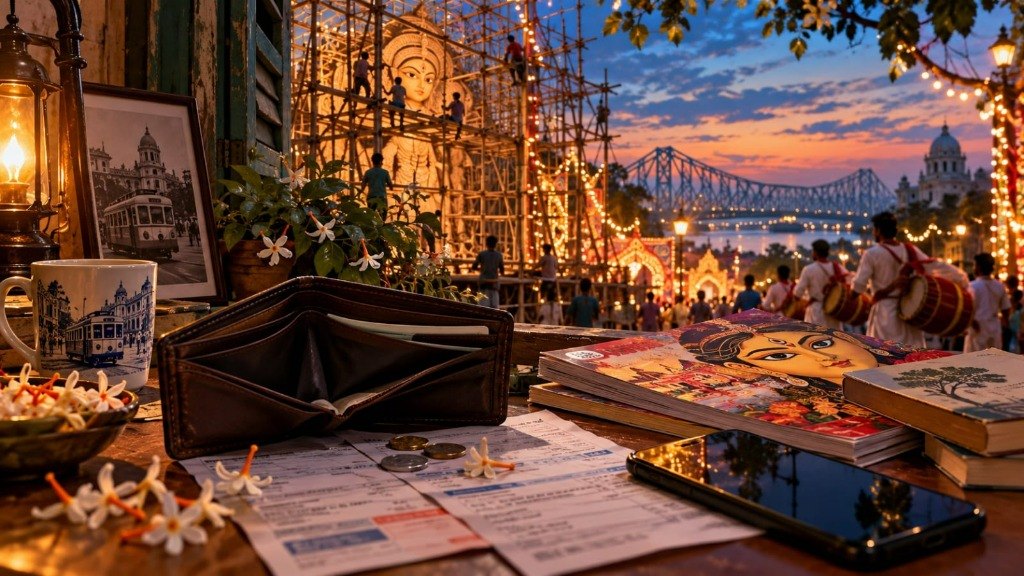
Durga Puja brings me to much the same diagram by a shorter route. It is October 8 as I write; Mahalaya is still two days away, and the main Puja days lie ahead. My dread has arrived early. Very punctual fellow, dread. Never misses a connection. The city is preparing its annual hallucination of light and drumbeat, its fever dream of gold and red, its temporary heavens assembled from bamboo, cloth, clay, money, and an astonishing amount of human labor. Soon the loudspeakers will vomit devotion at a volume that could wake the dead and then deafen them again for good measure. The air will smell of incense, frying oil, and the sweat of people trying to squeeze an entire year’s permission to be happy into a few evenings. It is gorgeous. It is obscene. It is a coup d’état mounted by joy against the government of ordinary misery, and I can already feel my application for citizenship being rejected.
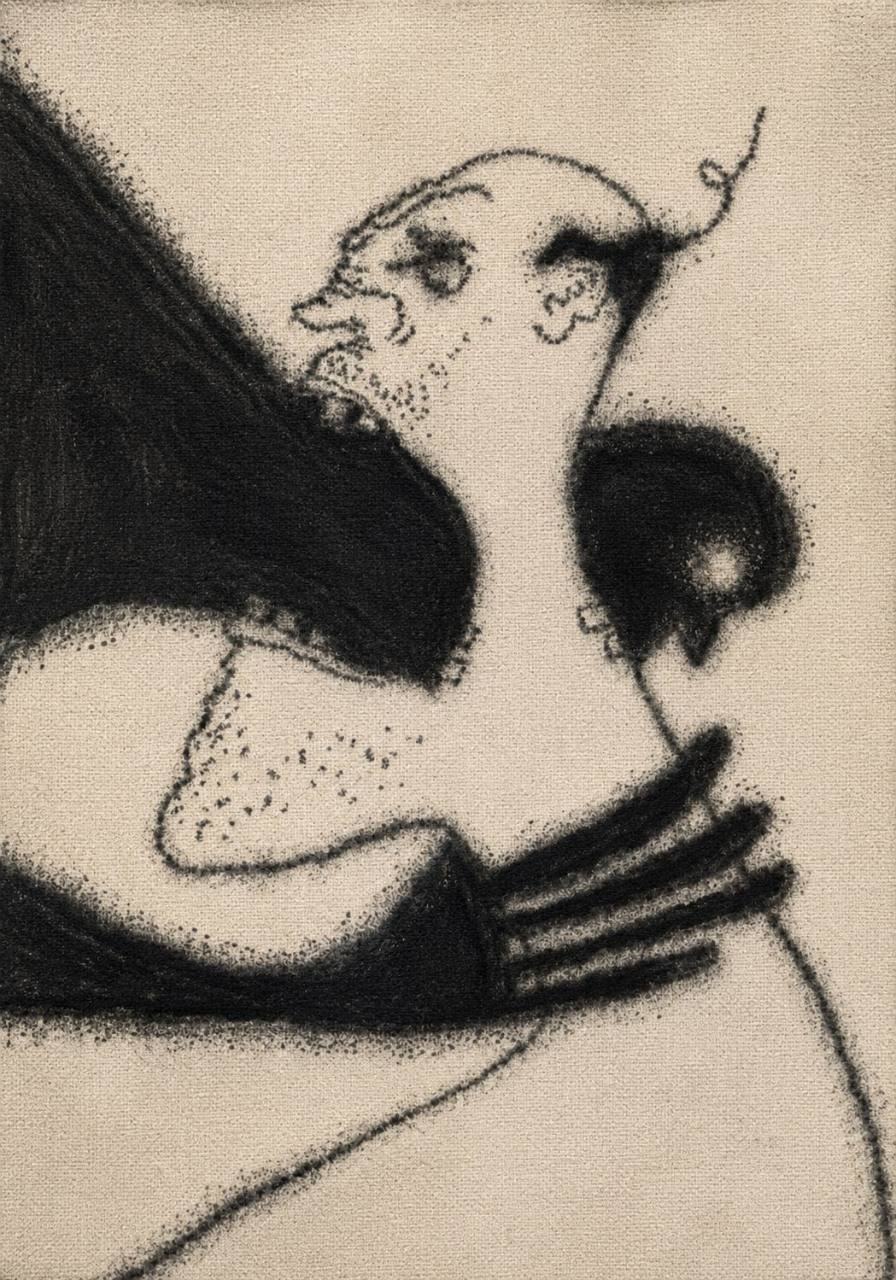
I am fifty-one, living alone in a rented room, with bipolar depression and finances that look like the remains of a meal after the plate has been washed. I would like to say that I feel nothing. It would simplify the paperwork. Unfortunately, anhedonia has not relieved me of anguish. Pleasure becomes difficult to reach while anxiety, shame, irritation, and loneliness continue reporting for duty with exemplary attendance. The machinery that hurts me has not broken down. That department is flourishing. I can recognize beauty, remember wanting it, even ache toward it, without getting the answering warmth that would make recognition feel like participation. My brain, that traitorous lump of electrified porridge, can apparently preserve the appetite for a life while making the life itself taste of cardboard.
There is no useful little dopamine gauge I can tap and refill. Nor does bipolar mean I will shortly be reimbursed for my depression with an equal installment of ecstasy. Mine has been a long acquaintance with the lower floors, with anxiety and agitation quite capable of making themselves comfortable there. I can be exhausted and restless together. I can want company and find the prospect of a crowd unbearable. I can sit still while something inside me runs from wall to wall. Try explaining that to the cheerful public-health authority who says, go out, enjoy yourself, it is Puja. Yes. And here is a staircase. Kindly grow the missing leg.
The dhaak does not have to fail to reach my chest. It can reach it perfectly well and find something sore. That is the part the language of emptiness gets wrong. There is a great deal inside this emptiness. There are years in it. There is the memory of anticipation, which is a particularly filthy thing to retain when anticipation itself has stopped turning up. There is the sense that other people are moving toward an evening while I am merely getting through one. The lights are bright; I am tired. The drums are loud; my thoughts are louder. The goddess arrives, triumphant, ten-armed, slaying the buffalo-demon with the kind of decisive violence I cannot muster against my own inertia, and some small, unpleasant clerk inside me says, well, that’s nice for her.
I am an atheist. I do not think a supernatural mother is traveling to Calcutta to inspect the lighting arrangements. But disbelief has done nothing to remove the festival from my emotional plumbing. Durga Puja still means homecoming, childhood, the city preparing to become more than its exhausted daily self. A person can stop believing in heaven without losing the capacity to feel locked out of it. I want to feel something when the goddess comes home. I want the phrase to touch a place in me that still answers. Instead, homecoming makes me acutely aware of how much of my life consists of remaining in the same room.
This is what I mean by the negative singularity. The futurists can keep the one they are busy fellating in their keynote speeches. Mine is the point at which public abundance makes private deprivation feel almost impossibly dense. The city grows more festive; my little patch of it contracts. Other people’s plans accumulate until my lack of plans acquires the solidity of furniture. The collective effervescence Durkheim described is happening somewhere within earshot, and I cannot get my own bloody emotional kettle to boil. I am not measuring a law of physics. I am describing what it feels like when everybody seems to be arriving somewhere and you become more stranded by the minute.
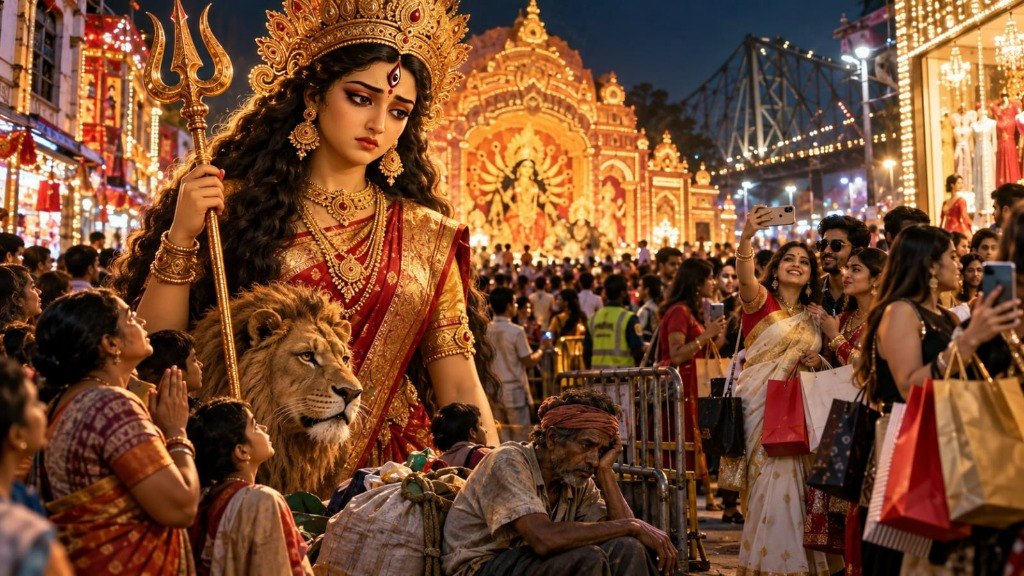
The division is untidy. A poor person can love Puja. A wealthy person can be desperately ill. Someone laughing in the queue may go home to a misery I know nothing about. Yet money, company, mobility, and a mind capable of receiving pleasure give a person ways into the evening that cannot be conjured by calling the festival inclusive. The pandal may be free to enter. Getting there, eating, buying something for someone, or simply leaving the room without calculating what it will cost can be another matter. And even with the fare in my pocket, there remains the problem of being alone among people who are there with one another. I do not particularly want admission to a crowd. I want to be expected by somebody in it.
It is the ordinary evidence of belonging that gets under the ribs. Someone holding a place. Someone asking whether you have eaten and being prepared to hear the answer. Someone turning around because you have fallen behind. Nothing grand enough to require ten arms. Two would do; on some evenings, a voice would be a substantial improvement. But the city offers belonging on a colossal scale, complete with sponsors, and I am standing there mentally trying to purchase one small unit for personal use.
Then I think of the old-age homes, especially the ones where care has curdled into storage and the television has been promoted to next of kin. I picture a man watching festival coverage from a plastic chair, remembering when people needed him to carry things, arrange things, pay for things, arrive. There may be a Puja outing, sweets, visitors, a photograph in which everyone has been successfully assembled. I wonder what happens after the photograph. Who stays long enough for him to finish the story he has already started twice? What does the goddess’s homecoming mean to someone whose own place in the family has become an administrative arrangement? The thought is ugly. So is discovering that you can be kept alive quite conscientiously while being allowed to disappear.
I think of people living under flyovers and beside railway tracks, close enough to see the lighting without acquiring any of the security it seems to promise. Their children may be delighted by it. That delight does not put a roof over the next rain. A plate of bhog can fill a stomach; tomorrow still comes with its original demands. There is something indecent about the ease with which a city can borrow a poor person’s smile as evidence that poverty has been successfully included in the celebration. The photograph says everyone is happy. The cardboard wall has not been consulted.
I think of prisons. Even where Puja is celebrated inside, a decorated courtyard does not abolish the locked gate. Someone can enjoy the food and still think about the child growing older beyond it, the parent becoming frail, the life continuing without their permission. I think of psychiatric wards, where one person may welcome a familiar song and another may need the blessed mercy of less noise. The patient who cannot bear the celebration does not need another demonstration of its magnificence. They may need sleep, quiet, care, or someone willing to stop insisting that enjoyment is a duty. I know something about that last demand. It can make an illness feel like a failure of manners.
I cannot know what each of these people feels. But I keep returning to the space between being counted and being wanted. A bed occupied, a meal distributed, a prisoner present, a patient accounted for. Necessary things, sometimes lifesaving things. A person can have all the boxes ticked and still have nobody who is looking forward to seeing them. I am not in a prison or a ward. I have a door I can open. On a bad day, my own skull makes remarkably poor use of that distinction.
The city knows how to cover a spectacle. The biggest pandal, the longest queue, the most expensive idol: all excellent subjects, all willing to stand still for the camera. Neglect is less cooperative. It has no inauguration. It may consist of a phone that does not ring, a visit repeatedly postponed, a person who stops suggesting plans because each suggestion requires another little exposure of need. Sometimes such lives become news after something terrible happens. Meanwhile, the daily disappearance proceeds without the dramatic incident that would justify a headline. There is no ribbon to cut when somebody gives up expecting company.
Calcutta calls itself the City of Joy. The nickname was popularized by Dominique Lapierre’s 1985 novel; the British cannot be blamed for this particular piece of branding. We have had ample time to turn it into a civic performance requirement. Smile, you miserable bastard. You are spoiling the reputation of the city. I write about this with no great confidence that the people who might recognize it will find the page. I write into the void and the void, like a good Bengali host, says, come in, come in, have some tea, we were not expecting you, we were not expecting anyone.
I do not want the happy to surrender their happiness. Their exhaustion after a good evening is not an offense against me. Let them eat the mutton and the mishti, lose their voices, argue over which pandal to visit next. I want some of that ordinary pleasure for myself, and admitting it is more painful than producing another polished insult. Satire permits me to look discerning while I am standing outside with my nose against the glass. Underneath the smart-ass commentary is the thoroughly undistinguished wish to have a good evening with people who want me there. I would like to come home tired from living a little. The tiredness I have is less satisfactory.
What I begrudge is the demand that the light be accepted as proof that everybody has been reached. What I cannot stand is tenderness performed at enormous volume while an inconvenient person nearby is left to make themselves less inconvenient. The goddess has ten arms. We congratulate ourselves on noticing this. Then a living person needs a lift, a meal, a quiet conversation, some unphotographed assistance, and suddenly the entire neighborhood appears to have been born without hands.
I can wish the clay mother would spare an arm for me without believing she can. That is the embarrassment of being an atheist with an intact capacity for longing. I know who made her. Human hands shaped the face, painted the eyes, dressed the body, arranged the weapons. Human hands will carry her away. The work is beautiful, and the beauty makes the question harder to avoid: how do we manage such elaborate acts of collective love for a homecoming while leaving so many living people uncertain whether they have anywhere to arrive?
Puja did not create my illness or my financial trouble. It has not instructed anyone to abandon anyone else. It simply brings a great deal of what I am missing into view at once, and then supplies amplification. Poverty can keep me from participating; illness can make participation exhausting; loneliness gives me too much time to notice both. Around they go, the three efficient little bastards, passing the same bill across the table. Meanwhile, the public address system announces another successful evening.
I do not know whether I will go out when the main days arrive. Perhaps I will manage a little. Perhaps the thought of returning alone will exhaust the outing before it begins. I would like a moment of pleasure without having to turn it into evidence that I am recovering, grateful, spiritually improved, or finally making an effort. I would like someone to understand that wanting the festival and dreading it can occupy the same body, at the same time, without either feeling being fraudulent.
The lights will reach my room. The sound will get in. There is nothing wrong with the transmission. Somewhere, people will be calling one another to hurry up, come downstairs, we are waiting. I can already imagine how casually they will say it. We are waiting. As though having somebody to wait for you were an ordinary arrangement, like leaving a light on.
If anyone asks what I am doing for Puja, I suppose I will say, nothing planned. It is a wonderfully compact expression. You can get a whole room inside it and still have space left over for the person sitting there.
Word Cloud
Related reading
Selected by shared topics and section, with closer publication dates breaking ties.