A Mediocre Manifesto of Managed Mediocrity
Uses the speech voice supplied by your browser or device.

So I sat down, see, with the explicit, the deliberate, the almost aggressive intention to write something positive about what happened to me today. A task, a mission, a goddamn imperative to find the silver lining in the cloud of my own exhalation. And you know what I came up with? The sleep meds worked. That’s it. That’s the whole parade, the entire circus, the sum total of my terrestrial achievement: I stayed asleep most of the day. And the part of the day that I was awake? I spent it watching Netflix and YouTube, winding down, winding down, winding down for another sleep period. A recursive loop of pharmaceutical sedation and algorithmic distraction, a life lived in the liminal space between REM cycles and recommended videos.
No, I didn’t die today. For the few of you who check this blog for that particular news bulletin, sorry to disappoint. I know, I know, the suspense must be killing you. But I also don’t have any redeeming story about my life, any aha moment, any epiphany that I can share. Sorry. I’m really just a mediocre bag of Bengali misfit, a walking disappointment to everyone I know, a human participation trophy in the Olympics of existence. But really, that’s where I am in my life right now. I’d rather be dead if there was a switch, a button, a toggle, a simple off-ramp from this highway of horseshit, but there isn’t. So I’m just alive. An insufferable person who writes down whatever comes to his mind.
And what comes to his mind, you ask? Well, let me tell you about the etymology of insomnia. It comes from the Latin in- (without) and somnus (sleep). Somnus, the Roman god of sleep, the brother of Death, the son of Night. So insomnia is literally being without the god of sleep, being abandoned by the very deity who is supposed to cradle you in his dark, velvet arms. And what do we do when the god abandons us? We invent pills. Little white tablets of synthetic somnus, chemical lullabies, pharmacological prayers swallowed with water and swallowed with hope. We replace the god with the molecule, the divine with the generic, the sacred with the Schedule IV controlled substance.
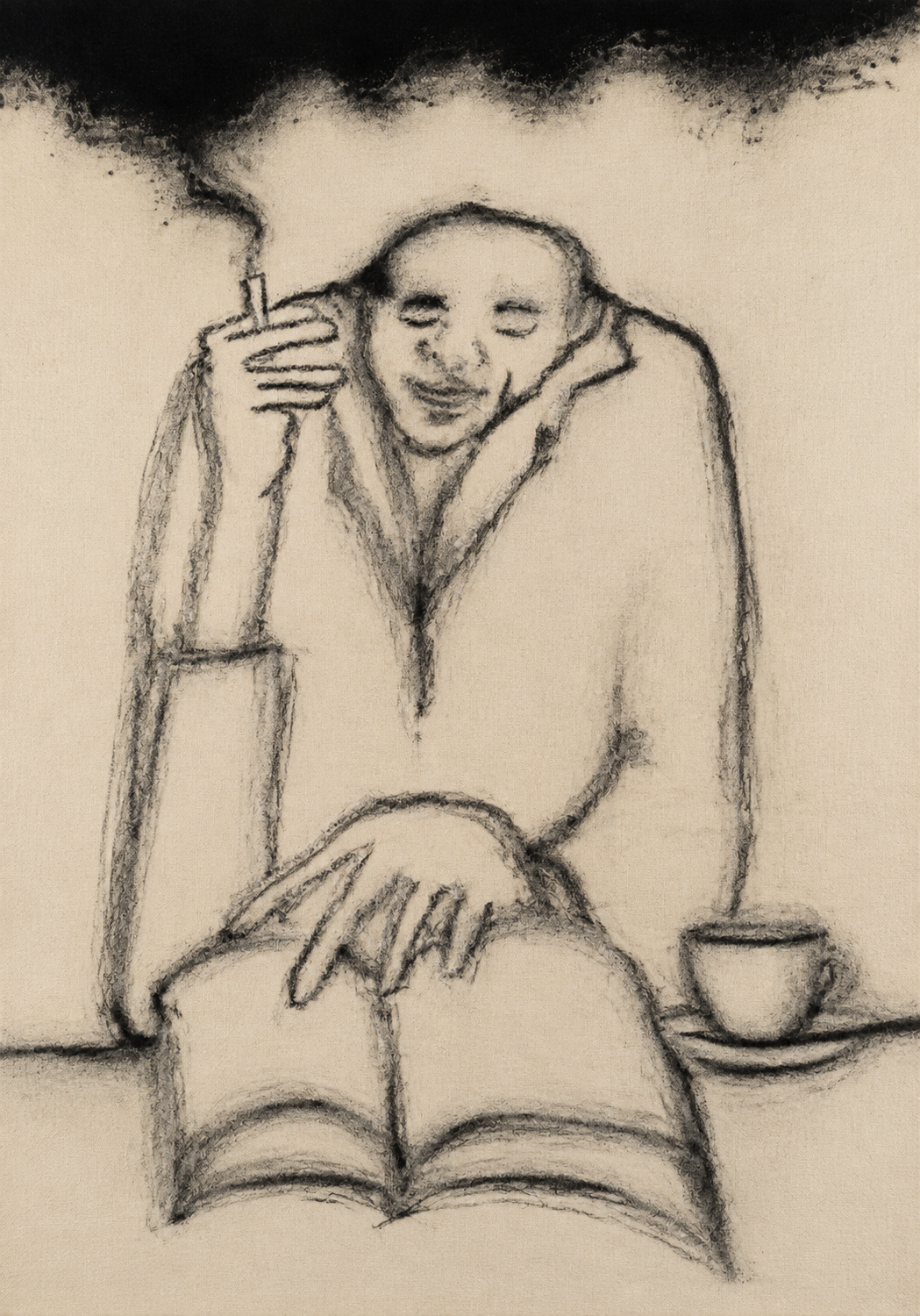
I took my pills today. They worked. I slept. I woke up. I watched Netflix. I watched YouTube. I watched other people live lives that seemed, from the safe distance of my screen, to have meaning, purpose, direction, momentum. I watched people cook elaborate meals in pristine kitchens, travel to exotic locations with golden light, fall in love in montages set to indie folk music. And I sat there, in my darkened room in Calcutta, in the city that never sleeps because it’s too busy sweating, and I thought: this is it. This is the pinnacle. This is the zenith of my day, the apex of my existence, the crowning achievement of my consciousness: I did not die, and I did not do anything else either.
The scientific method would demand that I form a hypothesis, test it, observe, conclude. So here is my hypothesis: my life is a controlled experiment in controlled substances. The independent variable is the dosage. The dependent variable is my ability to tolerate consciousness. The control group is everyone else, all those people out there walking around, talking, laughing, living, while I am here, in my room, in my bed, in my head, conducting my solitary study in sedation. The results are in: the pills work. The null hypothesis—that I would find meaning in wakefulness—has been rejected. P-value: statistically significant. Confidence interval: zero to despair.
But wait, you say, surely there is something, anything, that could be construed as positive? A good meal? A pleasant conversation? A moment of beauty? A sunset? A sunrise? A bird? A bee? A flower? A tree? No. None of the above. The only positive is the negative: the absence of death, the absence of pain, the absence of the acute, the absence of the unbearable. I did not have a panic attack. I did not cry uncontrollably. I did not contemplate the logistics of self-termination with the clinical detachment of a project manager. I simply… was. A being without becoming, a presence without present, a consciousness without content.
And the worst part? The absolute, unvarnished, unmitigated worst part? I know that tomorrow will be the same. The pills will work, or they won’t. I will sleep, or I won’t. I will watch Netflix, or YouTube, or some other streaming service, some other algorithmic opiate, some other digital soma. I will wind down for another sleep period, and another, and another, until the winding down becomes the winding up, the preparation becomes the event, the means become the end. A life lived in parentheses, in footnotes, in the margins of a book that no one is reading.
I am a mediocre bag of Bengali misfit. I disappoint everyone I know. But really, that’s where I am. I’d rather be dead if there was a switch, but there isn’t. So I’m just alive. An insufferable person who writes down whatever comes to his mind. And what comes to his mind is this: the sleep meds worked, and that is the most positive thing he can say about his day, his life, his existence in this city of sweat and sorrow, this Calcutta that never sleeps because it’s too busy dreaming of other cities, other lives, other selves.
So here it is, my manifesto of managed mediocrity, my testament to pharmaceutical survival, my ode to the off-switch that doesn’t exist. Read it and weep, or don’t. I’m going to take my pills and wind down for another sleep period. The algorithm awaits. The screen glows. The god of sleep, synthetic and scheduled, beckons. And I, the insufferable, the mediocre, the misfit, I follow. I always follow. Because what else is there to do?
P.S. No references needed. The only reference is the mirror, and the mirror is tired of looking back.
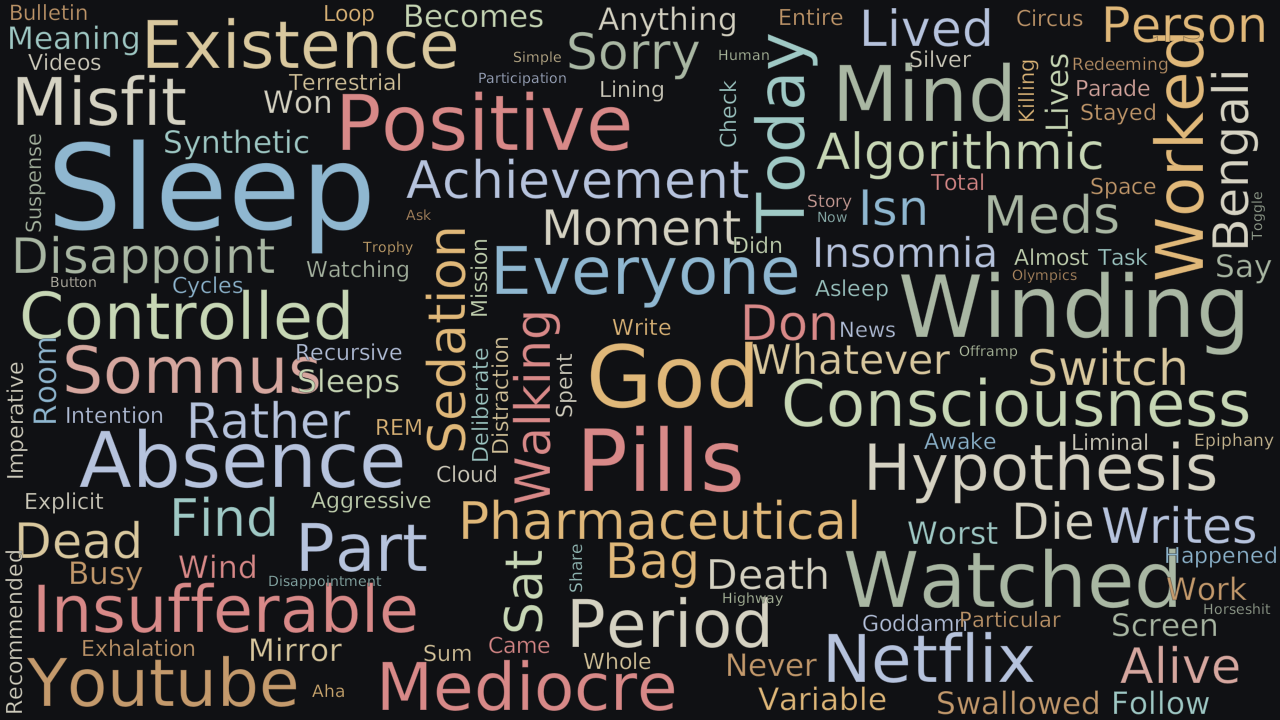
Word Cloud
Related reading
Selected by shared topics and section, with closer publication dates breaking ties.