Morbid Napping
Uses the speech voice supplied by your browser or device.

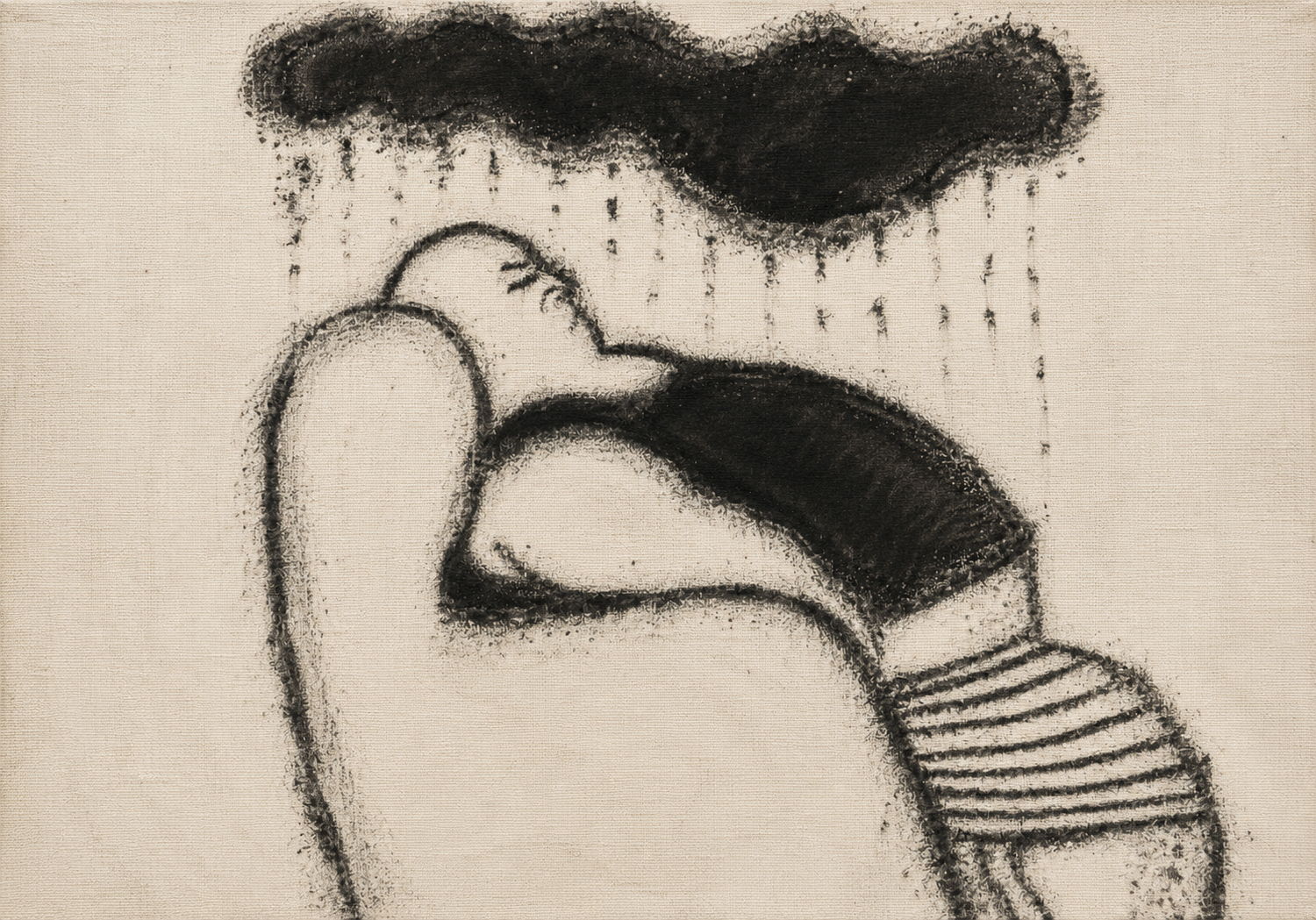
I have been conducting an experiment in voluntary oblivion, a longitudinal study with and a control group of zero, where the independent variable is consciousness itself and the dependent variable is whether I can make it to the toilet without weeping. The methodology is rigorous: wake, void, return, collapse. Repeat until the circadian rhythm forgets its own name and the sun becomes a rumor spread by traitorous curtains.
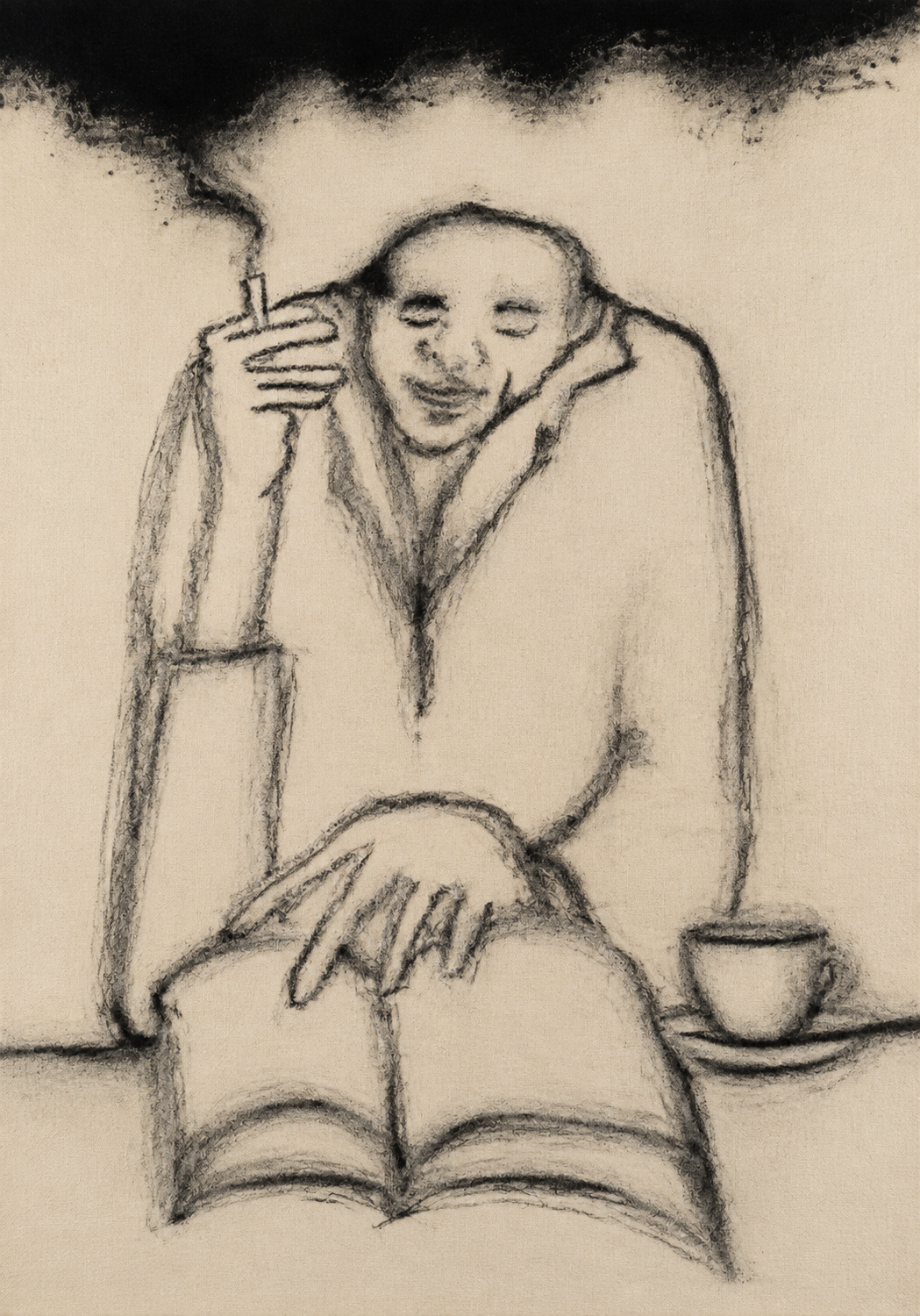
Sleep, that cousin of death—no, that flirtatious neighbor of death, the one who borrows sugar and never returns the bowl—has become my primary pharmacological intervention. Not because it heals, mind you. Because it abbreviates. It is the ellipsis between the agony of being awake and the agony of being awake again, a punctuation mark made of warm cotton and pharmaceutical-grade surrender. The ancient Greeks had Thanatos and Hypnos as twin brothers, which proves those Mediterranean bastards understood something fundamental: that the god of sleep and the god of death were running the same family business, just different branch offices. One offers a permanent solution, the other a renewable subscription model, and I am currently on the free trial of the latter, though I suspect the auto-renewal clause is written in fine print I am too exhausted to read.
My mattress, this rectangular purgatory purchased from Amazon for a princely sum of three thousand rupees—a sum that translates to approximately thirty-seven American dollars, which is what a New Yorker might spend on a moderately ambitious brunch, a brunch that I will never have because I am here, horizontal, in Calcutta, where the humidity enters your bones like a bad houseguest who refuses to acknowledge the hint of your yawns—this mattress, this monument to my own financial caution, has indeed performed as advertised. It has become a sarcophagus with soggy sponge, a slab where I practice the art of horizontal despair. There are no springs to creak in sympathy; there is only the slow, moist collapse of petroleum-derived foam that has surrendered where my torso rests, a depression within the depression, a topographical map of my own gravitational sadness. The sponge has caved in precisely where I cave in, as if the mattress and I are engaged in some perverse collaborative art project, a duo exhibition titled “The Physics of Giving Up,” where the medium is polyurethane and the message is “why bother.”
The humidity here is not merely moisture; it is moisture with a grievance, moisture that has read too much Camus and decided that absurdism is best expressed through the medium of fungal growth and the particular olfactory signature of a pillow that has absorbed approximately fourteen years of Bengali existential dread. And now this humidity has found an ally in my three-thousand-rupee sponge, which does not resist moisture so much as court it, romance it, invite it in for tea and then refuse to let it leave. The mattress is damp in a way that defies meteorology, damp with the particular dampness of a thing that has given up, that has looked at the monsoon and said “yes, I too am wet, I too am defeated, let us merge our dampnesses into a single soggy communion.”
The nightmares arrive like scheduled maintenance, the brain’s quality assurance department running diagnostics while the rest of me is off-duty. They are not the cinematic terrors of falling or chasing, no, these are bureaucratic nightmares, Kafka at the DMV, where I am forced to fill out forms in triplicate explaining why I deserve to continue breathing and the clerk keeps losing my paperwork. Or worse, the social nightmares, where I am at a dinner party—whose dinner party, why do I know these people, why are they all smiling with teeth that are slightly too large—and I am trying to explain my dissertation on healthcare outcomes while my pants have mysteriously migrated to my head and everyone is too polite to mention it, which is somehow more horrifying than if they had screamed. The horror of polite indifference, the terror of being seen through, of being the ghost at the feast who has forgotten he is dead.
But even these nocturnal committee meetings of the subconscious, even these REM-sleep tribunals where I am prosecuted for crimes I do not remember committing by judges who look suspiciously like my tenth-grade physics teacher, even these are preferable. Preferable to the waking state, that interminable coffee break between sleeps where the anxiety arrives like a train that is simultaneously late and early, a Schrödinger’s locomotive of dread that is both approaching and already here, its whistle a frequency that only my nervous system can hear, a sound that lives in the marrow and refuses eviction.
The etymology of anxiety, if we must play this game—and we must, because words are the only currency I have left, the only coins that jingle in my empty pockets—comes from the Latin anxietas, from angere, to choke, to strangle. The Romans knew. The Romans, those imperial bastards who built roads and aqueducts and the entire concept of institutionalized paranoia, they understood that anxiety was not a feeling but a physical act, a constriction, a hand around the throat that is your own hand but you cannot remember hiring it, cannot remember signing the contract that made you both victim and perpetrator. I choke, therefore I am. Descartes got it wrong, the French prick; it is not cogito ergo sum, it is suffoco ergo sum, I suffocate, therefore I exist, and the proof of my existence is the very act of gasping.
I wake for the toilet, that porcelain confessional where I make my brief, shameful offerings to the plumbing gods of Calcutta, and even this pilgrimage is fraught with the arithmetic of existence. How many steps from bed to bathroom? Seven. How many seconds of consciousness required? Forty-three, if I do not look in the mirror, if I avoid the narcissistic trap of self-recognition, if I pretend that the figure shuffling in the half-light is not me but some other depressed Bengali, some parallel universe Suvro who made better choices, who did not accumulate angst like a hoarder accumulates newspapers, who did not turn his past into a landfill of fear that now emits toxic gases at unpredictable intervals.
And then back to the mattress, back to the sarcophagus, back to the horizontal negotiation with time itself. Time, that bastard, that relentless creditor who compounds interest on interest, who turns the principal of my youth into the insurmountable debt of my middle age. I try to sleep through time, to default on the loan, to declare temporal bankruptcy. The mattress is my shelter from time’s collection agencies, its phone calls, its knocks at the door. Here, in this pocket of warmth that smells like unwashed hair and the particular despair of the unmotivated, time moves differently, or not at all, or in circles like a dog chasing its own tail, a dog that is also me, a dog that is also time, a Möbius strip of canine chronology.
I write these posts, these digital graffiti scratched into the walls of the internet where no one walks, where the only footprints are bots and algorithms and the occasional confused soul who stumbled here while searching for something else entirely. “How to make perfect biryani,” they typed, and instead they found this, this confession of a man who has forgotten how to want biryani, who has forgotten how to want anything except the cessation of wanting. I write because the alternative is a silence so complete it has density, mass, gravity. I write because if I stop, if the posts cease, if the cursor stops blinking its accusing blink, then the conclusion is foregone, then the only remaining variable is the method and the timing, and I am not ready, I am never ready, I am always in the process of not being ready, a perpetual state of readiness-unreadiness, a quantum superposition of future corpse and present coward.
The people I held close, the ones I let see the unedited version, the director’s cut with all the deleted scenes of vulnerability and need—they are gone, not dead, worse, they are living elsewhere, thriving perhaps, or perhaps they too have their own mattresses, their own sarcophagi, their own subscription services to Hypnos Incorporated. But I will never know, because I have performed the calculation, the risk-benefit analysis that every wounded animal performs, and the math is clear: strangers cannot hurt you because they do not know where to aim. The wall does not judge, the void does not gossip, the internet does not remember your birthday and then use it as ammunition in some future conflict. I talk to the wall, I write to the void, I confess to the algorithm, and in return I receive the illusion of conversation, the simulacrum of connection, the counterfeit currency of being heard.
And yet, and yet, and yet—there is the yet, the hanging participle of hope, the grammatical error that keeps the sentence from ending, the run-on that refuses the period’s finality—I write also for the future Suvro, the one who might, might, might look back at these posts from some vantage point of dubious recovery, some plateau of functioning that I cannot currently imagine but which I describe to myself in the language of fantasy, as others describe heaven or Narnia or a Calcutta without traffic. I write for him, that hypothetical bastard, that smug future self who has figured out how to be awake without wanting to file for existential bankruptcy, who has learned to bear the weight of his own consciousness without constantly checking for the emergency exits.
I write for the others too, the ones I will never meet, the ones who are also horizontal, also counting steps to the toilet, also conducting their own studies in the pharmacology of absence. You are not alone, I want to tell them, though I am alone, though we are all alone, though aloneness is the default setting and connection is the bug, the glitch, the beautiful error in the code. You are not alone in your aloneness, which is the only form of togetherness available to us, the solidarity of the sarcophagus, the fellowship of the mattress, the communion of those who have chosen sleep not as rest but as resistance, not as healing but as hiding, not as life but as the closest approximation to death that still allows for the possibility, however remote, however theoretical, of waking up tomorrow and finding that the anxiety has, for once, missed its train.
The posts continue. The cursor blinks. The mattress waits, its soggy depression cradling my depressed torso in a damp embrace that neither of us asked for but both of us endure. The humidity accumulates its grievances. And somewhere, in the space between sleep and waking, between the nightmare and the worse nightmare of being awake, I am still here, still writing, still defaulting on my loan to time, still choking, still existing, still suffocating my way through another day that I have abbreviated into a series of naps, a morbid punctuation, an ellipsis that refuses to end.
P.S. References: Homer, Iliad (Hypnos and Thanatos); René Descartes, Meditations on First Philosophy; Franz Kafka, The Trial; Sigmund Freud, The Interpretation of Dreams; the unwritten manual of Bengali existential dread, available at all good bookstores and most bad mattresses.
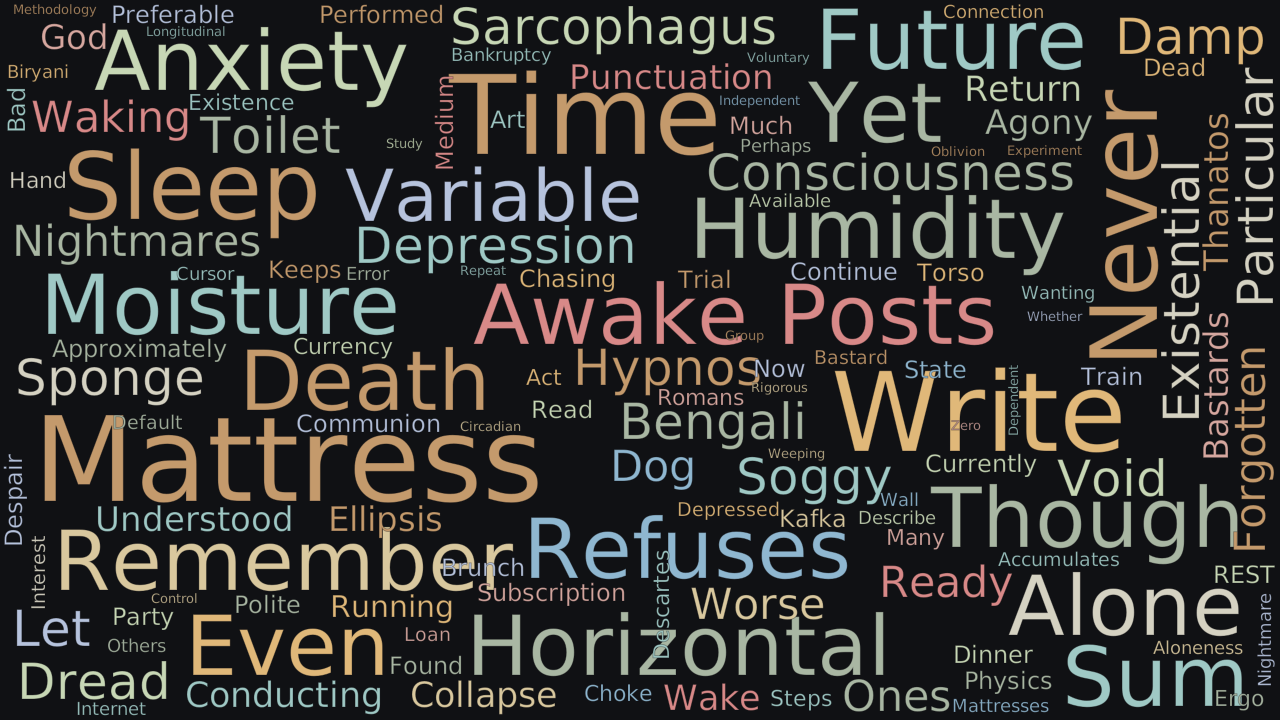
Word Cloud
Related reading
Selected by shared topics and section, with closer publication dates breaking ties.