Dread and the Metastatic Mind
Uses the speech voice supplied by your browser or device.

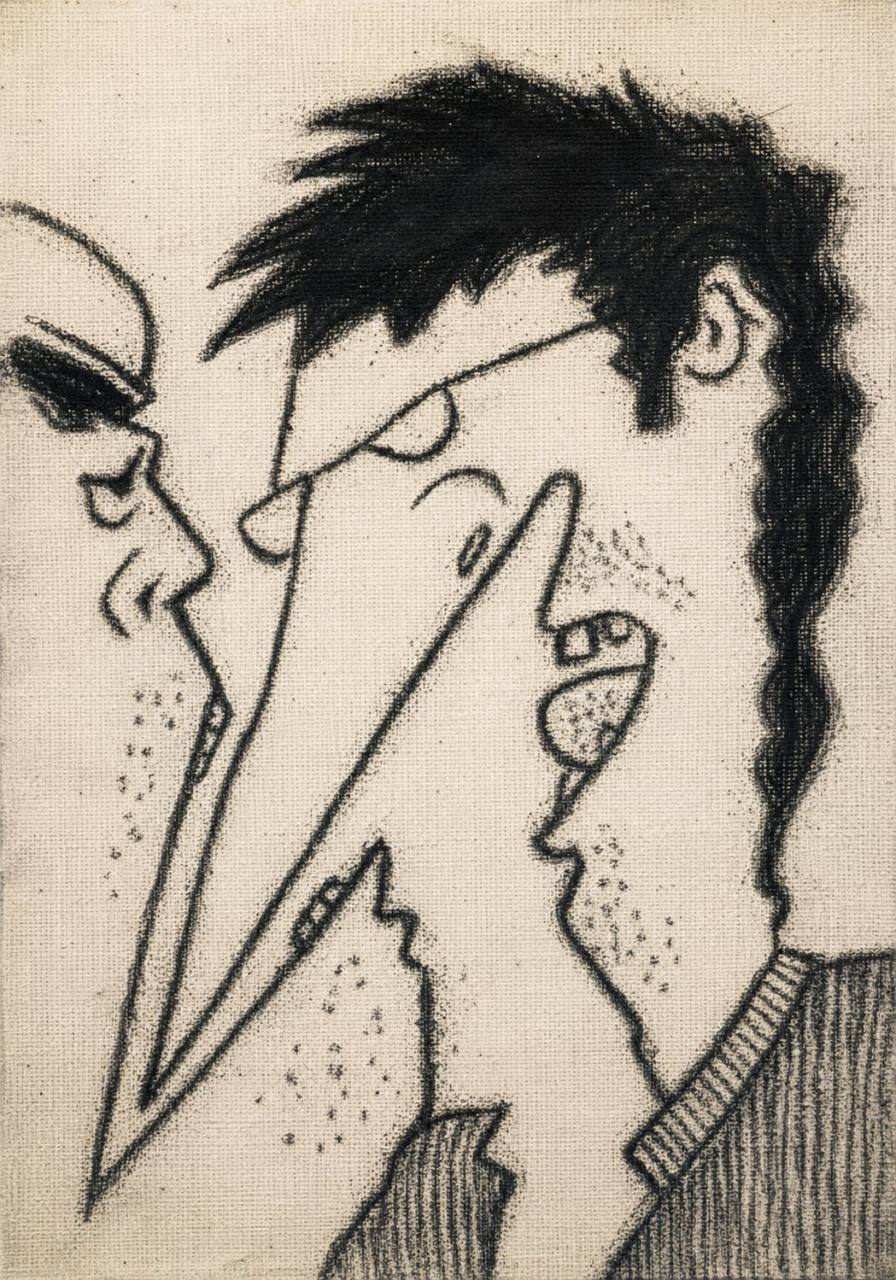
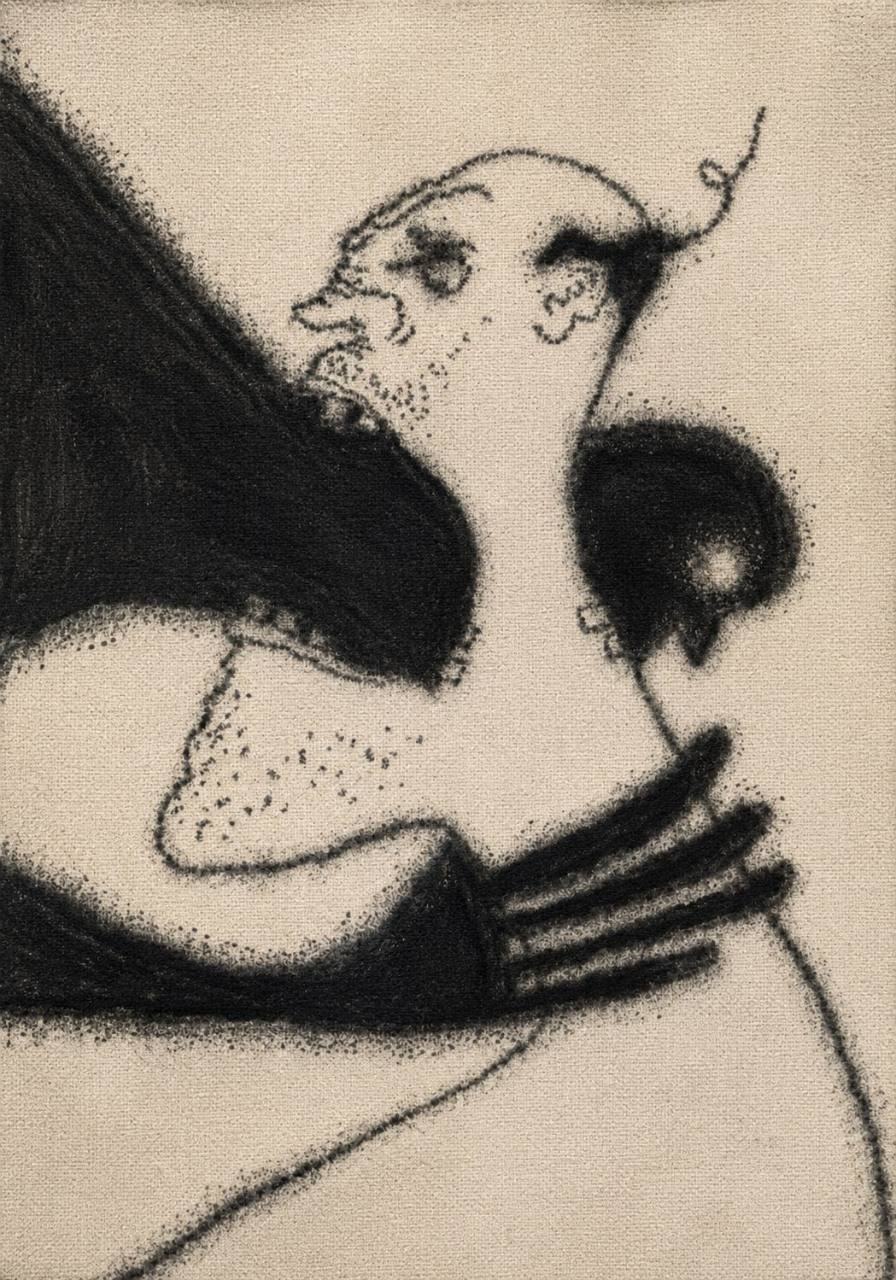
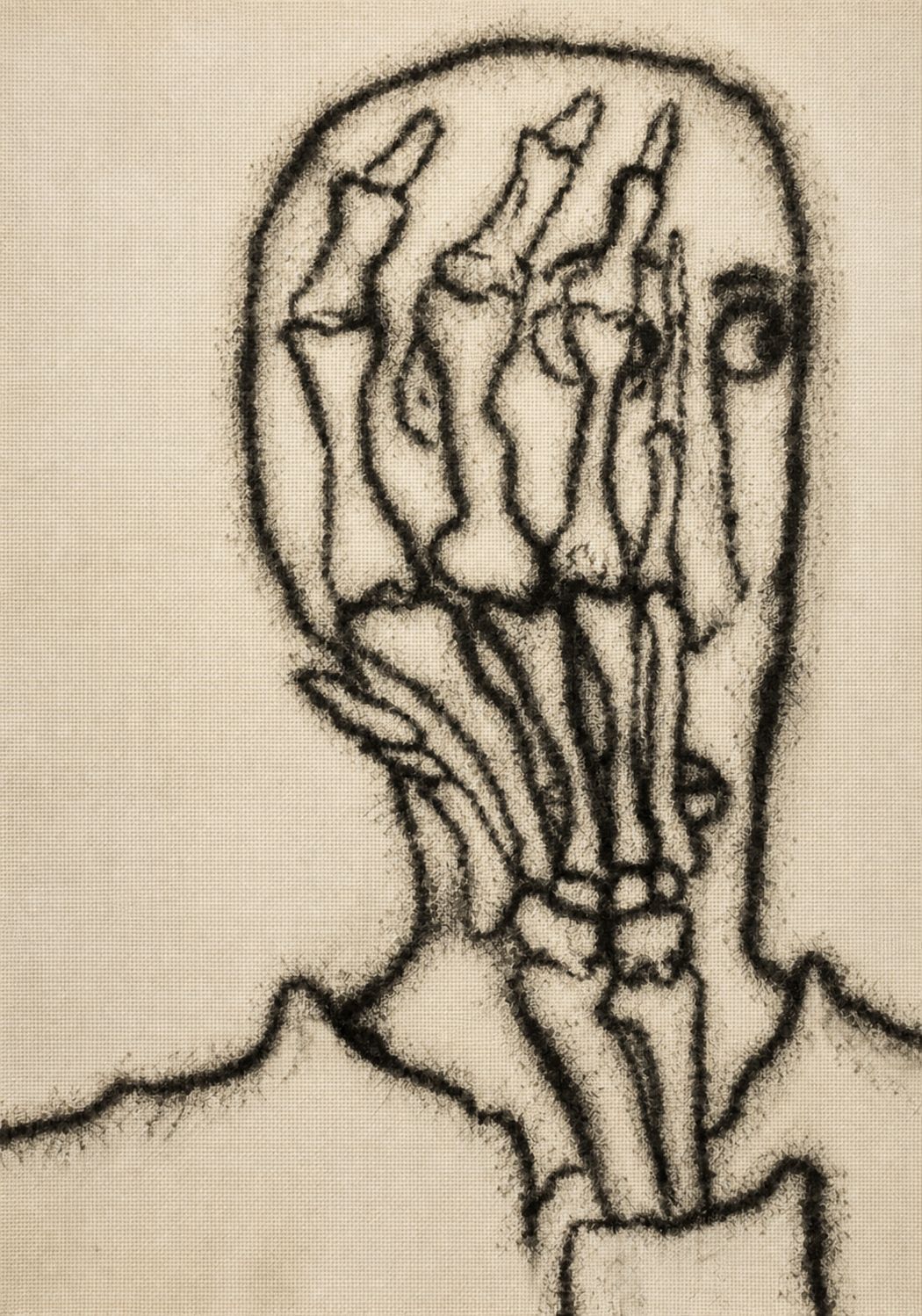
The retainer is late. The consulting payment is late. The sun, that fraudulent celestial bill collector, rises and sets on a schedule I have not honored in years, and I wake not to dawn but to the metastatic bloom of dread in my chest, a tumor of worry that started as a single cell—a missed invoice, a delayed wire—and has now colonized every lobe of my consciousness like a cancer of the possible.
I am a hikkikimori, a Bengali variant, a subspecies adapted to the humid entropy of Calcutta, where the air itself seems to conspire against ambition, where the fan rotates with the resigned rhythm of a bureaucrat stamping forms that will never be read. My circadian rhythm is not a rhythm at all; it is a roulette wheel, a carnival game of sleep and waking where the house always wins and the prize is consciousness itself, that most unwelcome of jackpots. I sleep when I collapse, I wake when the dread becomes too loud to ignore, and the sun—oh, that blazing, indifferent, nuclear-powered son of a bitch—has nothing to do with it. He keeps his hours, I keep mine, and never the twain shall meet, except in the occasional accidental collision that leaves me blinking at noon, wondering what year it is and whether my bank account has achieved the mathematical sublime of zero.
This is not about waking up early. This is not about the virtue of dawn, that hour beloved by charlatans and CEOs, by those who would have you believe that success is merely a matter of rising before the poor. I have risen before the poor, I have risen after the poor, I have risen precisely when the poor are eating their lunch, and in none of these configurations have I found the promised land of financial security. The poor, at least, have the dignity of knowing where their next meal comes from, or the tragic certainty of knowing it does not. I exist in the liminal space of the white-collar precariat, where the money is coming, probably, maybe, the client said next week, the client said the check is in the mail, the client said the CFO is reviewing it, and each excuse is a metasta—yes, there it is again, that word, that medical metaphor I cannot escape because my worry has become pathological, has become literal, has become a tumor of the imagination that grows in the Petri dish of my solitude.
Metastasis: from the Greek meta, beyond, and stasis, standing. To stand beyond, to stand where one should not stand, to colonize the liver when one began in the breast, to colonize the mind when one began in the inbox. The etymology is a comfort, in its way, because it reminds me that language itself is a history of fumbling, of Greeks and Romans and medieval scholars stumbling toward precision with words that were never quite adequate to the horrors they described, and so they built compound words, frankenwords, linguistic chimeras, and we inherited them and pretended they were precise, pretended they were medical, pretended they were science, when really they were just the best we could do with the tools at hand, just as my bank balance is the best I can do with the tools at hand, and the tools at hand are a laptop, a fraying nervous system, and the delusion that my thoughts, vomited onto a blog that no one reads, constitute a form of labor that the market will eventually recognize and remunerate.
No one reads this. This is the beauty and the terror of it. I write into the void, and the void, in its infinite courtesy, does not write back. It is a diary that happens to be public, a confession booth without a priest, a toilet stall without the poetry of previous occupants. And yet, and yet, sometimes a post leaks, sometimes a sentence escapes the containment field of my skull and finds its way to another skull, another Bengali bag of unkempt ugly brown skin, another hikkikimori rotating in their own circadian roulette, and for a moment there is communion, there is the terrible intimacy of shared dread, there is the recognition that we are all, in our way, metastasizing, spreading our worry beyond the boundaries of what we can control, colonizing the future with the cancer of our imagination.
The AI is coming. The AI is here. The AI is introducing noise into lives that did not need more noise, that were already symphonies of static, already orchestras of anxiety playing at fortissimo. I worked in healthcare research for fifteen years in the United States, fifteen years of navigating the Byzantine corridors of institutional review boards and p-values and the polite fiction that we were helping people, and now I watch as algorithms eat the jobs I once performed, as large language models generate the reports I once wrote, as machine learning models predict the outcomes I once predicted, and I wonder if my entire career was a preamble to obsolescence, a long prologue to the main act of my own irrelevance.
The noise, the noise. Shannon’s information theory tells us that noise is what interferes with the signal, that entropy is the enemy of communication, and yet here we are, drowning in a sea of artificial signal, of generated content, of synthetic thought, and the real signal—the retainer, the consulting payment, the simple human need to exchange labor for sustenance—is lost in the cacophony. Claude Shannon, that beautiful, chain-smoking, juggling genius, defined information as the reduction of uncertainty, and yet the AI has become an engine of uncertainty, a perpetual motion machine of doubt, generating not knowledge but its simulacrum, not understanding but its hollow twin, and we are expected to compete with this, to out-signal the noise, to prove our humanity in a Turing test we never agreed to take.
I have a whole month ahead. A whole month of unknowns, of invoices in limbo, of clients who may pay and clients who may not, of the slow-motion freefall that is freelance existence in the age of algorithmic disruption. The dread is not rational, or rather, it is rational at its origin and irrational in its metastasis, a small worry that grew, that spread, that colonized, that became a system of its own, a secondary growth that threatens to eclipse the primary tumor of my actual circumstances. I am not starving. I have a room. I have food for a few days. The payments are late, not absent. And yet the worry does not respect these boundaries, these facts, these bulwarks of the rational; it grows, it spreads, it stands beyond, meta-stasis, and I am left with the phantom pain of poverty, the neuropathic itch of financial insecurity, the sensation of falling without the actual descent.
The white-collar job is a fiction we tell ourselves, a narrative of stability in a world that has never been stable, a story of meritocracy in a world that runs on nepotism and luck and the arbitrary cruelty of markets. I believed in this fiction for fifteen years, I performed my role in the theater of professional competence, I wore the costume and spoke the lines and collected the paycheck, and now the costume does not fit, the lines have been rewritten by a neural network, and the paycheck is late, always late, perpetually late, a mirage on the horizon of my bank statement that recedes as I approach it.
What is to be done? The question is rhetorical, or rather, it is a question I ask not expecting an answer but expecting the comfort of the asking, the ritual of the inquiry, the Socratic midwifery of thought that produces not knowledge but the awareness of ignorance, which is itself a kind of knowledge, a negative theology of the practical. I will write this post. I will publish it. No one will read it, or someone will, and in either case the act of writing will have been its own reward, its own therapy, its own small rebellion against the metastatic silence of my room in Calcutta, where the fan rotates and the humidity accumulates and the money does not come and the AI does not sleep and I do not sleep and the sun rises and sets on a schedule I have long since abandoned, a schedule that belongs to another world, a world of alarm clocks and commutes and the polite fiction that we are all in this together, when really we are each in our own solitary roulette, spinning, spinning, waiting for the ball to land.
After this, more worry. After the food runs out, more worry. After the payments come, if they come, more worry, because worry is a habit, a habitat, a home I have built for myself in the abandoned warehouse of my mind, and I do not know how to live elsewhere, do not know how to inhabit the present without the metastatic spread of anxiety into every corner of the possible. We will see. We will see what the month brings, what the algorithms bring, what the clients bring, what the dawn brings when it comes, if it comes, to a man who no longer recognizes its face.
P.S. References: Shannon, C. E. (1948). “A Mathematical Theory of Communication.” Bell System Technical Journal, 27(3), 379–423. For the concept of metastasis, Hippocrates, Corpus Hippocraticum, though he called it karkinos, the crab, for the way it spreads its claws into healthy tissue, a metaphor that has outlived every treatment.
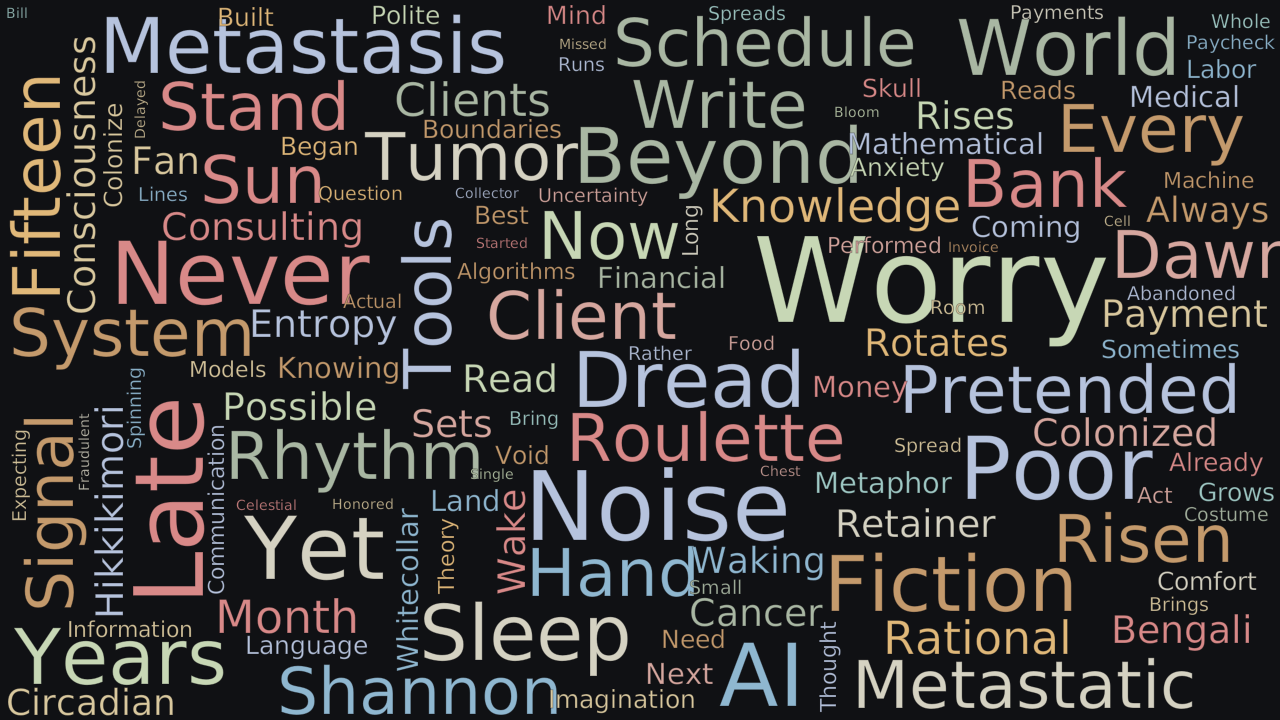
Word Cloud
Related reading
Selected by shared topics and section, with closer publication dates breaking ties.