Rain Palimpsest
Uses the speech voice supplied by your browser or device.

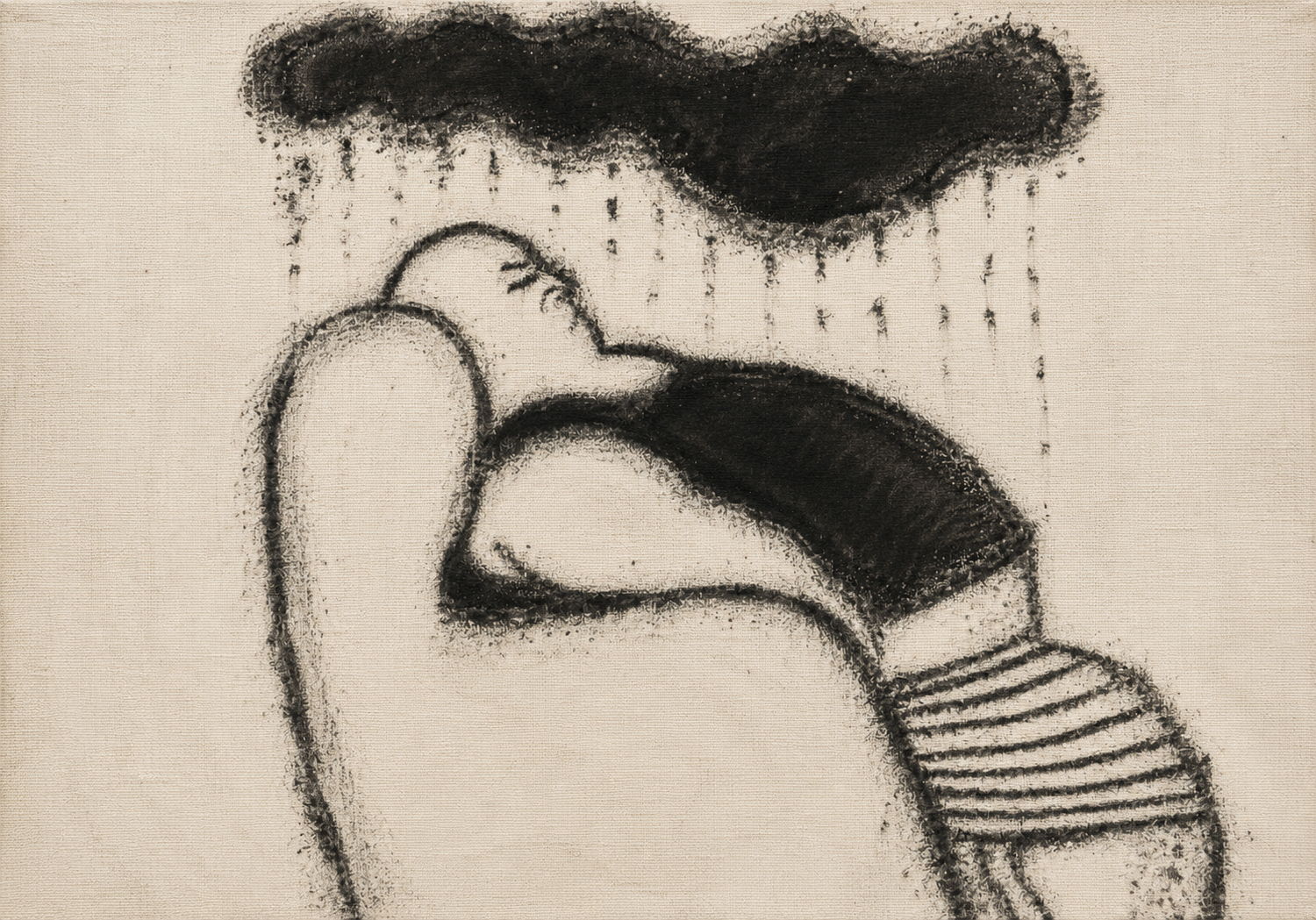
The rain in Calcutta does not fall. It prosecutes.
It arrives with exhibits, affidavits, moist envelopes, fungal footnotes, and that old colonial ceiling-fan laziness of weather which says: here, defendant, sit inside your damp skull and answer for yourself. The sky turns into a grey accountant, the windows sweat like guilty clerks, and my mind, that cracked municipal drain of a thing, begins again its little opera of doom. Not sadness exactly. Sadness is too clean a word. Sadness has a violin. This has a blocked latrine of metaphysics, a committee meeting in a flooded basement, a cerebral sewer-monsoon where every thought wears a wet lungi and claims it has found the final solution.
The final solution, naturally, is always my disappearance.
How elegant. How economical. How magnificently idiotic. The brain, which can contemplate quarks, rainfall, Sanskrit grammar, cardiology billing codes, and why Americans put twelve kinds of cheese into a sandwich and still call it lunch, suddenly becomes a third-rate insurance clerk with one rubber stamp: vanish, vanish, vanish.
Not die, mind you. The thought is usually more cowardly and more poetic than that. It says disappear. Evaporate. Become administratively unavailable. Fold yourself into the damp paper of the universe. Let the suffering end inside and outside, as though the world were a bad meeting and I could simply click Leave.
A lovely theory, except the theorist is a chemically unstable pudding wearing spectacles.
Depression comes to me with enthusiasm. That is the insulting part. It does not come like an exhausted beggar. It comes like a consultant with a deck. It has bullet points, which I resent. It has urgency. It has a plan. It says this time the evidence is conclusive. This time the rain means something. This time the heaviness behind the eyes is not merely weather, sleep, inflammation, loneliness, serotonin’s municipal strike, or the usual neurochemical donkey-cart collapsing in the arterial traffic. This time, it says, the verdict is metaphysical.
And because I am educated enough to be dangerous to myself, I begin cross-examining the gloom and also secretly employing it. I ask what it wants. I ask why now. I ask why the rain gives it confidence. I ask whether the body is sad first and the mind writes literature after, or whether the mind, that pompous damp babu, writes a tragedy and the body obediently floods the stage.
There is, in the old word, rumination. From the Latin ruminare, to chew the cud. Cows do it with grass. I do it with myself. The cow at least gets milk out of the arrangement. I get a philosophical hairball, a grand bolus of mental cud, chewed and rechewed until every memory becomes soluble, every future becomes infected, every neutral object becomes evidence. Rain on the road. Evidence. Silence in the phone. Evidence. A headache leaving behind its greasy fingerprint. Evidence. A day passing without result. Evidence. I am not thinking now; I am being thought by a diseased chewing machine.
And yet science, inconvenient and unsentimental science, refuses to let the drama have the whole stage.
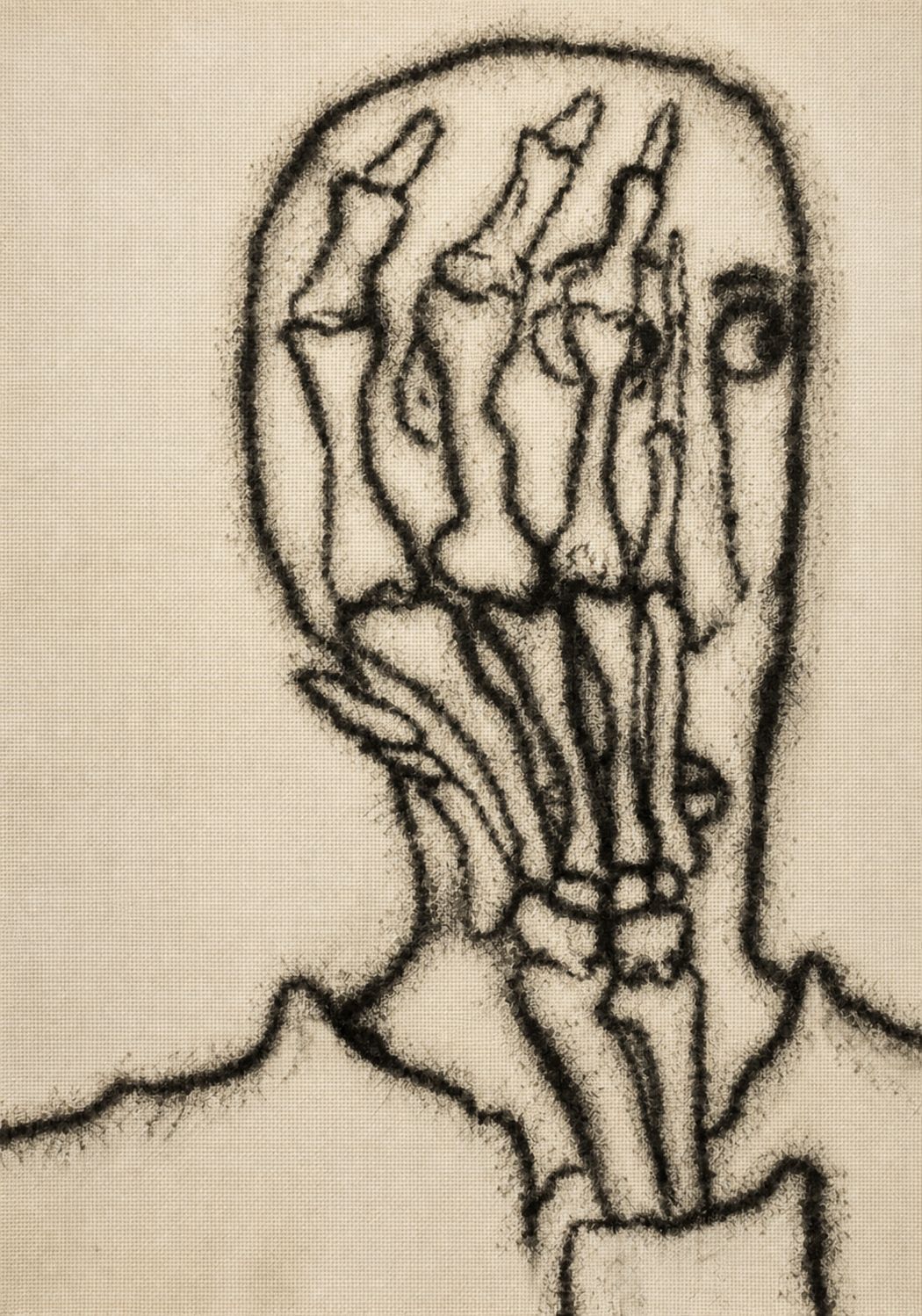
Because the mind is not a ghost in a skull-shaped temple. It is meat doing weather. It is electricity in soup. It is Bayesian inference performed by a tired organ with poor lighting and no union protection. It predicts, it compares, it updates, it misfires. The brain is not built to be happy; it is built to keep the organism from being eaten, betrayed, frozen, starved, rejected, poisoned, humiliated, or left behind in the social jungle like a cracked clay cup. It overdetects danger because, in evolutionary terms, the ancestor who mistook a shadow for a tiger merely looked foolish, while the ancestor who mistook a tiger for a shadow became an anecdote inside the tiger.
So my brain, being a dutiful ancestral nuisance, hears rain and says: cave. It hears silence and says: exile. It hears fatigue and says: collapse. It hears despair and says: theorem.
But despair is not a theorem. It is a forecast.
And forecasts can be wrong.
That sentence is not pretty enough to cure anything, but it is sturdy enough to lean on for ten minutes, and ten minutes is sometimes civilization. A forecast is not a commandment. A feeling is not a fact. A conclusion produced inside a bad spell is not necessarily wisdom; sometimes it is merely a bowel-noise of consciousness dressed as prophecy. The wet orchestra rises, the conductor foams, the brass section blares annihilation, annihilation, annihilation, and somewhere in the cheap seats a bored statistician mutters, sample size too small.
There it is, my American education, returning at the worst possible hour with a clipboard.
In research, we were taught to distrust beautiful conclusions arriving from dirty data. Why should the inner court be exempt? If a model is trained on sleeplessness, pain, isolation, humiliation, heat, rain, unpaid bills of the soul, and a history of spells that always claim permanent authority while being temporary little tyrants, then the model will overfit. It will find patterns in static. It will convert drizzle into destiny. It will produce a risk score with the confidence of a drunken magistrate.
The equation is almost insulting in its simplicity:
More formally, if the mind estimates the future from the current state, then in a depressive spell it samples from a corrupted distribution:
That little inequality is not a garland. It is a crowbar.
The rain keeps needling the shutters. Calcutta steams. The air smells metallic, fungal, historical, as if the city itself has been soaked in tea, sweat, tram wire, pond water, bureaucracy, and unresolved empire. I sit inside the weather and the weather sits inside me. The spell, being theatrical, wants a totalizing language. It wants always, never, finished, useless, gone. It loves absolutes the way damp walls love mold. It has no patience for partial verbs. It will not say I am suffering right now. It says I am suffering therefore existence is a badly stapled complaint form and the only dignified act is to resign from biology.
Biology, however, is indecorous. Biology does not accept resignation letters written during storms. Biology says drink water, reduce the immediate load, change posture, breathe slower, do not negotiate with the executioner inside the fog, wait for the chemistry to move one inch. Biology is annoyingly provincial. It believes in glucose, sleep, temperature, light, movement, salt, medication, time. The metaphysical peacock hates this. It wants grand tragedy. Biology offers a banana.
A banana is not a philosophy, but under certain conditions it is a rebuttal.
There is a line from the Bhagavad Gita, often polished into motivational marble until it becomes almost unusable: “उद्धरेदात्मनात्मानं नात्मानमवसादयेत्” — “Let a person lift the self by the self; let the self not sink the self.” I do not read that as a scented calendar instruction. I read it as an argument between two damaged clerks in the same skull. One self is drowning; another self must become the rope, however frayed, however ridiculous, however resentful of ropehood.
No angel descends. No cinematic thunder. Just the small undignified labor of not obeying the worst sentence the mind can manufacture.
That is the palimpsest of it. A palimpsest was parchment scraped and written over, older words still ghosting beneath the new. Every spell writes on me. Then recovery writes over it. Then the next spell writes again with its oily pen, claiming originality while recycling the same stale catastrophe in a new raincoat. Suffering accumulates like overwritten ink. But so does evidence of return. I forget this when the spell begins; the spell depends on my forgetting. It wants every relapse to feel like revelation, not recurrence. It wants to erase the archive in which I have felt the same rotten magnificence before and somehow not become its conclusion.
The archive says: you have been here.
The spell says: this is different.
The archive says: it always says that.
The spell says: but this time—
The archive clears its throat.
There is dark comedy in being betrayed by one’s own pattern-recognition machine. I can admire the cosmos and still be mugged by cortisol. I can know the amygdala is not a prophet and still feel its sweaty little sermon. I can understand mood-congruent memory, prediction error, learned helplessness, inflammatory hypotheses, circadian dysregulation, and all the grand neuropsychiatric plumbing, and still be reduced by rain to a sack of damp verdicts. Knowledge is not immunity. Knowledge is a match in a large wet room. Small flame, yes. But not nothing.
And not nothing is sometimes the whole empire.
So let the rain be rain. Let it beat the roofs and bully the afternoon. Let the depressive machinery grind its black gram into paste. Let the thought of disappearance arrive with its fake velvet, its undertaker perfume, its bureaucratic efficiency. I do not have to marry every thought that enters the room. I do not have to salute every uniformed emotion. I do not have to convert every chemical squall into scripture.
I can say, with as much dignity as a damp Bengali nervous system can muster: noted, you swollen little catastrophe. Sit there. Drip quietly. I am not taking policy advice from weather.
The agony inside is real. The agony outside may be real too, in the way unpaid time, failed systems, broken expectations, and social abandonment are real. But the proposed arithmetic is fraudulent. One person’s erasure does not balance the ledger of suffering. It merely lets the worst accountant in the skull falsify the books. Pain says subtraction. Life, being vulgar and stubborn, says wait, add one minute, add one glass of water, add one message not sent in panic, add one breath, add one lamp, add one refusal, add one more refusal after that.
Minute by minute, not heroically. Heroism is usually vanity wearing a helmet.
I prefer pettier survival. Spiteful survival. Scientific survival. The survival that says the data are incomplete, the model is biased, the rain is loud, the brain is chewing cud, and the conclusion can go drown itself in its own perfumed sludge.
I remain.
Not triumphantly. Not spiritually laminated. Not reborn under a beam of nonsense. I remain like a difficult footnote, like mildew with a library card, like an error term that refuses deletion, like Calcutta itself under rain: clogged, cracked, comic, unconquered, and still, somehow, still.
P.S. If this kind of thought begins behaving like an instruction rather than a passing storm, the correct response is not literary elegance but immediate human help: local emergency care, a doctor, a crisis line, or any nearby person who can sit in the room until the weather inside loses authority.
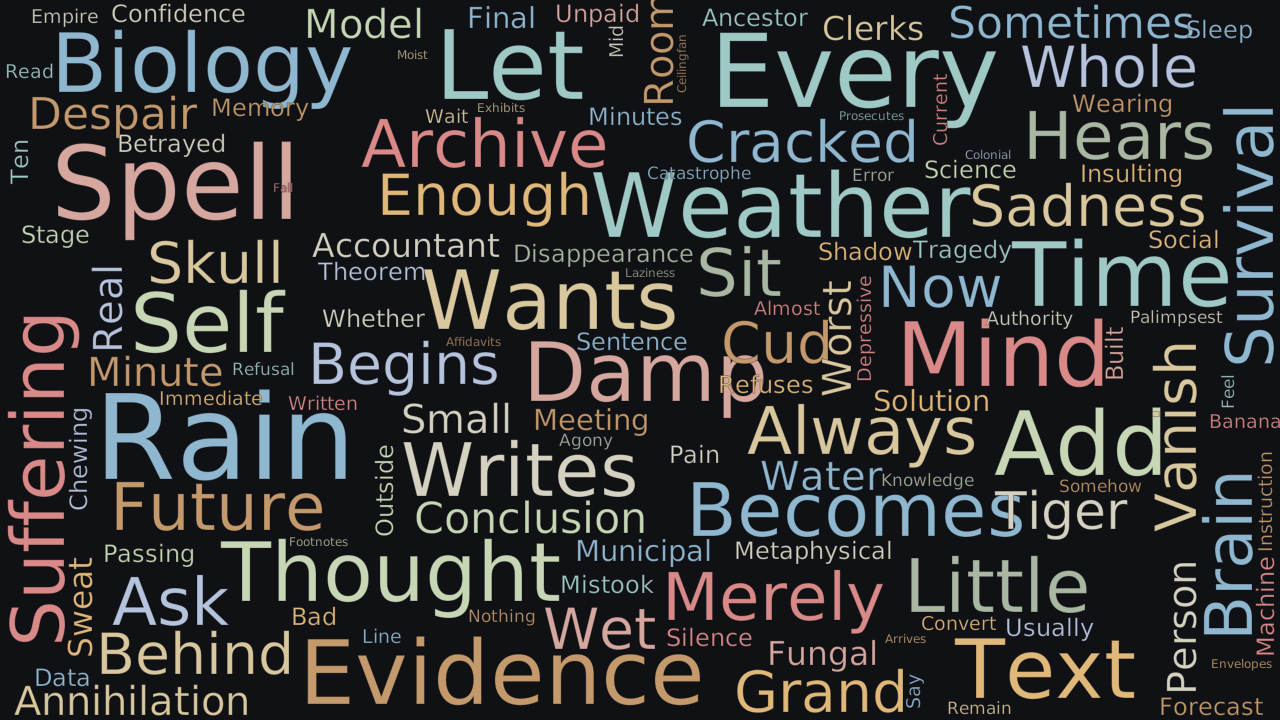
Word Cloud
Related reading
Selected by shared topics and section, with closer publication dates breaking ties.