Umbra and Penumbra
Uses the speech voice supplied by your browser or device.

The pills have turned my cerebrum into a Bengali sweet shop after monsoon—everything sticky, everything slow, everything vaguely smelling of rose water and impending diabetic coma. I swallow them anyway. I swallow them because the alternative is worse. The alternative is being awake in the three AM dark of a Calcutta summer, listening to my own thoughts ricochet off the walls like a drunken cosmic ray that forgot which star it came from, which is to say, I am a particle without a source, a shadow without an object, a penumbra pretending it knows what an umbra feels like.
Alexandra Kuznetsova plays something furious on the piano in my earphones. She is Gamazda. She is a Russian conservatory graduate who looked at classical piano and said, fuck it, let me play Metallica on a Steinway, and somehow that makes sense at three in the morning when the molasses is winning. The molasses is what the meds make of my sadness. First it is liquid, then it is thick, then it is stiff, then it is sleep, then it is hopefully, hopefully, hopefully—nothing. A nothing so deep and forgetful that tomorrow I will wake up and not remember this precise torment, though I will remember that there was a torment, which is the cruel arithmetic of mood disorders: you forget the flavor but retain the receipt.
I am, by any objective measure, a spectacular failure. I have no success stickers. I have no stickers at all. My sticker chart is a blank page that stares back at me with the judgmental silence of a Sanskrit sutra I never learned to read properly. I am not being eaten by a wild animal. I am not being scalded by volcanic fumes. I am not in immediate mortal danger unless you count the danger of being myself, which, let me tell you, is a full-time occupation with terrible benefits and no retirement plan. The wild animal is internal. The fumes are memories. The volcano is the past, and it is very much active, and it is very much located somewhere between my prefrontal cortex and my amygdala, which sounds like a real estate listing in hell.
Umbra. Penumbra. These are astronomical terms. They are also, conveniently, the geometry of my despair.
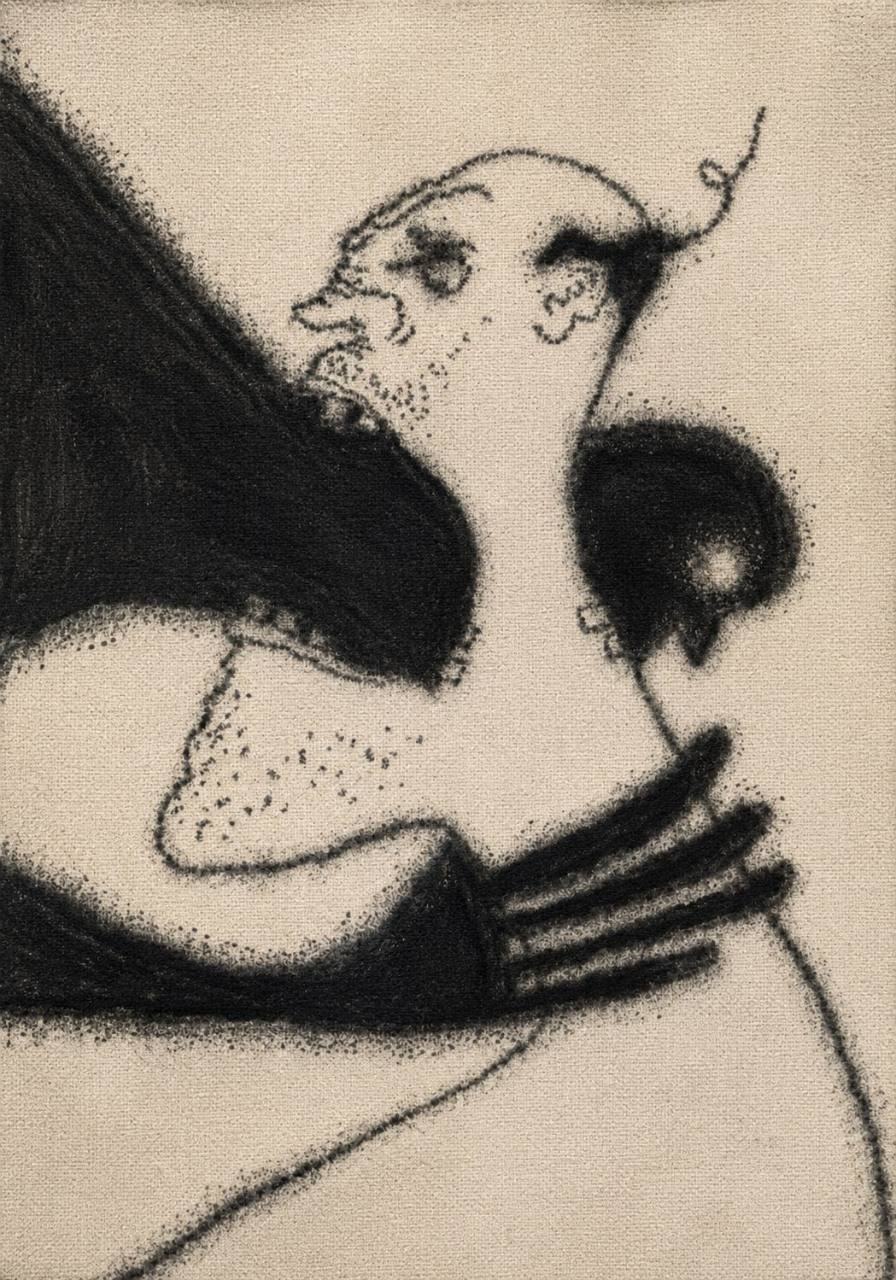
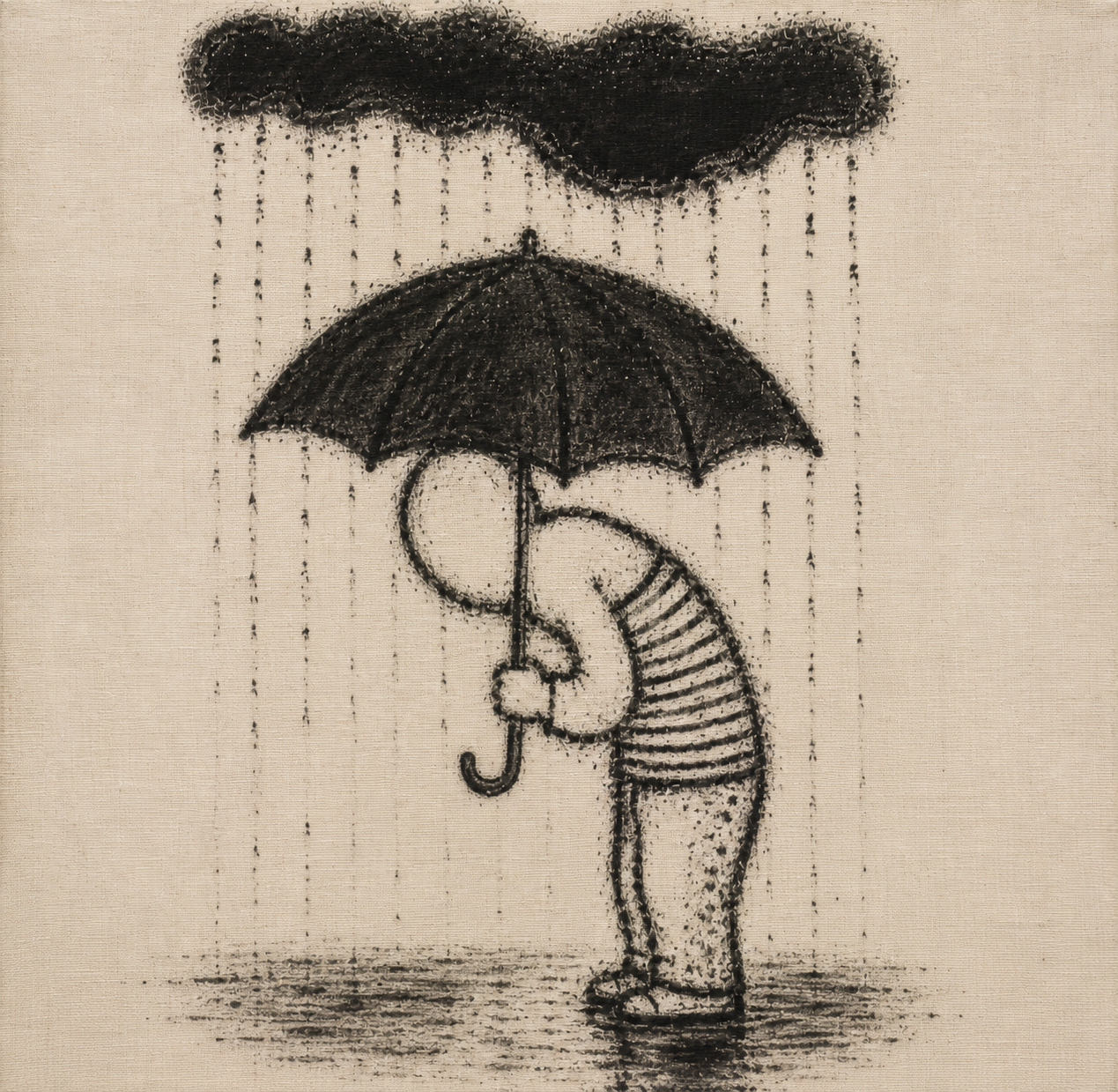
The umbra is the darkest part of a shadow, the region where the light source is completely blocked by the occluding body. Total eclipse. The penumbra is the lighter, outer part where the light is only partially blocked. Partial eclipse. The antumbra is the region from which the occluding body appears entirely within the light source, but that is a mouthful and I am already full of enough indigestible concepts. What I am saying is this: my depression casts shadows. The umbra is the void itself, the total absence, the moment when the moon swallows the sun and birds stop singing and dogs howl because they know, they always know, that something is wrong with the sky. The penumbra is the liminal horror, the almost-dark, the state of being in shadow but not fully in shadow, which is arguably worse because you can still see what you are losing.
The word umbra comes from Latin, meaning shadow or ghost. The Romans knew a thing or two about ghosts. They built their empire on roads that ghosts still walk. The word penumbra is Latin too: paene (almost) + umbra (shadow). Almost shadow. Almost dark. Almost dead. Almost alive. The almosts are where I live. I am a citizen of the penumbra, holding a passport stamped with almosts, paying taxes in almosts, dying by degrees in almosts.
I think about shadows a lot. I think about how Plato made his cave famous by having prisoners watch shadows and mistake them for reality, which is hilarious because Plato never met SSRIs or a Bengali mother or the particular horror of being educated in America and then returning to Calcutta where everyone asks what you are doing with your life and you have to invent answers that sound like penumbras of truth. I am doing research. I am writing. I am fine. I am fine. I am fine. The repetition does not make it true. The repetition makes it a mantra. The mantra makes it a lie I can almost believe.
The geometry of shadows is unforgiving. It is Euclidean. It is clean. It does not care about your feelings. If you are three meters from a light source and the occluding object is two meters from the light source, the length of your umbra can be calculated with simple similar triangles. There is no variable for despair. There is no constant for the particular weight of a childhood memory pressing against your sternum at four in the morning. There is no formula for the exact curvature of hopelessness. And yet. And yet I try to calculate it anyway, because calculation is control, and control is the illusion I cling to like a drowning man clinging to a floating logarithm table.
I am not in danger of being eaten alive. This is what I tell myself. This is the litotes of my existence: I am not dead, therefore I am alive, therefore I should be grateful, therefore my suffering is illegitimate, therefore I should shut up and eat my rice and be a good boy. The logic is airtight and suffocating. It is a sealed room where the oxygen is slowly replaced by guilt. I have food. I have shelter. I have Alexandra Kuznetsova in my earphones, a Russian woman who probably has her own shadows but plays through them with the precision of someone who trained at a conservatory while I trained at the school of fumbling through. I have pills that turn my thoughts to molasses. What more could I want? What more could anyone want? The answer, of course, is everything. The answer is to want wanting itself, to desire the cessation of desire, to be hungry for the end of hunger, which is the paradox at the heart of every depression that has ever been depressed, which is to say, all of them.
The ramshackle bridge. I keep coming back to the ramshackle bridge. It is a good image. It is a true image. It is the image of my mind stretched over sad terrible swirls and currents, and the bridge is lopsided, and the planks are rotten, and the ropes are frayed, and I am crossing it anyway because what else is there to do? Swim? I cannot swim. I have never learned. I am a Bengali who cannot swim, which is like being a fish who cannot drown, or a shadow who cannot find its object, or a penumbra who dreams of umbra-hood.
The currents below are not water. They are thoughts. They are the thoughts that come when the pills have not yet kicked in, or when they are wearing off, or when they decide to take a holiday without notifying me in advance. The thoughts say: you are worthless. The thoughts say: you have wasted everything. The thoughts say: everyone you have ever loved would be better off if you had never been born, which is a terrible thing for a thought to say, and an even more terrible thing to believe, and the most terrible thing of all is that sometimes, in the penumbra of the three AM dark, I almost believe it. Almost. Almost shadow. Almost dark. Almost gone.
But here is the thing about shadows. Here is the thing I keep forgetting and remembering and forgetting again. Shadows require light. You cannot have an umbra without a sun. You cannot have a penumbra without a source. The existence of the shadow proves the existence of the light, which is either a profound metaphysical insight or a cheap consolation prize, and I am too tired to tell the difference. I am too tired to do anything except listen to Alexandra play the piano very fast and wait for the molasses to thicken into sleep.
The pills are slow. The pills are so slow. They are slower than Calcutta traffic in July. They are slower than a Bengali bureaucrat processing a form. They are slower than my own metabolism, which is already legendary in its lethargy. But they work. Eventually. They work by not working immediately, which is the most frustrating kind of working, like a joke with a delayed punchline or a karma that arrives three lifetimes late. I take them and I wait and I wait and I wait, and the sadness slows, and the thoughts slow, and the world slows, and then I am asleep, and then I am forgetting, and then it is tomorrow, and tomorrow is always a different country with different customs and a different currency and sometimes, if I am lucky, a different weather.
I wake up. I do not remember the precise flavor of last night’s despair. I remember that there was despair. I remember that it was indescribable, which is a funny word to use in an essay that is attempting to describe it, but indescribable is not undescribable—it is merely that the description fails, and the failure is part of the description, and the whole thing is a Möbius strip of linguistic futility. I remember that I felt trapped. I remember that I felt incapable. I remember that I felt insecure, which is a word that sounds like it should mean something else, like maybe a type of insurance that covers the void where your self-esteem should be.
The bridge is still there in the morning. It is still ramshackle. It is still lopsided. But the sun is up, and the shadows have shifted, and the penumbra is smaller now, and the umbra is somewhere else, probably bothering someone else, probably casting its total darkness on some other poor bastard who is also listening to piano music and waiting for pills to work. I walk across the bridge. I walk carefully. I walk like a man who knows that bridges collapse, that planks rot, that ropes fray, but who walks anyway because the alternative is standing still, and standing still is its own kind of falling.
I am grateful. This is the paradox. I am grateful for the temporary escape. I am grateful for the pills. I am grateful for Alexandra Kuznetsova, who took her conservatory training and aimed it at rock and metal like a weapon against the dark. I am grateful for the earphones that deliver her fury directly to my temporal lobe. I am grateful for the sleep that forgets. I am grateful for the morning that arrives with its amnesia and its coffee and its relentless, stupid, beautiful insistence on continuing. I am grateful because gratitude is the only currency that works in the economy of depression, and I am bankrupt everywhere else.
The word gratitude comes from Latin gratus, meaning pleasing or thankful. It is related to grace. It is related to gratis, meaning free. Depression makes everything expensive. Depression charges interest on breathing. Depression is the worst loan shark in the history of metaphysics. And so when something is free—sleep, forgetfulness, the temporary cessation of angst—it feels like grace, even if it is pharmacologically induced grace, even if it is grace with side effects, even if it is grace that arrives three hours late and leaves too early and never calls afterward.
This is what I have. This ramshackle bridge. These slow pills. This piano music played by a Russian woman who probably does not know that somewhere in Calcutta, at three in the morning, her Metallica cover is keeping a bipolar brain from total eclipse. This penumbra that sometimes, on good days, shrinks to nothing and lets the light through. I do not have success stickers. I do not have a clear paved sturdy road. I do not have the life I imagined when I was young and stupid and thought that education in America would inoculate me against the shadows. What I have is this: the knowledge that the shadow moves, that the umbra is temporary, that the penumbra is not the whole story, that the sun is still there behind the moon, still burning, still indifferent, still beautiful in its indifference.
I take the pills. I wait for the molasses. I listen to the piano race ahead of my thoughts. I prepare for the sleep that will make me forget. And I tell myself, in the voice of a man who does not quite believe what he is saying but says it anyway because the alternative is silence, that tomorrow will be different. Tomorrow will be better. Tomorrow the bridge will hold. Tomorrow the currents will slow. Tomorrow the shadows will shrink. Tomorrow, tomorrow, tomorrow.
The word tomorrow comes from Old English tō morgenne, meaning at morning. It is the oldest promise in the language. It is the first lie we tell ourselves. It is the last truth we cling to. It is the penumbra of hope, the almost-light, the almost-shadow, the state of being almost okay, which is, on certain nights in Calcutta, with Alexandra Kuznetsova in your ears and pills in your blood and the three AM dark pressing against the windows, enough. It has to be enough. It is all we have.
P.S. “This too shall pass” is not in the Vedas, but it should be. The actual Sanskrit is closer to अनित्यं सुखं दुःखं च—anityam sukham duhkham ca—pleasure and pain are impermanent. Which is less poetic and more accurate, and therefore more depressing, and therefore more true.
Word Cloud
Related reading
Selected by shared topics and section, with closer publication dates breaking ties.