Rain of the Year
Uses the speech voice supplied by your browser or device.

The rain came. Not the first rain of September, because that would be meteorological fiction and Calcutta has enough fiction without my contributing to the drainage system, but the rain that mattered to me, which is perhaps the only honest definition of weather anyway: the weather that finally enters your room.
Not the monsoon’s grand theatrical entrance in June—that sodden, overhyped debutante who arrives with thunderous publicity and then spends months leaking on everything—but this late-September rain, steady enough to cool the walls, persistent enough to make the concrete stop radiating yesterday back at me. Alipore had a proper soaking. The temperature fell. The room exhaled. And this insignificant transaction between cloud and asphalt accomplished something magnificent: I switched off the fan. Then I switched off the geriatric air conditioner, whose compressor normally wakes from sleep like an asthmatic buffalo being informed that there is work to do.
And there it was.
Air.
Actual air.
Coming through an open window at a temperature that did not feel like the exhalation of a giant, diseased lung.
I sat there. I actually sat there doing nothing, which for a bipolar brain marinated first in Bengali examination culture and then in American productivity culture is approximately treason. The room was silent.
Well.
Not silent.
Never truly silent, because there is this high-pitched whine inside my skull, a personal mosquito no swatter can squash, the tinnitus I carry like a secret radio station transmitting continuously to an audience of one. But here was the obscene luxury of it: even the tinnitus was bearable because it was no longer competing with the ordinary orchestration of Calcutta—the horns, vendors, drills, engines, pressure cookers, television serials, dogs conducting territorial negotiations, somebody somewhere dragging a piece of furniture across concrete for reasons known only to Shiva, and the general acoustic phenomenon of a metropolis refusing to use its indoor voice.
The rain had not washed the noise away. Rain cannot perform miracles that large. But it had muffled the city, softened its edges, pushed the volume slider down from eleven to perhaps seven, and in the temporary vacancy I could hear myself not thinking.
That is rarer than silence.
In America this was easier. Too easy. You closed the windows, flicked switches, adjusted a thermostat, and civilization manufactured an atmosphere for you. Temperature became a setting. Noise became an insulation problem. Silence came laminated between drywall, carpeting, weather stripping, double glazing and several aisles of Home Depot. It was packaged silence, suburban silence, silence available in three finishes with a ten-year warranty.
Here silence requires negotiation with several million humans, several hundred thousand engines and occasionally God.
You cannot order it on Amazon.
You wait for the sky to take pity on you.
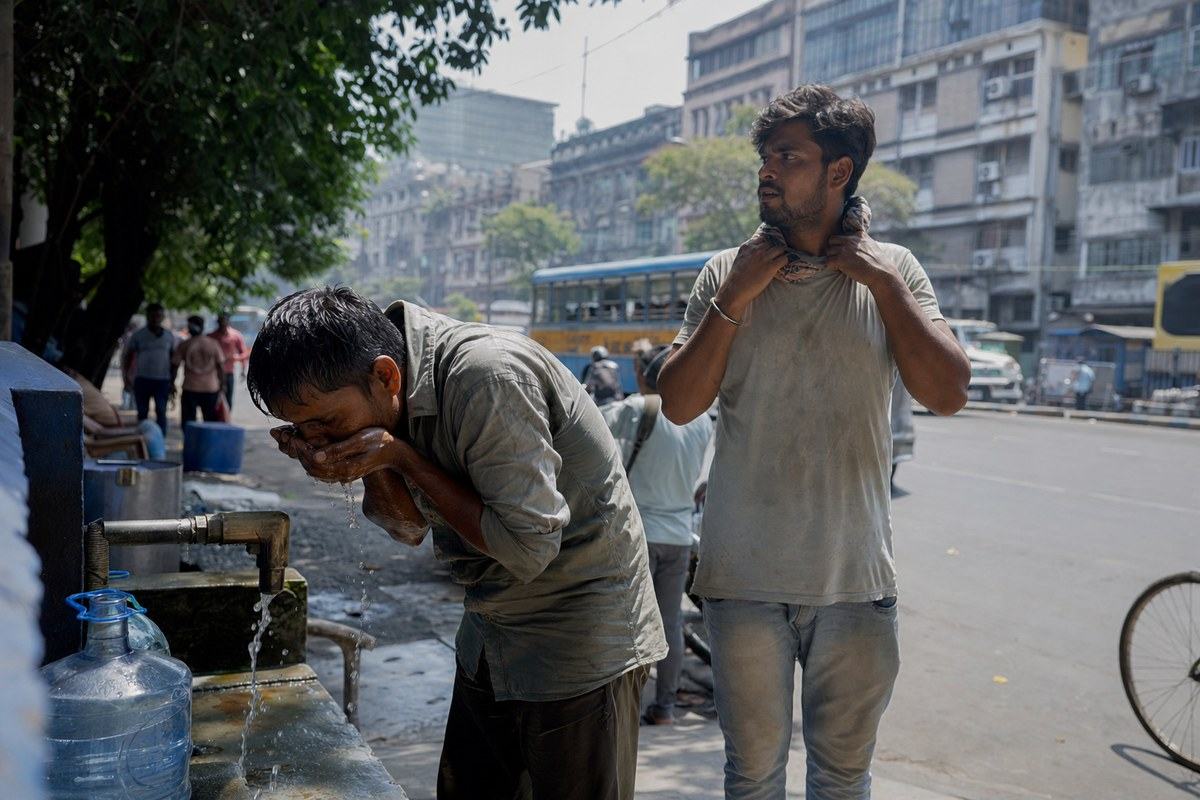
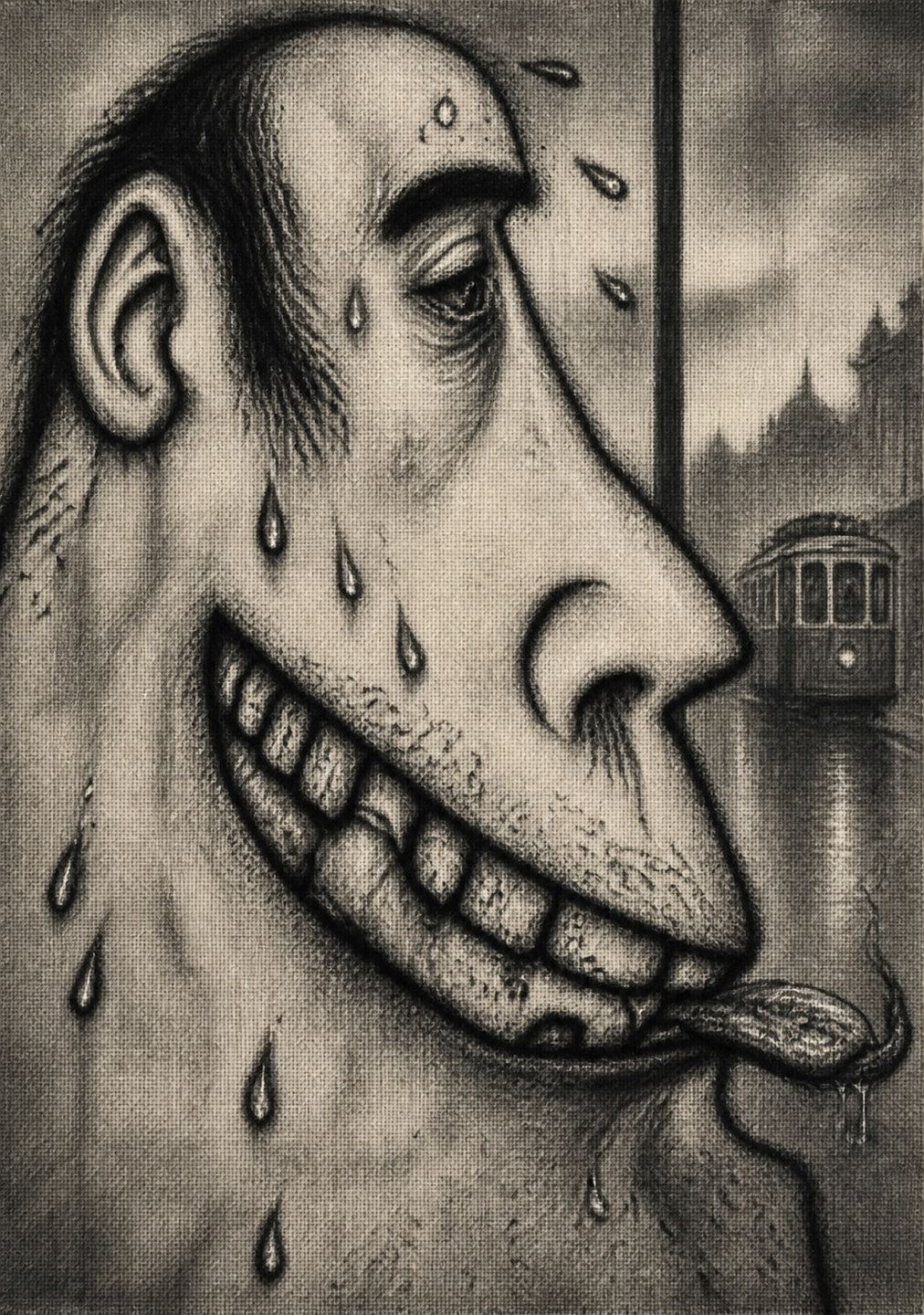
And when it does, when the temperature falls from “simmering resentment” to “merely uncomfortable,” the relief is almost indecent. Not the decorative relief of a wellness retreat where somebody rings a Tibetan bowl beside an infinity pool, but the real, guttural, mammalian relief of skin that has spent months sweating finally being told it may stop.
And naturally, being Bengali, I cannot enjoy this for more than twelve minutes without identifying the catastrophe concealed inside it.
Because I know the calendar.
The rains will withdraw. Autumn will perform its brief cosmetic surgery. Then comes what Calcutta calls winter, those few weeks when sweaters emerge at temperatures that would cause a Minnesotan to open a window, shawls are deployed with military urgency, monkeys appear on children’s woollen caps, and the city becomes genuinely pleasant enough to make you suspicious.
Then the air changes.
The colder months do not manufacture pollution from nothing. The pollution sources were there all along. What changes is the atmosphere’s willingness to carry our sins away.
Winds can weaken. The lower atmosphere becomes more stable. The mixing layer—the vertical depth through which pollutants are diluted—can become shallower, especially at night and in the morning. Sometimes temperature inversions help put a lid over the city. Emissions that dispersed more generously during warmer, turbulent weather now linger nearer the ground, accumulating like relatives who arrived for lunch and have quietly decided to stay until Tuesday.
Then the AQI begins acquiring personality.
India’s scale does not use the American progression I once knew. Here the Central Pollution Control Board gives us six categories: Good, Satisfactory, Moderate, Poor, Very Poor, Severe. These are wonderful names because they sound less like atmospheric toxicology and more like a Bengali school report.
Your son has received 387 in breathing.
Very Poor.
Needs improvement.
Parents please meet the atmosphere.
And every winter the newspapers rediscover PM2.5 with the astonishment of archaeologists uncovering Tutankhamun.
There will be graphics.
There will be red maps.
There will be pulmonologists under studio lights.
There will be photographs of schoolchildren in masks, traffic policemen wrapped in cloth, morning walkers marching heroically through an aerosol soup because apparently nothing must interfere with one’s constitutional right to cardiovascular exercise, including the cardiovascular consequences of the exercise.
There will be experts.
Panels.
Concern.
Action plans.
Citizens will ask how this is allowed to happen.
Politicians will explain that somebody else caused it.
Somebody else will explain that the weather caused it.
The weather, being unavailable for interview, will decline to comment.
And then summer will return.
The sky will look different. Dispersion improves. Rain periodically scrubs particles out of the air. The AQI often improves. The newspapers become interested in heat, elections, cricket, potholes, celebrity bowel movements or whatever emergency civilization has scheduled for that week.
And we will mistake reduced visibility of the problem for disappearance of the problem.
That is perhaps the great human cognitive defect: what is not dramatically visible becomes morally negotiable.
Particulate matter is almost designed to exploit this defect.
PM2.5 does not mean a particular chemical. It is a size category: particles with an aerodynamic diameter of 2.5 micrometres or less, a miscellaneous airborne bastard confederacy of soot, organic material, sulfates, nitrates, metals, mineral matter and other things produced directly or assembled chemically in the atmosphere.
A human hair might be fifty or seventy micrometres across. So you could line up twenty or thirty PM2.5-sized particles across its width, depending on the hair and the particles, although reality is messier than the diagrams because atmospheric particles are not obedient little billiard balls waiting to be photographed for a school textbook.
Their importance comes partly from where they can go.
Larger particles are more likely to be trapped higher in the respiratory system. Fine particles can penetrate much deeper into the lungs, reaching the alveolar region, and components of fine particulate pollution can enter the bloodstream and participate in inflammation and other systemic effects far beyond the lung itself. Epidemiology links both short- and long-term particulate exposure with respiratory disease, cardiovascular disease, stroke, lung cancer and premature death.
The WHO’s position is slightly more interesting than the slogan “there is no safe level.” It publishes guideline concentrations—its 2021 annual guideline for PM2.5 is 5 micrograms per cubic metre—but a guideline is not a magical biological border below which human lungs become invulnerable. Health effects have been observed at low concentrations, and there is little evidence for a neat threshold below which adverse effects simply vanish.
Nature, irritatingly, does not respect the convenience of our tables.
And where does Calcutta’s particulate matter come from?
Everywhere we have arranged combustion, friction, dust and chemistry.
Vehicles contribute, particularly to fine combustion particles and precursor gases. Industry contributes. Coal and other solid fuels used in commercial cooking and some households contribute. Open burning contributes. Road dust and construction matter greatly, especially for the coarser PM10 fraction. And then there is the part popular arguments tend to forget because it lacks a satisfying villain: secondary particulate matter, particles that were not emitted as particles at all but formed in the atmosphere when gases from different sources reacted and condensed into new material.
Pollution is therefore not one chimney to be dramatically shut down on television.
It is a system.
A recent Kolkata source-apportionment study found exactly the sort of inconvenient mixture that systems produce: dust important for PM10; combustion sources important for PM2.5; cooking emissions, including coal use at roadside eateries and some residential locations, showing substantial fine-particle contributions; tailpipe and industrial emissions varying by place and season; secondary particulate formation adding another layer of chemistry on top of everything humans emitted directly.
The atmosphere is doing post-processing.
We supply the ingredients. It cooks.
Winter merely becomes a particularly lousy exhaust fan.
Rain does the opposite, temporarily. Falling droplets remove some particles and soluble gases from the atmosphere, turbulence and changing weather alter dispersion, and for a little while the city seems washed—not purified, not redeemed, but rinsed.
There is a difference.
I remember America, where the air-quality index was usually something I could ignore unless wildfire smoke arrived or the weather service began issuing warnings. Here I am much more conscious of it. It becomes another number capable of negotiating with your day. Do I open the window? Do I walk outside? Is that haze humidity, aerosol, both? Is today’s pleasantly cool morning actually an atmospheric trap with good manners?
This is an absurd way to live, if one thinks about it long enough.
So naturally we stop thinking about it.
And the tinnitus remains.
It is my constant companion, my internal soundtrack, a tone generated somewhere in the machinery of hearing and perception without requiring any corresponding sound in the room. It is invisible, persistent and inaccessible to everybody else. Pollution makes an almost too convenient metaphor for it: something you may not see, something another person may not notice, something whose invisibility does not constitute absence.
Except the metaphor eventually eats itself.
The tinnitus is in me.
The pollution is also in me.
That is the problem with lungs. They are philosophically disastrous organs. They destroy the comforting fiction that there is a clean boundary between the self and the world. Every few seconds you take a piece of the outside and make it temporarily inside. Molecules cross. Particles deposit. Oxygen moves into blood. Carbon dioxide moves out. The city enters you and you return yourself to the city, breath after breath, whether either party has consented.
The rain has eased now.
The fan will eventually go back on.
The geriatric AC will clear its throat and report for another shift.
The horns will reclaim their constitutional rights.
But for a few hours I had this astonishingly primitive luxury: cool air entering through a window.
No compressor.
No blades turning above my head.
No machine negotiating between my skin and the atmosphere.
Only the tinnitus, softened by rain, and the wet city outside.
Perhaps that is why today felt less like weather and more like New Year’s Day.
Not January 1, that bureaucratic reset button invented so humanity can drink too much on December 31 and promise itself abdominal muscles by February. I mean the older sort of new year, before calendars became spreadsheets: the moment when the world changes phase and the body notices before the intellect does.
The rain fell.
The walls cooled.
The machines stopped.
For a little while the city was quieter than the thing inside my skull.
And I was there to hear it.
Or not hear it.
Which, for once, was almost the same thing.
P.S. References: India Meteorological Department, Kolkata-Alipore weather observations and forecasts, September 2026; WHO Global Air Quality Guidelines, 2021; Central Pollution Control Board, National Air Quality Index; West Bengal Pollution Control Board / TERI, Air Pollution Emissions Inventory, Source Apportionment and Atmospheric Carrying Capacity Study of Kolkata; recent peer-reviewed studies of winter PM2.5 and source apportionment over Kolkata.
Word Cloud
Related reading
Selected by shared topics and section, with closer publication dates breaking ties.