Diwali: The Festival of Darkness
Checking article narration…

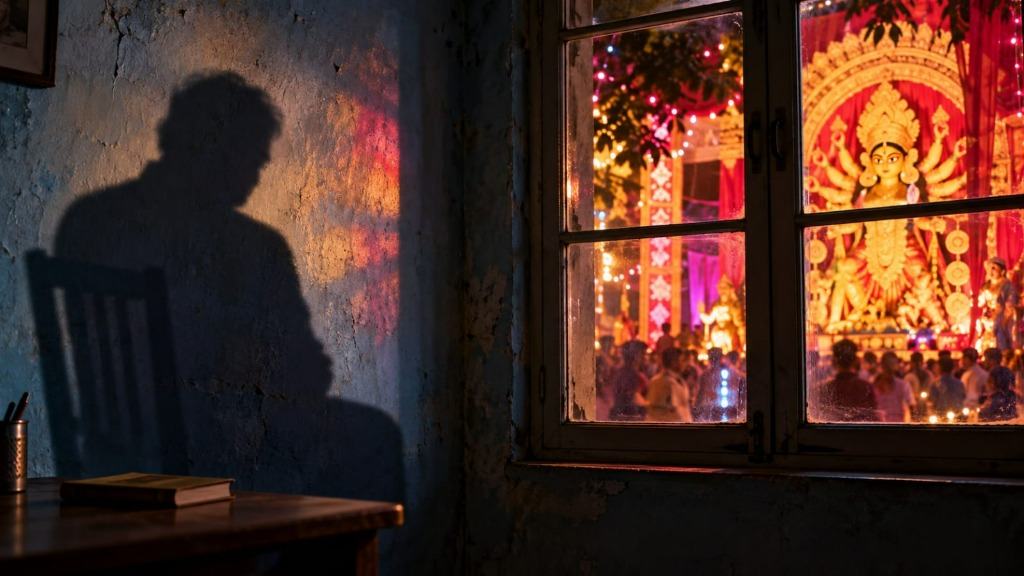
I am told, by people who seem to have a vested interest in my cheerfulness, that Diwali is the festival of lights. Rows of earthen lamps, little orange tongues licking the darkness, the victory of good over evil, all that mythological jazz. I nod. I smile the smile of a man who has just been handed a pamphlet about a religion he does not remember joining. Then I close my door, swallow my chemical peace, and settle into the festival of darkness, which is the only version of this holiday that has ever been honest with me.
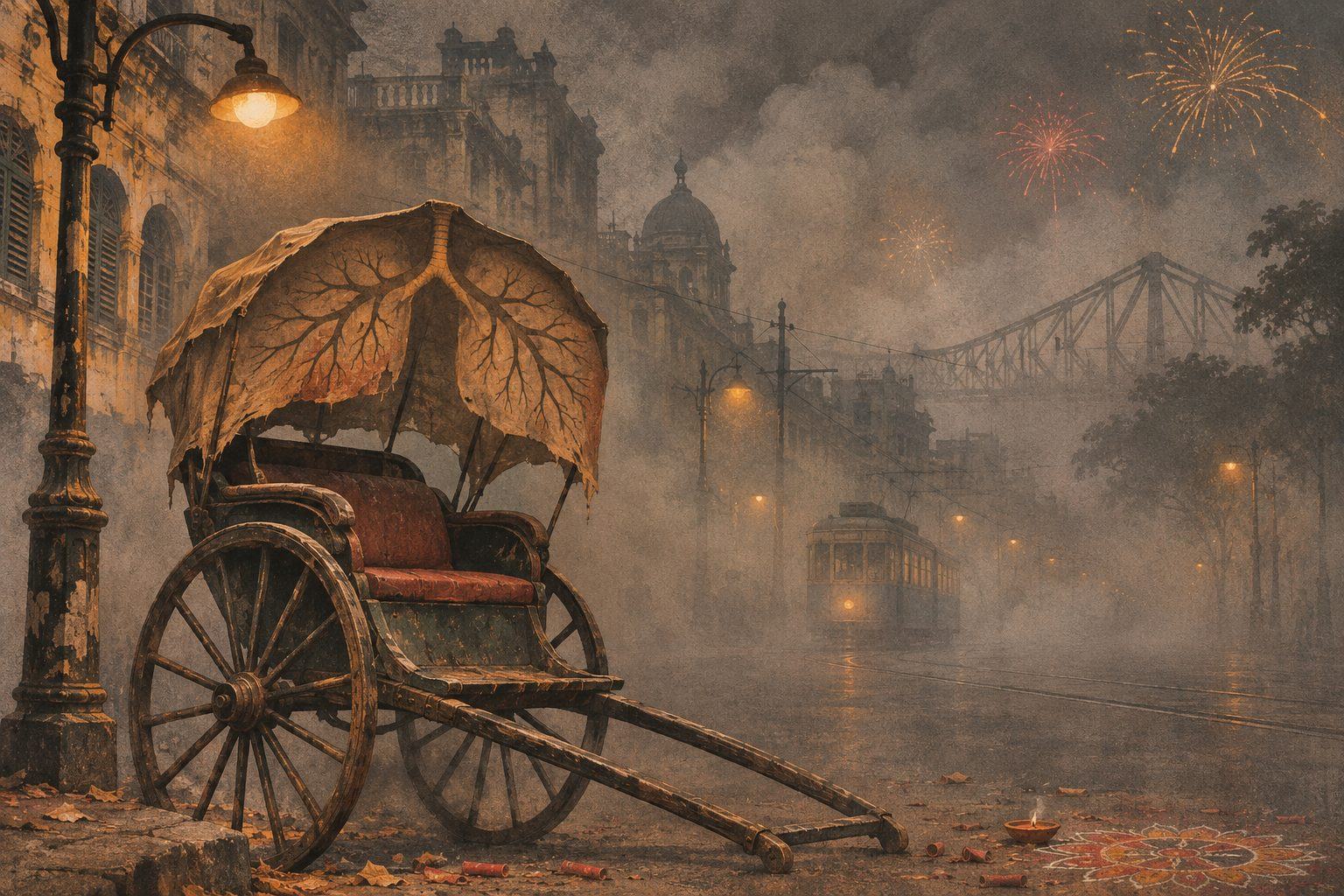
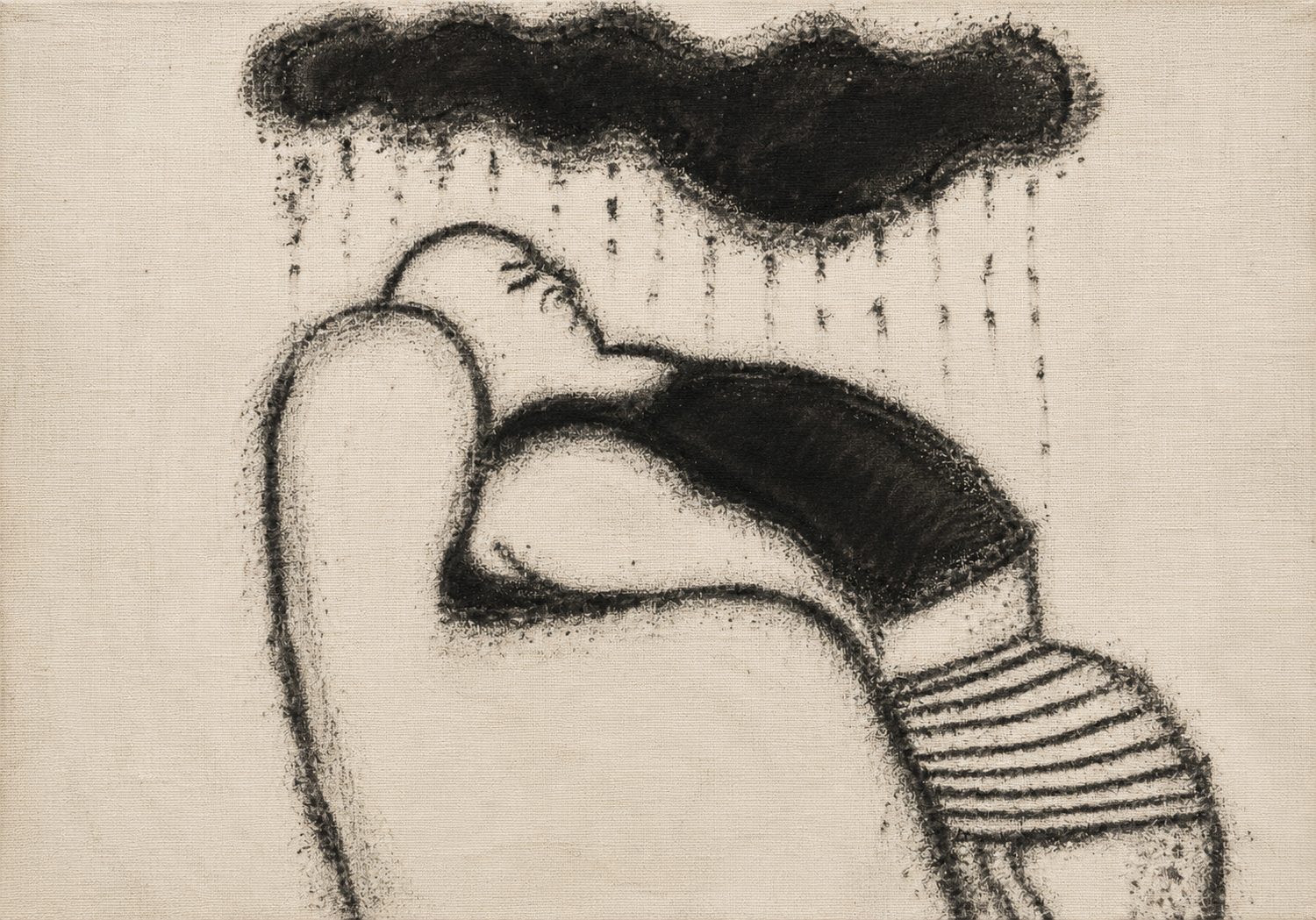
The pills are soporifics, which is a polite, Latinate way of saying they are supposed to knock the consciousness out of you before the consciousness does something regrettable. I take them with the devotion of a priest performing ablutions, except my ablutions are aimed inward, at the greasy engine of my own despair. Bipolar type two, the doctors call it, which sounds like a sequel nobody asked for. Bipolar one gets the fireworks, the mania, the spending sprees, the charming insanity that gets you invited to parties. Type two gets the depression, the long stay in the basement of the soul, the subscription to sadness that renews automatically. And so I lie here, in a room in Calcutta, where the air outside has turned into a soup of particulate matter and unexamined mythology, and I try to sleep through the noise of a nation celebrating its own luminous delusion.
The air. Let us talk about the air, because nobody else seems to want to. Every October, the Air Quality Index of this city climbs to numbers that would make a coal mine feel smug. We burn crackers, because tradition, because Rama, because the triumph of light over darkness, and in doing so we transform the atmosphere into a carcinogenic custard. The PM 2.5 levels rise like the national debt, invisible, inevitable, and utterly ignored by the people choking on them. I breathe through my window and I can taste the mythology, thick and sulfurous, a Vedic recipe for respiratory distress. This is the light we celebrate: incandescent particulates, pyrotechnic asthma, the bright flash of a nation coughing up its own history.
And the noise. The relentless, percussive, brain-curdling noise. Crackers that sound like the siege of a small republic, rockets that scream upward like the ambitions of politicians, sparklers that fizz and spit like the tempers of aunties at a fish market. I take my sedatives and I wait for the pharmaceutical tide to carry me out to the grey ocean of unconsciousness, but the festival penetrates even there. The bombs burst, the children shriek, the crowd cheers, and I lie in my bed like a corpse that has been forgotten by the funeral home. This is my Diwali: a man alone, in the dark, trying to chemically erase the memory of being someone else.
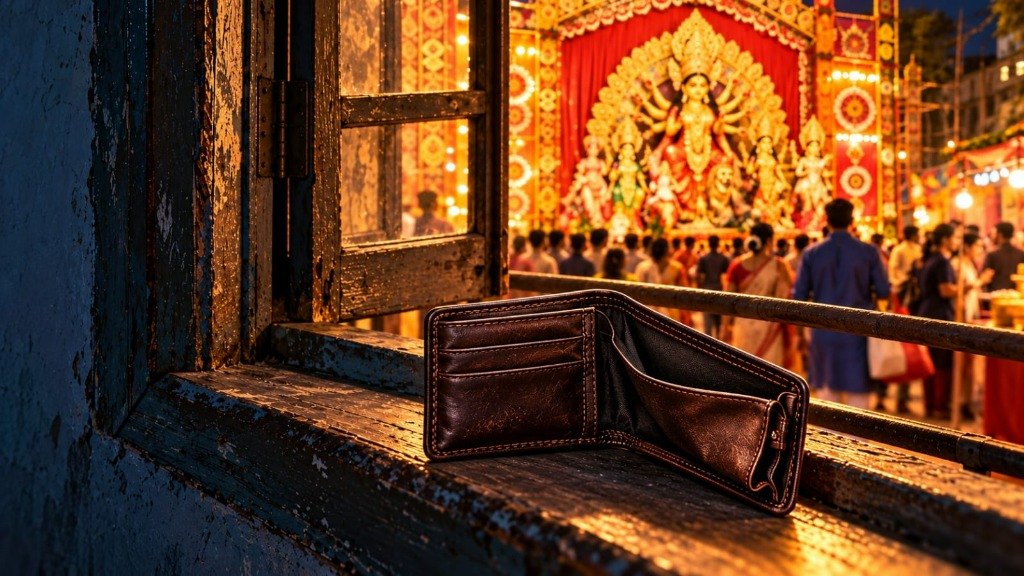
Because I remember, you see. That is the cruel arithmetic of depression, it preserves the past in amber while it poisons the present. I remember previous iterations of myself, earlier versions of this software, when I was happier, when I was not alone, when I was not standing at the breadline counting coins like a miser in a Dickens novel. Those versions of me celebrated Diwali, or at least participated in the general illusion of festivity. They lit lamps, they ate sweets, they did not regard the dawn with the suspicion of a man who has been betrayed by his own neurochemistry. Now I am the ghost at the feast, the uninvited guest at my own life, and the festival of lights feels like a personal insult, a cosmic joke told at my expense.
The mythology does not help. In our country, the mythology is as toxic as the air, and considerably harder to filter. We have the Ramayana, that epic of exile and return, of light conquering darkness, of the good king coming home to a kingdom that has been waiting, lamps in hand, for his righteous return. It is a beautiful story, if you do not look too closely at the caste politics, the misogyny, the casual violence that underpins the whole edifice. But we do not look closely. We burn crackers instead, because looking closely might require us to confront the darkness within, and that is a Diwali nobody wants to celebrate. We prefer our evil externalized, demonized, ten-headed, and flammable. Ravana must burn so that we do not have to examine the Ravana in the mirror, the one that discriminates, that pollutes, that looks away from the suffering on the pavement.
I take another pill. The chemistry of my brain is a democracy of dysfunction, neurotransmitters voting against my happiness with a regularity that would impress a dictator. The soporifics are my opposition party, weak, compromised, but occasionally capable of forming a government. I wait for them to act, for the slow dissolution of the self, the gentle erasure of memory and desire. Outside, the crackers burst in patterns that mimic the neural fireworks of a mind that has short-circuited. I wonder if the whole city is bipolar, if the collective psyche of Calcutta swings between the mania of celebration and the depression of the morning after, when the smoke hangs low and the garbage litters the streets like the confetti of a civilization that has forgotten how to clean up after itself.
The loneliness is a country I inhabit without a visa, a permanent resident of the republic of one. On Diwali, this country closes its borders. The phone does not ring, or if it does, it rings for others, for the happy, the coupled, the economically viable. I am none of these things. I am a man in a dark room, watching the light from other people’s celebrations flicker against my ceiling like the shadows in Plato’s cave, except I am not even chained, I am just too tired to move. The festival of lights assumes a community, a gathering, a shared table. It assumes that one has people to light lamps for, to exchange sweets with, to embrace at the moment of illumination. I have the darkness, and the darkness, to its credit, has never asked me to perform happiness.
There is a particular cruelty in the timing. Diwali falls in October or November, when the light is already dying, when the days shorten and the nights expand like the belly of a man who has eaten too much melancholy. The festival tries to push back against this natural darkness with artificial light, with oil and wick and gunpowder, but the darkness always wins in the end. The winter comes, the light fails, and we are left with the smoke and the ash and the silence. I prefer to align myself with the darkness from the start, to skip the middleman of celebration and go straight to the heart of the matter. I celebrate the festival of darkness, the honest festival, the one that does not pretend.
The crackers continue. Someone in the building next door is celebrating with the acoustic enthusiasm of a small army. I imagine them happy, or at least drunk, or at least performing happiness with the desperation of people who know that the darkness is waiting. We are all waiting, I suppose. The happy and the sad, the lit and the unlit, the crackers and the cracked. The difference is only in the timing. I have chosen to get it over with, to descend into the dark voluntarily, to take my pills and sleep through the apotheosis of light. They will join me eventually, when the sweets are digested, when the money is spent, when the smoke clears to reveal the same old city, the same old selves, the same old darkness that no amount of lamps can dispel.
I do not hate Diwali. Hatred requires an energy I no longer possess. I regard it with the weary suspicion of a man who has been sold a defective product and has lost the receipt. The festival promises light, but it delivers smoke. It promises victory, but it delivers a hangover. It promises the return of the king, but the king is a myth, and the kingdom is on fire. I lie in my bed, in my room, in my darkness, and I let the sedatives do their slow, imperfect work. The festival of darkness is the only one that keeps its promises. It promises nothing, and it delivers exactly that, with a reliability that the gods themselves might envy.
Happy Diwali. May your lamps burn bright, and may your smoke detectors be functional. I will be here, in the dark, where the light cannot find me, celebrating the only festival that has ever truly been mine.
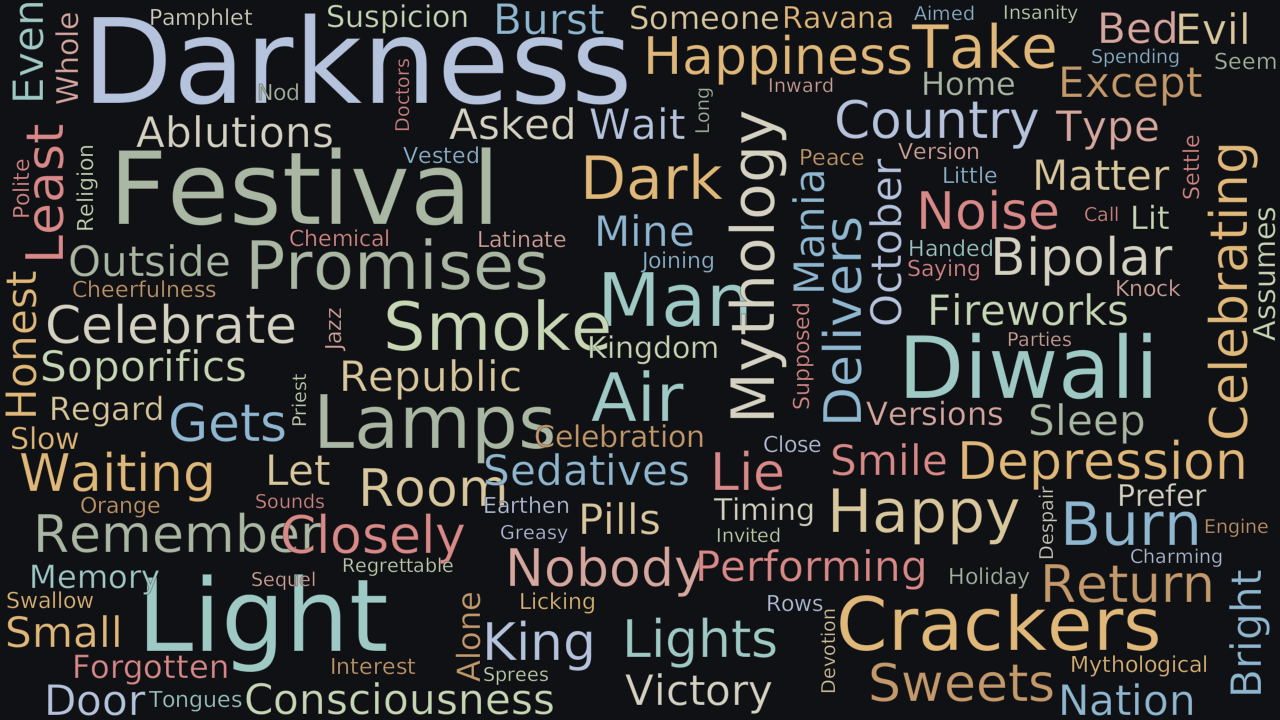
Word Cloud
Related reading
Selected by shared topics and section, with closer publication dates breaking ties.
Comments
Read the conversation or leave a thought for review. Comments load when this section is in view.