Durga Durga Durga: The Idiocy of Imaginary Gods and the Physics of Our Flatulence
Checking article narration…

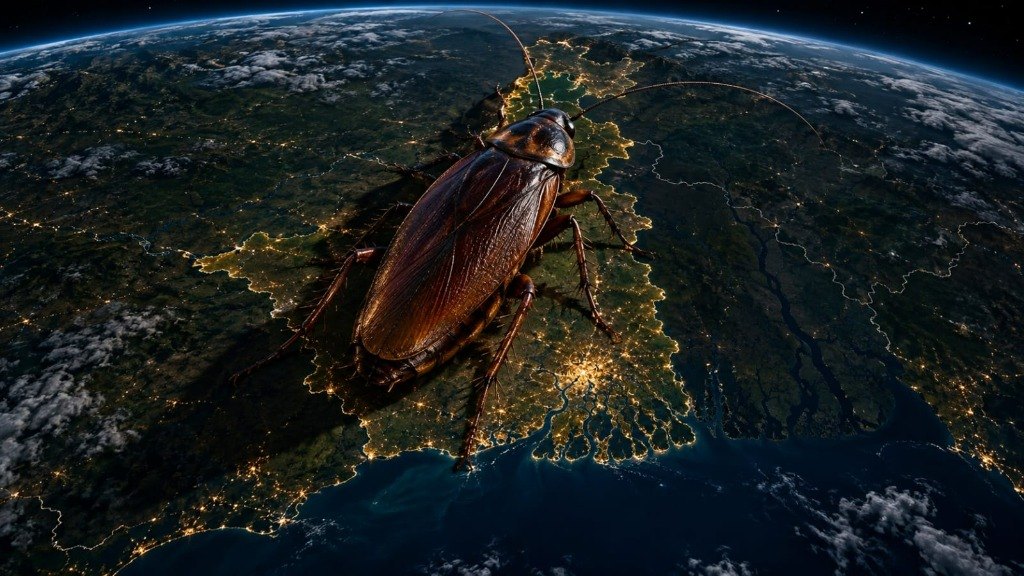
Five days of debauchery, they call it Durga Puja, as if the goddess herself, that clay-caked mannequin with her ten arms flailing like a drowning octopus, gives a single, solitary damn about the rivers of cheap whiskey and cheaper sentimentality we drown ourselves in. I have spent these five days watching my city, this festering, beautiful, godforsaken Calcutta, transform into a carnival of collective hallucination, and now that the immersion ghats have swallowed the idols, now that Ma Durga is bobbing up and down in the murky, sewage-laden waters of the Hooghly like a discarded rubber duck in a bathtub of dysentery, I can finally breathe, or rather, I can finally exhale the fetid air of religious stupidity that has been clogging my lungs.
Let us be honest, shall we? Let us drop the pretense, the folded hands, the red-bordered sarees, the dhunuchi naach, the incense smoke that makes your eyes water and your brain soften. Durga, that omnipotent slayer of Mahishasura, is currently dissolving into a slurry of clay, paint flakes, and sewage from a city whose devotees think that taking a holy dip in the same river where they dump their industrial waste will somehow wash away their sins. The goddess is not ascending to Kailash. She is sinking. She is becoming sediment. She is food for the bacteria that do not care about your mantras, your Sanskrit shlokas, your elaborate pandal decorations funded by coal mafia money and real estate scams. The only thing rising from those waters is the stench, and that, my friends, is the true prasad.
I grew up in this city, this city of joy, this city of intellectuals who quote Tagore while pissing on the street corners, this city that prides itself on its adda and its atheism while simultaneously erecting forty-foot tall clay idols of a woman riding a lion, a lion that looks suspiciously like a golden retriever on steroids. I have watched the same aunties who perform anjali with such devotional fervor go home and beat their domestic helpers for touching the food. I have seen the same politicians who inaugurate pandals with sacred threads around their wrists siphon off relief funds meant for flood victims. The hypocrisy is not incidental to the ritual; it is the very foundation of it. We build these temporary palaces of plywood and polyester, we worship the idol with the intensity of a starving man dreaming of a feast, and then we chuck it into the river with the casual violence of a child discarding a broken toy. Out of sight, out of mind. The goddess has served her purpose, which was never salvation, but distraction.
And what a distraction it is. For five days, the grinding poverty of the undercity, the rickshaw pullers sleeping on pavements, the sex workers in Sonagachi, the lepers outside Kalighat, the entire miserable apparatus of survival that constitutes the real Calcutta, is hidden behind a curtain of fairy lights and corporate sponsorship. The marginalized, the ones who build the pandals, who paint the idols, who clean up the mountains of floral waste and plastic plates, they remain invisible, as they always do, while the middle class takes selfies with their smartphones, filters applied to make the grime look golden. The economic machinery of the festival is a microcosm of the systemic injustice that permeates every aspect of our existence. The Kumartuli artisans, those brilliant, underpaid sculptors who give birth to the goddess from river clay, they live in hovels while the pandal hoppers drink their Starbucks and complain about the traffic on Park Street. The god is constructed by the poor, worshipped by the middle class, and dissolved into poison by the river, poisoning the very fish that the poorest of the poor will eat tomorrow. The circle of life, indeed.
But let us talk science, because that is the only prayer I know. Let us talk about the physics of idol immersion, the chemistry of religious delusion. When you immerse an idol coated in toxic paint, you are not performing a sacred ritual; you are conducting a grotesque experiment in environmental degradation. Calcutta’s traditional idols are clay and straw; plaster of Paris is a different material with a different chemistry. Plaster of Paris, calcium sulfate hemihydrate, hydrates and hardens into gypsum when the idol is made. The hardened gypsum is only sparingly soluble in water; immersion does not make it disappear. Where toxic paints are used, metals such as lead, chromium, and mercury can enter the water and sediment. Lead exposure can cause neurological damage in children who were born with the misfortune of being poor near a holy river. The religious fervor is directly proportional to the ecological destruction. The more gods you immerse, the more poison you drink. It is a perfect system, really, a closed loop of stupidity.
And yet, and yet, they tell me she will return next year. Ma asche, they say, the mother is coming. But the mother is not coming. The mother is a construct, a psychological projection of our collective need for a protective figure in a world that offers none. Richard Dawkins would call it a meme, a virus of the mind, but even that seems too charitable. It is a delusion, a mass hysteria, a shared psychosis that allows us to tolerate the intolerable conditions of our existence. If we believe that a ten-armed goddess will protect us from evil, we do not have to face the fact that the evil is us, our corruption, our apathy, our willingness to let children starve while we spend crores on lighting up a temporary structure that will be torn down in a week.
I have bipolar disorder, type two, the kind where the depression is a leaden blanket and the hypomania is a cruel joke, a brief, buzzing energy that makes you think you can fly before you crash into the same wall. And during these five days, watching the city lose its collective mind, I feel that same manic energy, that same desperate need to believe in something, anything, to escape the crushing reality of entropy. But I choose to worship the entropy itself. I choose to worship the second law of thermodynamics, the inevitable increase of disorder, the heat death of the universe that awaits us all. At least the laws of physics do not demand offerings of sweets and slaughtered goats. At least gravity does not care whether you are Brahmin or beggar. The laws of physics are the only true democracy we have.
The randomness, the quantum uncertainty, the stochastic processes that govern our lives, these are the only gods worth praying to. Because they do not judge. They do not demand. They simply are. The goddess Durga, that beautiful, terrible, imaginary construct, she has no power over the path of a photon, over the decay of a radioactive isotope, over the mutation of a virus that might kill you tomorrow. Your identity, your nationality, your religion, these are stories we tell ourselves to stave off the terror of insignificance. But the universe does not read your stories. The universe does not care about your bijoya greetings. The universe expands, indifferent, and we are but brief fluctuations in the quantum foam, momentarily organized patterns of stardust that will soon disperse, dissolve, and return to the clay from which we came.
So shubho belated bijoya, I suppose. I hope your future is rational. I hope you understand that the only immersion that matters is the immersion of your ego into the vast, uncaring ocean of cosmic indifference. I hope you realize that the goddess is you, and you are the river, and the river is poisoned, and we are all bobbing up and down in our own waste, waiting for the current to take us.
The stench is holy. The sewage is sacred. Welcome to the real Calcutta.
P.S. The Hooghly River has a documented problem with fecal contamination. Toxic idol paints can add heavy metals to water and sediment. The devotees are praying. The cycle continues.
Sources for the material facts: Kolkata’s clay idols; plaster setting; gypsum solubility; CPCB idol-immersion guidelines; West Bengal water-quality report, March–May 2024; WHO on lead exposure.
Word Cloud
Related reading
Selected by shared topics and section, with closer publication dates breaking ties.