Gobhir Joler Machh
Uses the speech voice supplied by your browser or device.

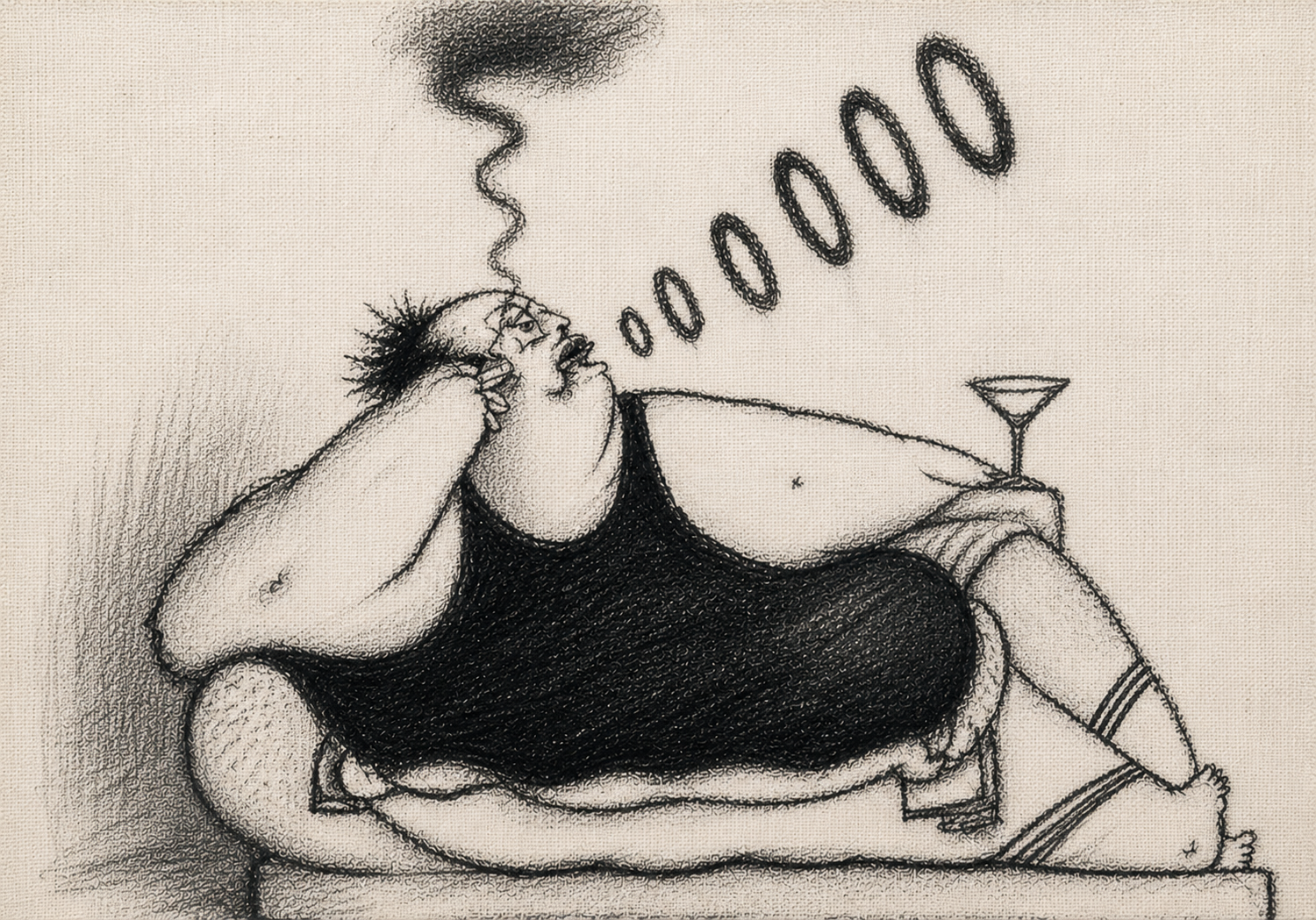
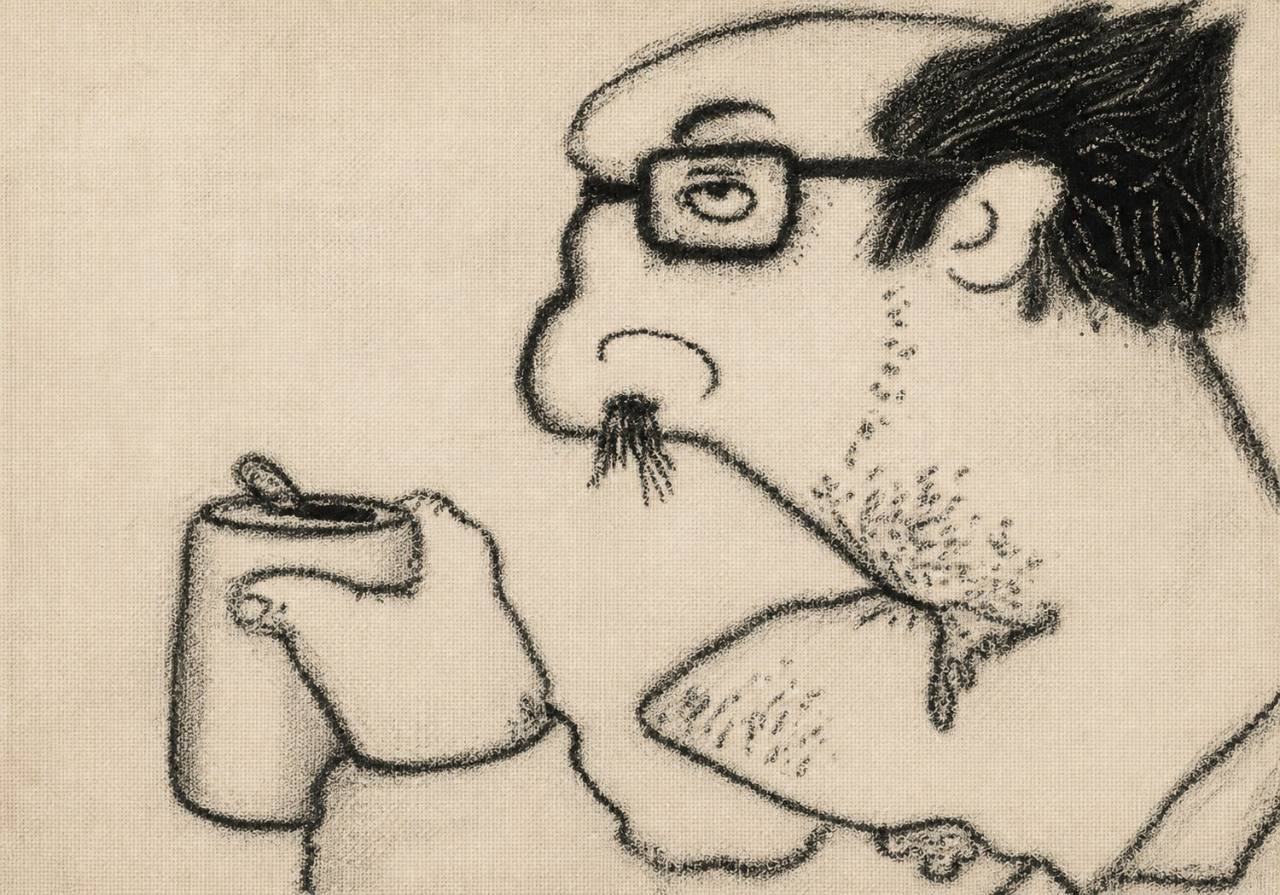
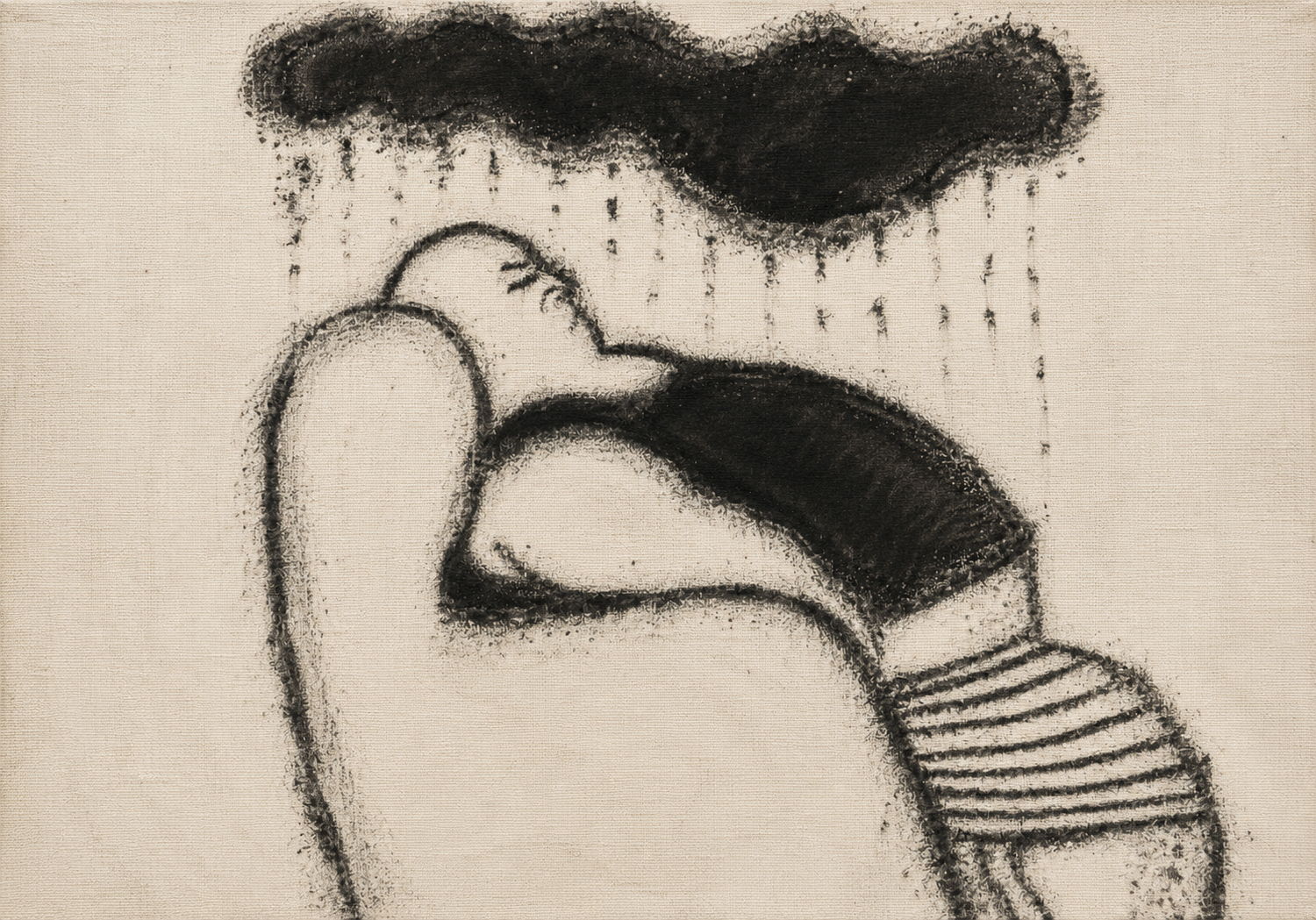
There is a Bengali phrase, gobhir joler machh—a fish of deep water—and for years I thought it was merely a fisherman’s weather report, some aquatic footnote about currents and nets, until I noticed that the deepest water in this country is not the Bay of Bengal but the space between a man’s promise and his performance, that dark, pressure-crushed trench where the light of scrutiny cannot reach and where certain specimens, pale-eyed and soft-bellied, have evolved to treat visibility as an occupational hazard. I am a Bengali, which means I was raised on a diet of fish, rice, and the implicit understanding that education—shiksha, that sacred cow of the Bengali middle class, that Brahminical passport to respectability—would render a man honest, or at least too exhausted by differential equations to practice dishonesty with vigor. What a crock of festering, fly-blown, theological-grade horseradish that turned out to be. I spent fifteen years in American healthcare research, staring at statistical models, survival curves, and p-values while my countrymen back home were busy perfecting the bureaucratic shakedown, and I returned to find that the gobhir joler machh had not merely survived the tsunami of modernity but grown fat upon it, swimming now not only in the murky ponds of the unschooled but in the climate-controlled aquariums of the half-baked, the tuition-coached, the piety-greased, the men and women who hold degrees the way a cutpurse holds a razor: with affection, with skill, and with absolutely no intention of using the instrument for its advertised purpose.
Consider the anatomy of this creature, because taxonomy matters if one intends to avoid becoming lunch. The deep-water fish is not born with scales but with a certain elasticity of spine, a congenital ability to bend toward whichever current carries the most nutrients, and it is this flexibility, this cartilaginous moral architecture, that distinguishes it from the honest, rigid-backed fool who drowns trying to swim upstream toward some imaginary waterfall of integrity. Education, when administered in a homeopathic dilution—credential visible, learning chemically undetectable—acts upon this creature not as a poison but as a growth hormone; it provides the vocabulary to disguise larceny as policy, the statistical literacy to report theft to three decimal places, the legal acumen to steal principally through paperwork. Here, however, resentment has already forged its own dataset. There is no known threshold at which quantum mechanics disinfects the character. Science is a method for testing claims, not a sacrament for cleansing souls, and an accomplished physicist can be a crook with the same grim ease as an accomplished accountant. The second law of thermodynamics says that the entropy of an isolated system does not decrease; it does not say that every pocket of order must immediately collapse, nor does it place widows and their railway pensions beyond the reach of thieves. A refrigerator creates local order by consuming energy and dumping heat elsewhere; a bureaucracy performs a similar miracle by exporting its disorder into the citizen’s afternoon. Serious learning may introduce scale, doubt, and humility. May is not must. A man can stare into the indifferent machinery of the universe until his eyes water and return from the telescope with a grant proposal, two shell companies, and a renewed appetite for public money.
But the half-baked—by which I mean not the person with too little schooling, but the person whose credential matured while the mind remained raw—are perfect hosts for this parasitic wonder, for they have acquired just enough vocabulary to be dangerous to others but not enough self-suspicion to become dangerous to themselves. They have memorized the periodic table but not the periodic nature of their own greed; they can recite 23 June 1757, the date of the Battle of Plassey, but cannot recognize the battle in their own nervous system among reward, habit, fear, and inhibition, among the animal’s appetite and the human’s capacity for shame. These are the men and women who dominate our society at every level, the clerks with their rubber stamps dipped in invisible ink, the contractors who build bridges that collapse in slow motion like a moral lesson, the politicians who quote Tagore while pickpocketing the treasury, the godmen who have confused the pineal gland with a divine antenna and the prostate with a cash register and attend to both for a fee. They are educated, yes, but their education is a veneer, a lacquer, a thin microbial biofilm of degrees spread over a deeper substrate of ancestral cunning, and because they never learned to test the foundations, because they never stayed for the second semester of skepticism, they remain blissfully, profitably, ecstatically unencumbered by the scientific method’s most corrosive byproduct: the suspicion that one might be wrong.
I have watched these creatures operate in the corridors of Calcutta’s institutions, in the waiting rooms of hospitals where brokers sell access to beds, in temples and ashrams where fear can be monetized with the efficiency of a derivatives trader, and I have marveled at their consistency, their evolutionary stability across generations. The gobhir joler machh does not adapt to the environment; the environment adapts to the gobhir joler machh. When the British departed in 1947, it changed its accent; when economic liberalization gathered force in 1991, it updated its currency and company letterhead; when public internet service arrived in 1995, it migrated from the ledger book to the spreadsheet, the QR code, and eventually the crypto wallet. This is not because markets, spreadsheets, QR codes, or cryptocurrency are inherently crooked; the fish is simply substrate-independent. It is the cockroach of the moral ecosystem, surviving nuclear blasts of reform, thriving in the radioactive aftermath of revolutions that were supposed to cleanse the system but merely rearranged the furniture in corruption’s waiting room. And piety—or rather, piety worn as theatrical camouflage—provides the perfect coloring, for nothing sanctifies a scam like the invocation of the divine, nothing launders a reputation quite like a conspicuous donation, and nothing terrifies a whistleblower quite like the threat of karmic retribution delivered by a man with a tilak on his forehead and a calculator in his dhoti.
The mathematics of this phenomenon deserves inspection, if only because numbers do not lie even when the analyst, the numerals, and the ministry do. Let us posit a function, a sort of ethical Gaussian, where the x-axis represents years of genuine education and the y-axis represents the capacity for duplicity. The curve rises steeply at first, from the illiterate brute who steals your wallet to the matriculate who steals your identity, peaks somewhere around the second year of a commerce degree or the first year of law school, and then declines precipitously as the subject—sorry, the student—encounters quantum mechanics, evolutionary biology, or the statistical mechanics of stochastic processes. By the time one has wrestled long enough with the Navier–Stokes equations or absorbed the precise wound Gödel’s incompleteness theorems inflict upon sufficiently expressive formal systems, the desire to cheat on one’s income tax return has supposedly been replaced by cosmic indifference, a sense that the universe is a practical joke played by no one upon everyone and that the only rational response is to laugh, to weep, or to write equations on a blackboard until the chalk runs out.
It is a magnificent curve. It is also bullshit. It has no sample, no operational definition of genuine, no reason to be Gaussian, and no license to infer morality from coursework. Actual evidence is untidy: education can cultivate civic skill and sometimes travels with cleaner institutions, but additional university education does not automatically bleach corruption out of the individual. My curve is not social science; it is resentment in a laboratory coat, drawing itself with a stolen pencil. Still, the metaphor survives in a narrower and less flattering form. The gobhir joler machh avoids not the deep end of knowledge but the deep end of examination. It thrives in the warm, brackish shallows where words are acquired but premises are never tested, where the light is dim enough to hide the hook but bright enough to see the wallet, where a man learns how to defend a proposition without ever acquiring the indecency of asking whether the proposition is true.
I speak from the bitter sediment of personal observation, having been cheated by men with PhDs and by men who could not spell the initials, but often finding the latter more honest in their dishonesty, more straightforward in their theft, whereas the credentialed rascal, the religiously accredited professional, wraps his extortion in the language of development, sacrifice, tradition, and the greater good. The cartoon I once carried in my head went like this: the uneducated thief steals your watch; the half-educated thief steals your time and invoices you for the privilege; the overeducated man gives you his watch, his time, his everything, having realized that ownership is a fiction we tell ourselves to stave off the terror of mortality. Life, that vulgar peer reviewer, rejected the manuscript. Scholars hoard, doctors lie, engineers take bribes, and people who have never seen the inside of a university return wallets thick with cash. Education is neither baptism nor pesticide. The distinction worth keeping is not between few degrees and many but between the credentialed mind and the examined one—and even the examined mind requires institutions with records, audits, enforcement, and fewer discretionary little choke points where a public servant may place two fingers upon the citizen’s windpipe. Virtue is excellent; controls should continue working when virtue calls in sick.
This is why the gobhir joler machh fears not the scholar as such but the inconvenient person who keeps asking to see the ledger, the rule, the receipt, the denominator, the original data. Understanding can be compartmentalized, anesthetized, rented to the highest bidder, or appointed to the board. Inquiry matters only when it turns inward and meets consequence. Shine the light of rigorous scrutiny upon the fish and it may not evolve into something honest or die gasping on the deck of its contradictions; it may hire a consultancy, publish a report on transparency, and invoice the government for sunglasses. One should never underestimate a creature whose first adaptation was the discovery that reform itself can be eaten.
And yet, and yet, I cannot help but admire the bastards, in the way one admires a virus that has outwitted an immune response, in the way one respects a cockroach that has survived the insecticide of modernity. There is a certain evolutionary genius in their consistency, a poetic justice in their predation upon the very society that created them. We built the tuition centers; they bred there. We venerated the degree; they printed it. We worshipped the godman; they incorporated him. The gobhir joler machh is not an aberration of Indian society but one of its most faithful products, the logical harvest of a culture that values the appearance of knowledge over its substance, that confuses memory with intelligence and obedience with virtue. They are not all of us—that would be lazy misanthropy dressed as sociology—but they are what our incentives make easy, what our institutions make profitable, and what our reverence makes respectable. The first half of the Bhagavad Gita 2.47 says, karmaṇy evādhikāras te mā phaleṣu kadācana—you are entitled to action alone, never to its fruits. The rest warns against making the fruits of action one’s motive and against attachment to inaction. It is a discipline of action, not an indemnity clause for theft. The deep-water fish quotes the first half, pockets the fruit, outsources the consequence, and then explains that the Sanskrit is too subtle for the auditor.
So I swim carefully now in these waters, keeping my wallet close and my skepticism closer, knowing that the deepest water is not in the ocean but in the eyes of a man offering me a deal too good to be true, especially if he has a degree from a university whose website contains six stock photographs and no faculty list, and a photograph of himself touching the feet of a guru who owns three Mercedes-Benz cars. The fish are out there, circling, smiling with their many teeth, waiting for the next fool who believes that education alone makes a man honest. I have my own bipolar weather to endure, my own fractured insomnia to navigate, but at least I have the consolation of knowing that my madness is honest, that my chaos is mine, that I do not swim in deep water pretending to be a saint while functioning as a shark. The gobhir joler machh will not inherit this country; inheritance is for heirs, and the creature already sits in the executor’s office. I, poor fool that I am, remain on the shore, shouting warnings no one hears, clutching my equations and my integrity as a beggar clutches his last rupee, watching the water for the small, polite ripple that precedes the bite.
P.S. In Bengali script, গভীর জলের মাছ (gobhir joler machh) literally means “a fish of deep water”; the closely related অগাধ জলের মাছ (agadh joler machh, “a fish of unfathomable water”) is also common. Idiomatically, it describes a very shrewd, secretive, or hard-to-fathom person. It does not by itself mean a criminal, hypocrite, or predator; that moral taxonomy is mine. Grammatically, gobhir means “deep,” joler means “of water”—the inflected form of jol—and machh means “fish.” To call that an etymology, as I did earlier, would be to place a doctoral hood upon a grocery list.
Word Cloud
Related reading
Selected by shared topics and section, with closer publication dates breaking ties.