The Extrovert Economy Gets a Jetpack
Uses the speech voice supplied by your browser or device.

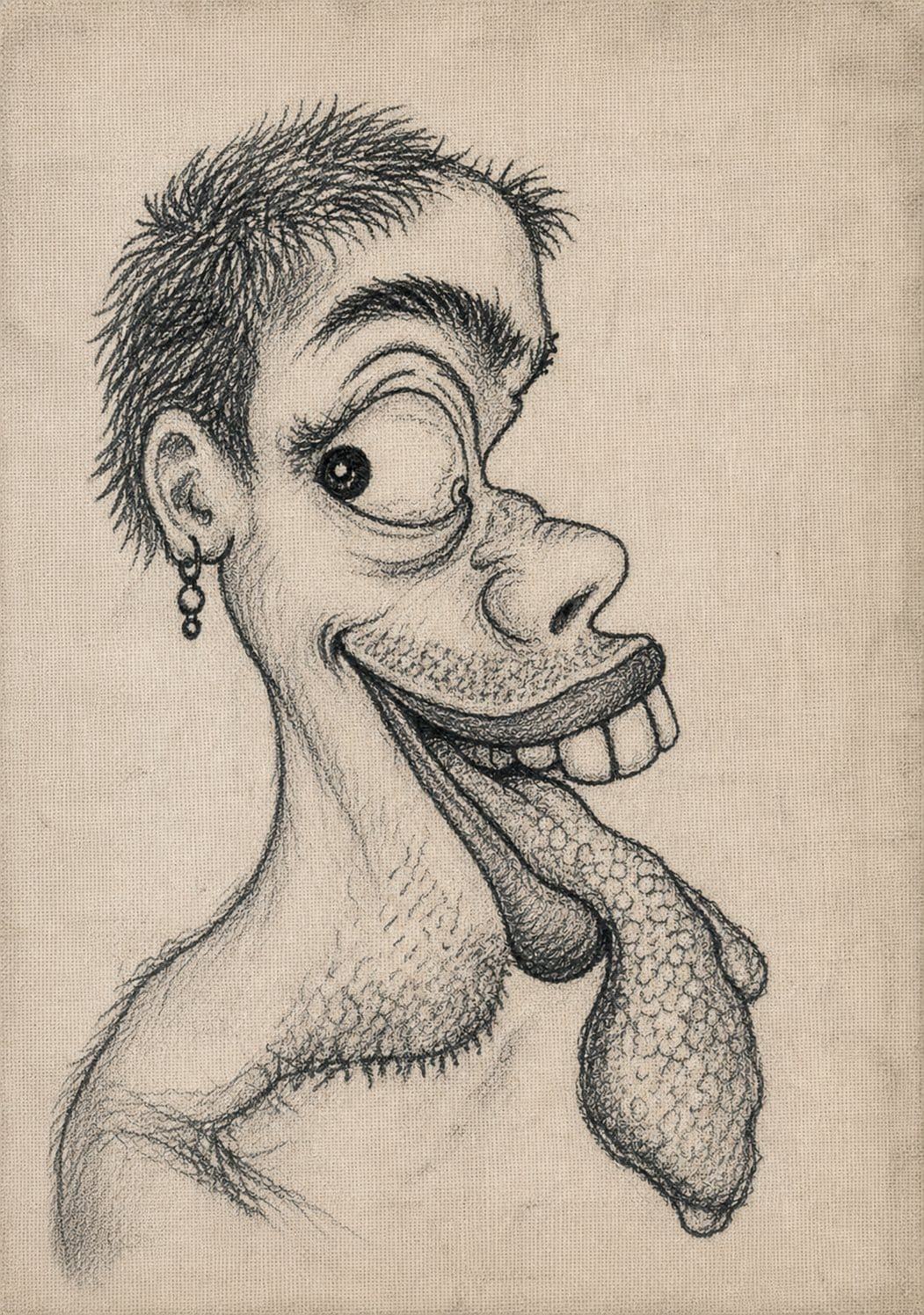
I have never once tooted my own trumpet, mostly because I do not own a trumpet, and if I did, I would probably apologize to it before putting my mouth on it. There is a species of human, however, that emerges from the womb with a trumpet already welded to the face, and they have colonized the attention economy so thoroughly that the rest of us—the quiet, the hesitant, the people who prefer to think in paragraphs rather than perform in punchlines—are treated like background radiation: present, measurable, and noticed only by specialists with grant money.
Then came generative AI, that tireless little fluffer of egos, and the trumpet people were issued an entire brass section that neither sleeps, blushes, nor asks whether the music is any good.
Let me establish my credentials in this matter, because the modern world demands credentials the way a vampire demands an invitation. I am an introvert. Not the romantic kind, not the tortured-artist kind, not the “oh, I just need to recharge” kind that pop psychology serves up like comfort khichuri. I am the kind of introvert who spent roughly fifteen years inside American healthcare and medical research, surrounded by the confident, the loud, the people who could describe a null finding as a “transformative paradigm shift” and get funded for it. I watched them. I took notes. I said little. That is, after all, the introvert’s alleged superpower: the ability to observe a catastrophe in progress and remain politely silent until the building collapses. It is also our recurring tactical error.
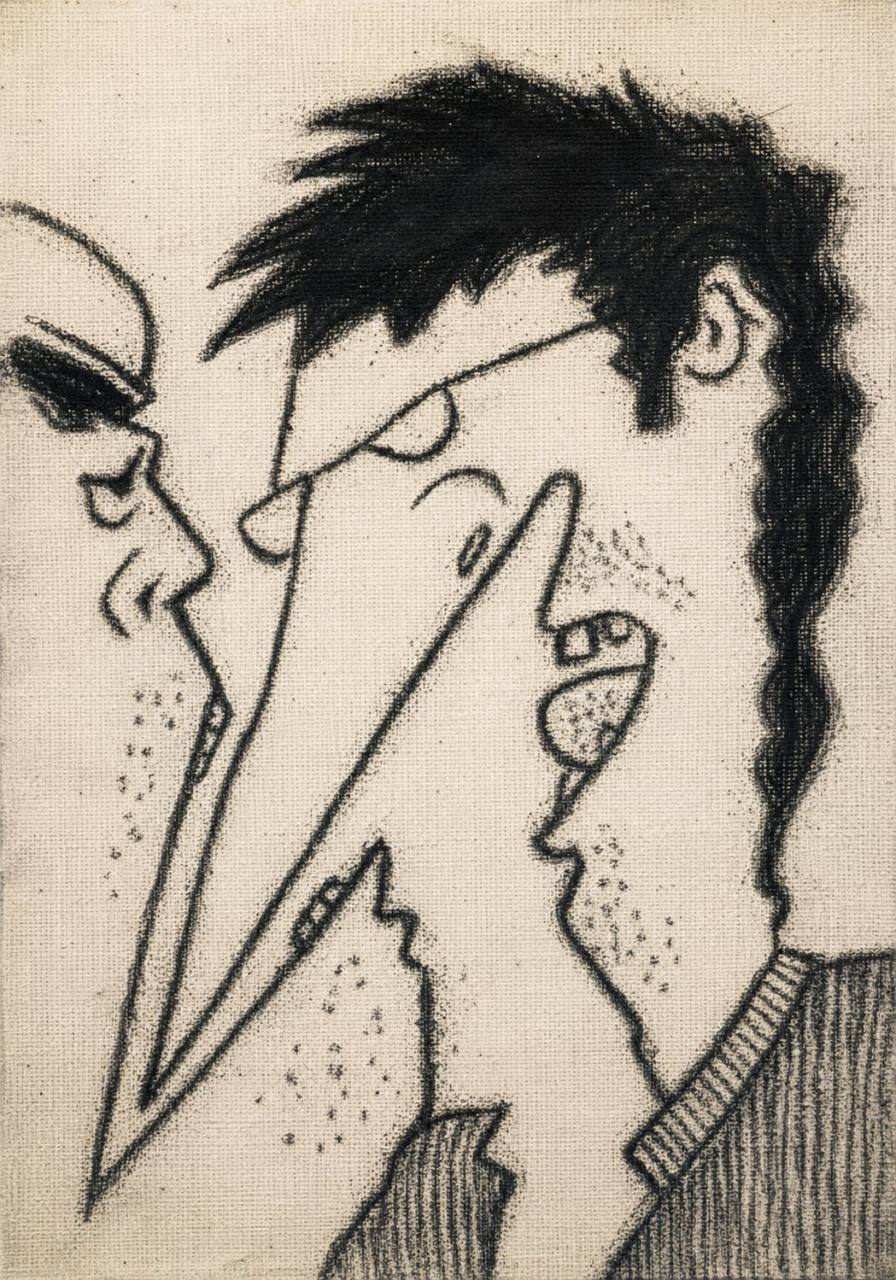
The attention economy, that great digital souk where self-worth is traded like questionable fish, has always belonged to the unabashed. You know the type. They are on LinkedIn performing humility with the subtlety of a marching band in a library. “I am humbled to announce,” they begin, which is humility in the same sense that a peacock is a modest chicken. They have turned the platform into a perpetual Thanksgiving dinner where everyone is simultaneously carving the turkey and delivering the toast. Each has overcome adversity, discovered leadership, learned resilience from a delayed flight, and extracted seven lessons about stakeholder management from a sandwich.
The feed machinery is less stupid than my contempt would prefer. LinkedIn says it considers relevance, expertise, and patterns of engagement, and its newer systems use large language models to understand posts and predict what particular users may find useful. Fine. The machine may now distinguish a cardiologist from a cryptocurrency rooster. But even the cleverest recommender cannot distribute the thought that was never posted, the paper that was never packaged, or the sentence still being checked for the indecency of being wrong. Visibility remains the admission ticket, and volume buys more chances at the raffle.
Generative AI has done something economically simple and socially grotesque: it has collapsed the marginal cost of appearing articulate. Another competent-looking paragraph now costs a prompt, a few watts of electricity somewhere far away, and one downward movement of the thumb. When lottery tickets approach zero cost, the fellow already camped beside the counter does not purchase one ticket. He asks for the roll.
So the trumpet people are no longer merely tooting; they are orchestrating. They have AI to draft their self-congratulatory posts, AI to generate their thought leadership, AI to respond to comments on their AI-generated content with AI-generated gratitude. It is a closed circuit of autofellatio so efficient that it requires almost no actual thought and produces no friction burns. The professional announcer, once limited by the tedious necessity of forming sentences and eventually becoming tired of himself, can now manufacture content at the speed of insecurity itself. Meanwhile, the poor bastard who actually read the paper, checked the math, followed the footnotes, and still has something to say—but would prefer to say it accurately rather than hourly—is left holding a solitary cup of tea while the brass section marches past.
Generative AI is not a personality transplant. It is a friction-removal machine. It removes time, effort, embarrassment, fatigue, and occasionally the small moral rash that once accompanied publishing a sentence one had not earned. It can amplify a publishing impulse the way a microphone amplifies a fart in a cathedral. The performer’s appetite, once constrained by the lungs and wrists of a mammal, now has the stamina of a server rack. Reflection remains chained to the stubborn biological time required to decide whether a sentence is true. We are bringing knives to a gunfight, except the guns have learned to shoot themselves while their owners publish leadership lessons about the marksmanship.
At this point, the psychologists are clearing their throats, and they are right. Introversion is not the same thing as shyness, modesty, moral seriousness, or an inability to use LinkedIn. Extraversion is not narcissism, fraud, or an uncontrollable urge to photograph airport lounges. These are broad personality dimensions, not two moral castes; shyness and sociability can come apart, and most human beings are untidy mixtures rather than pure specimens.
The culprit, then, is not the extrovert. It is the extroverted economy: a market that taxes silence and pays a dividend on visibility. A quiet fraud can master it; a sociable and honest person can loathe it. The trumpet is a business model, not a diagnosis.
I do not begrudge the loud their loudness, any more than I begrudge a fish its wetness or a Bengali committee its subcommittee. But I do wonder, in my quiet and therefore commercially irrelevant way, what is being lost in the cacophony. The attention economy was never a meritocracy. It was always a market, and markets may reward value, but only after value has become visible, legible, repeatable, and sufficiently decorated to survive the scroll. A profound thought in a closed notebook has approximately the same market value as a diamond at the bottom of the Hooghly.
Nor did AI invent the outsourcing of articulation. Kings had scribes, politicians had speechwriters, celebrities had ghostwriters, and executives had communications departments populated by pale mammals whose job was to make the executive appear to have had a thought. Generative AI merely placed a pocket-sized communications department in every trouser. Once, one needed money or staff to outsource the appearance of reflection. Now a model can summarize a supplied book, draft the post about the book, generate the uplifting conclusion, and, if nobody bothers to supply the book, invent a convincing substitute. The trumpet owner presses publish from the golf cart.
The careful reader, meanwhile, is still on chapter three, annotating the margins and wondering whether anyone will notice the difference.
Sometimes they will. Not reliably.
That is the point. That is the wound.
There is a passage I remember from the Bhagavad Gita—or, more accurately, two neighboring verses that my memory had compressed into one. In 3.25, Krishna tells Arjuna that the wise should act without attachment for loka-saṅgraha, the holding together or welfare of the world. In 3.26, he says that the wise should not unsettle the understanding of those still attached to action, but should act properly and encourage them to act. I used to find this comforting. Now I suspect Krishna never had to scroll through LinkedIn.
The attached are no longer merely attached to action. They are attached to the performance of action, the announcement of action, the branding of action, the photograph of action, and the five lessons action taught them about leadership. AI has given them the means to perform action at industrial scale, manufacturing the appearance of thought without the inconvenience of thinking and the appearance of work without the vulgar interruption of work.
The introvert’s dilemma, then, is not merely that we are quiet in a world that rewards noise. It is that sincerity now has cheap upholstery. AI cannot feel sincerity, but it can reproduce its cadence: the pause, the confession, the carefully bruised sentence, the humble gratitude to mentors, team, family, dog, and universe. Care can be imitated sentence by sentence; experience can be dressed in the typography of confession. The words may be true, false, borrowed, prompted, or sincerely endorsed after being generated, but the feed flattens their provenance into the same glowing rectangle.
The trumpet people are not always lying. Some probably mean every polished syllable. They are simply playing an instrument that no longer requires breath, and the music need not be indistinguishable from the real thing; it need only be close enough at scrolling speed. The audience often cannot pause long enough to investigate. The algorithm possesses no organ with which to care. The market sees throughput.
Or perhaps I have it backward. Perhaps the introvert’s silence was never a virtue but merely a lack of tools. Perhaps, given the same AI, the same leverage, the same infinitely patient brass section, the quiet person will become just as insufferable as the loud one, just as eager to announce his humility, just as quick to mistake visibility for value. Perhaps the attention economy favors neither introversion nor extraversion but a behavior: the willingness to publish before doubt has finished dressing.
The same tool can also lower the barricade for the anxious writer, help the careful person organize an argument, or give someone who hates performance a tolerable way to enter public conversation. Give the quiet a megaphone and some will whisper into it. Others may discover that they had been waiting all their lives for batteries. Neither possibility rescues my taxonomy.
I doubt it. But then, I would. That is what this introvert does: doubt, hesitate, qualify, apologize for occupying the paragraph, and then write another paragraph about the apology. The trumpet plays on. AI generates another post about the leadership lessons learned from a sandwich. The world scrolls. My tea cools.
The trumpet has been tooted. The trumpet will be tooted again. And I, who began by claiming never to toot, will now publish an entire essay about my superior relationship to silence under my own name, on my own website, with a title, a description, a thumbnail, a category, ten tags, and a burnt-orange hexadecimal color.
The hypocrisy has not escaped me. It has merely been formatted in Markdown.
P.S. References: Bhagavad Gita 3.25–3.26, LinkedIn’s public account of its own feed machinery, and approximately fifteen years of involuntary mammalian fieldwork. This is still a mood, not a paper. The algorithms will read it before most humans do, which is precisely the problem.
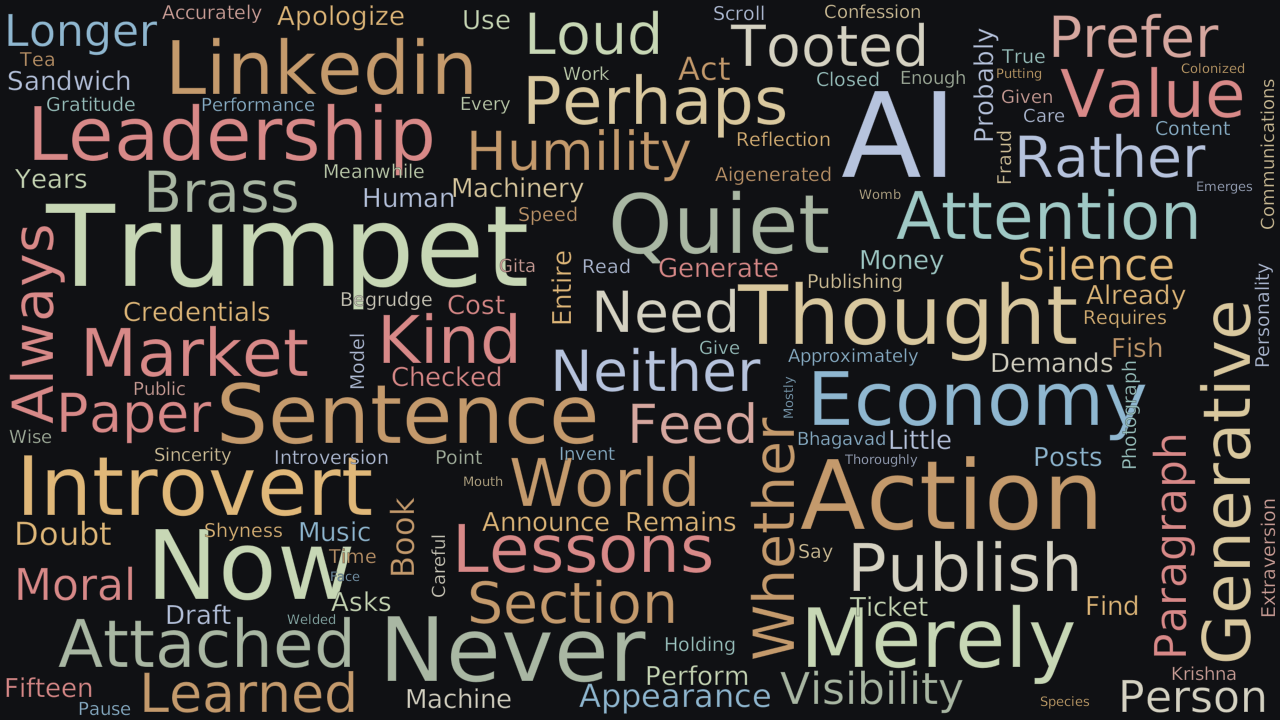
Word Cloud
Related reading
Selected by shared topics and section, with closer publication dates breaking ties.