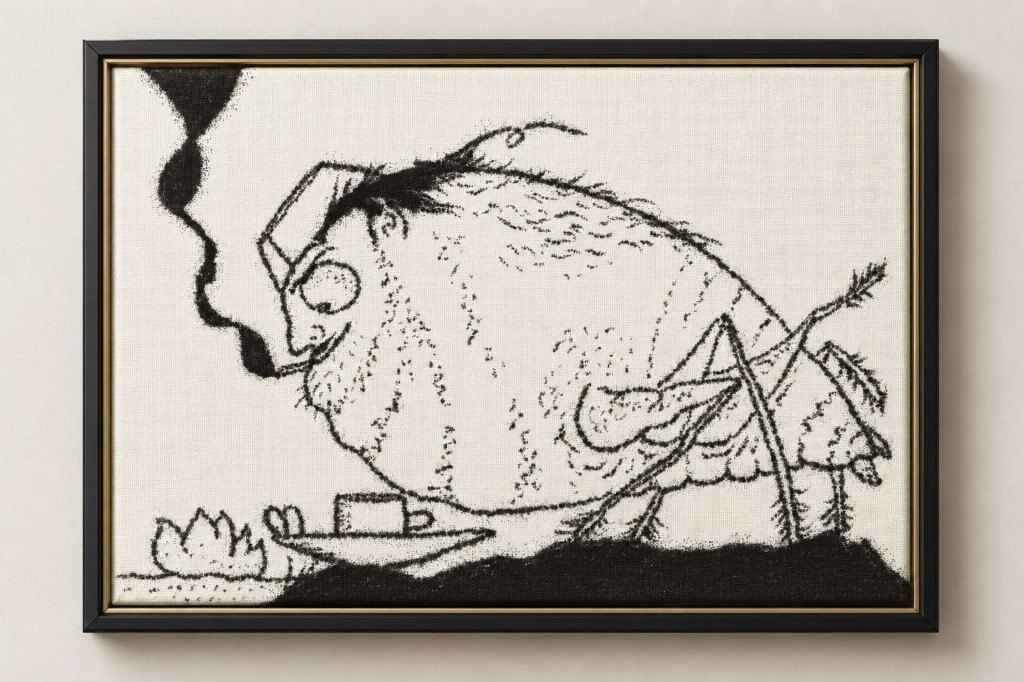
The Ballot and the Banana Peel
Uses the speech voice supplied by your browser or device.

There comes a moment in the life of a democracy when the people rub the electoral gunk from their eyes and begin to suspect that the referee has been wearing the other team’s jersey beneath his official shirt. Naturally, when asked to unbutton it, he delivers a lecture on the dignity of refereeing.
The questions are impertinent. The answers are procedural. Please enjoy the match.
On October 10, Reuters reported mass detentions in Delhi as demonstrators demanded Chief Election Commissioner Gyanesh Kumar’s resignation. The dispute centers on revisions to electoral rolls and allegations that the exercise has unfairly benefited the BJP. The Election Commission denies wrongdoing. Behind the statements and counterstatements sits a question that ought to be answerable without a national nervous breakdown: who was removed from the rolls, on what grounds, and with what opportunity to challenge the decision?
I support the demand for his resignation. I join this movement by writing in support of it on my blog, from my rented room in Calcutta. I cannot afford to travel to a demonstration. Even getting somewhere costs money I do not have to spare. My contribution to public life has to pass through a keyboard because my bank account regards a bus ride as an infrastructure project.
This is a small contribution. It is nevertheless mine. Poverty has already restricted where I can go; I see no reason to let it decide what I am allowed to say.
Calcutta remains a city of perpetual intellectual ferment and political indigestion. We protest the heat, we protest the cold, we protest the lack of protest. We can turn a disagreement about tea into a constitutional crisis before the milk boils. But beneath the familiar slogans is something less theatrical: the fear that the machinery meant to protect your one small share of power may be making that share increasingly difficult to exercise.
Your vote is supposed to be the little piece of sovereignty that survives your salary, your surname, your connections, and the particular quality of humiliation the economy has selected for you. A man who cannot afford to go anywhere is still supposed to count somewhere.
That is why this matters to me.
The Election Commission is not a decorative constitutional object, something to be dusted before a visiting delegation arrives. Its work includes maintaining electoral rolls and conducting elections fairly. Those are responsibilities, not favors. When its leadership faces serious questions about the discharge of those responsibilities, the public is entitled to something more nourishing than the official expression people wear when they are about to explain why your complaint has been forwarded.
Forwarded where? Into whose intestine? Will it emerge with a reference number?
The mathematics of it all is particularly galling, though not because probability has suddenly started wearing a party scarf. Elections are not coin tosses, and an unexpected result is not, by itself, proof of fraud. The useful arithmetic is more prosaic. How many entries were deleted? How many deletions were challenged? How many were reversed? What reasons were recorded? Were the same standards applied in different places? Could an ordinary person actually navigate the correction process before losing the chance to vote?
Give us records that can be checked, categories that mean something, and explanations that survive being read twice. A confident man at a microphone is not a statistical method.
I have worked with data. A total can be perfectly added and still describe a rotten process. If an eligible voter has been wrongly removed and cannot get restored in time, the machine can count every vote it receives with immaculate accuracy and still never encounter that person’s choice. You cannot audit a missing voice by admiring the equipment that never heard it.
This is also why the argument should not be carelessly bundled into the claim that Electronic Voting Machines have been proved to steal elections. They have not been proved to do so by the material cited here. In April 2024, the Supreme Court rejected demands for a return to paper ballots and for universal counting of VVPAT paper slips, while ordering additional safeguards. That judgment did not settle the conduct of a voter-roll revision in 2026. A defense of the counting machine does not answer a question about who was allowed to reach it.
The institution owes an explanation of the process under challenge. Substituting a speech about its own greatness is the bureaucratic equivalent of a restaurant answering a complaint about food poisoning by showing you a photograph of the refrigerator.
Meanwhile, the Associated Press reported police intercepting demonstrators heading toward Jantar Mantar and detaining protesters and movement leaders. Police said permission had been denied because the application was submitted late.
There is something exquisitely Indian about a crisis of public confidence arriving at a counter and being told that its paperwork is out of order.
The state can find vehicles, personnel, barricades, and a remarkable quantity of administrative enthusiasm when citizens want to assemble. If only the machinery of explanation could be mobilized with comparable speed. Imagine a grievance receiving the attention ordinarily reserved for the person carrying it.
We are told the Commission is independent. The word is lovely. It sits beautifully in a civics textbook, upright and freshly ironed. But independence needs arrangements that sustain it, not merely a nameplate announcing that it exists.
Under the 2023 appointment law, the selection committee consists of the prime minister, a Union cabinet minister nominated by him, and the leader of the opposition in the Lok Sabha. Two government seats out of three. I find that arrangement about as reassuring as a three-wheeled shopping cart being certified for straight-line travel.
This is a structural reason for scrutiny. You do not need to invent a secret envelope changing hands to notice who has the majority at the table. And you do not strengthen an institution by insisting that anyone who examines its foundations is trying to demolish the building.
The Commission should outlive its officeholders. That is precisely why its officeholders should not be allowed to confuse their continued employment with the survival of democracy.
There is, of course, a demanding constitutional procedure for forcing a chief election commissioner out of office. Under Article 324(5), removal follows the same process and grounds as removal of a Supreme Court judge: proved misbehavior or incapacity, the required special majorities in both Houses of Parliament, and an order by the president. Other election commissioners have a different safeguard: their removal requires the chief election commissioner’s recommendation.
These protections exist to prevent arbitrary dismissal. They are not certificates of innocence, and they do not prevent resignation. The 2023 law expressly allows a commissioner to resign by writing to the president.
A pen. Some paper. An address. The technology exists.
Whether the inclination exists is another matter. I suspect the leadership will try to outlast the anger. Public office can develop an extraordinary resistance to embarrassment, rather like a hospital bacterium developing resistance to everything except the hospital’s billing department.
Wait long enough and the questions become old questions. Old questions become tiresome questions. Tiresome questions become evidence that the questioner has an agenda. The institution has scarcely moved, yet somehow the citizen has completed the journey from concerned voter to public nuisance.
Then comes the next spectacle. A celebrity wedding. A cricket match. A new flavor of potato chip. The news cycle spins faster than a washing machine, and the stain is eventually declared part of the fabric.
This is the part I can resist from a room.
I can keep the question in print. I can refuse to turn a denial into an answer merely because it has been repeated by someone with a better chair. I can support those demanding accountability without pretending that I stood beside them at a barricade or went home with their bruises. Their physical presence belongs to them. These sentences belong to me.
And I can insist that resignation, if it comes, must be followed by scrutiny of the decisions that produced the distrust. Otherwise, we will have changed the photograph on the wall while leaving the damp behind it. A replacement with an impressive biography is not a repair manual.
I do not know what this movement will achieve. I do not possess a secret forecast in which decency wins by a comfortable margin and the defeated parties congratulate it gracefully. My expectations have had enough practice falling down stairs.
But the alternative is not some superior form of wisdom. It is the slow acceptance that citizenship means appearing when summoned, pressing a button, displaying a finger, and then clearing off while the grown-ups discuss the result. A subscription service with automatic renewal, compulsory emotional investment, and customer support available only during patriotic advertisements.
We should be able to demand credible electoral rolls, fair procedures, usable remedies, and answers that can be checked. These are modest requirements for a system that advertises itself as the voice of the people. If the customer asks to see the bill, the restaurant should not have to summon a riot squad.
Power prefers its critics exhausted. It likes the old questions buried and the old complaints faintly embarrassing. It strides across the polished floor of its own importance, confident that everyone has agreed to forget where the mess came from.
The banana peel is the question somebody keeps putting back.
I cannot promise that my little blog will make anyone slip. I can put the question there again tomorrow. And the day after that, if necessary. Who was excluded? Was it justified? Can the record withstand independent scrutiny? Why should those responsible retain the public’s trust?
I am at home in Calcutta, and I support the demand for the chief election commissioner’s resignation. I want the records examined, wrongful exclusions corrected, and the office made answerable to the citizens whose votes give the entire political establishment its reason to exist.
If they are waiting for my silence, they can take a number.
Word Cloud
Related reading
Selected by shared topics and section, with closer publication dates breaking ties.