Crab Diaries of a Bengali Kakistocrat
Uses the speech voice supplied by your browser or device.

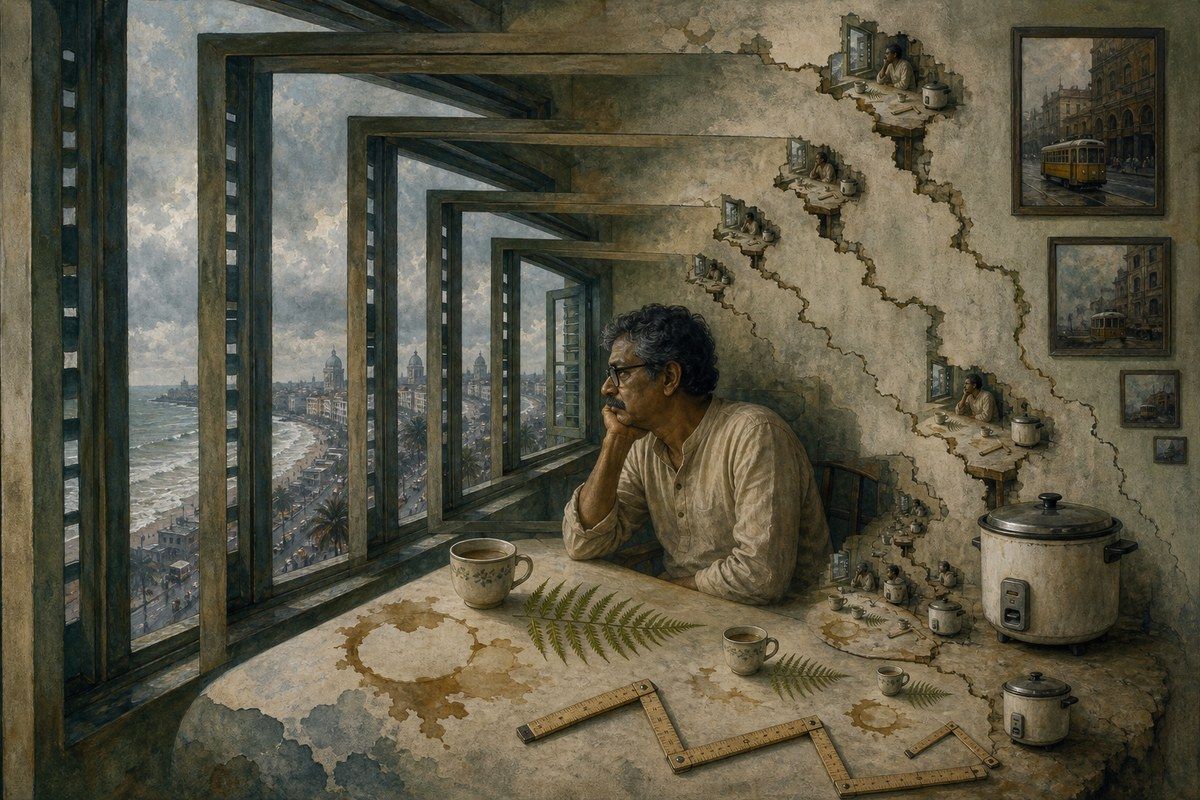
I am standing in my bathroom at four in the morning, staring at a cockroach the size of a small Fiat, and I am thinking about crabs. Not the cockroach, though the resemblance is—what is the word—fractal, yes, fractally uncanny, the way both creatures scuttle sideways with that particular arthropod indignity, the way both communicate through excretion, the way both have survived every extinction event that murdered the dinosaurs and will probably survive the heat death of the universe and the heat death of my own liver, which, let me tell you, is proceeding apace, thank you very much, thank you for asking, no one is asking, no one ever asks, but I am telling you anyway because that is what I do, I tell, I vomit words, I am a fifty-one-year-old atheist Bengali man from Calcutta, not Kolkata, never Kolkata, Kolkata is the name the government gave the city when they decided that colonialism was bad but renaming things was good, as if a name change could scrub the cholera out of the Hooghly, as if calling it Kolkata would make the traffic move, as if Kolkata would somehow produce fewer corrupt politicians, fewer NEET paper leaks, fewer Telegram blocks, fewer everything, and here I am, staring at this cockroach, and I am thinking about crabs.
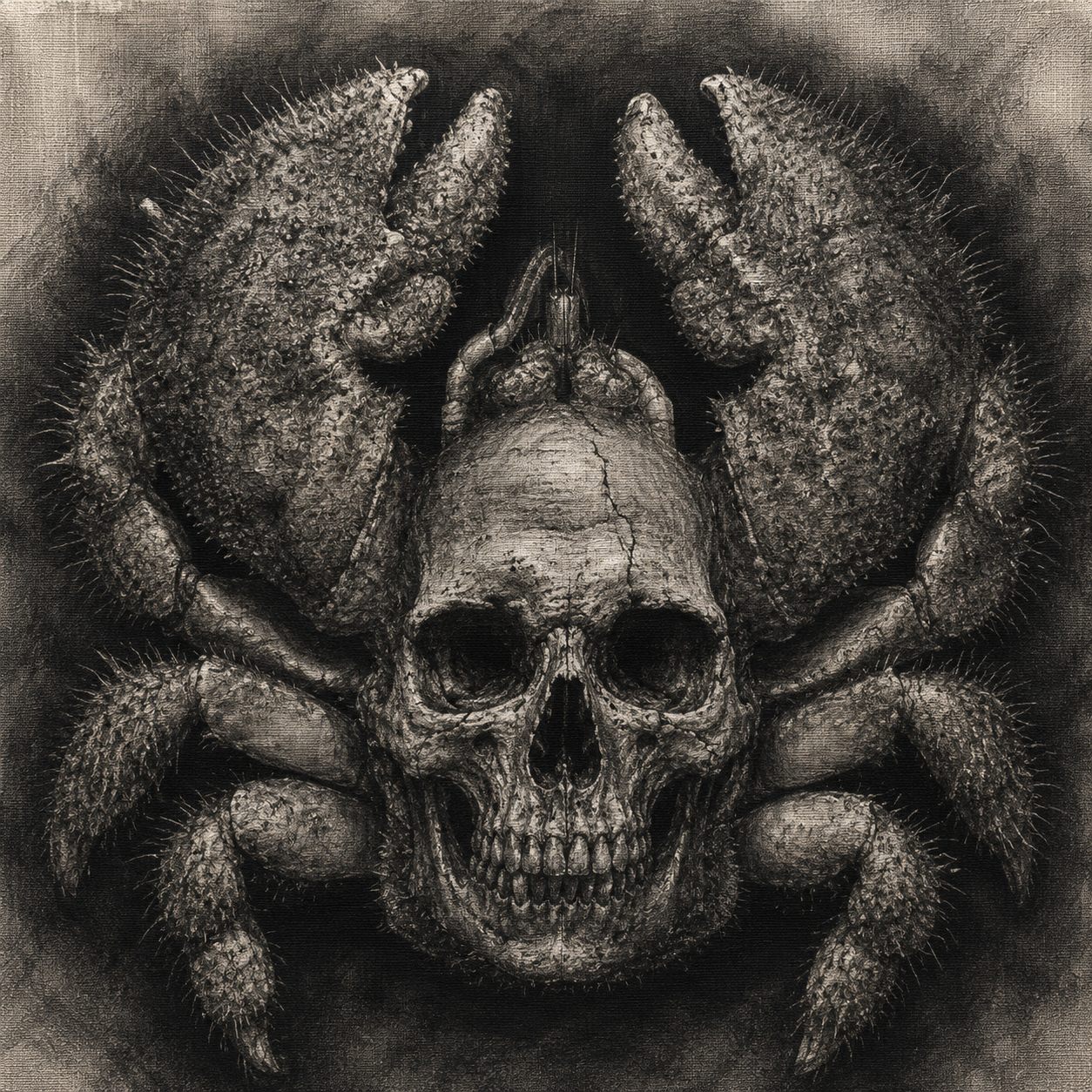
Did you know that some crabs communicate by urinating? They piss at each other. Chemically. They release urine from their faces—yes, their faces, their little crustacean mugs, their mandibular orifices, I looked it up, I am over-read, uselessly over-read, I have read everything and understood nothing—and this urine carries pheromones, messages, little aquatic telegrams saying I am here, I am angry, I want to mate, I want to fight, I am a crab and I am pissing on you, and I think, my God, my absent God, my nonexistent God, this is the most perfect metaphor for Indian governance I have ever encountered. The human Indian corrupt crab is a species stable in the Indian kakistocracy, spread fractally in all aspects of life, and they too communicate by urination, by spraying their toxic effluvia across every institution, every examination, every hospital, every hotel that catches fire and kills twenty-one people in Delhi, every Antonov An-32 that crashes in Assam, every Long Range Land Attack Cruise Missile that DRDO tests successfully while the country around it rots, every Telegram block that the Ministry of Electronics and Information Technology issues because someone leaked the NEET paper again, again, again, as if blocking Telegram will stop the leaks, as if blocking the messenger will fix the message, as if pissing on the fire will put it out.
I have not slept. I have not slept in thirty-six hours. I am manic. I am depressive. I am both, simultaneously, a quantum superposition of grandiosity and self-loathing, a Schrödinger’s Bengali, simultaneously alive and dead inside, and the cockroach is still there, staring at me with its compound eyes, each ommatidium a tiny lens reflecting my haggard face, my graying stubble, my bloodshot eyes, my everything-is-fucked expression, and I think: the cockroach is the honest one here. The cockroach does not pretend to be anything other than a cockroach. It does not run for office. It does not promise development. It does not block messaging apps. It simply exists, scuttles, eats, excretes, survives. The cockroach is the Zen master. The cockroach is the Buddha. The cockroach is more enlightened than every guru on every WhatsApp forward my kith and kin send me at six in the morning, every “Good Morning” image with a lotus and a quote from the Gita, every forwarded message about how turmeric cures cancer and how the government is actually good and how I should be grateful, grateful, grateful for what, for the LPG price hike, for the dust storms that killed ninety-six people in Uttar Pradesh, for the CBSE on-screen marking controversy where blurred answer sheets and payment portal collapses destroyed the futures of children who studied for two years in rooms without air conditioning in forty-five-degree heat, for what, tell me, what should I be grateful for, the cockroach does not ask me to be grateful, the cockroach simply is, and in that, there is a terrible, perfect dignity.
I was married once. She left. Smart woman. She saw the trajectory. She saw the graph. She saw the bipolar chart, the up and down, the euphoria and the crash, the way I would stay up for days writing manifestos that no one would read and then sleep for twenty hours and wake up hating myself with a purity that would make a Jain monk weep. She left before I could ruin her too, before I could spray my psychic urine all over her life, before I could communicate like a crab, sideways and toxic. I do not blame her. I blame myself, which is my primary hobby, my vocation, my religion, my atheistic prayer: I blame myself for everything, for the NEET leaks, for the Telegram block, for the Iran-America-Israel conflict that dominates the news, for the BJP winning West Bengal, for Vijay becoming Chief Minister of Tamil Nadu, for D.K. Shivakumar replacing Siddaramaiah in Karnataka, for every political development that I read about at three in the morning on my phone while lying in a pool of my own sweat in a Calcutta summer that feels like the inside of a crematorium oven, and I think: I did not cause these things, but I feel them, I absorb them, I metabolize them into this acid that corrodes my stomach lining and my soul lining, if souls have linings, which they don’t, because there are no souls, there are only neurons misfiring, neurotransmitters drowning, serotonin evaporating like monsoon rain on hot tar.
The word “kakistocracy” comes from the Greek kakistos, meaning “worst,” and kratos, meaning “power.” Rule by the worst. The worst people. The most venal, the most incompetent, the most urinarily communicative. And it is fractal, did I mention that? Fractal. Self-similar at every scale. The Prime Minister is corrupt, the Chief Minister is corrupt, the MLA is corrupt, the municipal councilor is corrupt, the ration shop owner is corrupt, the auto-rickshaw driver is corrupt, the man who sells you a bottle of water at the railway station is corrupt, and you, you are corrupt too, in your small way, in your petty way, in your I-will-bribe-the-traffic-cop-because-I-am-late way, in your I-will-not-report-the-neighbor-because-what-is-the-point way, in your I-will-scroll-past-the-news-of-the-fire-because-I-cannot-feel-anymore way. We are all crabs. We are all pissing on each other. We are all communicating through our waste. The entire country is a giant aquarium of urine and pheromones, and the water is getting warmer, and the oxygen is running out, and no one is changing the filter.
I tried to write a novel once. It was about a man who discovers that the entire city of Calcutta is actually a giant crab, and the Howrah Bridge is one of its legs, and the Victoria Memorial is its carapace, and the Metro is its digestive system, and the people are just mites living on its shell, feeding on its detritus, and the crab is dying, slowly, from a disease called modernity, and the man tries to save it by feeding it nostalgia, by pouring biryani and Rabindra Sangeet and adda and phuchka into its mandibles, but the crab just keeps scuttling sideways, toward the Bay of Bengal, toward the rising sea, and the man realizes that you cannot save a crab that does not want to be saved, that the crab is happy being a crab, that the crab’s idea of happiness is scuttling and pissing and surviving, and the novel ended with the man lying on the roof of his apartment building, watching the crab’s eye—the sun—set over the Ganges, and he smiles, not because he is happy, but because he has finally understood the fundamental truth of existence: that nothing matters, that everything is absurd, that the cockroach will outlive us all.
It was a bad novel. It was a very bad novel. I deleted it. I delete everything. My hard drive is a graveyard of aborted novels, abandoned essays, un-sent emails, un-said apologies, un-lived lives. I am a fractal of incompletion. I am a Mandelbrot set of self-sabotage. Zoom in, zoom in, zoom in, and at every level you will find the same pattern: potential, excitement, work, doubt, despair, deletion. Repeat. Forever.
Today is June 22, 2026. The International Day of Yoga was yesterday. I did not do yoga. I did not stretch. I did not breathe. I stared at a wall and thought about the etymology of the word “yoga,” which comes from the Sanskrit root yuj, meaning “to yoke,” “to join,” “to unite,” and I thought: what a cruel joke, what a grotesque irony, that on a day dedicated to union, to joining, to yoking, the country is more fractured than ever, more divided than ever, more pissed-on than ever. The NEET re-examination is happening. The UGC NET begins tomorrow. The FATF vice-presidency is being held by India, which is hilarious, because India is a money-laundering paradise, because every politician has a shell company in the British Virgin Islands, because the black money flows like the Hooghly during monsoon, brown and unstoppable and full of dead things. And Telegram is blocked. Until today. June 22. The block ends today. But the damage is done. The message is sent. The urine is sprayed. The pheromones are in the water. The crabs have spoken.
I am tired. I am so tired. But I am also wired, electrified, my brain is a Tesla coil of unwanted thoughts, each one arcing to the next, sparking, burning, and I cannot stop, I cannot sleep, I cannot rest, because if I rest, if I stop, if I let the current die, then the depression will come, the black dog, the black hole, the black everything, and it will swallow me, and I will lie in bed for days, not showering, not eating, not speaking, just existing in a state of pure, undiluted, pharmaceutical-grade despair, and I do not want that, I do not want the void, I prefer the fire, I prefer the sparks, I prefer the manic scuttling of my own mind, even if it burns me, even if it leaves me ash, because ash is at least warm, ash is at least something, ash is proof that there was once a fire, and the fire was beautiful, even if it destroyed everything.
The cockroach is gone. I do not know when it left. I was ranting, and it scuttled away, probably to find a darker corner, a damper spot, a place where no one stares at it and projects their metaphysical angst onto its chitinous back. I do not blame it. I would scuttle away from me too. I am unbearable. I know I am unbearable. I am the uncle at the party that no one invited, except I refuse to be called uncle, I hate that word, uncle, auntie, these words that Bengalis use to infantilize everyone, to turn every adult into a relative, into a figure of faux-familiar authority, no, I am not your uncle, I am not your kith and kin, I am a stranger, I am an alien, I am a crab on the beach of existence, scuttling sideways, pissing into the wind, and the wind is blowing it all back into my face, and I am tasting it, tasting my own waste, my own words, my own life, and it tastes like iron, like rust, like the Hooghly at low tide, like everything that has been and everything that will be, which is the same thing, which is nothing, which is this moment, this bathroom, this cockroach-less dawn, this manic-depressive monologue that no one asked for and no one will read and no one will remember, because memory is a lie, because the past is a fiction we tell ourselves to pretend that time is linear, that progress is possible, that the crab is moving forward, when in fact the crab is only moving sideways, always sideways, scuttling along the same beach, the same tide line, the same strip of sand between the ocean of oblivion and the land of disappointment.
I am going to make tea now. Strong tea. Red tea. The kind that stains your teeth and your soul. The kind that Bengalis drink at all hours, in all weathers, in all states of mind. Tea is the only constant. Tea does not leak. Tea does not get blocked. Tea does not require a two-thirds majority in the Lok Sabha. Tea simply is. Hot, bitter, necessary. Like life, if life were honest. Like death, if death were kind. Like me, if I were someone else.
P.S. — The etymology of “crab” is disputed. Old English crabba, related to Dutch krab, German Krebs, possibly from a Proto-Germanic root meaning “to scratch” or “to claw.” The constellation Cancer, the crab, was named by Ptolemy in the 2nd century CE, though the Babylonians knew it earlier. The crab in the myth of Hercules was crushed under the hero’s foot, and Hera, in her infinite petty wisdom, placed it in the sky as a constellation, which is, if you think about it, the ultimate bureaucratic promotion: you fail, you die, you get immortalized. The Indian kakistocracy operates on similar principles. Also, Telegram is unblocked now. The crabs can piss freely again. Happy Yoga Day, belatedly. The cockroach has probably laid eggs behind my toilet. Everything reproduces. Everything survives. Except my novel. Except my marriage. Except my sleep. Except my peace. None of which ever existed in the first place.
Word Cloud
Related reading
Selected by shared topics and section, with closer publication dates breaking ties.