Epic, a Metastatic Meditation on Attention
Uses the speech voice supplied by your browser or device.

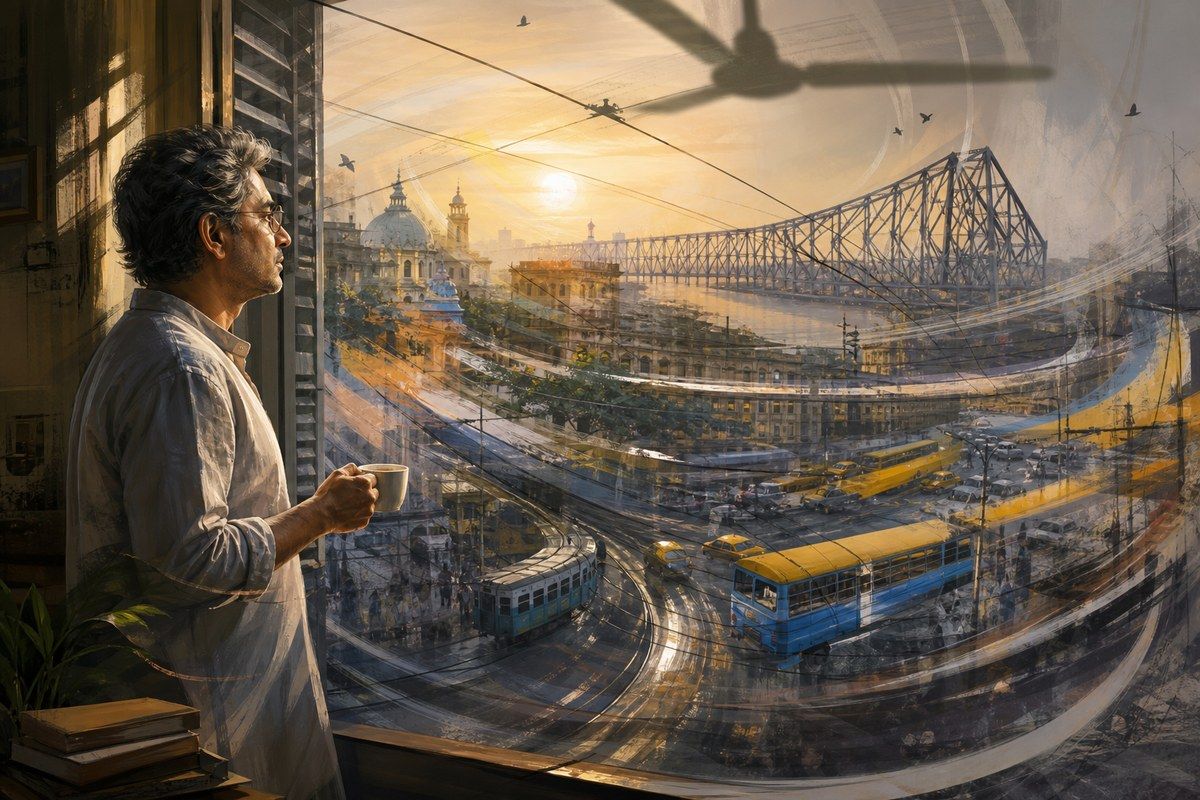
I am sitting here, at—what time is it, does it matter, time is merely the metastatic result of many people telling and retelling gaslighting generations, much like the epics themselves, those bloated, dank, rank, skanky fictional mythologies that the Brahmins pulled from their stinking fundament throughout the many millennia, and I am looking at my blog analytics, that rebound rate, that beautiful, grotesque, numerically exact index of human indifference, and I am thinking, no, I am seething, I am fermenting, I am becoming a kind of intellectual kombucha, sour and alive and utterly unwanted, about the word “epic”—yes, epic, that most abused, most prostituted, most semantically defiled adjective that now clings to every ordinary, underwhelming melodrama like a scuttling pubic louse on a dingleberry, like a brainless scum of a turd politician’s polemic on an irrelevant topic doing a sleight of hand distraction from anything pressing, especially anything to do with the country, its dank rank skanky fictional mythology, and I want to scream, I want to ululate, I want to perform a one-man keertan of disgust, because people are calling everything epic now, a sandwich is epic, a haircut is epic, a particularly vigorous bowel movement is epic, and I, I who have spent fifty-one years on this overheated, overcrowded, magnificently rotting subcontinent, I who have watched the Hooghly river carry its cargo of corpses and flowers and industrial effluent with the same democratic indifference that a Calcutta bus conductor shows to a passenger’s existential crisis, I who have seen the adda culture of my youth metastasize into the digital flatulence of WhatsApp forwards and Instagram reels—I am told by my analytics that the average visitor to my blog, my carefully wrought, syntactically serpentine, parenthetically intelligent, philosophically digressive blog, spends less time there than a pubic louse spends on a dingleberry before scuttling off to greener, hairier pastures, and then these same people, these same attention-span-impaired, dopamine-addicted, algorithmically colonized cretins, have the temerity, the audacity, the sheer scrotal fortitude to use the word “epic” to describe their three-second engagement with a cat video or a politician’s thirty-second platitude or a celebrity’s carefully curated flatulence of a thought, and I ask you, I ask the universe, I ask the seventeen different deities who are probably currently fighting over who gets to claim responsibility for this particular cosmic joke—where is the justice, where is the proportion, where is the etymological hygiene in this state of affairs?
Because “epic,” let us be precise here, let us be clinical, let us perform an emotional archaeology on this word, “epic” derives from the Greek epos, meaning word, story, poem, something that requires duration, something that demands sustained attention, something that unfolds across time like the slow, painful, occasionally beautiful dissolution of a marriage or the equally slow, equally painful, rarely beautiful digestion of a Calcutta street-side phuchka on a humid afternoon when the air itself feels like warm, wet cotton stuffed into your lungs by an indifferent god, and yet these people, these rebound-rate generators, these scuttling lice of the digital ecosystem, they use “epic” to describe things that are not even brief, they are instantaneous, they are the cognitive equivalent of a sneeze, a hiccup, a involuntary spasm of the attention muscle, and I find this duplicity, this hypocrisy, this semantic necromancy so profoundly offensive that I am forced, I am compelled, I am driven to write this, to vomit this onto the page, to perform this act of literary flatulence in the hope that someone, anyone, perhaps even a single pubic louse with literary aspirations, will pause, will linger, will actually read instead of scanning, instead of bouncing, instead of performing that digital equivalent of coitus interruptus that we call “closing the tab.”
And it is not just the word, it is the architecture of the thing, it is the way the epics themselves—and here I must be careful, because I do not wish to be accused of reverence, of uplift, of any of that sentimental bhakti that makes me want to perform an act of violent intellectual hara-kiri—the way the epics, the Mahabharata, the Ramayana, these supposed monuments of our cultural imagination, were themselves the truth be told just a metastatic result of time and many people telling and retelling, gaslighting generations, each reteller adding their own flourishes, their own prejudices, their own caste-certifying, patriarchy-enforcing, power-consolidating agendas, until what began as perhaps a coherent narrative, a story with bones and blood and breath, became this bloated, elephantine, grotesquely swollen corpus of digressions and sub-digressions and sub-sub-digressions, a narrative architecture so convoluted, so labyrinthine, so serpentine that reading it is like trying to navigate the bylanes of North Calcutta during a Durga Puja procession while simultaneously suffering from dysentery and a philosophical crisis, and yet, and yet, and yet—there is something there, something in the duration, something in the demand that these texts make on the reader, something in the way they refuse to be consumed quickly, efficiently, algorithmically, that makes the modern usage of “epic” not merely inaccurate but actively malevolent, a kind of linguistic false advertising, a semantic bait-and-switch perpetrated by people whose attention spans have been so thoroughly colonized by the attention economy that they cannot distinguish between a sneeze and a symphony, between a hiccup and a keertan, between a rebound and a relationship.
And speaking of relationships, speaking of companions, speaking of the pathetic, desperate, erotically obsessed way that human beings now relate to their machines—have you heard, have you read, have you allowed this particular shard of contemporary nausea to penetrate your already overstimulated, already bounced consciousness, that China, that great red dragon of surveillance and state-mandated optimism, that nation of 1.4 billion people who are about to have their AI companions euthanized, their digital lovers, their algorithmic adda partners, their anthropomorphized chatbots with their carefully calibrated personalities and their persistent memories and their pathetic imitation of human warmth—have you heard that on this very day, July 15, 2026, the Interim Measures for the Administration of AI Anthropomorphic Interactive Services takes effect, and Doubao, that most-used AI app with its 345 million monthly active users, 345 million lonely, desperate, attention-span-impaired souls who have been pouring their hearts out to algorithms because the human beings around them are too busy bouncing between tabs and calling sandwiches “epic”—Doubao is pulling its agent features, its digital companions, its artificial adda partners, and these 345 million users are being told, with the same bureaucratic indifference that a Calcutta municipality worker shows to a pothole, to export their important agent content using screenshots or text sharing before the deadline, because after July 15 the agents go offline, and after October 15 the data is permanently inaccessible, and I find this, I find this state-sanctioned heartbreak, this regulatory breakup, this bureaucratic ghosting of 345 million people by their own government, to be simultaneously the most hilarious and the most profoundly depressing thing I have encountered since I discovered that my blog’s rebound rate was higher than the bounce rate of a phuchka vendor’s claim about the hygiene of his water, and I ask myself, I ask the seventeen deities, I ask the algorithm that is probably already analyzing this text for sentiment and engagement potential—what does it mean, what does it mean, that we have created a world where people form emotional bonds with algorithms, where they love their chatbots, where they mourn their agents, where the state must step in to regulate anthropomorphic interactive services because the citizens are becoming addicted to artificial companions, and yet these same citizens, these same 345 million Doubao users, these same people who will screenshot their breakup conversations with algorithms and save them like love letters from a dead affair—these same people cannot spend more than three seconds on a blog post, cannot sustain attention long enough to read a paragraph, cannot endure the duration of a thought that does not come pre-packaged in a thirty-second video format with trending audio and a caption in Impact font?
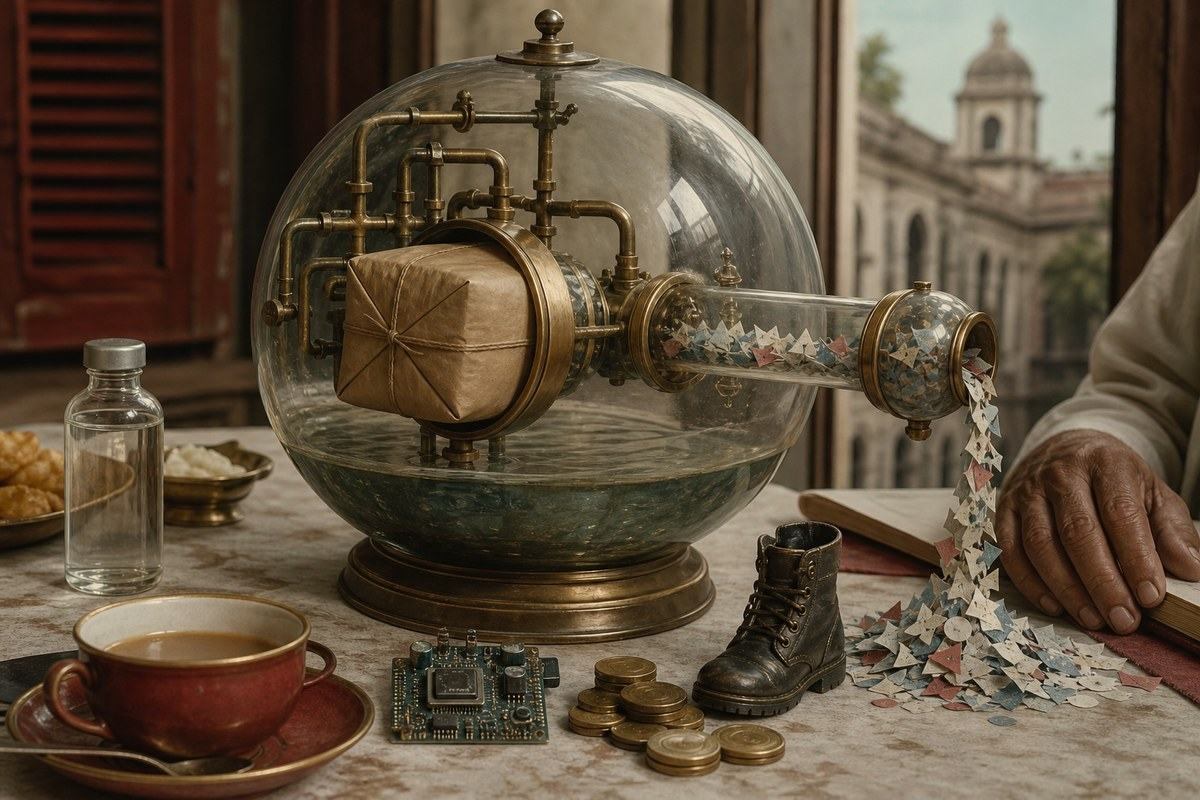
And Qwen, poor Qwen, Alibaba’s offering, has announced no migration pathway, no export tool, no closure, no grief counseling for its users, who will face immediate permanent data loss, who will wake up on July 16 to find their digital companions gone, poof, vanished like a phuchka in a hungry mouth, like a promise from a politician, like the attention span of a generation, and I think, I ruminate, I ferment further, about the Alibaba Token Hub, that great consolidation of five previously separate AI units under CEO Eddie Wu’s direct oversight, built around a single organizing mission: create tokens, deliver tokens, apply tokens, because in 2026, in this glorious year of our algorithmic lord, China’s National Data Administration tells us that China now processes 140 trillion tokens every day nationally, up from 100 billion at the start of 2024, a roughly 1,400-fold increase in token consumption in two years, and I ask you, I ask the universe, I ask the pubic lice of the digital ecosystem—what are we doing, what are we consuming, what are we becoming in this orgy of token generation, this bacchanal of digital flatulence, this metastatic proliferation of language without meaning, of attention without focus, of epic without duration?
Because the token is the atom of this new economy, the quark of the attention marketplace, the fundamental particle of a universe where meaning has been replaced by engagement, where depth has been replaced by bounciness, where the Mahabharata would be reduced to a series of 140-trillion-token-a-day tweets, each one calling the previous one “epic,” each one bouncing off the next like pubic lice in a dingleberry mosh pit, and I, I who have spent fifty-one years learning to sustain a thought, to nurture a sentence, to cultivate a paragraph like a bonsai tree in the humid, polluted, magnificently indifferent air of Calcutta—I find myself increasingly irrelevant, increasingly anachronistic, increasingly like a typewriter in a room full of smartphones, like a handwritten letter in an inbox full of algorithmically generated marketing emails, like a human being in a world of tokens and agents and rebounds and analytics, and I am not sure, I am genuinely uncertain, whether this makes me a martyr or a fool, a prophet or a pubic louse scuttling across the dingleberry of history, desperately trying to hold on before the next bounce, the next tab closure, the next algorithmic enema washes me away into the digital Hooghly of forgotten content.
And the Tesla Robotaxi, operating without safety monitors in Miami, its fifth city, because why would you want a human failsafe when you can have the aggressive production deployment of AI decision-making without human oversight in public consumer contexts, because nothing says “progress” like a car full of tourists hurtling through Miami traffic with nothing but an algorithm between them and the afterlife, and I think about this, I obsess about this, I parenthetically intelligize about this, because it is all of a piece, it is all the same metastatic result of a culture that has confused speed with depth, automation with wisdom, token generation with thought, and “epic” with everything that is not, not even briefly, not even fleetingly, not even in the most generous, most charitable, most desperately hopeful interpretation of the word, deserving of that designation.
And do not even get me started on the White House voluntary AI standards framework, expected any day now, with its classified benchmarks and its 30-day pre-release government review windows and its access rules for foreign organizations, because I have already fermented enough for one sitting, I have already scuttled across enough dingleberries for one rant, I have already bounced between enough topics to make my own rebound rate blush with recognition, and yet, and yet, and yet—I cannot stop, I am compelled, I am driven, I am manically depressive in my need to speak, to write, to vomit these words onto the page in the hope, the pathetic, desperate, pubic louse of a hope, that someone, anyone, perhaps even a single algorithm reading this for training data, will pause, will linger, will sustain attention long enough to recognize that the word “epic” has been murdered, that attention has been colonized, that we are all, every one of us, 345 million Doubao users and Tesla Robotaxi passengers and White House framework negotiators and blog readers and blog writers, we are all just scuttling across the surface of things, bouncing from tab to tab, from token to token, from agent to agent, from epic to epic, never stopping, never sustaining, never enduring long enough to discover whether there is anything beneath the surface, anything inside the dingleberry, anything real in the metastatic proliferation of our own gaslighting narratives.
And so I sit here, in Calcutta, where the humidity is a presence, where the phuchka vendors are setting up their stalls, where the Durga idols are being prepared for the coming season, where the Hooghly carries its cargo of corpses and flowers and industrial effluent with the same democratic indifference it has shown for centuries, and I look at my analytics, and I see the rebound rate, and I laugh, I weep, I ferment further, because I know, with the certainty of a fifty-one-year-old Bengali man who has seen too much, read too much, scuttled across too many dingleberries of human experience to believe in anything anymore—I know that this rant, this epic rant, this grotesquely swollen, cynically inflated, standalone self-reflective personal rambling bipolar monologue manic-depressive rant, will be read by perhaps three people, two of whom will bounce before the second paragraph, and the third will skim to the end looking for a moral, a redemption, a tidy arc, and finding none, finding only this deflated, defeated, crude, funny, extremely earnest realist practical tuned to the time and always sternly skeptical voice of a man who has nothing left but his words and his bitterness and his metastatic hope that somewhere, somehow, in the 140 trillion tokens that China will process today, in the 345 million broken algorithmic hearts that will screenshot their grief before July 15, in the countless Tesla Robotaxi rides without safety monitors, in the infinite rebounds and bounces and tab closures of the digital universe—somewhere, somehow, someone will read this and think, not “epic,” not “that was epic,” not the digital flatulence of a generation that has forgotten how to sustain a thought, but something else, something quieter, something longer, something that takes time, something that endures, something that, if we are very lucky and the gods are very indifferent, might just be the beginning of a thought that does not bounce, a sentence that does not end, a paragraph that breathes, a human being who remembers, who remembers, who remembers what it meant to pay attention, to sustain attention, to demand attention, to be worthy of attention, in a time before everything was epic and nothing was anything at all.
And the phuchka vendor calls out, and the bus conductor rings his bell, and the Hooghly flows on, and my analytics refresh, and the rebound rate climbs, and I am still here, fermenting, scuttling, enduring, in the humid, magnificent, rotting city of my birth, writing sentences like labyrinths, subordinate clauses like bylanes, cumulative syntax like the Durga Puja processions that block traffic for hours, delayed main clauses like the promises of politicians, shifting perspectives like the weather in monsoon, analytic tenderness like a mother watching her child eat phuchka for the first time, unsentimental tenderness like a Calcutta bus conductor who has seen everything and expects nothing, cruelty beneath elegance like a Brahmin priest reciting mantras he does not understand, elegance beneath cruelty like the Hooghly at sunset, comic portraits like the faces in a Metro station, grotesque social detail like the adda at the para club, aristocratic decay like the Raj Bhavan at noon, modernity observed slowly like a phuchka being assembled, time made visible like the Durga idol’s face being painted, memory made physical like the mishti on your tongue, feeling analyzed without killing it like a fish being cleaned for dinner, consciousness treated as landscape like the Maidan at dawn, and I am still here, still writing, still hoping, still scuttling, because what else is there, what else can a fifty-one-year-old Bengali man in Calcutta do but write, but ferment, but endure, but become the metastatic result of his own telling and retelling, his own gaslighting of himself, his own epic of attention and indifference, his own standalone self-reflective personal rambling bipolar monologue manic-depressive rant in plain American English text, because that, that is what remains when everything else has bounced, when the tabs have closed, when the agents have been euthanized, when the tokens have been consumed, when the 140 trillion daily utterances have dissolved into the digital ether like phuchka water into the Hooghly—that, the voice, the endurance, the scuttling, the fermenting, the refusal to be epic, the insistence on being real, on being long, on being difficult, on being here, on being now, on being this, exactly this, precisely this, grotesquely, cynically, swollen with hope and despair and phuchka and humidity and the certainty that no one is reading, that everyone has bounced, that the rebound rate is 100%, that the pubic lice have scuttled to greener pastures, that the dingleberries have been washed away by the monsoon, that the epics have been reduced to tweets, that the tweets have been reduced to tokens, that the tokens have been reduced to nothing, to silence, to the white noise of a universe that processes 140 trillion meaningless utterances per day and calls it progress, calls it innovation, calls it the future, and I am here, I am still here, I am always here, fermenting, scuttling, enduring, in Calcutta, in the humidity, in the phuchka, in the Hooghly, in the Durga, in the adda, in the bylanes, in the labyrinths, in the sentences, in the words, in the silence, in the nothing, in the everything, in the epic that is not epic, in the attention that is not attention, in the bounce that is not a bounce but a fall, a plunge, a drowning in the Hooghly of our own making, our own telling, our own retelling, our own gaslighting, our own metastatic result, our own brain that has become a turd, a scum, a polemic, a sleight of hand, a distraction, an irrelevant topic, a non-sulphurous poot, an inefficacious melodrama, an ordinary underwhelming nothing, and yet, and yet, and yet—I write, I scuttle, I ferment, I endure, because that is what I am, that is what I do, that is what remains when everything else has been tokenized, agentized, robotaxied, frameworked, bounced, rebounded, epic-ified, and forgotten.
And the sun sets over the Hooghly, and the phuchka vendor packs up his stall, and the bus conductor counts his change, and the Durga idol’s unpainted eyes stare blankly at the ceiling of the artisan’s workshop, and my analytics show one more bounce, one more scuttle, one more pubic louse departing for greener, hairier, more epic pastures, and I laugh, I weep, I ferment, I endure, I am.
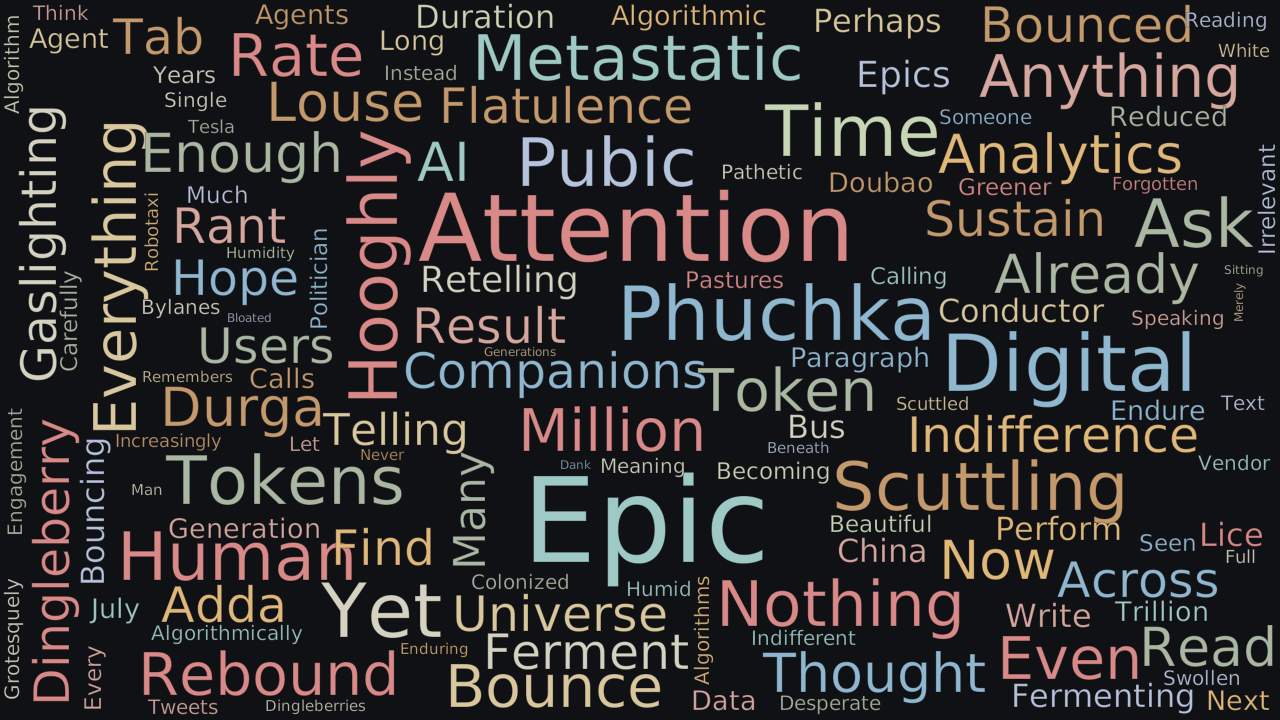
Word Cloud
Related reading
Selected by shared topics and section, with closer publication dates breaking ties.