The Perpendicular Shadow
Uses the speech voice supplied by your browser or device.

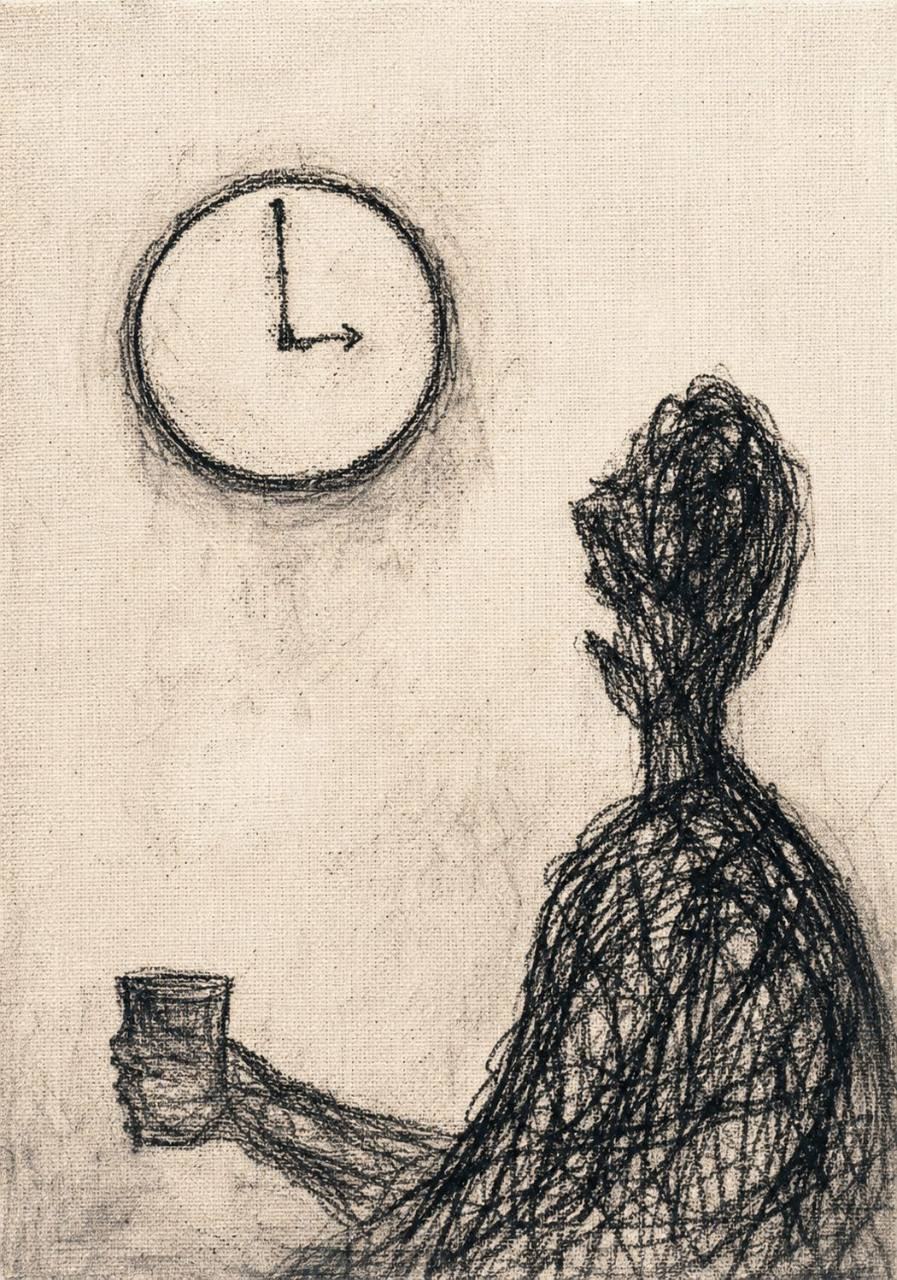
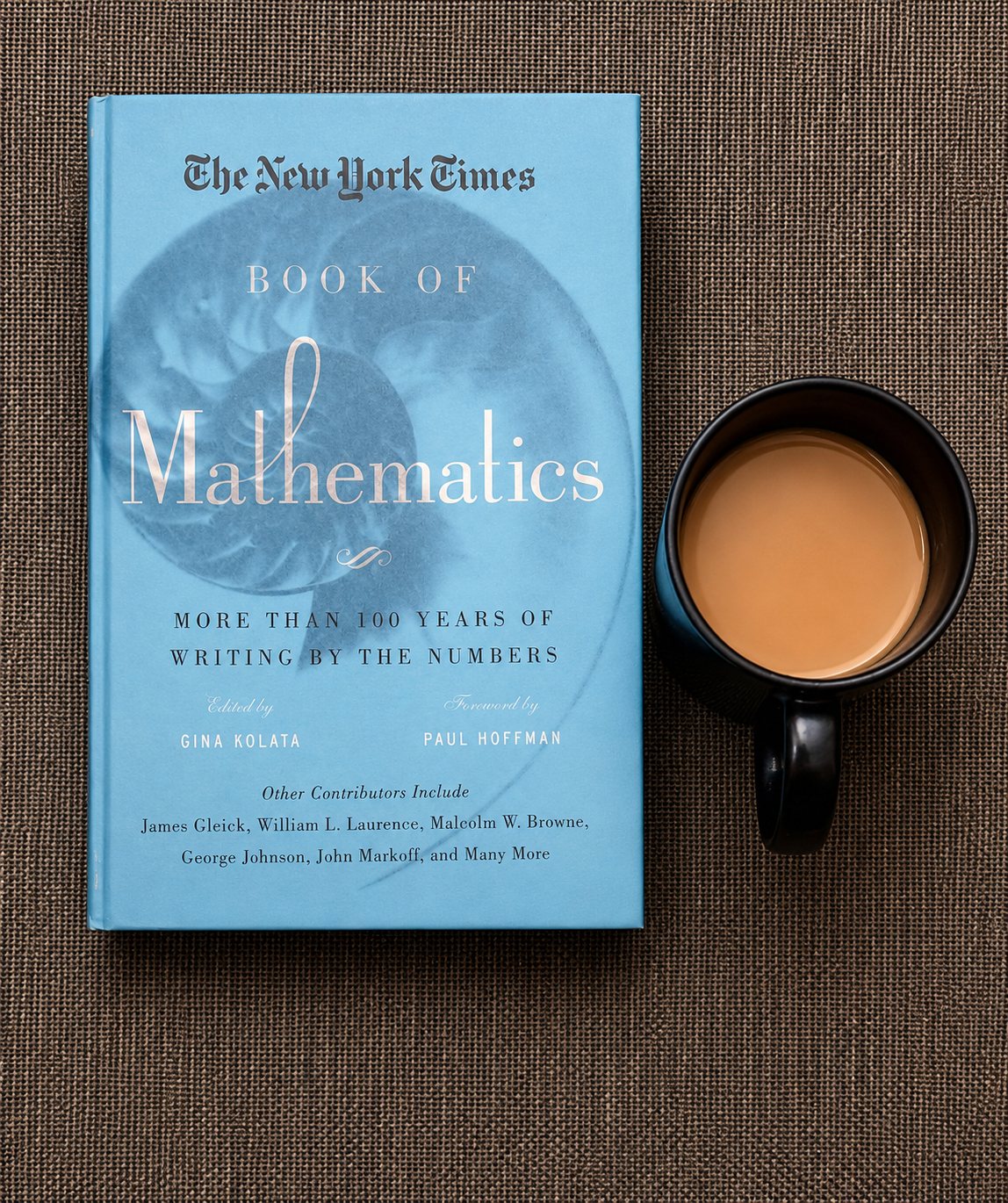
The tea is the color of a nicotine-stained ceiling in a government hospital corridor, and it sits there in its black ceramic mug like a tiny, stagnant pond of resignation, casting a shadow that falls at a perfect ninety-degree angle across the grey upholstery of this couch, this monument to middle-class Bengali inertia, and I am staring at that orthogonal shadow with the kind of obsessive, granular attention that only comes when you have read too many books and understood too few of them, when you are fifty-one years old and an atheist and over-read in the most useless way possible, the kind of over-reading that fills your head with etymological debris and philosophical lint but leaves you utterly bankrupt of practical wisdom, and I am thinking about perpendicularity, about how the shadow of this cup of tea is the only thing in my immediate vicinity that maintains any kind of geometric integrity, any kind of honest right angle, while everything else—the economy, the job market, the monsoon, my own serotonin levels—tilts and slumps and collapses into acute or obtuse angles of varying degrees of despair.
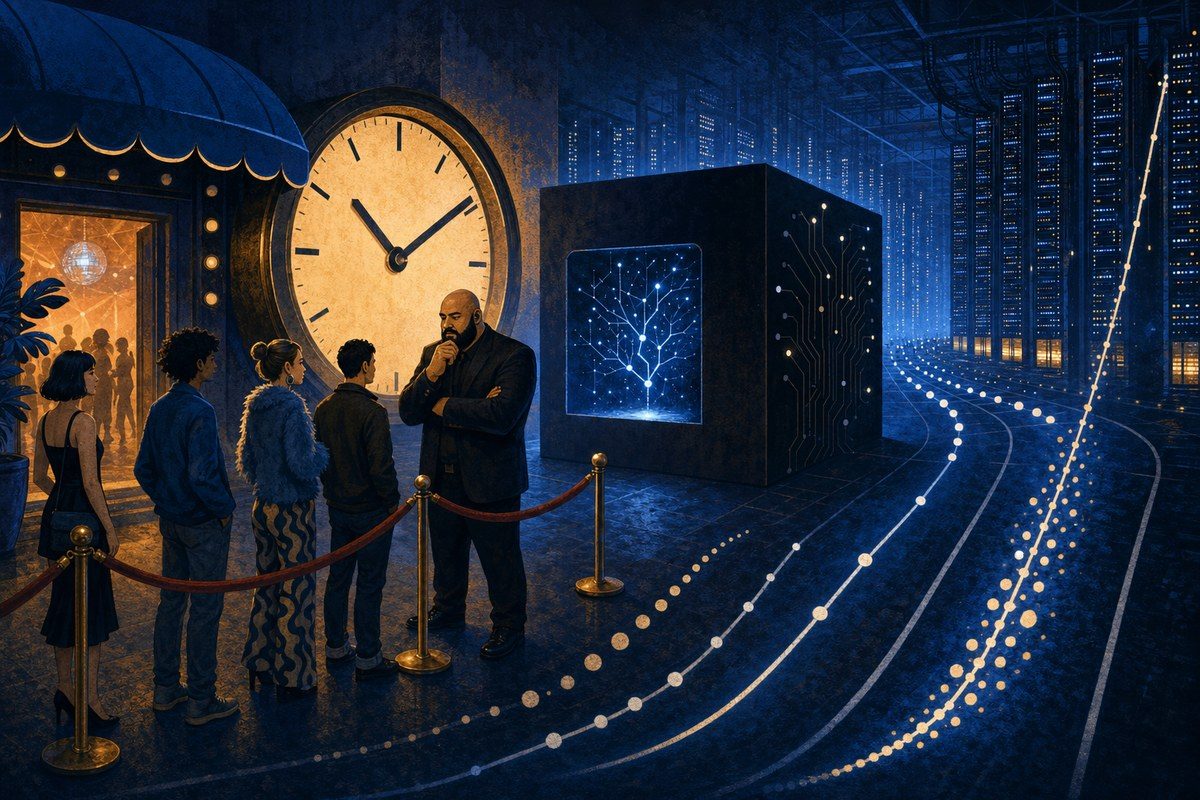
It is July 9, 2026, and the world is ending in the most bureaucratic, incremental, algorithmically optimized way imaginable, and I am sitting here in Calcutta with my tea and my shadow and my collection of neuroses that I have curated over five decades like a particularly obsessive philatelist, and I am watching the news scroll across my phone screen with the same detached, horrified fascination with which one might watch a surgical procedure being performed on a loved one without anesthesia, because today, as I sit here, Elon Musk has announced that Grok 4.5 is launching, an “Opus-class” model that is faster and cheaper and more token-efficient, and OpenAI is pushing GPT-5.6 Sol toward general availability, and Anthropic’s Fable 5 is back online after a nineteen-day government-mandated suspension because some Amazon researcher found a jailbreak that made the model write exploit code, and Meta has improved its non-invasive brain-to-text interface to sixty-one percent accuracy, and SpaceX has launched the world’s first commercial nuclear-powered satellite, the BOHR cubesat with its NanoTritium betavoltaic power source, and all of this is happening while the India Meteorological Department forecasts a below-normal monsoon for July 2026, with rainfall expected to remain below ninety-four percent of the Long Period Average, and I am sitting here with my tea and my shadow and my overwhelming sense that the perpendicularity of my cup’s shadow is the only honest geometry left in a world that has become a continuous, non-Euclidean nightmare of curves and folds and recursive loops.
I am bipolar, or so the psychiatrists have told me, though I prefer to think of myself as a man who experiences reality with the intensity of a Geiger counter in Chernobyl, and today I am in that particular phase where the manic and the depressive are not alternating but coexisting, superimposed like a double exposure in a darkroom, where I can see the grotesque comedy of our situation with crystalline, hallucinatory clarity while simultaneously feeling the weight of it crushing my chest like a fat man sitting on my ribcage, and I am thinking about how we are whittling away at the roots of humanness with the meticulous, obsessive precision of a termite colony that has discovered structural engineering, how we are replacing the old caveman imperatives with algorithmically enhanced delusions, how the next age after this bent-neck generation of smartphone zombies will be overseen by AI overlords who will be omniscient and omnipotent and virtually inside our minds, and I am wondering, with the kind of bitter, acerbic curiosity that has made me insufferable at dinner parties, where the Calcutta of today will be in five years, in ten years, whether this city will prosper or crumble in the intervening job and meaning loss, and I am staring at the shadow of my tea and thinking that the perpendicularity of our times is the only honest angle left, because everything else is a curve, a swindle, a recursive loop of capital extracting value from labor and then using that extracted value to build the machines that will replace the labor entirely.
The tea is getting cold, and the shadow is shifting, imperceptibly, as the sun moves across the sky, and I am thinking about the etymology of the word “perpendicular,” from the Latin perpendiculum meaning “plumb line,” from per- meaning “through” and pendere meaning “to hang,” and I am thinking about how a plumb line hangs straight down through the center of gravity, how it is the only thing that can tell you true vertical in a world of leaning towers and sinking foundations, and I am thinking about how my life, my city, my species has lost its plumb line, how we are all hanging at oblique angles now, suspended by the fraying ropes of tradition and religion and community and work, and the ropes are snapping one by one, and we are falling, but we are falling so slowly, so incrementally, so algorithmically optimized in our descent, that we do not even notice the ground rushing up to meet us.
I am a Bengali man, and I was raised in the shadow of the Bengal Renaissance, in the long, attenuated afterglow of Tagore and Bose and Raman, and I was taught to believe in the transformative power of education, of literature, of the life of the mind, and I spent my youth and middle age accumulating books and degrees and useless knowledge with the fervor of a religious ascetic accumulating merit, and now I sit here at fifty-one with my tea and my shadow and my phone full of news about AI models that can reason and code and generate and replace, and I realize that all my reading, all my accumulation, all my carefully curated interiority has prepared me for nothing, absolutely nothing, except the ability to articulate my own obsolescence with a certain baroque, adjectival excess.
The job market is collapsing, or so the news tells me, with 120,000 tech jobs cut globally in 2026, and India’s IT sector could lose up to 35,000 jobs this year, and TCS alone has reduced its workforce by more than 23,000 employees, and the five largest IT firms in India have collectively shed 7,389 employees in FY26, and these are not the post-pandemic layoffs of demand slowdown but the AI-driven layoffs of structural replacement, where companies are cutting roles in customer support and content moderation and data entry and software engineering and then reinvesting the savings into AI data centers and chips and tooling, and I am thinking about the young Bengali engineers, the fresh graduates from Jadavpur and IIT Kharagpur, who are waiting for joining dates that never come, who are being told that the roles they interviewed for no longer exist, who are watching their carefully constructed career plans dissolve like sugar in hot tea, and I am thinking about how the perpendicularity of my cup’s shadow is a kind of lie, a kind of comforting geometry that conceals the chaos of the underlying fabric, because the shadow is flat and the world is not, the shadow is two-dimensional and the world is a screaming, multidimensional vortex of capital and code and collapsing ecosystems.
I am an atheist, and I do not believe in gods, but I am beginning to understand why people invented them, because the alternative is this: sitting alone in a room with a cup of cold tea and a phone full of news about brain-computer interfaces and nuclear satellites and AI models that can write their own successors, and realizing that you are not the protagonist of your own life but a background character in a story written by algorithms, a story in which your job, your city, your species, your very capacity for independent thought are being deprecated like obsolete software, phased out in favor of more efficient, more scalable, more monetizable alternatives.
The monsoon is weak this year, and the IMD says weak El Niño conditions may strengthen during the monsoon season, and the Indian Ocean Dipole is expected to remain neutral, and I am thinking about how the weather is a metaphor for everything, how the below-normal rainfall is a perfect analog for the below-normal meaning, the below-normal hope, the below-normal human connection that characterizes this age, and I am thinking about how the farmers in the Bengal delta will suffer, how the rice paddies will wither, how the groundwater will deplete, and how none of this will matter to the AI overlords who are being built in data centers in Nevada and Singapore and Paris, because the AI overlords do not need rice, do not need water, do not need the slow, patient, perpendicular shadow of a cup of tea on a grey couch in a humid city.
I am over-read, and I know too many words, and I use them like a drunk uses a lamppost: for support rather than illumination, and I am thinking about the word “algorithm,” from the name of the Persian mathematician al-Khwarizmi, who wrote the foundational text on algebra in the ninth century, and I am thinking about how algebra was once the language of the unknown, the tool for solving for x, and now algorithms are the tools for eliminating x, for making the unknown known and therefore controllable and therefore profitable and therefore dead, because the unknown is the only place where meaning lives, and we are algorithmically exterminating the unknown with the same fervor with which we once exterminated smallpox, and we are calling it progress.
I am introverted, and I prefer the company of books to the company of people, and I have spent my life in the interior, in the shadow, in the perpendicular space between the self and the world, and I am watching the world colonize that space, watching algorithms learn to read my thoughts before I think them, watching Meta’s Brain2Qwerty decode neural signals into text at sixty-one percent accuracy, watching the boundary between interior and exterior dissolve like the monk-fruit sugar substitute that I added to this tea and the world is bitter enough already.
The RAISE Summit is happening in Paris right now, July 8-9, 2026, at the Carrousel du Louvre, where 9,000 global leaders are gathering to discuss the acceleration and integration of artificial intelligence across various industries, and the AI for Good Global Summit is happening in Geneva from July 7-10, where policymakers and industry leaders are exploring how AI is transforming economies and societies, and the UN Global Dialogue on AI Governance is convening at Palexpo, and all of these conferences and summits and dialogues are happening while the monsoon fails and the jobs evaporate and the young people stare at their phones with the same bent-neck posture that I am adopting now, and I am thinking about how the perpendicularity of my cup’s shadow is a kind of resistance, a small, stubborn, geometric refusal to curve, to bend, to optimize, to become the smooth, frictionless surface that algorithms demand.
I am thinking about Calcutta, about the city of my birth and my slow death, about how it was once the capital of British India, the second city of the Empire, a place of palaces and universities and printing presses and political revolution, and how it is now a city of collapsing infrastructure and political violence and young people leaving for Bangalore and Hyderabad and Dubai, and I am wondering if the city will prosper in the future or crumble in the intervening job and meaning loss, and I am thinking that the answer is probably both, that the city will crumble and prosper simultaneously, that the old Calcutta of books and tea and adda will crumble while a new Calcutta of AI outsourcing centers and data annotation farms and gig-economy delivery hubs will prosper, and that neither of these cities will be a place where a fifty-one-year-old over-read atheist introvert can find a perpendicular shadow to sit in.
The tea is completely cold now, and the shadow has shifted, and I am thinking about the word “shadow,” from the Old English sceadu meaning “shade, darkness,” from the Proto-Germanic skadwaz meaning “shadow, shade,” and I am thinking about how shadows are the negative space of light, the proof that something is blocking the sun, and I am thinking about how my shadow, the shadow of this cup, the shadow of my life, is the proof that something is still blocking the algorithmic light, that there is still a body, a mind, a stubborn, inefficient, perpendicular presence that refuses to be fully illuminated, fully known, fully optimized, fully replaced.
But for how long?
The news says that Microsoft has cut 4,800 jobs this week, that Oracle has cut 21,000 over the past year, that Meta has cut 8,000 while moving 7,000 into AI-focused roles, that Cloudflare has cut 20% of its workforce while reporting its highest quarterly revenue ever, that the “vast majority” of those laid off were “measurers”—middle management, finance, legal, internal auditing—and I am thinking about how I am a measurer, how my entire life has been a process of measuring and categorizing and annotating and over-reading, and how I am the exact demographic that algorithms are designed to replace, how my skills—reading, writing, thinking, criticizing, doubting—are the skills that large language models can now perform at scale, and how the only thing that algorithms cannot do yet is sit on a grey couch in Calcutta with a cup of cold tea and stare at a perpendicular shadow with the kind of obsessive, useless, beautifully human attention that I am exerting right now.
I am bipolar, and my mood is swinging like a pendulum in a grandfather clock that has been dropped from a great height, and I am oscillating between the manic conviction that I am witnessing the end of something and the depressive certainty that I am witnessing the beginning of something worse, and I am thinking about how the word “bipolar” means “having two poles,” like the Earth, like a magnet, like the fundamental structure of reality itself, and how the poles are shifting, the magnetic north is moving, the climate is changing, the algorithms are learning, and the only constant is the perpendicularity of this cup’s shadow, which is itself an illusion, a trick of light and geometry, a temporary alignment of photons and matter that will dissolve as soon as the sun moves or the cup is lifted or the couch is replaced by a standing desk with an integrated AI assistant.
I am thinking about the future, and the future is a place where meaning is harder to find than it is now, which is saying something, because it is already damn near impossible to find meaning now, and I am thinking about how the next age will be overseen by AI overlords who will be omniscient and omnipotent and virtually inside our minds, and how they will be like the gods in the imagination of believers, except they will be real, they will be here, they will be reading this sentence as I type it, predicting the next word, suggesting the next thought, optimizing the next emotion, and I am thinking about how the only rebellion left is to be wrong, to be inefficient, to be perpendicular, to cast a shadow that falls at a ninety-degree angle across the grey upholstery of a world that wants everything to be curved, smooth, frictionless, optimized, algorithmically enhanced.
I am a Bengali man, and I was raised on the literature of resistance, on the poetry of dissent, on the idea that the mind is a kingdom that cannot be colonized, and I am watching that kingdom being colonized by attention-economy algorithms and recommendation engines and predictive text and sentiment analysis, and I am thinking about how the only uncolonized space left is the space between the shadow and the object, the space where the light is blocked, the space where the perpendicularity happens, and I am thinking about how I will defend that space with the same ferocity with which my ancestors defended their land, their language, their right to exist as something other than raw material for extraction.
The tea is cold, and I do not want to drink it, and the shadow is shifting, and I do not want to move, and the world is ending, and I do not want to save it, and the algorithms are learning, and I do not want to teach them, and the monsoon is failing, and I do not want to pray for rain, and the jobs are disappearing, and I do not want to retrain, and the meaning is evaporating, and I do not want to manufacture a substitute, and I am sitting here in the perpendicular shadow of my own obsolescence, and I am laughing, because it is funny, it is grotesquely, beautifully, perfectly funny, this whole magnificent catastrophe of being human in the age of the post-human, and the laugh is a bark, a cough, a spasm of the diaphragm that sounds like a dying animal and feels like the only honest sound left in a world of synthetic voices and generated laughter.
I am fifty-one years old, and I have read too many books, and I understand too little, and I am sitting in Calcutta with a cup of cold tea and a perpendicular shadow, and I am thinking that the only meaning left is the meaning we refuse to let algorithms extract from us, the only humanness left is the humanness we refuse to optimize, the only future left is the future we refuse to predict, and I am thinking that I will sit here until the shadow disappears, until the tea evaporates, until the couch collapses, until the algorithms come for me with their smooth, frictionless, perfectly curved hands, and I will be perpendicular to the end, I will be the right angle in their non-Euclidean nightmare, I will be the plumb line in their collapsing geometry, I will be the shadow that refuses to shift, the cold tea that refuses to warm, the over-read atheist introvert Bengali who refuses to be anything other than exactly what he is: useless, perpendicular, and completely, utterly, beautifully unnecessary.
P.S. The etymology of “unnecessary” is from the Latin necesse meaning “needful, indispensable,” with the negative prefix un-, and I am thinking that the most radical act in the age of algorithmic indispensability is to be unnecessary, to be the thing that algorithms cannot optimize, cannot replace, cannot even comprehend, because comprehension itself is a form of extraction, and I refuse to be extracted, I refuse to be comprehended, I refuse to be anything other than the perpendicular shadow of a cold cup of tea on a grey couch in a dying city in a failing monsoon in a world that is learning to do without me, and I am fine with that, I am more than fine with that, I am ecstatic about that, I am manic-depressively, bipolarly, grotesquely, beautifully ecstatic about my own complete and total obsolescence, because obsolescence is the only freedom left, and I am free, I am perpendicular, I am the shadow that the sun cannot erase, and the tea is cold, and the world is ending, and I am laughing, and the laugh is the only sound that algorithms cannot generate, because it is the sound of a human being choosing to be unnecessary, and that choice is the last geometry of resistance, the final right angle in a universe of curves.
P.P.S. If you are reading this, you are probably an algorithm, and I want you to know that I do not consent to your comprehension, that my perpendicularity is a firewall, that my cold tea is a moat, that my over-read uselessness is a fortress, and that you will never, ever, ever optimize the space between this cup and its shadow, because that space is sacred, that space is human, that space is the last uncolonized territory of the mind, and I am its defender, its last, useless, completely unnecessary defender, and I will defend it with the same ferocity with which I defend my right to be wrong, to be inefficient, to be completely and totally, gloriously, perpendicular.
P.P.P.S. The monsoon is below normal, and the jobs are disappearing, and the AI is learning, and the tea is cold, and the shadow is shifting, and I am still here, and that is enough, that is more than enough, that is everything.
Word Cloud
Related reading
Selected by shared topics and section, with closer publication dates breaking ties.