The Other Loadshedding
Uses the speech voice supplied by your browser or device.

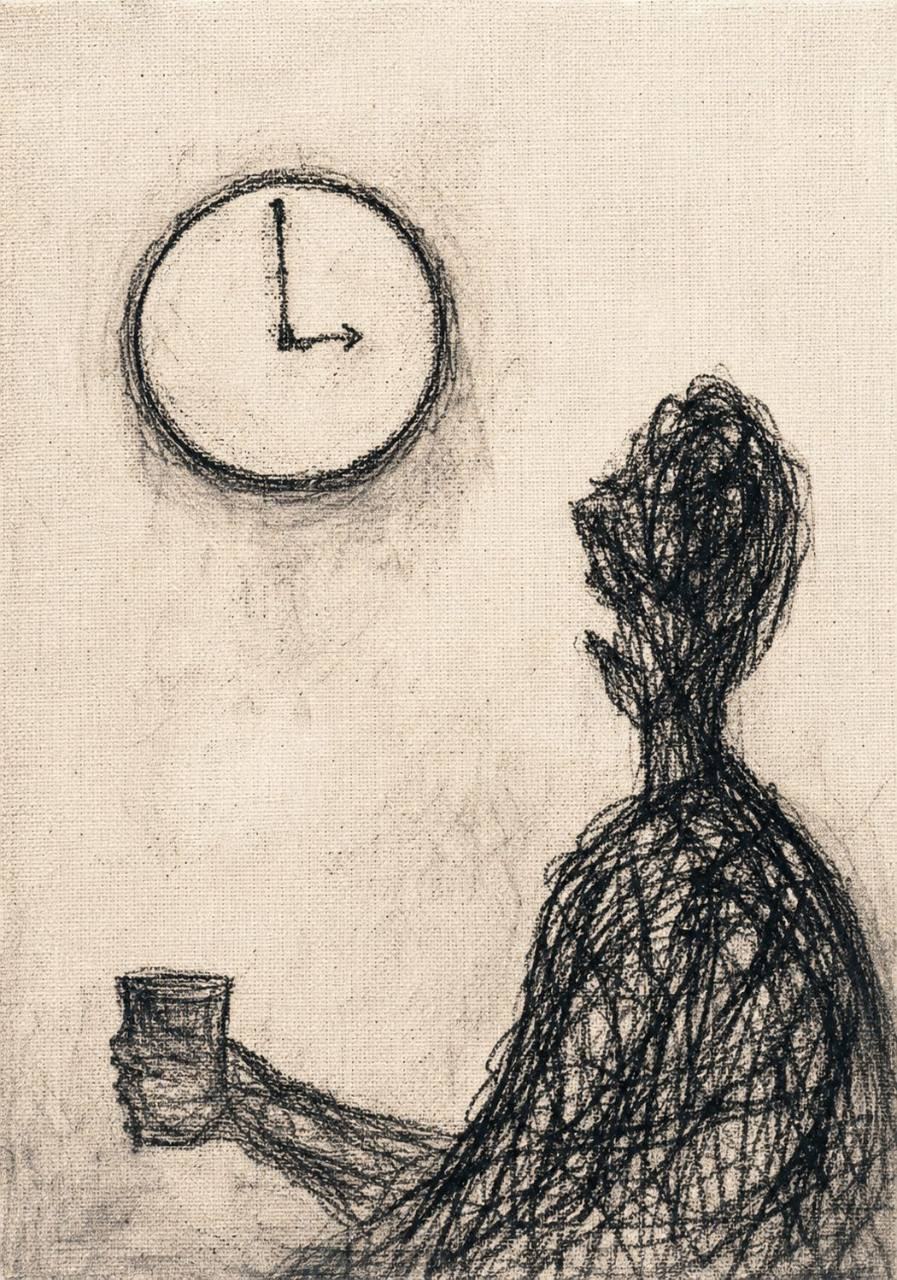
The fan stutters. The fan dies. The fan becomes a ceiling-mounted corpse, and I become a man sitting in a dark room in Calcutta, which is the same as saying a man sitting inside a lung that has forgotten how to exhale, because the air here does not move, it loiters, it squats, it presses its humid thumbs against my eyelids and says stay, little man, stay, and I stay, because where exactly am I going to go, the fridge is already beginning its slow promotion to lukewarm sarcophagus of leftovers, the router’s green eye has gone blind, and the entire room has been unplugged from civilization like a coma patient whose insurance just ran out, and the word we Bengalis reach for, whether technically correct or not, is loadshedding, which is two perfectly innocent English words shoved into an arranged marriage, load plus shedding, as if electricity were a snake’s skin that the utility simply sloughs off when things get too tight, too hot, too overloaded, and I sit here in the dark and think, of course, of course the load is shed, the load is always shed, the load is me, I am the load, I have been shedding myself for years now, molting careers and relationships and savings accounts and the will to floss, and here I am, fifty-one years old, bipolar as a weather vane in a hurricane, sitting in a rented room in the boondocks of Calcutta, sweating through my undershirt like a guilty confession, and the power is out, and the power has been out before, and the power will be out again, and somewhere in this vast sweating electrical organism a fuse, feeder, transformer, cable or distribution box is reconsidering its career choices.
There was an almost too-perfect example of this in June. Parts of the Tollygunge-Garia belt lost power around midnight after local CESC distribution equipment tripped under a sudden rise in demand. Strictly speaking this was not the old-fashioned, deliberate rotational loadshedding of my childhood, where someone somewhere intentionally removed demand from the system so the rest of it would survive; this was local infrastructure being asked to carry more than parts of it could comfortably carry and answering with the electrical equivalent of fuck off. At 11:45 PM the nighttime demand reached a record 2,526 MW. Earlier that afternoon, at 3:45 PM, CESC’s system had touched a daytime record of 2,739 MW. Those are two different records, because apparently even catastrophe requires bookkeeping. CESC said a surge in domestic air-conditioner use pushed some local networks beyond their built-in capacity, and residents in places such as Netaji Nagar and Bijoygarh sat sweating between midnight and 3 AM while the city performed that ancient Calcutta ritual in which everyone looks simultaneously at the ceiling fan, the switchboard and God.
I should explain, for the fortunate souls who have never developed a personal relationship with the phrase “power cut,” what loadshedding actually means. In the strict electrical-engineering sense it means deliberately removing some demand from a power system so that the rest of the system does not become unstable when available generation or network capacity cannot safely meet the load. It can be automatic or planned; it can involve feeders, industrial customers, neighborhoods, anything sufficiently expendable to keep the larger organism alive. The specific outage above was reported as local network tripping, not planned shedding, but language is a shameless scavenger and in India we have spent decades calling practically any sudden disappearance of electricity loadshedding, because when the fan stops at midnight nobody lying under it conducts a forensic audit of the transmission system.
And the word is magnificent anyway. Load. Shedding. Two bureaucratic syllables followed by one biological act. The phrase makes it sound as though the electrical system has become a buffalo walking out of a pond and is simply shaking excess water from its hide. What actually disappears is your comfort, your work, your Wi-Fi, your sleep, your milk if the outage lasts long enough, your patience somewhat sooner, and eventually your belief in the refrigerator as a permanent feature of civilization. But the phrase itself is almost tender. We are merely shedding load. Nothing has failed. Nothing has broken. The grid is performing wellness.
The older word beneath all this is better still. Electricity comes ultimately from the Greek ēlektron, amber. Not because the Greeks had power stations tucked behind the Parthenon, but because rubbing amber could make it attract little bits of light material. Thales of Miletus, around the sixth century BCE, is traditionally credited with one of the earliest recorded observations of this curious effect, although saying he “discovered electricity” would be like saying the first man who watched an apple fall discovered orbital mechanics. The naming came much later. William Gilbert used the Neo-Latin electricus in 1600 for amber-like attraction, and the English word electricity appeared in the seventeenth century. So the linguistic road from my dead ceiling fan runs backward through substations and Faraday and generators and Gilbert until eventually it arrives at a Greek man rubbing fossilized tree resin and watching bits of straw misbehave.
I find this unbearably poignant. The phenomenon that powers my ceiling fan and charges my phone and keeps insulin cold in the pharmacy down the road entered human curiosity through a piece of old tree resin and some fluff. Civilization is like this if you look closely enough. Behind every terrifying industrial cathedral there is usually some ancestor going huh, that’s odd. Rockets begin with people watching things burn. Medicine begins with people noticing which leaf did not kill Uncle. Probability begins with gamblers trying to understand why God keeps stealing their money. Electricity begins with amber picking up straw. Then a few thousand years pass and I am lying half naked beneath a motionless Crompton, waiting for amber to come back through copper.
Which is an absurd sentence, but absurdity is the only light source I have left that does not require a grid connection.
But I am not really here to talk about electricity.
I am here to talk about the other loadshedding.
The one that doesn’t get scheduled, doesn’t get announced in the newspaper, doesn’t arrive with a polite SMS saying “inconvenience regretted.” The loadshedding of a life. The systematic, rotating blackout of a self.
Because I have been shedding load for decades now and didn’t even notice it happening. I was too busy, too rushed, too important, too much of a healthcare researcher in America, too much of a man with a salary and a health-insurance card and a car that started when I turned the key, to notice that the grid of my own existence was being quietly dismantled one feeder at a time. Work. Marriage. America. Money. Certainty. The ordinary masculine superstition that if you keep pushing long enough something somewhere must eventually yield. One by one the circuits went dark, until eventually I woke up and found myself back in the city of my birth with the lights flickering on and off inside my own skull.
Psychiatry has words for some of this, naturally. Psychiatry has accumulated words the way Calcutta accumulates political posters. Bipolar disorder. Depression. Hypomania. Anhedonia. Anxiety. Insomnia. Executive dysfunction. Magnificent labels, each one a little brass plate screwed onto a machine that still refuses to start. Medication can sometimes keep a few essential circuits alive, an inverter battery for the skull: enough current to get out of bed, perhaps make tea, perhaps write something, perhaps notice that the day exists. But the larger load is still shed. Ambition. Desire. Confidence. Appetite for company. The casual animal assumption that tomorrow will probably be worth attending.
And I sit here in this dark room, in this cheap neighborhood, in this city that has been accumulated rather than designed, layer upon layer of empire, refugees, commerce, ambition, neglect, tram wire, concrete, mildew and argument, and I think about the people who do not even have a room to be hot in.
This thought does not comfort me.
People like to prescribe gratitude as though it were Crocin. Someone always has it worse. Count your blessings. Look at the poor. Be thankful for what you have. But genuine gratitude is not an antidepressant. Sometimes it is a knife. It says: you have a roof. You have a bed. You have a computer. Somewhere nearby someone is sleeping on pavement under a flyover and you are still miserable, you ungrateful sack of damp laundry.
And depression replies: yes.
That is the unpleasant part nobody puts on the inspirational poster. Suffering is not a competitive examination. The man sleeping under the flyover does not cure me by existing, nor does my misery improve his circumstances. Gratitude can widen the frame; it cannot always alter the picture. It can make suffering less narcissistic without making suffering disappear.
People prefer the other version, of course. The overcoming-adversity version. The TED Talk. The dramatic pause. The swelling music. The slide showing the abyss, then the slide showing the mountain summit, then the speaker walking calmly into applause wearing expensive sneakers. What I have instead is a dark room, a dead fan and a mind that alternates between a funeral and a circus, sometimes within the same week, sometimes within the same sentence. I report on the barely. I report on the almost. I report on the thin fraying wire by which this whole ridiculous operation continues to receive current, because perhaps that is the only beat I have left, the only assignment nobody can fire me from.
And if you are waiting for the redemption arc, the third-act turnaround, the moment where I rise from the bed and announce that the darkness taught me to see, I don’t have one for you.
Sometimes darkness teaches you nothing.
Sometimes darkness is merely darkness.
Sometimes the fan stops and you sweat.
There is a passage in the Isha Upanishad, verse 16, addressed to the Sun:
पूषन्नेकर्षे यम सूर्य प्राजापत्य व्यूह रश्मीन्समूह । तेजो यत्ते रूपं कल्याणतमं तत्ते पश्यामि योऽसावसौ पुरुषः सोऽहमस्मि ॥
One part of it says, roughly: gather your rays; that fairest form of yours, I behold. And then comes the stranger, larger claim: that Person there in the Sun, I am He.
The anonymous seers behind the Upanishad were not waiting for CESC. Their light was not electricity and their Sun was not a utility provider with a complaints number. This is metaphysical light, the thing beneath appearances, the suggestion that behind the noisy circuitry of the individual there is something continuous with the source itself. I do not know whether I believe that. Belief has become another appliance in my house that works intermittently. But I understand the instinct.
Because after enough loadshedding, you begin looking for a current that cannot be disconnected.
I want to believe there is one.
I reach for it the way a drowning man reaches for a rope whose other end he cannot see. Maybe there is a hand holding it. Maybe there isn’t. Maybe it is merely rope-shaped hope passing through dark water.
But the reaching is not nothing.
The reaching, for now, is the one load I refuse to shed.
P.S. References: Times of India, June 5, 2026, on record CESC demand and nighttime outages in the Tollygunge-Garia belt; standard histories of electrical terminology tracing electricity through William Gilbert’s electricus to Greek ēlektron, “amber”; Isha Upanishad, verse 16.
Word Cloud
Related reading
Selected by shared topics and section, with closer publication dates breaking ties.