When Variety Starts Wearing the Same Shirt
Uses the speech voice supplied by your browser or device.

The problem is not English. The problem is that everybody’s life is being pushed through the same little polishing machine.
Let me clear that first, before some well-meaning person arrives with a lantern and says, “Ah, another Bengali man blaming English while typing in English.” No. That is not my complaint. I remain trilingual. English did not narrow my world; it gave me another window. Sometimes it gave me a staircase. Sometimes it gave me a job. Sometimes it gave me the ability to read a science paper at 2:17 in the morning while my ceiling fan made the sound of a tired pigeon.
A new language does not necessarily reduce resolution. Often it increases it.
The danger is elsewhere.
The danger is when the many-windowed house becomes a showroom flat.
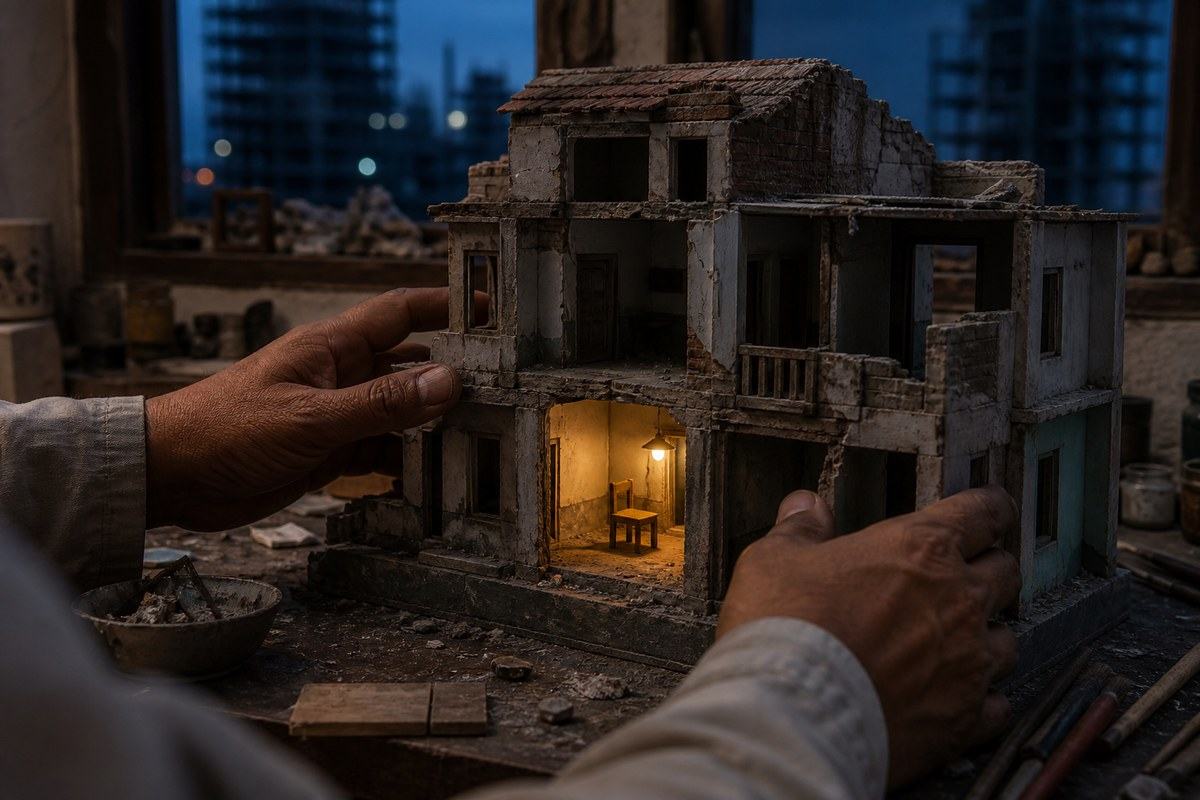
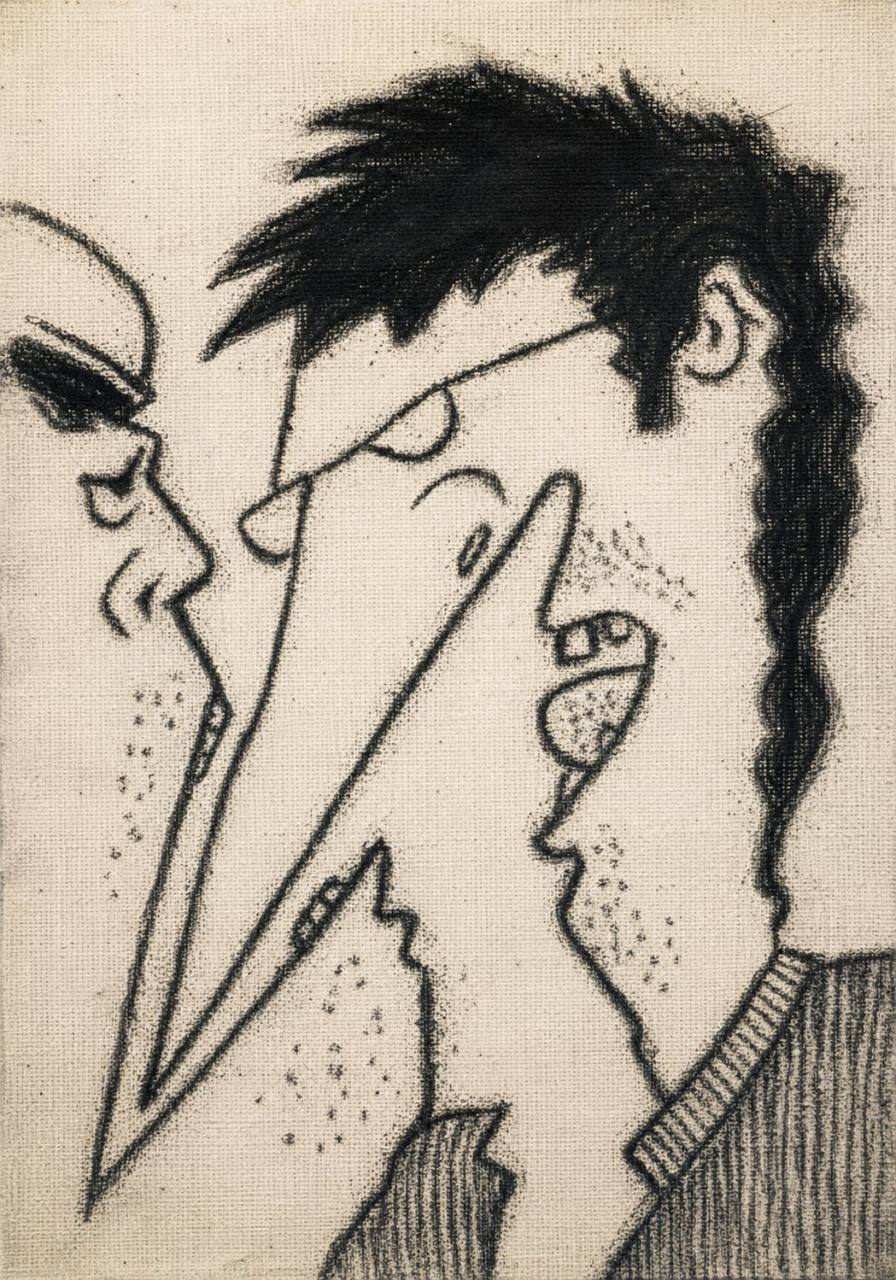
That is the thing I noticed growing up, though at the time I did not have grand words for it. Calcutta had difference. Not always noble difference. Not always charming difference. Some of it was merely inconvenience in a lungi. But it was there. One neighborhood had one rhythm, another had another. One family spoke with a certain softness. Another spoke as if every sentence had to defeat an enemy at the High Court. One uncle wore his shirt tucked in so tightly that his stomach looked like it had been arrested. Another drank tea from a chipped cup and delivered foreign policy analysis with the confidence of a man who had once changed a fuse.
People had edges.
Shops had personalities.
Even stupidity had local flavor.
Then I went to the US and saw something odd. Cities were not the same, but they were learning to become the same. The same coffee chains. The same apartments with tasteful sadness. The same pharmacy aisles. The same office parks. The same airport sandwiches wrapped like surgical equipment. America had variety, of course. Huge variety. But above it floated a commercial weather system, a smooth national glaze, like someone had poured supermarket vanilla over a continent and called it lifestyle.
At first I admired it.
Then I started smelling the cardboard.
When I returned to India, the cardboard had arrived here too. Not everywhere. Not in every lane. Not in the fish market, thank heavens, where civilization still survives in the form of bargaining, moisture, and accusation. But among those who could afford aspiration, the smoothing had begun.
The ambitious class was changing first.
That is always how it happens. The poor do not get homogenized first. The poor get heat, rent, queue, dust, medicine bills, and rice measured with suspicion. Homogenization arrives first among those who can buy the costume: the café people, the mall people, the coaching-center people, the airport-lounge people, the people teaching their children not only what to learn but how to appear globally digestible.
And before anyone throws a chair, let me say this plainly: I am not sneering at ambition.
Ambition is not a crime. It is often hunger with polished shoes. A parent pushing a child toward a better school, better accent, better manners, better laptop, better city, better passport, better future is not a villain. He is frightened. She is frightened. India teaches fear early. One bad exam, one illness, one unpaid bill, one job loss, one wrong marriage, and the floor opens like a trapdoor in a cheap stage play.
So people adapt.
They trim.
They sand.
They imitate.
They learn the acceptable smile.
They learn the acceptable clothes.
They learn the acceptable birthday party.
They learn the acceptable interior decoration, acceptable vacation photograph, acceptable gym selfie, acceptable school admission sorrow, acceptable grief caption, acceptable public virtue, acceptable private emptiness.
This is not culture changing naturally like a river. This is culture being pressed into molds like cheap plastic buckets.
The old variety is not being replaced by richer variety. That would be fine. That would be life. Calcutta itself is mixture: Bengali melancholy, British drains, Chinese breakfast, Armenian ghosts, Marwari capital, Bihari labor, Urdu words, English schools, Communist graffiti, startup jargon, Rabindrasangeet, pressure cookers, and traffic planned by goats with unresolved childhood issues.
Mixture is not the enemy.
Mixture makes civilization edible.
The enemy is sameness pretending to be sophistication.
You can see it in weddings, where every family now seems to be auditioning for the same drone camera. You can see it in cafés, where every wall has the same fake sincerity. You can see it in apartments, where the furniture has less personality than a bank form. You can see it in children’s parties, where small humans are dressed like export-quality cupcakes. You can see it in social media, where everyone appears to have received the same emergency training in posing beside food.
Even outrage is becoming standardized.
Even sadness has templates.
This, to me, is the real narrowing of resolution. Not English. Not multilingual life. Not exposure to the West. The narrowing comes when attention itself becomes industrialized.
Social media is not a window. It is a grinder.
It takes experience and turns it into feed-shaped pieces. Short. Bright. Repeatable. Instantly legible. You do not need to understand a thing deeply. You only need to recognize the type. Romantic trip. Political anger. New café. Fitness journey. Spiritual quote. Rich person pretending to be humble. Poor person turned into content. Child made precocious for applause. Old parent used as emotional seasoning. Same rhythm. Same hook. Same moral. Same face.
The phone has become a small priest of sameness, except I am an atheist, so let us call it what it is: a glowing little box with excellent distribution and no conscience.
Now AI enters this already flattened room carrying a steam iron.
AI did not invent the flattening. It arrived late, like a clever cousin at a family crisis, and immediately began explaining the crisis in better grammar. Before AI came television, advertising, shopping malls, streaming platforms, corporate speech, coaching centers, global branding, migration, private schooling, and the ancient Indian panic that one’s child may not become respectable enough to survive relatives.
But AI changes the scale.
Because AI is not merely showing us sameness. It is helping us produce it.
A person wants a caption. AI gives one.
A person wants a speech. AI gives one.
A person wants a polite complaint, a condolence note, a love message, a resignation letter, a school essay, a motivational paragraph, a brand slogan, a poem for Mother’s Day, or a suitably moist birthday wish for a cousin one does not actually like. AI gives it.
And it gives it smoothly.
That smoothness is the trap.
Bad AI is easy to reject. It says something foolish and you swat it like a mosquito. Good AI is more dangerous because it is useful. It improves your sentence. It removes awkwardness. It gives your thought a haircut, deodorant, and a LinkedIn profile. It does not kill your voice. Worse. It upgrades your voice until it is no longer yours.
That is how variety disappears now. Not by violence. By helpfulness.
The great archives that feed these machines are not neutral mirrors of humanity. They are piles of what got written, digitized, indexed, published, optimized, uploaded, promoted, repeated, and rewarded. They carry power inside them the way old houses carry damp. Certain countries, classes, institutions, professions, aesthetics, and manners are overrepresented. Not because one language is evil. Not because every Western idea is poison. That is childish. The issue is weight. Some human experiences enter the machine as mountains. Others enter as dust.
Then the dust is told to become more like the mountain.
That is where my unease lives.
A Bengali grandmother’s timing in sarcasm is not in the dataset in any meaningful proportion. The emotional mathematics of a Calcutta rent negotiation is not there. The exact mood of a man standing at Garia on a hot afternoon with one unpaid invoice, a headache, and a packet of muri is not there. The private humiliation of pretending to be fine when your bank balance looks like a philosophical joke is not there. The strange dignity of lower-middle-class survival, where one chair is also guest seating, dining furniture, and emergency ladder, is not there in sufficient quantity.
The machine knows many things.
It does not know proportion.
And social media does not know mercy.
Between them, they produce a world that is polished, fluent, attractive, and oddly airless.
This is why the matter bothers me as a 51-year-old man living alone on the edge of Calcutta, making just enough consulting income to keep the wolves bored but not defeated. Depression may sharpen the worry. Bipolar anxiety may add thunder to an already cloudy sky. A more cheerful man might look at the same world and say, “Arrey, relax, culture changes.” He would not be entirely wrong. Culture does change. It must. A culture that does not change becomes a museum exhibit with digestive problems.
But change is not the same as compression.
A forest changes. A parking lot also changes, when they repaint the lines. These are not identical events.
What I fear is not that young people watch foreign shows, eat burgers, speak three languages, or wear sneakers. Let them. Life is short. Shoes should be comfortable. What I fear is that the world is losing its small irregularities—the things that make one lane different from another, one family different from another, one mind different from another.
I fear we are confusing polish with depth.
I fear we are choosing recognizability over richness.
I fear the aspirational class is becoming a photocopy of a photocopy of a photocopy, each generation a little lighter, cleaner, and less legible.
And yes, there is a class angle here. There always is. Homogeneity is sold as taste, but taste is often fear wearing perfume. People do not only imitate the West. They imitate success. They imitate safety. They imitate whoever looks less vulnerable. A person standing on a cracked pavement will naturally admire marble flooring. The problem begins when he starts believing the crack in the pavement was his soul.
That is how local life becomes shame.
Not by argument.
By comparison.
By the daily drip of images.
Someone else’s child speaks better. Someone else’s kitchen shines better. Someone else’s vacation looks cleaner. Someone else’s grief has better lighting. Someone else’s breakfast has blueberries, which in Calcutta appear less like fruit and more like imported punctuation marks.
After enough comparison, people begin to edit themselves.
First for society.
Then for the camera.
Then for the algorithm.
Then for the machine.
Finally for an imaginary audience that may not even exist.
At that point, the self becomes a rented costume.
So what is the answer? Certainly not to become a cultural fossil sitting in a corner shouting at sneakers. Nobody needs that man. Calcutta already has enough men sitting in corners shouting at things, and some of them are chairmen of committees.
Nor is the answer to worship the old. The old had plenty of rot. Local culture can be tender, but it can also be cruel, nosy, hierarchical, superstitious, and astonishingly confident about matters it has never examined. The past should not be restored wholesale. Some of it should be thanked politely and left outside with the broken umbrella.
The answer is discernment.
Keep the window. Refuse the showroom.
Take from the world. Do not become paste.
Use English, Bengali, Hindi, whatever you have, as extra lenses, not as erasers. Use AI as a tool, not as an inner landlord. Use social media for reach, not as a measuring tape for the soul. Let the child learn global manners, but also let the child know the smell of his own courtyard, the joke of his own people, the taste of his own street, the awkward history of his own family, the foolishness and beauty of his own place.
Do not preserve culture like pickle in a jar.
Cook with it.
Argue with it.
Mock it.
Repair it.
Let it learn new words and new habits. Let it travel. Let it come back changed, but not bleached.
The real task is not to protect purity. Purity is mostly nonsense with a loudspeaker. The real task is to protect texture. The grain of life. The small difference. The unpolished joke. The local madness. The crooked sentence that carries a real person inside it.
Because once everything becomes smooth, we may discover too late that smoothness is not civilization.
It is only the absence of fingerprints.
And I do not want to live in a world without fingerprints. I do not want Calcutta to become an airport lounge with humidity. I do not want every child to inherit the same plastic dream. I do not want every sorrow improved into content, every thought polished into acceptability, every family made presentable for strangers, every life reduced to a template with good lighting.
Maybe that is depression speaking.
Maybe that is discernment.
Most likely it is both, sitting together in my small room like two unpaid advisors, while the fan turns, the phone glows, someone outside shouts for no clear reason, and the world quietly learns to wear the same shirt.
A clean shirt, yes.
Well-ironed too.
But after a while you begin to miss the old stains.
Word Cloud
Related reading
Selected by shared topics and section, with closer publication dates breaking ties.