A Cup of Cha Is Not a Small Thing
Uses the speech voice supplied by your browser or device.

Acronyms and terms:
EIC: East India Company, the British trading corporation that became powerful enough to collect taxes, run armies, manipulate trade, and generally behave like a government wearing a merchant’s hat.
VOC: Dutch East India Company, the Dutch trading empire that helped carry the word “tea” into European languages through maritime trade.
Qing: The Chinese imperial dynasty ruling from 1644 to 1912, during whose time China’s tea knowledge became an object of foreign commercial hunger.
Wardian case: A sealed glass plant box used in the nineteenth century to transport living plants across oceans without turning them into expensive compost.
Camellia sinensis: The tea plant. Green tea, black tea, oolong, white tea, and many other teas come from this one stubborn little botanical celebrity.
A cup of cha is not a drink; it is history trying to look innocent in a chipped glass.
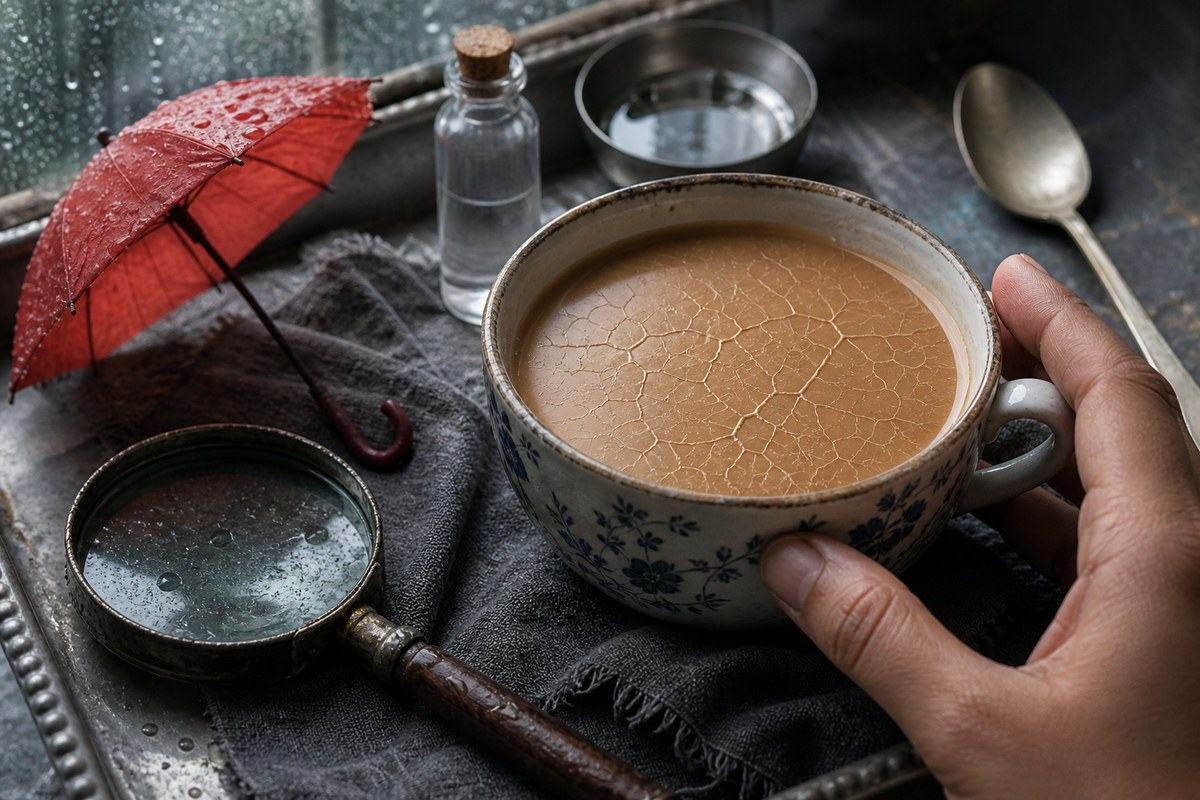
You think you are holding boiled leaves, milk, sugar, and perhaps a heroic amount of ginger. Reasonable mistake. Most of us begin there. A man at a roadside stall in Calcutta lifts a dented aluminum kettle, pours from a height that suggests either skill or lack of insurance, and hands you a small glass hot enough to remove your fingerprints. You blow on it. You sip. Your tongue survives by negotiation.
And inside that glass sits China, empire, theft, opium, botany, labor, railway lines, monsoon air, plantation sweat, English porcelain, Bengali addiction, and Newton quietly ruining the timing.
This is why I cannot treat tea as a decorative beverage. Tea is not a polite liquid for people with embroidered napkins and a biscuit tin. Tea has done more travelling than most ministers, caused more economic panic than most budgets, and entered more homes than good sense.
The Chinese got there first, as they often do in the history of useful things. Long before the British became emotionally dependent on tea and started behaving like a nation-sized patient waiting for its morning dose, China had turned tea into a practice, a trade, a habit, a taste, a ceremony, and a civilizational flex. The Chinese looked at a leaf and said, in effect, let us boil this and see what happens. A brave sentence, really. Many civilizations have advanced by asking exactly this, though not all have survived the spinach-water stage.
They called it cha in one family of sounds. In other ports and dialects another sound travelled: te. This is the lovely thing. The word itself has two passports.
If tea travelled overland, through Central Asia, Persia, Russia, and into places like our side of the world, it often became cha, chai, shay, or something cousinly. If it travelled by sea with Dutch traders from the Fujian coast, it became tea, thee, té, and so on. Geography quietly entered the mouth. Every time a Bengali says “cha,” he is not just asking for tea. He is unknowingly standing on an old trade route, wearing bathroom slippers.
The Portuguese took one route. The Dutch took another. The English, being the English, took what the Dutch had carried, polished the spelling, sat down with porcelain, and slowly convinced themselves that tea was part of the natural order, like fog, monarchy, and saying sorry when one means move aside.
Then the British developed a problem. They loved Chinese tea. China wanted silver. Britain did not enjoy paying silver. No empire enjoys paying fairly for something it wants badly. It feels, to an empire, like losing a wrestling match to a shopkeeper.
So the British looked around for a solution and found one of those solutions that should make decent people put down their cup for a moment. Opium. Indian opium was pushed into China. Chinese tea came out. British habits were supplied. Chinese society paid a monstrous price. The cozy cup had teeth behind it.
This is the first small trap in the tea story. It looks domestic. It is geopolitical.
Then comes Robert Fortune, a name so perfect it sounds invented by a sarcastic novelist. Fortune was a Scottish botanist sent by the EIC in the nineteenth century to learn how China grew and processed tea. Not just to admire the scenery and collect a few leaves like a gentleman tourist with muddy shoes. He was after the plant, the seed, the technique, the secret sauce.
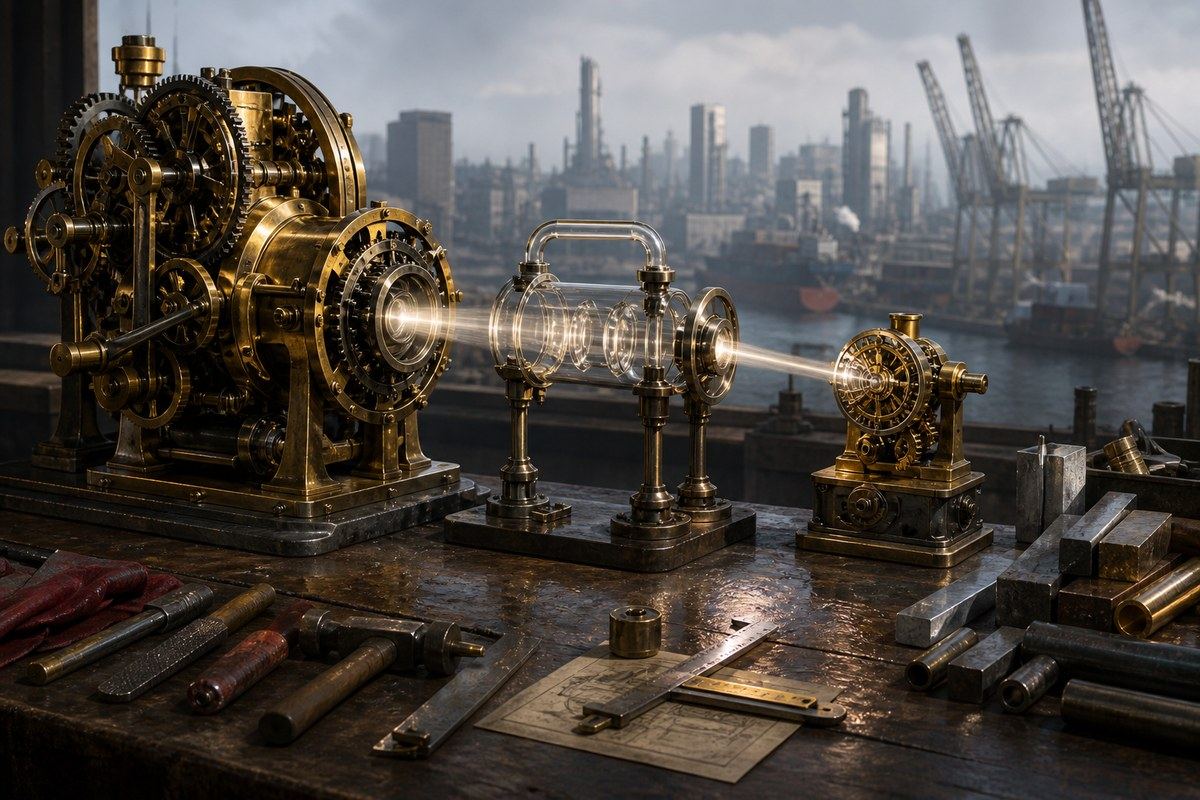
He moved through Chinese tea districts, gathered plants and knowledge, and packed living specimens into Wardian cases. These glass boxes were a quiet revolution. Imagine a miniature greenhouse with travel papers. Soil inside. Moisture inside. Plant inside. Sunlight comes through. Condensation forms and falls back. A tiny weather system in a box. Victorian empire, never short of confidence, discovered that even plants could be made to travel steerage if sealed properly.
The Wardian case did for plants what the suitcase did for quarrelsome relatives. It moved them.
Tea plants and tea knowledge moved toward India. But here the story needs cleaning, because colonial stories are often told as if everything began when a British gentleman noticed it. Assam had indigenous tea plants. Local communities knew them. The British did not invent tea in India. They industrialized it, fenced it, taxed it, exported it, and then wrote themselves into the center of the photograph.
This is an old trick. Stand in front of the tree and claim you made the forest.
Assam became strength in a cup. Darjeeling became perfume with a view. The Nilgiris became another chapter in altitude and flavor. Plantations spread. Hillsides were rearranged. Workers were recruited, trapped, moved, disciplined, underpaid, and hidden behind phrases like “estate,” a word that makes exploitation sound as if it has lawns.
Meanwhile, in drawing rooms far away, porcelain cups behaved as if they were born superior. Porcelain has that expression. You know it. Like a thin aunt who owns two shawls and disapproves of your spoon.
Tea came dressed as refinement, but behind it stood land, weather, labor, and empire. The leaf was delicate. The system was not.
Then, after all this thunder and theft and botanical smuggling, tea did the most astonishing thing.
It became ordinary.
This is where Calcutta enters, coughing a little, adjusting its lungi, and asking how much sugar.
In Calcutta, tea is not tea. Tea is cha. Tea is the pause between two failures. Tea is what you drink before opening the electricity bill. Tea is what an unemployed man drinks before pretending he will answer emails. Tea is what three rickshaw pullers drink while discussing international diplomacy with more confidence than the United Nations. Tea is what the para uncle drinks while explaining why every chief minister, prime minister, football coach, cricket selector, and building secretary is a fool, except himself, temporarily.
It is sold in glass cups, clay bhar, plastic cups, paper cups, and sometimes in vessels whose chemical history is best not examined before breakfast. It comes sweet. Very sweet. Sweet enough to make a pancreas file a written complaint. Milk goes in. Ginger may go in. Cardamom may appear if the stall owner is feeling poetic. The kettle is blackened at the bottom, the counter is sticky, the biscuit jar is fogged, and the whole establishment runs on heat, debt, gossip, and muscle memory.
And yet.
And yet there are mornings when that little cup is the only civilized thing in the lane.
I am 51. I live in the shanty boondocks of Calcutta, not in the shiny brochure version where everything is heritage lighting and nostalgic tram bells. My Calcutta has damp walls, sudden drilling, power fluctuations, leaking taps, apps that say “arriving in 3 minutes” for 18 minutes, and a room where the ceiling fan sometimes sounds like it is considering resignation. I have spent years in America, worked in healthcare IT, studied systems, data, clinical workflows, all that respectable machinery. Now I sit here with a precarious consulting income, bipolar depression and anxiety chewing quietly under the table, and I can tell you this much without romance: some mornings are not mornings. They are small court cases.
Tea is evidence for the defense.
Not a cure. Let us not become foolish. Tea does not repair a broken life, settle rent, restore sleep, fix teeth, pay taxes, answer clients, or turn a lonely room into a family photograph.
But it gives you a handle. That matters.
A cup in the hand. Heat against the fingers. Steam on the face. A taste that says, stay for five minutes. Do not solve the universe yet. First drink.
This is what the fashionable coffee people often miss. Coffee in a chain store has branding. Cha has citizenship. Coffee asks your name and misspells it on a cup. Cha does not ask your name because it has already seen your type. Tired. Broke. Irritated. Too early for philosophy, too late for innocence.
“Dada, chini kom?”
“Yes, less sugar.”
He puts normal sugar.
This is democracy.
Now, just when we are getting comfortable, physics enters wearing a schoolteacher’s face.
Tea cools.
This should not be news, but it is somehow always an insult. You wait because it is too hot. You look at your phone. Someone somewhere has said something stupid. A minister has announced a plan. A celebrity has apologized without apologizing. The weather app says “feels like 43,” which is not weather but a threat. You look back.
The tea has crossed over.
Not hot. Not warm. Not drinkable in any noble sense. It has become brown disappointment.
Newton’s law of cooling explains the betrayal:
Do not panic. This is not mathematics trying to steal your lunch. It only says that hot tea cools faster when the room is much cooler than the tea. As the tea gets closer to room temperature, cooling slows. That is all. The bigger the temperature gap, the faster the heat escapes.
In plain Calcutta language: the hotter the gossip, the faster it spreads. Later, when everyone knows, it slows down.
Tea does the same.
There is a perfect sipping window. Too early and your tongue is punished for enthusiasm. Too late and the tea tastes like regret with milk. Somewhere between injury and sadness lies civilization.
That tiny window is life.
This is why tea is a better philosopher than many philosophers. It teaches timing without giving a lecture. It teaches impermanence without shaving its head. It teaches moderation, though roadside cha laughs at moderation and adds another spoon of sugar while looking you straight in the eye.
There is that Sanskrit line: “अति सर्वत्र वर्जयेत्” — excess should be avoided in all things.
Fine advice. Sensible. Polished. Good for calendars, diets, speeches, and people who own matching furniture.
But have these wise men stood under a tin shade in July rain, with traffic coughing on one side and frying telebhaja on the other, holding a hot cup of cha while the whole city smells of wet dust, diesel, green chilies, and old ambition? At that moment excess is not a vice. It is municipal compensation.
You need the extra sugar. You need the overboiled milk. You need the ginger to arrive like a small slap. You need the heat. You need the stall. You need another human being to pour something into a cup and hand it to you as if this, at least, can be managed.
This is the hidden dignity of cha. It does not pretend the world is clean. It does not pretend history is gentle. It does not pretend empire was a misunderstanding with better hats. It does not pretend labor vanished into flavor by magic. It does not pretend your life is fine.
It simply says: here, drink.
Tea began as a leaf. Then it became a trade. Then a craving. Then a weapon. Then a plantation. Then a factory product. Then a breakfast habit. Then a roadside necessity. Along the way it collected blood, silver, language, weather, theft, skill, and comfort.
That is the strange thing about human culture. We inherit things with dirt under the fingernails. Then we use them to get through Tuesday.
I do not drink cha because it is pure. Nothing is pure. Not cities, not families, not nations, not memories, not tea. I drink it because it is mixed: bitter and sweet, stolen and local, historical and immediate, ordinary and cosmic, cheap and priceless.
Also because without it I am useless before 10 a.m., and even after 10 the evidence is mixed.
So yes, a cup of cha is important to me. Important like a match in a power cut. Important like shade in May. Important like a joke in a bad month. Important like a small rope thrown into the morning.
The empire wanted tea for profit. The British wanted it for habit. The botanists wanted it for specimens. The traders wanted it for silver. The plantation owners wanted it for export.
I want it because the day is long, the room is hot, the mind is unreliable, and somewhere in a lane in Calcutta, a man with a blackened kettle can still produce, for a few rupees, a brief and steaming argument against giving up.
Word Cloud
Related reading
Selected by shared topics and section, with closer publication dates breaking ties.