The Second Smile
Uses the speech voice supplied by your browser or device.

THIS IS A WORK OF FICTION
The new teeth arrived on a Tuesday, pushing against the back of her molars like a child’s fingers under a blanket.
Meera had been running her tongue along the inside of her cheek for days, feeling the swelling there, the wrongness of the flesh. She assumed it was a wisdom tooth finally making its move, the last rebellion of a body that had been quiet for thirty-four years. But this was not one tooth. This was a ridge. A seam. A second row, waiting behind the first like understudies.
She stood in the bathroom of her flat in Ballygunge, the light from the single bulb catching the sweat on her upper lip, and opened her mouth wide. The mirror showed her what her tongue already knew: the ridge continued around the inside of her jaw, and behind her lower incisors, six small white buds had broken through. Not yellowish like adult teeth. Not gray like the water-stained tiles. White as aspirin. White as chalk. White as the exposed centers of the striped lozenges she had been finding in the filters at the Dhapa waterworks.
She touched one with the tip of her tongue. It was soft. It gave slightly, like a pill before it dissolves.
The water had been tasting like vanilla since mid-September. Not the whole city—just the southern neighborhoods served by the new filtration beds. Meera had logged the complaint herself: Sweet aftertaste, source unknown, further analysis required. She had taken samples. She had sent them to the laboratory. The routine results had come back within limits. Nothing on the list was wrong with the water.
The water smelled like a bakery and felt like silk on the skin and made her want to weep with gratitude every time she brushed her teeth.
She requested more tests. Her supervisor, Mr. Chatterjee, returned the request with No further action written across it.
By Friday, she had stopped brushing. The new teeth hurt when the bristles touched them. They were growing fast.
At the office, Chatterjee had stopped asking about the reports. He had stopped asking about anything, actually. He sat in his cubicle with a smile that did not reach his eyes, sucking on something that clicked against his teeth. When she walked past, he would turn his head slowly, like a sunflower following a poison sun, and watch her mouth.
His breath smelled of vanilla.
She began to keep her lips closed when she spoke.
The poor were dying first, but they were dying quietly, which in Calcutta meant they were dying correctly. The papers called it methanol. Country liquor cut with industrial solvent, sold in plastic pouches that leaked onto the pavement. The hospitals filled with men who went blind before they went still, who clutched their bellies and screamed about the ants crawling under their skin.
Then a woman who did not drink. Then a boy who was nine.
The municipal corporation issued a statement. The statement used the word unfortunate. The word isolated. The word contained.
Meera knew it was not contained. She had seen the tanker trucks at night, the ones with the falsified manifests, the ones delivering emergency drinking water to the bustees. Their water smelled of vanilla. Their paperwork bore the name of the contractor who had supplied the new filtration beds.
She had seen the money change hands. She had taken the money herself, once, a thick envelope that made her feel important and dirty in equal measure. She had signed a clearance before the samples came back. She had used the money to pay for her mother’s dialysis. She had told herself it was just a facilitation fee. She had told herself the water was fine.
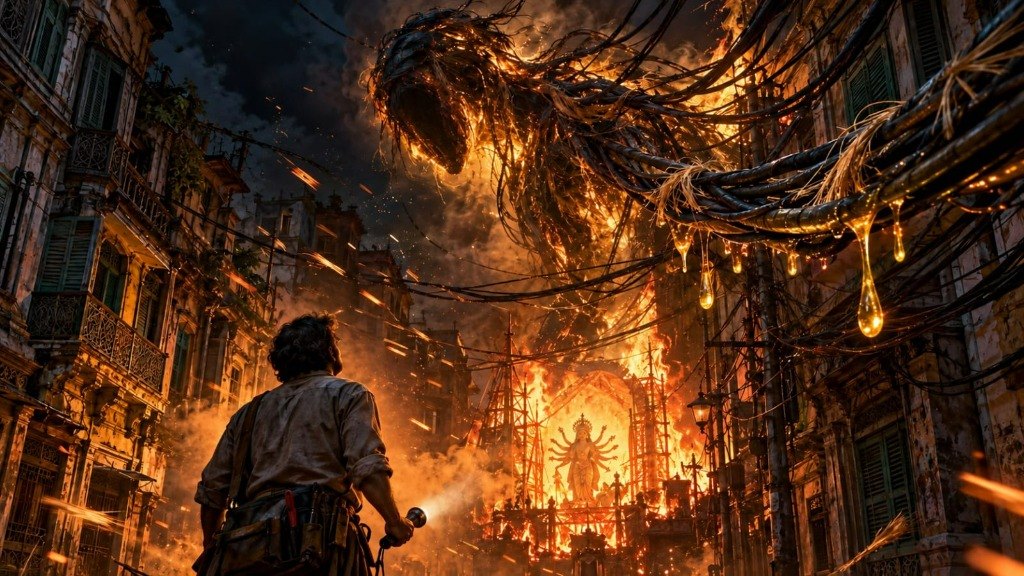
The water was not fine. The water was full of rainbows.
She had found the first tablet on the first of October, wedged against the mesh on the clean side of a filter. It was round, no larger than a button, and striped with colors that had no business being together—pink and green and a yellow so bright it looked radioactive.
Water ran over it. The stripes did not bleed. The edges did not soften.
When she touched it with her bare fingertip, it began to dissolve. The colors slipped away, exposing a chalk-white center. Her fingertip went numb. A sweetness spread across her tongue.
She found seventeen more that day. She found hundreds the next.
She brought one home in a glass sample jar. She told herself she needed to keep evidence. She told herself there was no point leaving it in a laboratory where Chatterjee could decide what it was allowed to contain. She put the jar on her kitchen counter.
That night, she woke at 3:00 a.m. with her jaw aching and her mouth full of the taste of vanilla and blood. She was standing in the kitchen. The open jar was in her hand. The tablet was on her tongue.
She could not remember unscrewing the lid.
She tried to spit. Her tongue folded over the tablet and held it there, tenderly, until it dissolved.
The dissolution felt like forgiveness.
The teeth were visible now. She could not hide them. When she smiled—and she was smiling more, she could not stop smiling, the muscles in her cheeks ached with the effort—the old teeth tilted forward and the new ones showed through, tiny and white and perfect, growing in rows that curved back into her jaw like the keys of a piano. She stopped going to work. She stopped answering her phone. She sat in her darkened flat and ran her tongue over the ridges and felt the pleasure of it, the electric zing that traveled down her spine and made her toes curl.
Her mother called. Meera did not answer. Her mother left a message: The water tastes strange, Meera. I boiled it twice. It still tastes like cake. I am so thirsty, beta. I am so thirsty and the water makes me happy and I am frightened of the happy.
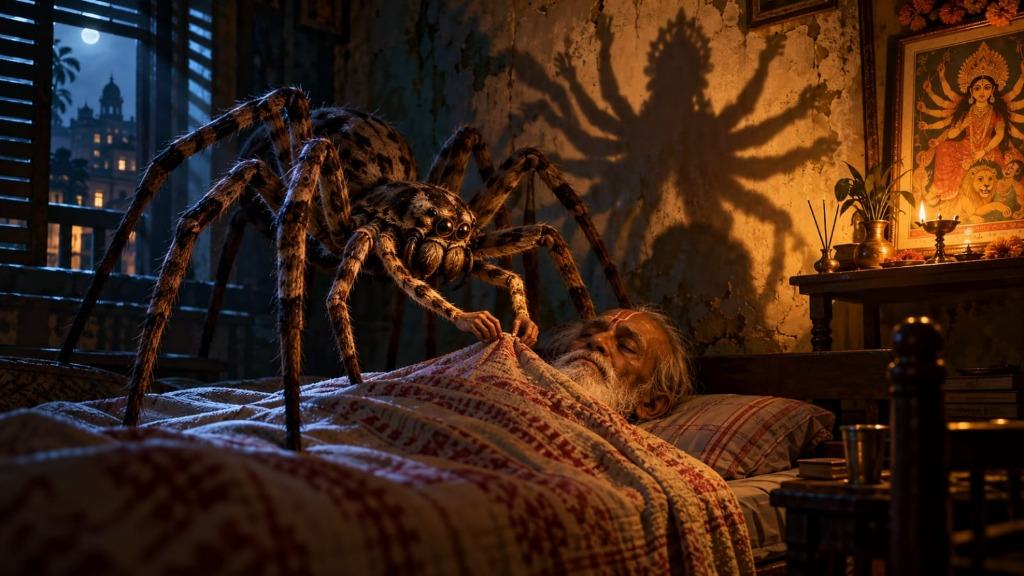
Meera listened to the message seven times. She did not call back. She was busy. She was busy standing in front of the mirror, watching her reflection lag half a second behind her movements. She would raise her hand. The reflection would raise its hand. She would smile. The reflection would smile. But there was a delay, a tiny delay, and in that delay she could see the reflection deciding to smile, choosing to mimic her, and she understood that her reflection was not reflecting her anymore. It was watching her. It was learning her.
She touched the glass. The reflection did not touch the glass. It just stood there, smiling with its new teeth, waiting for her to turn around.
By the time Durga Puja began, she could no longer close her mouth properly.
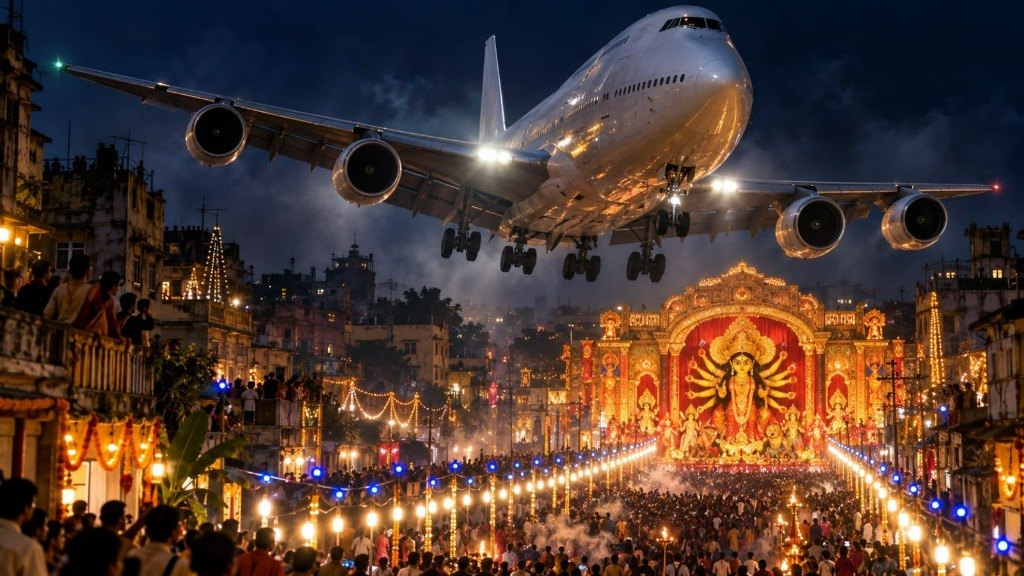
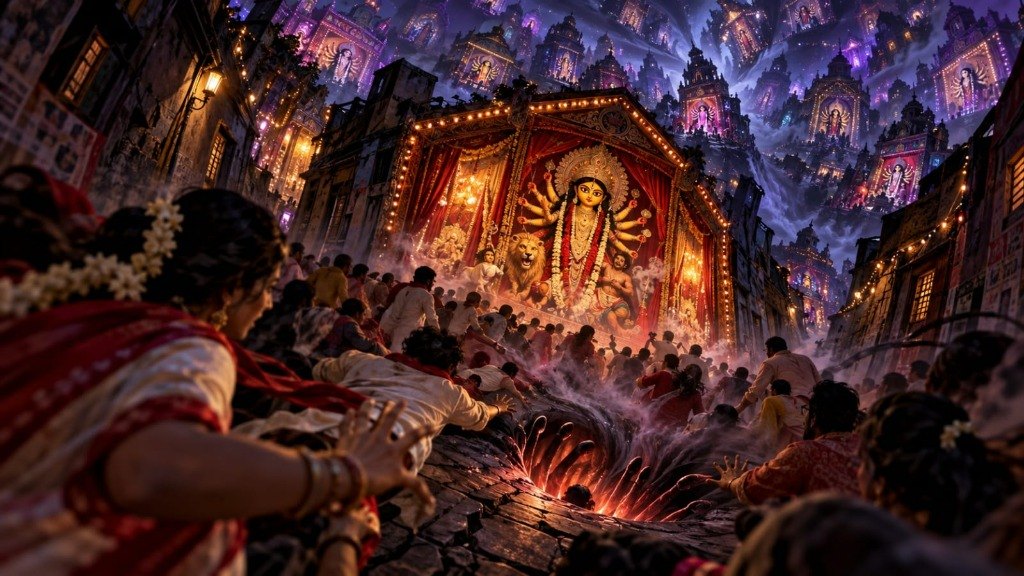
The city erupted into light and drumbeats and the smell of incense and frying oil. Pandals rose in every neighborhood, towering structures of bamboo and cloth and gold paint, housing the goddess with her ten arms and her calm, calm face. Meera walked through the crowds in Gariahat. She had gone out to buy water. She kept forgetting this. The people parted for her. They looked at her mouth. They looked at her mouth with envy.
She saw others like her. A man selling cotton candy whose smile was too wide, whose teeth were too small, who wept sugar-tears that dried white on his cheeks. A child in a new dress, maybe six years old, holding her mother’s hand, her jaw swollen and distended, her eyes rolling with bliss. A policeman directing traffic, his whistle dangling against his chest, his mouth open to show the rows and rows of new teeth growing behind his old ones, pushing the old ones out onto his tongue where they sat like discarded seeds.
No one screamed. That was the horror of it. The city was dying, and the city was grateful.
She bought a bottle of water from a street vendor. The cap turned too easily. There was no little crack of the seal breaking. She had already swallowed before she understood why that mattered.
It tasted like vanilla and roses and the inside of a pharmacy. She felt the liquid go down her throat and felt it stop halfway, felt her throat close around it, felt something soft and crowded moving where there should have been room to swallow.
She vomited into a storm drain. What came up was not water. It was a paste, thick and white and flecked with color, and in the paste were her old teeth. All of them. The roots intact. They clattered against the metal grate like dice.
She did not need them anymore. She had new ones.
When she straightened, the vendor was leaning toward her. He took a long breath through his nose. His face loosened. He smiled.
He offered her another bottle, free.
She went to the waterworks that night. She still had her pass. She still remembered where the controls were.
The security guard was asleep in his chair, or dead, his head tilted back to show bare gums crossed with neat black stitches. Someone had made room.
The control room hummed. The monitors showed the flow rates, the pressure, the chemical levels. Everything was green. Everything was optimal.
She found the delivery ledger on the desk. The latest shipment had arrived on the twenty-eighth of September. Forty metric tons. Industrial flavoring agents. Above it were earlier deliveries, smaller quantities, going back to the beginning of the month. The receiving contractor was the same one whose tankers she had cleared. The approving officer was Mr. Chatterjee. Her own signature appeared on the attached clearance.
The distribution network was the municipal water supply. The target population was everyone.
There was a note in the margin, handwritten, in Chatterjee’s careful script: Initial dosing: thirty days. Secondary dispersal thereafter. Full saturation by Kali Puja.
Beneath it, in the same careful hand: The goddess will be thirsty this year.
Meera ran her tongue along the new teeth. Their tips softened against it. Behind them, deeper in the gums, another ridge was rising to replace what dissolved.
She thought of Chatterjee’s breath. The vendor leaning close. The people looking at her mouth with envy.
The teeth were not merely a symptom. They were a delivery mechanism. They were growing in her jaw, in the jaws of thousands, and they were soft, and they were dissolving, and every time she smiled, every time she spoke, every time she breathed through her mouth, she was breathing sweetness into the air around her, dosing the people who stood close, making them want to stand closer.
She was not merely being dosed. She was becoming the dose.
She lifted the cover over the emergency stop. Her finger rested on the button.
For a moment she remembered her mother before the dialysis, before every conversation became an invoice, before pain occupied the house so completely there was nowhere left for either of them to sit.
Why would she take her mother’s happiness away?
She stood there until that seemed like a reason.
Then she lowered the cover.
She went home. She locked the door. She pushed the dresser against it. She sat in the bathroom with the lights off and felt the teeth growing, felt them pushing against her lips, felt her jaw shifting to accommodate the new architecture. She was not in pain. That was the worst of it. She was comfortable. She was ecstatic. Her body was telling her that this was right, that this was evolution, that she was becoming something better, something that did not need to eat, something that only needed to smile to survive.
Her phone buzzed. Her mother. She answered.
“Meera,” her mother said. Her voice was thick, slurred, happy. “Meera, I drank the water. I drank so much water. My teeth fell out, Meera. They fell out while I was sleeping and I swallowed them. I swallowed my teeth and now I feel so light.”
“Ma,” Meera said. The word came out wrong. It came out sweet. It came out in a voice that was not hers, a voice with too many teeth in it. “Ma, don’t drink the water.”
“But it’s so good, beta. It tastes like you. It tastes like when you were small and you would smile at me. Come home. Come home and smile at me.”
The line went dead.
Meera looked at the mirror. In the dark, her reflection was visible only by the light of her phone, a pale glow that illuminated her face from below.
The reflection smiled.
Then Meera smiled.
The new teeth caught the light. Their white surfaces had worn away. Underneath were stripes. Pink and green and yellow. The exact colors of the tablet that had been in the empty jar on her kitchen counter.
The reflection lifted a hand toward the door.
Meera’s hand followed.
It had finished learning her.
She had signed the clearance. She had swallowed the evidence. The city had swallowed her, and now she was swallowing the city back.
She stood up. She moved the dresser aside with a strength she did not recognize. She unlocked the door. In the kitchen, she filled the empty sample jar from the tap. She screwed the lid on carefully. She did not know why she was taking it. Her hand knew.
She went out into the street, into the noise of the drums, into the crowd of smiling people with their soft new teeth, and she opened her mouth wide, and she breathed.
The people turned to look at her. They inhaled. They smiled back.
They were carrying water too. Brass lotas. Plastic bottles. A steel jug held in both hands by a little girl whose chin shone with sweet saliva.
In the pandal at the end of the street, the goddess waited with her ten arms and her calm, calm face.
Meera watched that calm begin to leave her.
First the eyes. Then the mouth. A small movement in the painted throat.
The goddess could see what was coming. She could see the army of the happy walking toward her with their mouths open and their vessels raised, and she knew that when they arrived, they would not be asking for blessings.
They would be bringing her the water.
And she would drink.
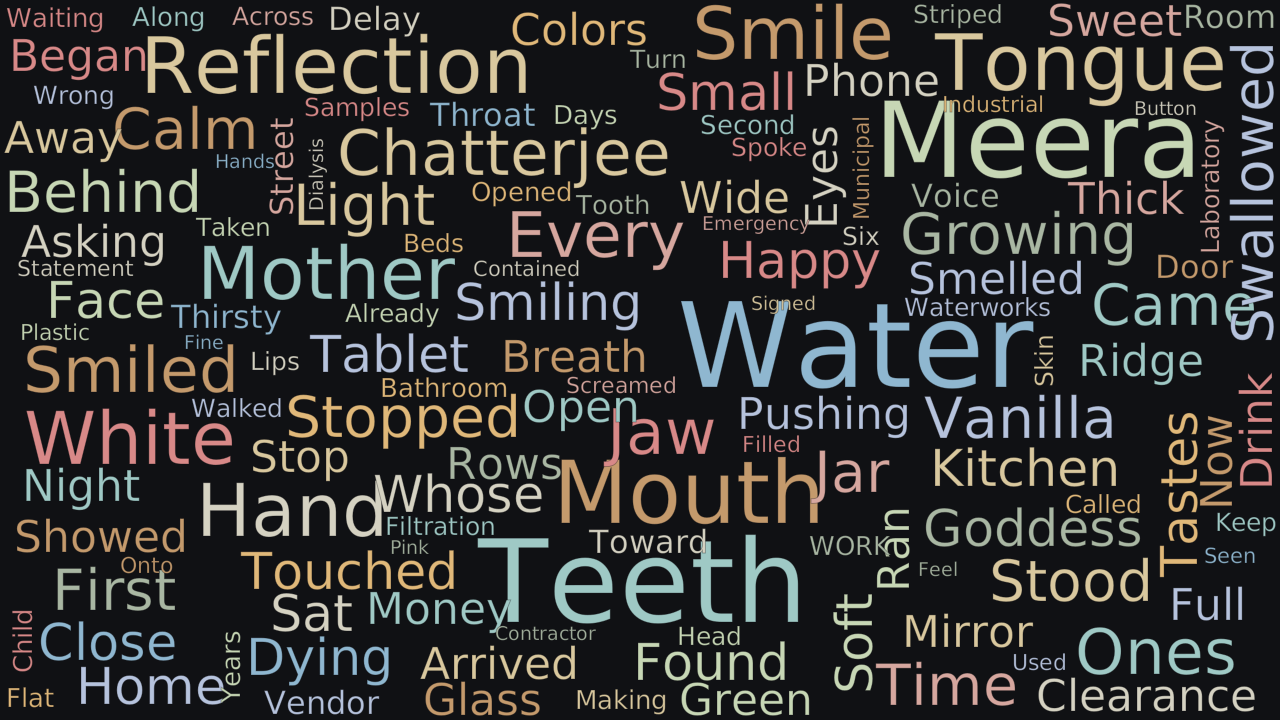
Word Cloud
Related reading
Selected by shared topics and section, with closer publication dates breaking ties.