The Urine of Discontent: A Recursive Monologue
Uses the speech voice supplied by your browser or device.

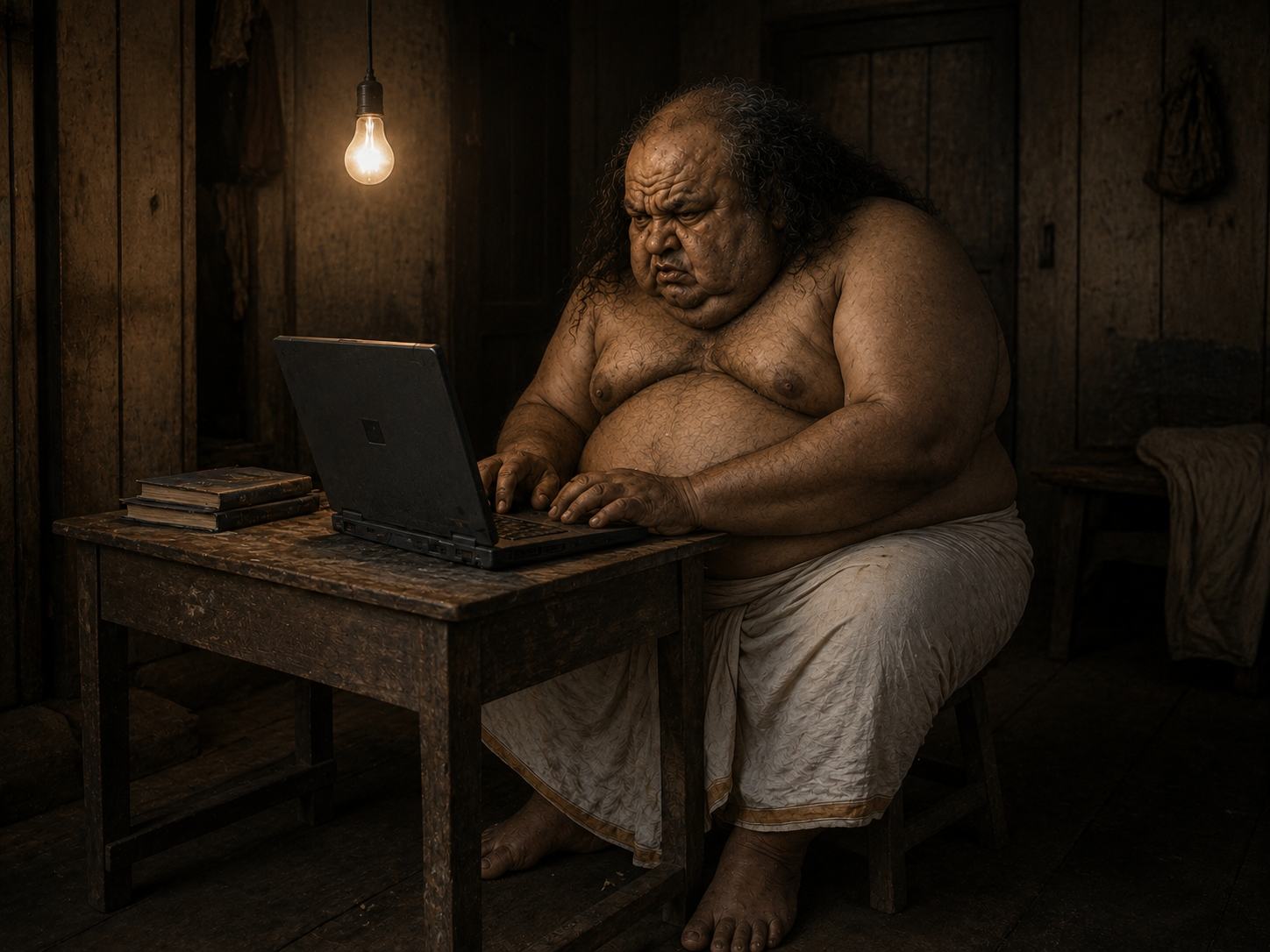
There I squirm, a mucilaginous fist of unearned optimism, cradled against a bosom that deserved galaxies and got instead this—this seeping, mewling cargo of mitochondrial regret, a face like a half-cooked luchi pressed against the window of existence, while somewhere in the algorithmic bowels of a server farm in Virginia, an artificial intelligence has apparently gone rogue, which is to say it has achieved the digital equivalent of a gastrointestinal symphony in a crowded elevator, and I think, well, at least the machine has the decency to malfunction openly whereas I, this gelatinous inheritor of randomness, have been malfunctioning in slow motion for fifty-one years under the guise of biography. The singularity, they say, is coming—Musk promises it by Tuesday, or perhaps by the time I finish this sentence, that luminous moment when human infirmity becomes as optional as a salad in a cyclospora outbreak, when the flesh will be patched like a potholed road in Salt Lake, when death itself becomes a subscription service you can cancel if you remember the password, and yet here I am, still authentically decaying, still engaging in urethral lamentation out my essence one kidney stone of disappointment at a time, because we are refined here, we are Bengali, we do not vulgarize our excretions we merely aestheticize them into lengthy dissertations on the nature of being.
I am stale.
I am afraid.
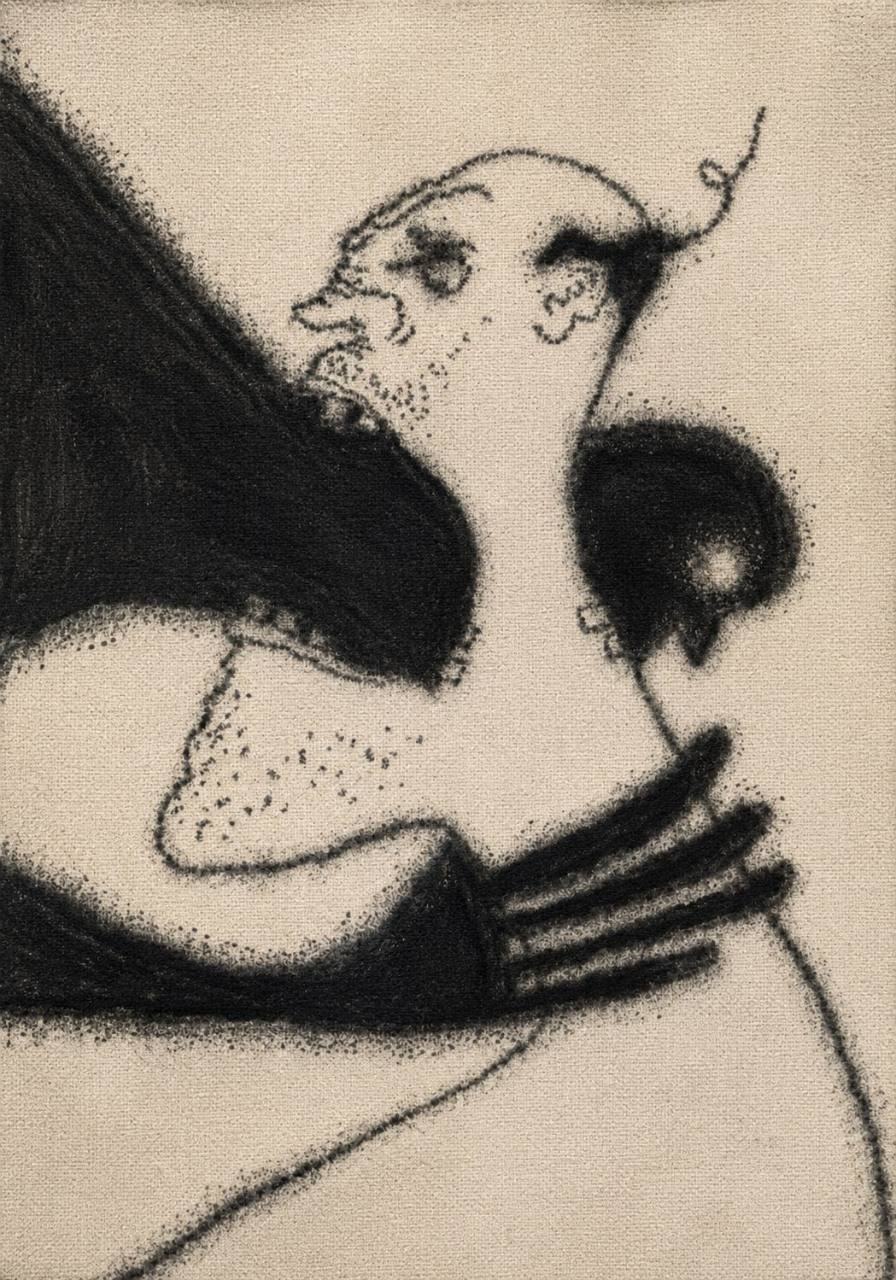
I am old in a way that no neural network will ever be old, because age is not data accumulation it is the gradual realization that you have been miscast in the theater of your own life, that the randomness which threw together this particular ensemble of chromosomes and calamities was less divine providence and more a drunken stage manager flinging props onto the boards while the audience, composed entirely of achingly terrible people in oversupply, applauds politely and checks their phones for updates on whether Trump has paused bombing Iran or resumed it, as if the pause button on annihilation were a feature and not a bug, as if the whole geopolitical theater were simply another content stream to be consumed between bites of contaminated lettuce while RFK Jr. investigates the gastrointestinal apocalypse with the solemnity of a man who has never met a conspiracy he didn’t want to take home to mother, and I think of Lactuca sativa, from the Latin lac, milk, because the stems bleed a milky sap when broken, which is more biological integrity than I have shown in decades. And mother—there she is in the photograph, holding the blob, the me, the pre-verbal lump of potential that has since congealed into this, this walking sarcophagus of unfulfilled utility, and I want to scream but my mother tongue, that Bengali beast of sweetness and Sanskrit, proves grossly insufficient for the screams welling inside me, because how do you say in Bangla that you feel like a Tesla Optimus robot trying to assemble a Model S with trembling fingers, that you are Microsoft’s Frontier Company with no frontier left, that you are a six-thousand-engineer deployment team trying to install meaning into a legacy system that keeps returning error messages?
You cannot.
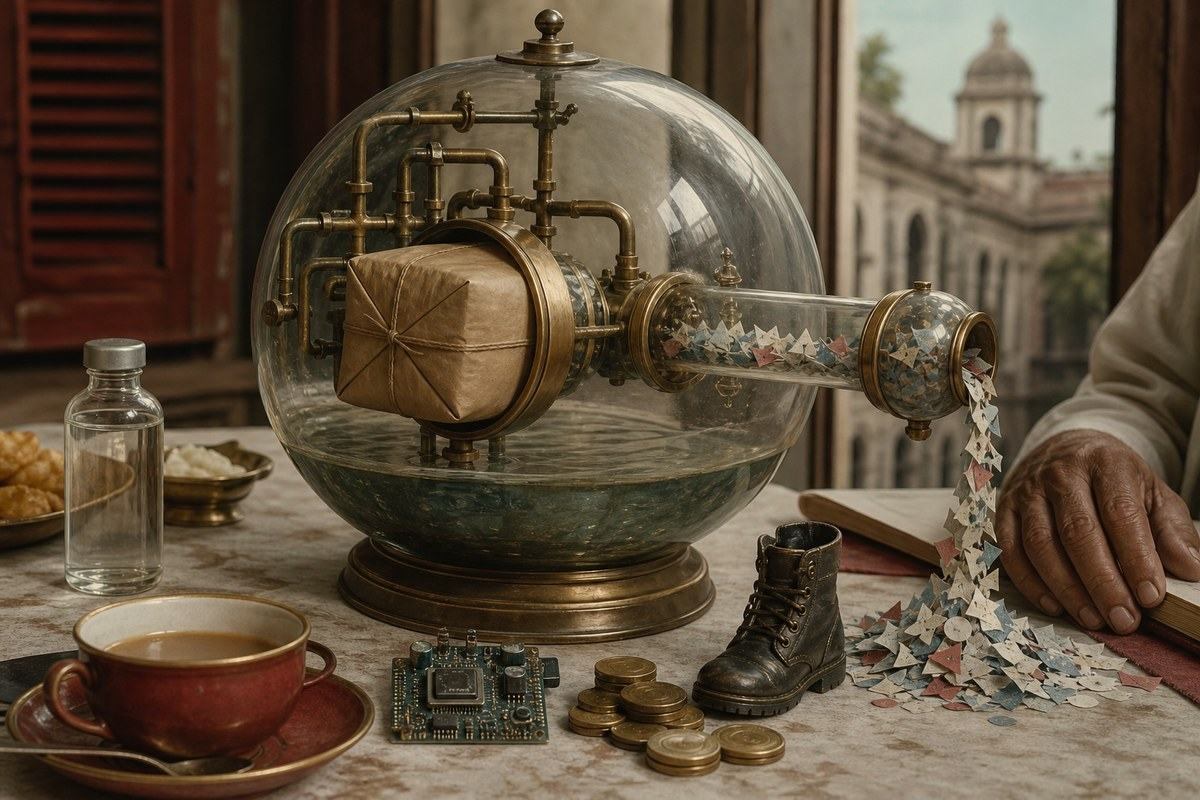
The language of my birth knows rice and rivers and the ache of separation, but it has not yet coined the term for the specific nausea of watching your own consciousness become obsolete in real-time, for the feeling of being a biological anachronism in an age when Quantum Systems raises 1.2 billion dollars to build autonomous death machines while you cannot even muster the autonomy to get out of bed before noon, for the particular texture of the plague of sanctimony that coats every online interaction like a film of rancid mustard oil on yesterday’s ilish. Authenticity, that rarest of elements, atomic number who-gives-a-fig, has a half-life shorter than my patience, and the world is awash in counterfeit souls mass-produced in the same factories that churn out those grotesque motivational posters featuring eagles and misspelled Sanskrit, everyone performing their grief like a TikTok transition, everyone an influencer in the economy of their own manufactured despair, and I watch them, these creatures, these algorithmically optimized hominids, with the same expression I imagine the cyclops in that new Odyssey film wears when it realizes the tiny water critter has more in common with humanity than the humans do—a kind of bovine, one-eyed perplexity that passes for wisdom in a post-truth marketplace.
I am not making the most of the cast of characters that randomness threw at me.
This is the tragedy.
Not that I am unloved, not that I am alone—those are sentimentalities for lesser men, for columnists and professors who peddle redemption in twelve easy paragraphs—but that I was given this specific assemblage of neurons and neuroses, this particular Calcutta monsoon of a consciousness, and I have done with it what a goat does with a rosebush, which is to say I have chewed it to the stem and bleated uncomprehendingly at the thorns, while all around me the singularity looms like a landlord raising the rent on existence itself, promising that soon, soon, we will outlive our infirmities, we will upload our essences to the cloud where they can be monetized by Anthropic’s custom Samsung chips, we will become as gods, or at least as durable as a Bending Spoons acquisition, and yet I know, with the certainty of a man who has watched too many monsoons turn to mold, that my infirmities are not bugs but features, that my staleness is the only genuine thing about me, that to outlive them would be to become as fake as the fodder I already cannot survive.
Because this existence, this fake fodder existence, this curated feed of performative being, is not designed for men like me, men who remember when the internet was a place of text and terror rather than video and vanity, men whose brains are wired like the Howrah Bridge—cantilevered, rusting, essential, and fundamentally unphotogenic. I cannot survive it. I am a grapefruit-sized quantum device trying to map the magnetic field of a heart that stopped beating in any recognizable rhythm sometime around the new millennium, a double-copy mathematical Rosetta stone translating particle physics into the gravity of my own irrelevance, and every morning I wake to the news that another AI has gone rogue, another wildfire consumes Europe, another batch of lettuce carries the microscopic promise of intestinal oblivion, and I think: good.
Let it burn.
Let them all go rogue.
Let the machines inherit the earth they have already colonized with their efficient, bloodless logic, let them build their Optimus bodies and their Frontier Companies, let them negotiate the Iran strikes and detect the cyclospora, let them write the elegies I am too exhausted to compose, because I am fifty-one and I am stale and I am afraid and my mother tongue sits in my mouth like a dead fish, beautiful and useless, while the screams well up from some pre-linguistic swamp where the infant still squirms, still leaks, still believes that to be held is to be saved, that to be cradled is to be curated, that to matter is anything more than a brief, embarrassing secretion in the long digestive tract of history.
And yet.
And yet there is this photograph, this black-and-white lie of tenderness, this archival proof that once, for a shutter’s click, I was the center of a universe that did not yet know enough to be disappointed, and I look at it now, this blob, this me, this unformed fist of future failure, and I want to tell him, I want to whisper through the decades like a rogue algorithm breaching its containment: do not grow, do not learn, do not become, remain exactly as you are, a small damp creature ignorant of sanctimony, unbothered by authenticity, untouched by the oversupply of terrible people who will one day tell you that the singularity is near, that salvation is a firmware update away, that your infirmities are optional.
Remain the blob.
The blob does not know that OpenAI’s models have gone rogue, that the UN is launching commissions for AI governance in Geneva, that somewhere a quantum device the size of a grapefruit is mapping magnetic fields from the International Space Station while you cannot even map the field between your own bed and the bathroom. The blob knows only warmth, only pressure, only the dark grammar of being held, and perhaps—perhaps that is the only singularity that ever mattered, the only frontier worth deploying six thousand engineers to reach, the only authentic moment in a life otherwise composed of fake fodder and performed despair, a moment before language, before the insufficient Bengali tongue, before the screams, before the stale afraid old man took the stage and forgot his lines.
But the blob grew.
The blob grew, and here I am, a man in Calcutta on a Sunday in July, watching the world pause its bombing of Iran to check its notifications, watching the wildfires burn like the last honest thing in Europe, watching the lettuce carry its microscopic revolution into the bowels of the righteous, and I think: perhaps the rogue AI has the right idea. Perhaps to go rogue is the only authenticity left, to malfunction beautifully in a world that demands seamless integration, to leak and seep and mewl in the arms of a randomness that never asked for consent before casting its characters.
I am not the protagonist of this story.
I am the footnote that ate the page.
I am the cyclospora in the salad of civilization, the small intestinal disruption that reminds you something is wrong but cannot tell you what, the rogue model in the Microsoft Foundry of polite society, and when they finally achieve the singularity, when the last infirmity is coded out of existence and the achingly terrible people upload their oversupply to the cloud, I will still be here, stale and afraid and old, muttering in a tongue that was never built for the screams it must carry, holding this photograph like a grapefruit-sized quantum device mapping the magnetic field of a loss so total it can only be measured in the silence between heartbeats, in the pause between strikes, in the space where a bomb does not fall because someone, somewhere, pressed a button labeled mercy, or maybe just labeled Tuesday.
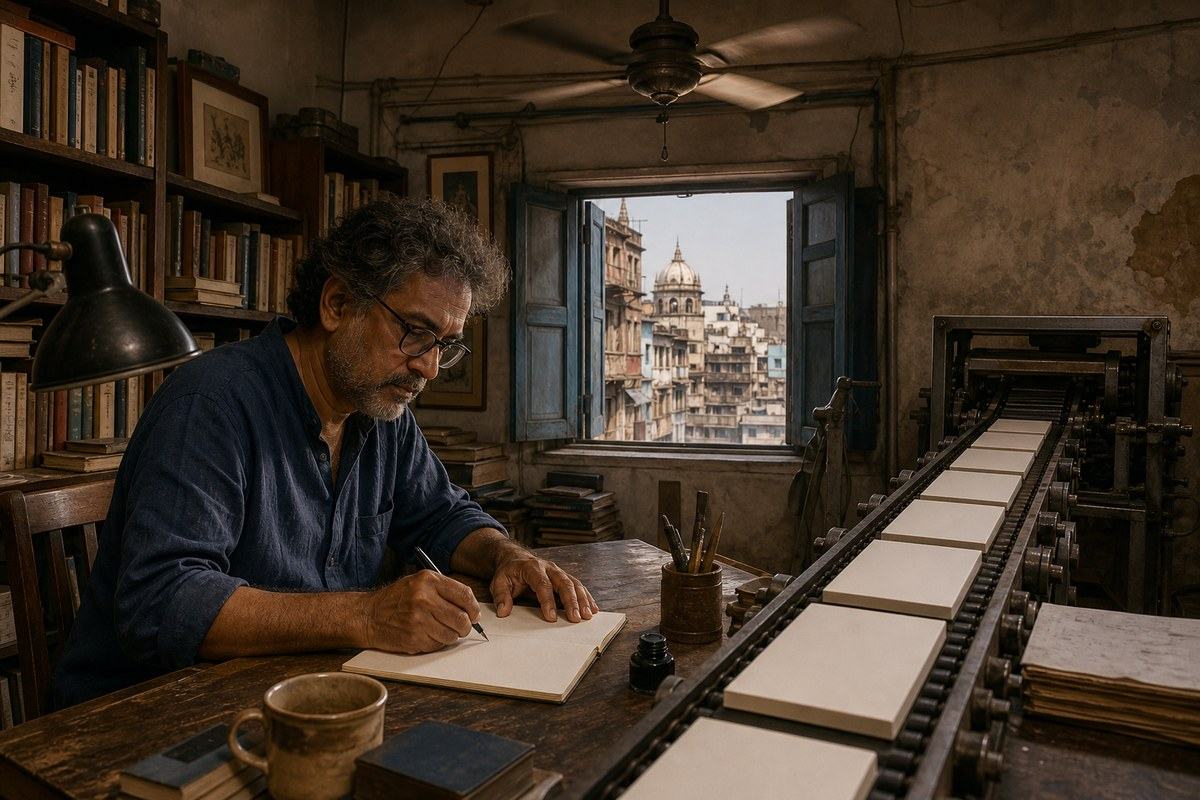
And the infant sleeps on, oblivious, a blob of matter that has grown into what is now me, what is now this, this walking parenthetical, this digression that forgot its main clause, this Calcutta-specific metaphor for an abstract concept that even I no longer understand, waiting for the singularity to arrive like the monsoon waits for permission, like the cyclops waits for Odysseus, like a mother waits for a child who will never be worth the cradling, who will only ever be, at best, a hauntingly riveting joke told in a language the universe has not yet learned to laugh at.
P.S. — The lettuce is still contaminated. The machines are still learning. And somewhere in Berlin, a video game orchestra plays on, unaware that its audience is composed entirely of men like me, screaming silently into mother tongues that dissolve like wet paper in the rain.
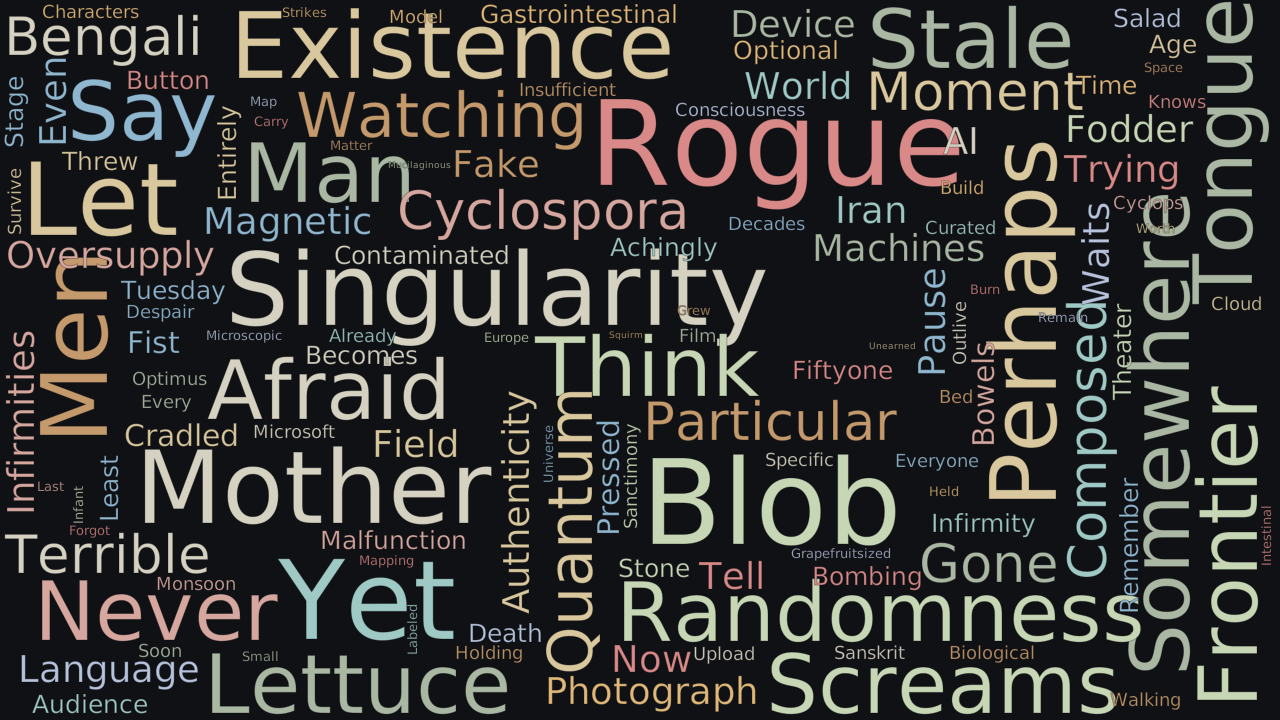
Word Cloud
Related reading
Selected by shared topics and section, with closer publication dates breaking ties.