The Accelerating Velocity of Obsolescence
Uses the speech voice supplied by your browser or device.

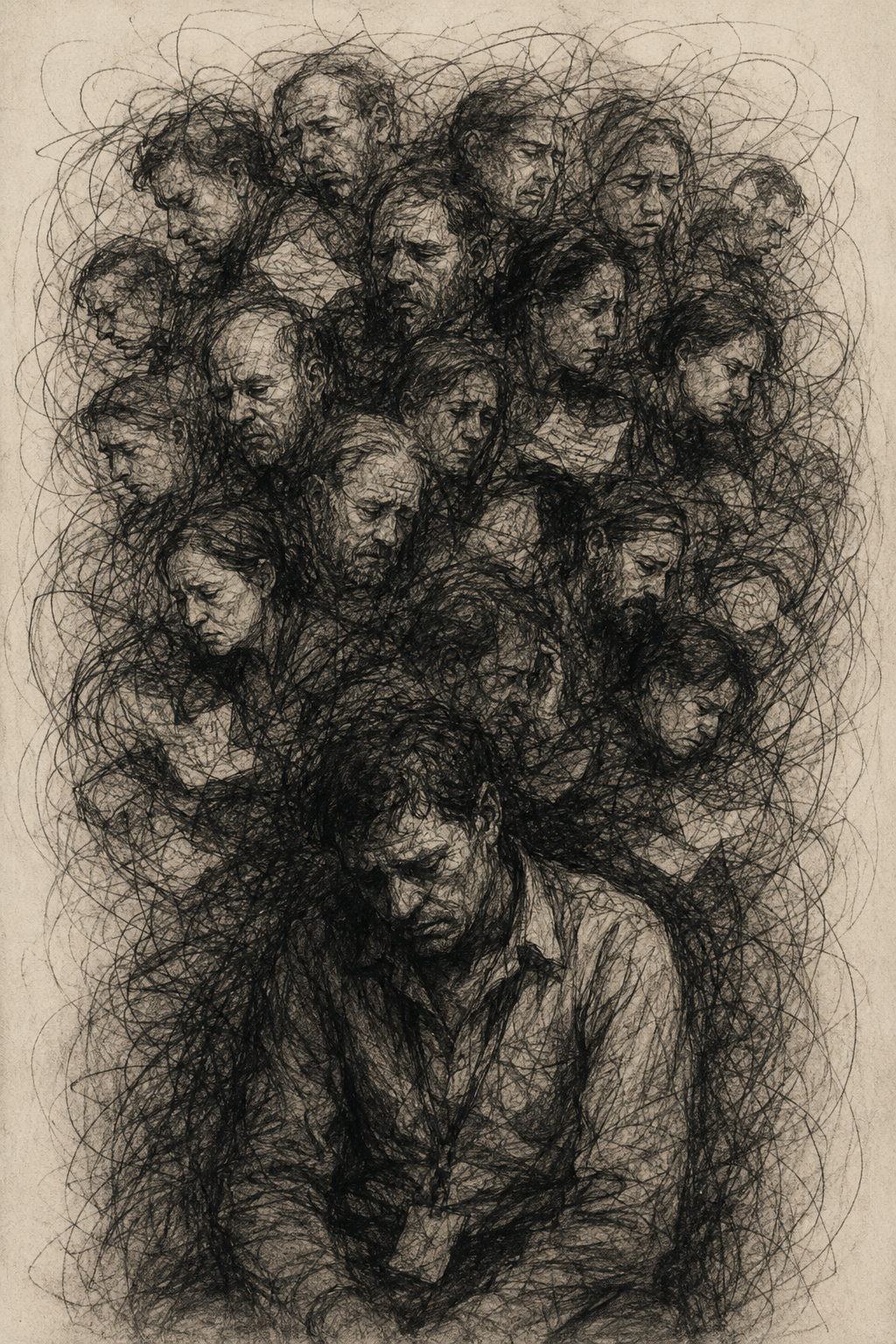
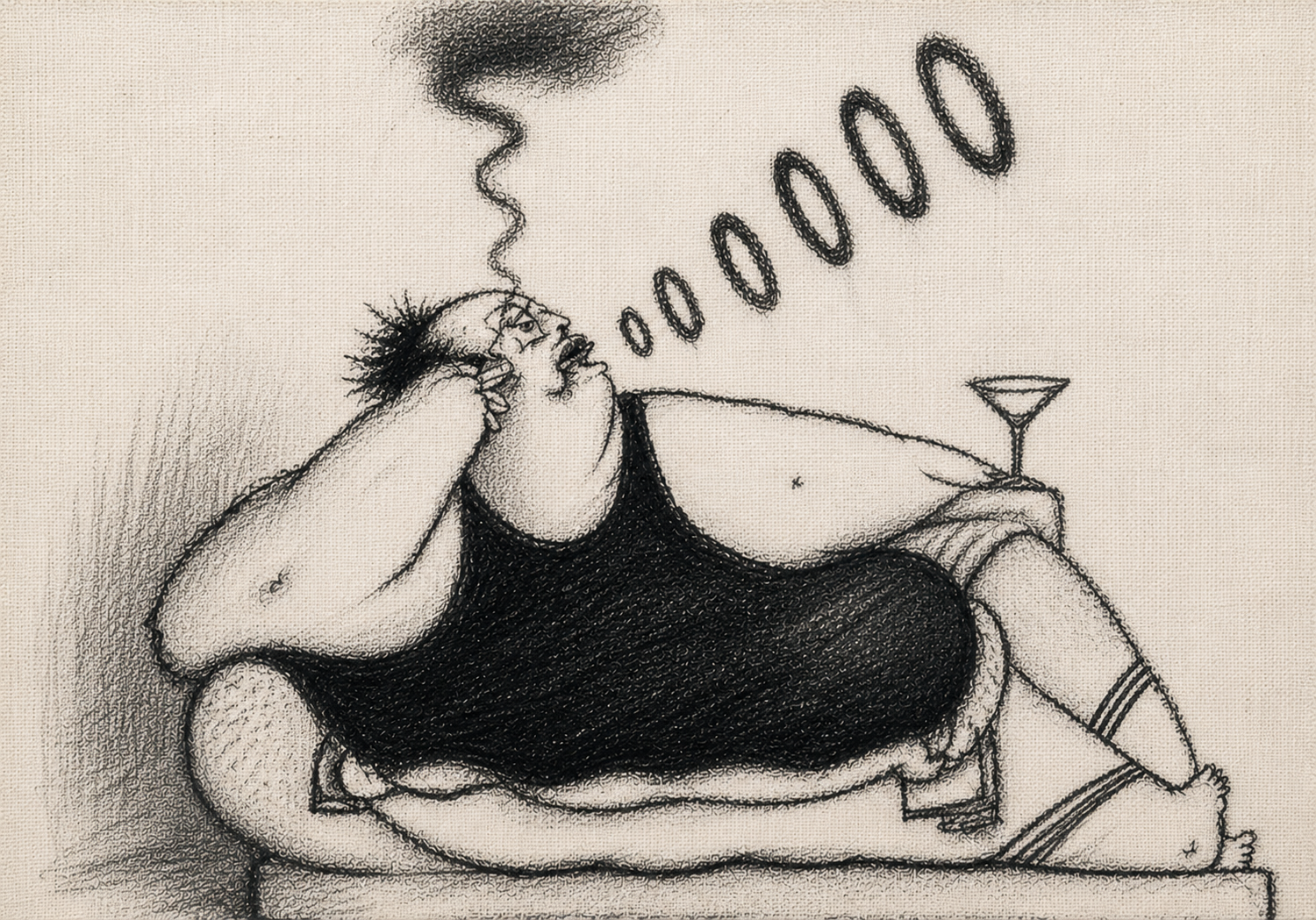
The past is a comfortable coffin, and we have all been napping in it with the serenity of house cats who have never seen the street. I am not here to sing you lullabies. I am here to tell you that the lid is closing, the air is thinning, and somewhere in a server farm in Hyderabad, an algorithm is currently digesting the very job description that paid for your child’s school fees last quarter. Digesting it, metabolizing it, excreting it as a cost-saving memo.
Let us begin with a number, because numbers do not weep. The half-life of a professional skill in 2010 was approximately five years. By 2020, it had compressed to two and a half. In 2026, if you are reading this on the day I publish it, the half-life of relevance is roughly the duration of a good bowel movement. I exaggerate, but only slightly, and only because the truth without hyperbole is too banal to penetrate the skulls of those who believe their LinkedIn endorsements constitute armor.
Consider the Indian white-collar worker, that magnificent creature who has spent three decades perfecting the art of the arbitrage. The body-shopping model, that glorious conveyor belt of warm human capital shipped from Bangalore to Bentonville, from Hyderabad to Houston, has been the economic engine of a million dinner-table boasts. “My son is in the US,” the uncle would say, and the aunties would nod with the solemnity of theologians confirming a miracle. The miracle, dear reader, was never the son. The miracle was the spread—the difference between what an American company would pay an American and what it would pay someone who spoke English with the grammatical precision of a Victorian textbook and the wage expectations of a person for whom a dollar was still, psychologically, sixty-five rupees.
That spread is evaporating. Not slowly. Not gradually. Evaporating like morning dew on a Calcutta sidewalk in May. The Large Language Models do not require H-1B visas. They do not suffer from jet lag. They do not demand green cards, nor do they send remittances home to build a third floor on a parental house in Salt Lake. They work for the cost of electricity, and electricity, unlike your nephew with the IIT degree, is getting cheaper.
I have done the arithmetic so you do not have to, though I suspect you will not do it anyway because arithmetic is uncomfortable and comfort is the opiate we mainline between PowerPoint presentations. A mid-level business analyst in India costs a firm approximately forty-five thousand dollars annually, loaded. A competent LLM subscription, properly prompted, can perform seventy to eighty percent of that analyst’s deliverables at a cost of roughly two thousand dollars per year. The remaining twenty to thirty percent? That requires a senior analyst, who costs seventy thousand dollars, who is now doing the work of three, who is herself wondering why her inbox is a graveyard of former colleagues’ out-of-office replies that never turn off.
The word “obsolete” derives from the Latin obsolescere, to fall into disuse, to grow old. But here is the etymological gut-punch we hide in fat textbooks: the root olescere means “to grow,” the same root that gives us “adolescent.” Obsolescence is not decay. It is growth—perverse, inverted, cancerous growth. You do not wither; you are outgrown. The world expands past you while you are still memorizing the map of yesterday.
I am fifty-one years old. I have bipolar type II, which means I have spent enough time in the depressive trough to recognize the architecture of collapse before the cheerful people do. The manic episodes have their uses—they burn away the polite filters, they let you see the skeleton beneath the skin of consensus. And what I see now, with the clarity of a man who has stared at ceilings at three in the morning while his neurotransmitters staged a coup, is this: the Indian professional class is about to experience a compression event that will make the 2008 recession look like a gentle shoulder massage.
The body-shopping model was always a bridge, not a destination. It was a bridge built on the assumption that intelligence was scarce, that English fluency was a moat, that time zones could be arbitraged indefinitely. Artificial intelligence is the river rising. The moat is flooding. The bridge is still there, but it now leads from nowhere to nothing, and the toll booth attendant has been replaced by a chatbot that wishes you a nice day in twelve languages.
“But surely,” the imaginary reader protests, the one I conjure because actual readers are as rare as honest politicians, “surely there will be new jobs? New roles? We will adapt, as we always have?” Yes. Yes, you will adapt. Some of you. The young ones, the ones for whom Python is not a snake and Git is not an insult, they will pivot, they will reskill, they will do the desperate dance of perpetual reinvention. But the forty-five-year-old project manager with the EMail signature that lists seventeen certifications? The fifty-year-old quality assurance lead who has spent two decades defining “defect severity matrices”? The mid-level executive whose primary skill was “stakeholder management,” which is corporate Sanskrit for “remembering birthdays and nodding sympathetically”?
They will not adapt. They will be processed. The Indian employer, let us be candid, does not do severance with the theatrical kindness of American HR departments. There is no exit interview with a gift basket. There is a meeting, a door, a security guard who has seen this too many times to make eye contact. The pink slip is a Western euphemism. Here, it is simply Tuesday.
And the severance, when it exists, is a fraction, a gesture, a performative nod to labor law that everyone knows is unenforceable for anyone without the resources to spend five years in court. The family will not see it coming. The family never does. The family has been told, by the cheery chucklefucks on LinkedIn, that India is the future, that digital transformation is opportunity, that every problem is merely a solution wearing a disguise. The family has been saving for a flat in Rajarhat. The family has been planning a wedding. The family does not know that “transformation,” from the Latin transformare, means to change shape entirely—to become unrecognizable to those who knew you before.
I am not pessimistic. I am old, and I am a realist, and realism in 2026 is indistinguishable from pessimism to anyone who has not done the reading. The danger is not that the jobs will vanish entirely. The danger is that they will vanish structurally—that the ladder which allowed a generation to climb from lower-middle to upper-middle, from Maruti to Mercedes, from government quarter to gated community, that ladder is being retracted while people are still on it. The rungs below are dissolving. The rungs above require skills that were not taught in the colleges that charged your parents their life savings.
The mathematics of this are inexorable. Exponential curves do not negotiate. Moore’s Law does not care about your mortgage. The cost of compute falls, the capability of models rises, and the intersection point where human labor becomes economically irrational approaches with the velocity of a train you can hear but have not yet turned to see.
What is to be done? I am not your career counselor. I am not going to sell you a course on prompt engineering or blockchain or whatever snake oil is being peddled this quarter. But I will tell you what the numbers whisper to those who listen: diversify your household’s income streams as if your life depends on it, because it does. Assume that any single source of revenue is a glass jaw waiting for the punch. Teach your children skills that algorithms cannot mimic—not because algorithms cannot mimic them, but because by the time they can, your children will have moved to the next thing. Cultivate the habit of learning as if it were a chronic disease, because it is. The only inoculation against irrelevance is the willingness to become irrelevant to your former self, over and over, until the final irrelevance that comes for us all.
This is not a dog-eat-dog world. It is far, far worse. It is a world where the dogs have been replaced by robotic vacuum cleaners that do not even need to eat. The dog that survives is the one that learns to operate the vacuum, or failing that, the one that convinces the vacuum it is a carpet.
Plan for the compression. Expect the shock. Do not trust the chucklefucks. The past is a coffin, yes, but it is also a lesson in carpentry—study how it was built, so you know where the nails are loose, where the wood is rotten, where the next coffin will differ from this one.
The future belongs to the perpetually uncomfortable. The comfortable are already obsolete; they simply have not received the memo. The memo is being written by a transformer architecture in a data center, and it is being written in a language your former job description is still trying to translate.
P.S. References: Brynjolfsson, E., & McAfee, A. (2014). The Second Machine Age. W.W. Norton & Company; Frey, C.B., & Osborne, M.A. (2017). “The future of employment: How susceptible are jobs to computerisation?” Technological Forecasting and Social Change, 114, 254-280; World Economic Forum (2023). The Future of Jobs Report.
Word Cloud
Related reading
Selected by shared topics and section, with closer publication dates breaking ties.